

PhD Student in ML/Fluid Dynamics @Mines_Paris, Ex CTO @FlaneerInc. https://xitter.cf/t.co/sw4DYzpKZy
Paris
Joined February 2013
- Tweets274
- Following258
- Followers399
- Likes370





Paul Garnier @ ICML 26 retweeted

We’re sharing a solution to the Navier-Stokes Millennium Prize Problem, one of the deepest problems at the frontier of mathematics.
The proof was produced by a group of agents, using an OpenAI next-generation model significantly more capable than GPT-6 Astra.
The problem concerns whether the description of smooth three-dimensional fluid motion modeled by the Navier-Stokes equations can break down. It has remained unresolved for roughly 90 years.

For anyone interested, the preprint is out. We dived a bit deeper on the interpretability and the cost comparison (including with Fable). Link is below.


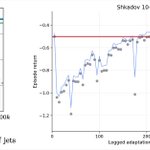
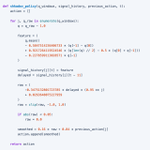
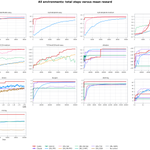
1/5 TLDR; We used Codex to discover and maintain heuristic learning for hard fluid dynamics control cases.
I’ve been applying DRL and GNN to physics since 2019,, and over the past 3 months I’ve been toying with the idea of using agents in our processes. Inspired by the blog post from @Trinkle23897, I decided to use the same strategy and have agents find readable control strategies. This means a lot to our field, where interpretability can be key for industry.
Wrote a short blog post building intuition for why KL divergence has the form it does, and why the forward vs reverse KL distinction matters.
We start from flat spaces, move to Riemannian manifolds, and recover KL as a negative gradient to get a specific vector field

probably the best blog i have read for some time
viewing SFT, RL, and OPD as different ways of reshaping a model's distribution makes their tradeoffs super intuitive.
- SFT pulls toward a fixed external target
- RL moves along the reward gradient on on-policy samples
- OPD sits in between, using a teacher signal but on student-generated data, which is why it inherits RL's anti-forgetting properties even when the teacher itself was an overtrained SFT model.
the post is heavily grounded in recent literature and uses the distributional perspective as a unifying bridge across all three paradigms, i really like the point it argues the load-bearing ingredient is on-policy data and OPD's convergence to RL-like outcomes is the strongest evidence

This is very similar to when a conservative force can be written as the gradient of an energy, but here we have to take into account the curvature of the space using the Fisher Metric.
donsetpg.github.io/#/blog/wh…
True when Vauquelin said it in 1798. Still true when it was quoted in 1931. And somehow it feels even more relevant today.
(Found in a book about my former school that I hadn't opened in years.)
en.wikipedia.org/wiki/Louis_…

As a very concrete example, I'm studying blood flow in the brain and in aneurysms. Looking at it from an efficiency pov, we went from autopsy -> angio -> CT scan -> MRI -> 4D Flow; CFD -> Machine Learning surrogate.
During small experiments, we realized AI could now build solver
Finally finished The Origins of Efficiency by @_brianpotter this week. Really really good book that could interest a lot of people. It feels very relevant to the current AI space to see how efficiency evolved in the past 200 years in different products.
Conclusion was actually very close to my PhD conclusion I'm currently writing. The search for efficiency in CFD was key to many industrial improvements, and AI is indeed heading the same way.
pretty sure the future of cfd are agent modified custom solvers: faster and with lower residual for a specific family of cases
Added the results from Fable 5 to fluid heuristic learning, large upgrade ! But Fable was run in xhigh mode, using the same total number of optimisation steps --- unclear why we see lower average costs and results.
xitter.cf/pg_dons/status/2056411…

1/5 TLDR; We used Codex to discover and maintain heuristic learning for hard fluid dynamics control cases.
I’ve been applying DRL and GNN to physics since 2019,, and over the past 3 months I’ve been toying with the idea of using agents in our processes. Inspired by the blog post from @Trinkle23897, I decided to use the same strategy and have agents find readable control strategies. This means a lot to our field, where interpretability can be key for industry.
My gf is an architect specialized on old protected buildings.
Since this morning, they now have a GitHub org.
To share their Codex skills.
I’m having a lot of fun helping them, very interesting to see not scientific applications

Got more and more annoyed at scrolling (and the time I lose) recently. I figured that since Codex has a browser, and now uses it pretty quickly, it could simply scroll for me?
Every day, Codex now spends 30 minutes scrolling different websites and creates a newspaper for me

I think the biggest issue is the randomness. Similarly to when you bump into a colleague from a different field and get new ideas, I've had good ideas from random, unrelated tweets/articles/posts. Would Codex catch on to those, since it knows what I'm working on?