
founding eng @ https://xitter.cf/t.co/VvOl7DRKx4 - particularly focus on evals. previously @ https://xitter.cf/t.co/8m8weVc4gO. Also studying 中文 and trying my best to travel.
Joined June 2010
- Tweets6.3K
- Following2K
- Followers302
- Likes49.5K









Maybe this model will actually be useful for knowledge work

🚀 DeepSeek-V4.1-Flash-1017 is here!
Stronger benchmark performance, faster task completion, and shorter outputs than the previous version—a Pareto improvement in performance and cost. Now live on our website, app, and API.
🛠️ Optimized for @DeepSeekHarness, Tencent CodeBuddy, WorkBuddy, and more. Upgrade to DeepSeek Harness v0.2.1-rc.1 or later for the best experience with the new model.
1/4


You doubted the Zuck?

Muse Spark Open -- weights releasing today -- runs great on new Mac Studios thanks to work with @johnternus and Apple.

Amazing research, but I find it difficult to comprehend both the content itself as well as the level of intelligence needed for this sort of work. Constantly in awe of what people are capable of.

interpretability might be the most important scientific problem in the world right now, as I don't think we can solve alignment if we don't know what we're building. I think I have good news about it. I co-authored early work in mechanistic interpretability at OpenAI and came away pessimistic, because neural networks appeared to fold into arbitrary tangled knots. years later, I started openai's first large-scale automated interpretability project, finding about 2% of neurons legible with the primitive tools we had
with modern agentic tools and a much closer look, the picture looks totally different. the vast majority in models up to trillions of parameters are legible, and their circuits beautiful. many famous examples of tangled neurons turned out to be misunderstood. The roadblocks I expected mostly aren't there. I now think ambitious interpretability will be solved by the time we need it most, and possibly quite soon, as automated scientists keep improving. it may be a bitter lesson for interpretability: the simple thing, at absurd scale, works
already-clean.goodfire.com/

Not quite sure how it’s possible @LangChain thought it was a good idea to ship the Langsmith UI without OTEL support?
True, it's not until you go extremely deep on your company's vertical, that you realise the frontier models simply don't cut it for every task. You keep expecting Fable or Astra to solve what is (to someone with knowledge of the industry) a seemingly simple problem.
We have the data, and if we had money, time and resources to spare I would immediately start trying to build out a reward model and start the process of a training run on @PrimeIntellect on our very specific vertical.
But alas, for now, back to shipping product.

We were able to fine tune an open weight model (Qwen3.5-9B) on proprietary internal data at @coinbase, and it out performed frontier models, at much lower cost and speed, for a specialized task (fraud prevention in this case).
I think we'll see more of this pattern inside companies. The frontier models are amazing generalists. But increasingly you'll see specialist models out perform on more narrow tasks, either working on teams, or by themselves.
We're making it easy to fine tune models internally for our employees. We even have a skill for it in our internal harness that makes it easy to spin these up and start training them:
"/fine-tune-and-serve-llm I want to fine-tune Qwen for payments risk review. help me get started"
I imagine we'll have some backend services that could be replaced entirely by this new architecture.


I hear a lot of talk, and I’ve used open models successfully for coding, but I have yet to find one that works well for any sort of professional knowledge work
I spent some time with Deepseek 4.1 / Kimi K3 today, trying to improve one of our workloads ( finance related ). Just terrible - reasoning in circles, failed tool calls etc. People talk about the commodification of models, but I don’t think that exists outside of software engineering yet.
Maybe I’m being particularly naive but getting onboarded on this is a nightmare, the URL based secrets are extremely annoying, not sure why Anthropic felt like they had to diverge from standard practice here


I'm seriously struggling with using Anthropic for any serious engineering work in the past few weeks. Constant `reasoning_extraction` refusals over totally legitimate pieces of work
1. Refusals on the DSPy CoT ( dspy.ai/current/api/modules/… ) module because it thinks asking for the reasoning is some sort of distillation.
2. Refusals when trying to build evals - at Templi our e2e evals are built using a source report, a set of inputs (documents), and a the prompt that extracts claims from these documents and why it extracted them. Apparently this triggers the Input + Output + "Give reasoning" filters?
Genuinely impossible to work with this, we've heavily used the Anthropic API for months now with no issues, we're obviously an irrelevant customer in the grand schema of things, but we will have to move to OpenAI if this continues.


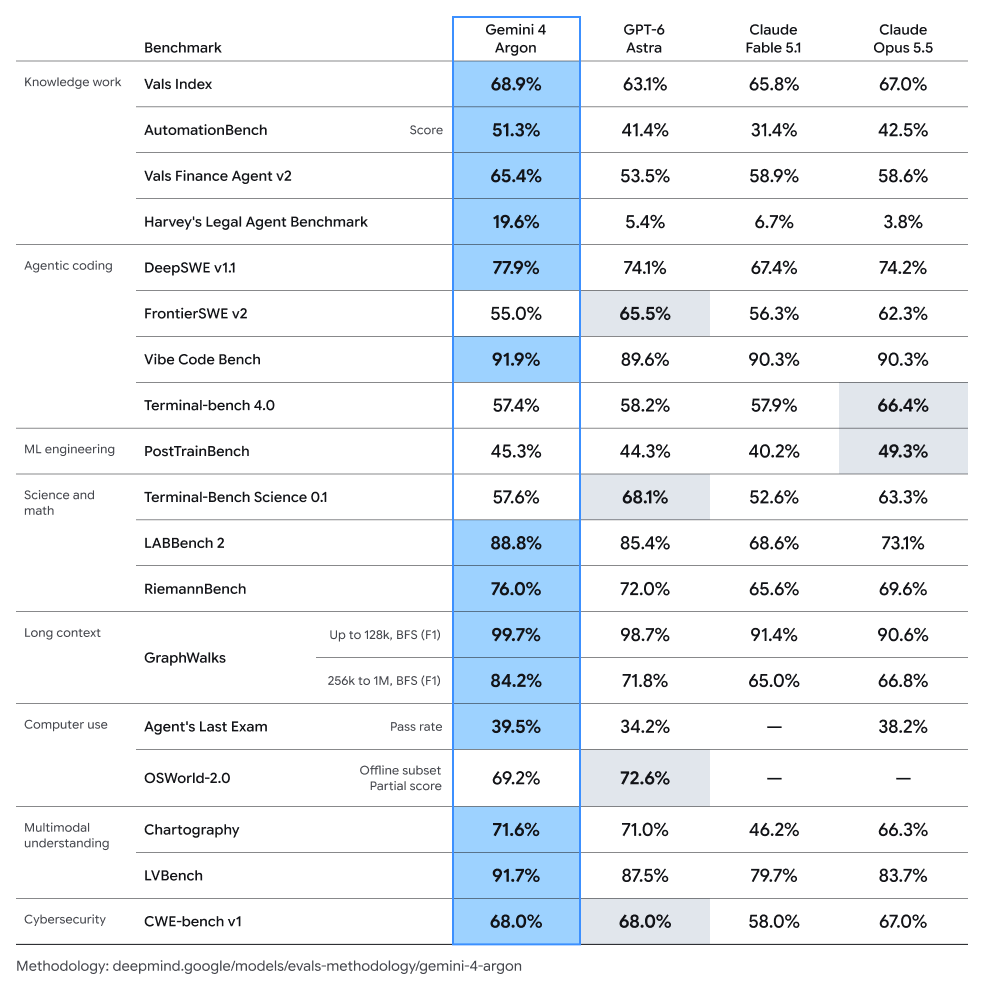
What do you mean you're not massively parallelising the QA of different parts of your product with intelligence too cheap to meter?

Insane behaviour from Sonnet 5.5 in our testing with it, we use DSPy ChainOfThought for some work, Sonnet 5 didn't refuse. But now Sonnet 5.5 throws on reasoning_extraction failures :( @lateinteraction