
Postdoc @ Stanford Neural Prosthetics Translational Lab | NeuroEngineer working on Speech BCI 🧠 💻
San Francisco, CA
Joined October 2017
- Tweets31
- Following114
- Followers186
- Likes50



Erin Kunz retweeted

Cool to see the Brain to text '24 and '25 contest results to the test for online decoding!

Erin Kunz retweeted

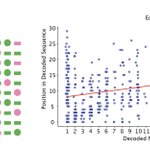
Excited to share our new work on cross-brain transfer of speech and handwriting BCIs! Some studies have required 10+ days of training data for peak BCI performance. Can pooling neural data from other users speed things up? 1/6
biorxiv.org/content/10.64898…

Erin Kunz retweeted

News podcast: @pearlsandpython @Stanford on inner voice; @SamuelDickenUK @ucl on ultra-processed foods; Solomon Hirsch @imperialcollege on Mars; and Katie Shanks @Renewables_UoE and Sophie Gledhill @FraunhoferISE on butterfly-inspired solar energy.
thenakedscientists.com/podca…

Erin Kunz retweeted

Interested in speech neuroprostheses? Come to the #SfN24 minisymposium organized by @HerffC and I. We have a fantastic lineup chosen to survey the many directions this field can go in: different recording modalities, languages, and behaviors (e.g. attempted vs. imagined speech).

ALT SfN 2024 schedule for the minisymposium "Speech Neuroprostheses": Monday 2-4:30 pm in MCP Room S406B
Erin Kunz retweeted

Congratulations to @CathyrenOleande for winning the Brain-to-Text Benchmark '24 (eval.ai/web/challenges/chall…). Her entry drove the word error rate down from 9.72% (our baseline) to 5.81%, a substantial improvement! Excited to see what we can learn from this approach and others.
Erin Kunz retweeted

Are you a postbac interested in neural engineering / BCIs? 🧠🤖🗣️
Come join our team!! Work directly with our amazing BCI participants.
Great exposure for prospective grad/med school applicants! snel.ai/positions
Erin Kunz retweeted

I'll present a poster at #SfN23 on "brain-to-voice" #BCI where we synthesise speech in closed-loop from intracortical signals with real-time audio feedback in a person with ALS. @SergeyStavisky @DrDavidBrandman
Visit us on Wednesday AM (PSTR488.14/JJ25) abstractsonline.com/pp8/#!/1…
Erin Kunz retweeted

If you're attending SfN 2023 and you're interested in speech decoding, come check out my poster on Wednesday morning! We demonstrate a very high accuracy and rapidly calibrating brain-to-text BCI for restoring communication.
PSTR488.12 / JJ23
abstractsonline.com/pp8/#!/1…
Erin Kunz retweeted

💭Imagine relying on a brain-computer interface (BCI) for your only means of communication, but it's inconsistent and needs frequent recalibration. For those who can't move or speak, this isn't just frustrating; it's a huge barrier.
🌟Our #NeurIPS2023 paper introduces a promising solution: Continual Online Recalibration with Pseudo-labels (CORP). Over an entire year (403 days), CORP demonstrated remarkable stability in an online handwriting BCI task. With a 6.16% word error rate, it significantly outperforms existing recalibration methods. 🥇To the best of our knowledge, this is the longest demonstration of intracortical BCI plug-and-play stability to date.
⚙️Technical Insight:
1⃣CORP leverages large language models to auto-correct BCI outputs. The outputs are accurate enough to be used as pseudo training labels, enabling unsupervised recalibration without user interruption.
2⃣We also implemented a replay buffer and data augmentation strategies to tackle the challenges of continual learning.
🤝We encourage the research community to build on our findings. Our data and code are open for further research and collaboration.
Paper: arxiv.org/abs/2311.03611
Code: github.com/cffan/CORP
Data: doi.org/10.5061/dryad.hqbzkh…
This work was the result of amazing collaboration with @WillettNeuro, @xoxo_meme_queen, Nick Hahn, Foram Kamdar, Donald Avansino, Leigh Hochberg, Krishna Shenoy, Jaimie Henderson, and our clinical-trial participant T5!


Erin Kunz retweeted
We're so excited that our speech neuroprosthesis project won the 2023 BCI Award! Thanks to all the coauthors for all their hard work @Maitreyee_W @SergeyStavisky @DrDavidBrandman @ca_rrina @BrainGateTeam @neuroleigh @WillettNeuro @pearlsandpython @FanChaofei @JaimieHenderson

Erin Kunz retweeted

Researchers are using BCIs that decode and convert brain activity to text on a screen to restore speech in ALS patients.
Co-lead author Erin Kunz (@pearlsandpython) is supported by the Ketterer-Vorwald Fellowship and NeuroTech Training Program. med.stanford.edu/news/all-ne…
Erin Kunz retweeted

A paper in @Nature presents a brain–computer interface that helped a patient with ALS to communicate at an average rate of 62 words per minute, which is 3.4 times as fast as the previous record and moves closer to the speed of natural conversation. go.nature.com/3QW9bTr