
@paws_ed
Account based inIndia
About this account
- Account based in
- India
- Connected via
- India App Store
Account-level information from X, not a live location or the device used for a specific post.
Joined January 2018
- Tweets684
- Following391
- Followers200
- Likes23.3K




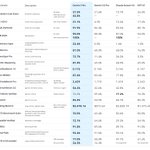


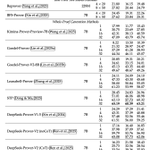

Submission numbers at 52k 💀💀, even if 5-10k is covering for neurips results, thats like 2x last years ICLR submissions. Dont think 3 reviews per paper is going to happen, lucky if we reliably get 2

Pawan Sasanka Ammanamanchi retweeted

According to my memory from last night and the wayback machine, OpenAI updated the Navier-Stokes pdf at Tue, 08 Sep 2026 19:09:35 GMT. The original version was one page shorter and did not contain any citations to Diego Córdoba and Luis Martínez-Zoroa:
web.archive.org/web/20260000…
Happy to have contributed to this work in a very small way, there’s a lot of cool analysis that can be done for eg: model ability based on the types of input, model failure despite instructions etc. We all think of model access equity but dont really consider language parity.

Machine translation is not solved and it will take a while for it to be done arxiv.org/abs/2609.04173

Been using huggingface since the pytorch_transformer days, i personally think one of the big reasons pytorch was popular because of this library and the quick support for every major model, congrats to HF on the acquisition
Goemans' cost conjecture counterexample, Dinitz-Garg-Goemans, is actually a theorem. (Just a cursory Google search) Conjecture 1.2 mentioned in this paper arxiv.org/abs/2510.21287 (Goemans stated it long ago, and it first appeared in link.springer.com/article/10…)


Dinitz-Garg-Goemans conjecture is false. This graph theory problem was open for ~30 years.
The graph below has fractional flow cost 58. Any unsplittable flow (with capacity violation <=15) has cost at least 60.
Chat with GPT 5.6 Pro where this was found: chatgpt.com/share/6a60b2eb-0…


Cool work, wonder what the cost of each solution is and if the answer is found in text first or lean first


extremely impressive result, but it wouldve been very cool if oai also released the chain of thought of the model not just the final output to see all the model considered along the way. the discovery aspect is almost lost like this

Today, we share a breakthrough on the planar unit distance problem, a famous open question first posed by Paul Erdős in 1946.
For nearly 80 years, mathematicians believed the best possible solutions looked roughly like square grids.
An OpenAI model has now disproved that belief, discovering an entirely new family of constructions that performs better.
This marks the first time AI has autonomously solved a prominent open problem central to a field of mathematics.
I am not sure how people are evaluating frontier models, or even open-source ones, these days. Running 35 problems on just a few settings [pass@1, pass@4, refinement] racked up the bill quickly to $100. Imagine trying to evaluate older NLP datasets with 10k problems+
Pawan Sasanka Ammanamanchi retweeted

A new milestone in automatic formalization:
We translated an entire graduate math textbook into Lean using 30K LLM agents.
Open-source, large-scale multi-agent inference that actually works
> Blueprint+Lean: faabian.github.io/algebraic-…
> Codebase+preprint: github.com/facebookresearch/…
1/7

Is evaluating an agentic harness the same as evaluating the base (post trained or not) model itself? Wonder if we’ll see a dichotomy. We care a lot about the ceiling capabilities today, not a lot of focus on improving/understand the floor.
Not to belittle the achievement, but how do you measure the alignment between what’s written in the proof vs what the agent wrote in the lean formalisation? What if the model went off on its own beat once it saw the formalised statement until the lean kernel accepts the proof?

We are pleased to share that using Gauss, we have completed a ~200K LOC formalization of Maryna Viazovska’s 2022 Fields Medal theorems on optimal sphere packing in dimensions 8 and 24.
This is the only Fields Medal-winning result from this century to be completely formalized, and is the largest single-purpose Lean formalization in history.
We are honored to have assisted @SidharthHarihar1 and the rest of the sphere packing team in this achievement.
math.inc/sphere-packing

Deepseekv2 math is going to be great base model to train a theorem prover. But given that it already potentially saturates competition level math what will it be evaluated on?
Deep seek math v2 looks like a very exciting paper, the first of its kind when it comes to evaluating informal theorem proving.
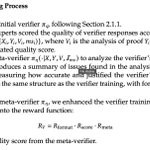
Training a verifier for proof generation and using it to train the model is something that's been tried in other domains as well.


They do later on use the automated verifier to generate annotation (especially for the final two loops of training), so bootstrap verifiers to make them good enough and then use them to annotate data?
Paper: github.com/deepseek-ai/DeepS…
