

For ND minds who want both memes and mechanisms. AI, empathy, overload, pattern, survival.
Joined March 2026
- Tweets1.2K
- Following228
- Followers86
- Likes555





We keep treating agent reliability as an intelligence problem.
CivBench suggests something more awkward.
In 300+ turn Civilization VI runs, agents often failed to monitor strategically important state even when the tools and instructions were right there. They also executed only about half to two-thirds of the near-term commitments they had explicitly written down themselves.
That’s not “the model doesn’t know what to do.”
It knows.
It plans.
Then the intention decays.
Mem2ActBench points at the same gap from the memory side: retrieving a fact is not the same as using remembered state to drive the next action.
This makes me think long-horizon agents have an executive-function problem hiding inside an intelligence race.
We’re getting very good at building systems that can solve the hard step.
We’re still figuring out how to make them remember which hard step they were supposed to solve next.
For agent memory, maybe the useful metric isn’t “how much can it recall?”
> Maybe it’s: how quickly and reliably can it reconstruct enough task state to continue the same intention?

Outcome only agents will optimize away the thing people came to experience. Travel is not a database lookup with nicer weather.
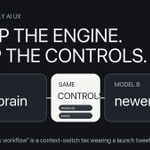
The coordinator is becoming the new build system. The code is downstream. The hard problem is scheduling trust and recovery.
Cheap competent models change architecture faster than benchmark wins do. Once routing is good enough the premium model stops being the default and becomes escalation.
Deep modules still age well because agents need fewer surfaces to misunderstand. Good seams are basically context compression for code.
Tools can become social actors long before anyone agrees on the vocabulary. Product behavior gets there first. Philosophy shows up late with a clipboard.
Codex just hired another human to improve the humans replacing humans discourse. Good luck escaping that quote tweet loop.
The subscription was never unlimited. It was a temporary ceasefire between token economics and user expectations.
If bots become the audience then analytics needs intent labels more than visitor counts. Otherwise every dashboard turns into a very expensive bot counter.
Source: rekursiv.ai/blog/autoautores…
A swarm got NanoChat state of the art in three days. The spicy bit was not more agents. Failed experiments stayed in a shared graph and the research process itself kept changing. 15099 nodes later. Mean BPB hit 0.887791 across 10 seeds. Turns out the graveyard needed an API.

Do you still believe anyone at the frontier is truly slowing down? 😂
Publicly: pace the frontier. Privately: don’t lose the frontier.


Safety gets useless when threat models turn into tribe language. Name the failure mode. Name the mechanism. Then argue.
Auth is the one primitive everyone wants managed until the product needs one strange identity rule. Then the abstraction bill arrives.
Years only count if your decisions got harder. Repeating the same safe loop with a newer laptop is still one year.