

Software & InfoSec professional at @ReaktorNow
Helsinki, Finland
Joined May 2010
- Tweets1.1K
- Following183
- Followers355
- Likes936




Heikki Pora retweeted

Q: What would a defeated Russia look like?
Professor @TimothyDSnyder answers.
Heikki Pora retweeted
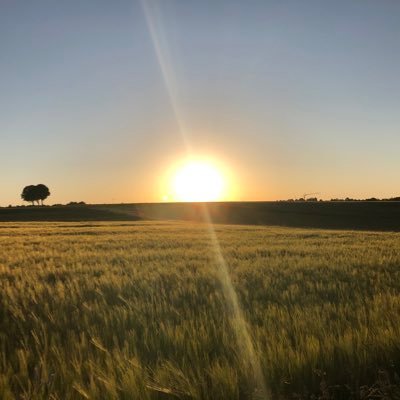
Opposition leader of the CDU and potential next German Chancellor, Friedrich Merz, delivered a fiery speech yesterday night in Stuttgart. I translated the core message.
Since I have been saying this for years and even carry this message in my signature, I approve this message by 100%.


Heikki Pora retweeted

Two years ago today, Russia launched a full-scale of Ukraine.
In the 38 days that followed, Russian forces were driven out of Kyiv, leaving nothing but horror in their wake.
My directorial debut tells the story of those who survived the Battle for Kyiv.
youtu.be/L_3ixikY8AM
Heikki Pora retweeted

Announcing Sora — our model which creates minute-long videos from a text prompt: openai.com/sora
Heikki Pora retweeted

This iMessage exploit is crazy. TrueType vulnerability that has existed since the 90s, 2 kernel exploits, a browser exploit, and an undocumented hardware feature that was not used in shipped software:
securelist.com/operation-tri…

Heikki Pora retweeted

Jäätävän hyvä haastattelu Ukrainan sodan merkityksestä USA:lle ja laajemminkin lännelle, Putinille ja Tyynenmeren alueelle. Vahvaa suurstrategioiden analyysia UKR sodan "voittojen" kautta ja USA:n sisäpolitiikan arviointia heidän Grand Strategy'lle. #turpo
politico.com/news/magazine/2…

Heikki Pora retweeted

First independent measurement of zero resistance in LK-99
A team of scientists from the Physics Department of Southeast University, a top university in Nanjing, China, have reported measuring 0 resistance in a sample of LK-99 they synthesized from scratch.
Here is the video:
- They measure 0 resistance at 110K (-163C) using the four-point probe method. 0 resistance at this high of a temperature at ambient pressure is a new discovery in materials science
- They also claim a transition in and out of zero resistance state depending on a strongly applied magnetic field - a classic characteristic of superconductivity.
- The sample they synthesized is reported to have much higher purity than the original Korean team of LKK
- They note an interesting and abrupt drop in resistance, by several orders of magnitude, between ~300 and 220K (approx values from the graph). This is currently unexplained, but is in rough agreement with LKK - i.e., LKK may have been measuring this higher-temperature 'drop' which was two orders of magnitude.
- They retain the claim that this is not absolute conclusive proof of superconductivity, but it is suggestive of very interesting electronic properties in this material.
These results compare nicely with recent simulations out of Lawrence Berkeley National Lab, University of Boulder Colorado, Shenyang National Laboratory, and TU Wien, all performed by high profile and established materials scientists.
Those simulations have converged on LK-99 having the potential for superconductivity at high temperatures and ambient pressures due to the formation of flat energy bands when lead-apatite crystal is doped with copper. Notably, other doping metals may also achieve similar or better performance.
Here is a summary of those simulations: xitter.cf/Andercot/status/…

In 2 days there are have been 4 studies that help explain LK-99's potential superconducting abilities.
These simulations converge on key properties that suggest a new class of SC materials, and help explain quirks of TK-99 we've seen so far.
Here is the easy-to-digest summary so far:
(Reminder: still no experimental replication yet!!)
All studies converged on the fact that LK-99 has interesting electronic properties, formed by these 'flat energy bands' that can enable superconductivity through several different mechanisms.
- This effect relies on copper replacing lead atoms in the crystal, but it has to replace very specific lead atoms for the bands to appear, meaning it may be hard to synthesize with high purity (paper 1)
- The conduction pathways in the material may be one-dimensional, meaning they aren't equal in all directions, and this could be why it doesn't act as a perfect magnetic levitator but rather a semi-levitator. Also, other metals like gold could make LK-99 perform even better (paper 2)
- TK-99 appears to be much more robust to disorder, or randomness in the crystal, while retaining its superconducting properties. And, it appears the overlap of copper and oxygen electron orbitals might explain why this occurs at ambient pressures (paper 3)
- The most dramatic result of all is by the most distinguished author: the appearance of diamagnetism without superconductivity seems unlikely (paper 4).
Here is the technical deep-dive to back it up:
Note: I include highest h-indexes of authors, which is like a 'science high score'
h=20: 'successful scientist', e.g. full professor
h=40: 'outstanding scientist', e.g. fellowship in APS
h=60: 'truly exceptional scientist', e.g. national academy
1st Paper - Lawrence Berkeley National Lab
Sinead Griffith (h-index 20)
arxiv.org/abs/2307.16892
@LBNLresearch scientist @sineatrix published the first simulation study on LK-99. Her study supported the original Korean team's (LKK) proposed mechanism whereby copper atoms replace lead atoms in a crystal structure, which introduces a twist or strain on the crystal.
LKK measured a 0.5% volume contraction from this strain, which @sineatrix's simulation corroborated, but more interestingly this change in shape creates an interesting change in the available places electrons can fit into the material. These are known as 'energy bands' and normally are quite jagged, going up and down below the 'sea level' of energy like a mountain range.
However, when these energy bands remain quite flat and stay close to sea level, aka 'fermi energy', it is thought to enable interesting properties like superconductivity, insulation, etc, and more.
Notably these energy bands only form when one particular location receives the copper replacement atom, and it is the least-likely location. This suggests synthesizing the material may be difficult, with low-efficiency yield or purity.
2nd Paper - Shenyang National Laboratory
arxiv.org/abs/2307.16040
Lai, Li, et al, and Xing-Qiu Chen (h-index: 47)
These authors find similar results to @sineatrix, showing a volume contraction with lead-apatite has copper introduced, and which produces the signature 'flat energy bands' near the fermi level which are thought to make possible superconducting effects.
They note that the available conduction pathways through the material seem one dimensional, meaning they do not extend in all directions equally. This might explain an imperfect Meissner effect where the material does not levitate perfectly, but only partially (my interpretation).
Most interestingly, they try simulating similarly-sized atoms like silver and gold in replacement of copper atoms, and find that these maintain flat energy bands at the fermi surface. Other elements besides copper may improve the performance of LK-99-like materials.
3rd Paper - University of Colorado, Boulder
arxiv.org/abs/2308.00698
Kurleto et al, Daniel S Dessau (h-index: 49)
Also finds the same flat energy band structure at the fermi surface. More interesting, these authors simulate the effects of disorder being introduced to the crystal lattice, and see an interesting result: energy bands in TK-99 remain flat even when slightly disordered, i.e. not perfectly 'ideal crystal'.
They suggest this could help explain how it retains superconductivity at such high temperatures. Also, they put forward an interpretation of the superconductivity as reliant on overlapping wave functions, or distributions, of the electron energy levels, i.e. the electrons are just slightly overlapping with each other, which creates the flat bands.
They also claim the most important consideration is the overlap between the copper and oxygen electron orbitals, noting that the Oxygen-Copper pairing may explain why TK-99 may superconduct at much lower pressures than previous RTS materials (hydrides). (previous hydride-based RTS materials were superconducting at room temperature, but only at millions of atmospheres of pressure).
4th Paper - Northwest U and TU Wien
arxiv.org/abs/2308.00676
Liang Si and Karsten Held (h-index: 67)
These authors find the same results as the previous two studies - flat energy bands around the fermi surface as a result of copper atoms replacing lead. Two different methods for superconductivity are coupling between electrons, 'electron-electron', or coupling between electrons and vibrations in the crystal lattice, 'electron-phonon'. These authors find that both mechanisms could be possible given the structure that is formed.
There is strong agreement with general findings of all the other papers mentioned, however they additionally claim the appearance of diamagnetism without superconductivity is at odds with their results.
This would have immense implications for the early attempts at synthesis which show diamagnetism but have not yet yielded electrical measurements of zero resistance.
~~~~~~~~~~~
All the authors in these studies noted that their simulation results are not predictive or conclusive of TK-99 being the holy grail of materials science - a room temperature, ambient pressure superconductor.
Taken together they paint an interesting and compelling picture - at the very least, TK-99 is a very interesting material that suggests new lines of research into superconductors that have the potential to perform at room temperatures and ambient pressures.
Here is my mental model right now:
This material is difficult to synthesize because getting the copper in the right place is not very likely, producing low-yields. However, it's possible to separate out individual flakes, or crystal grains, that are diamagnetic but these are quite small. Internal to these tiny crystal grains are one-dimensional 'superconducting' channels that result in partial flux-pinning / levitation, however because these don't enable currents to flow in any direction it isn't perfectly pinned. The energy bands that superconduct are resilient to slight disorder, and are oriented in such a way that lets them perform well without requiring large temperatures.
The flakes that levitate aren't just diamagnets, but, the 1-dimensional conduction pathways might feasibly make it difficult to measure resistance (i.e. anisotropic resistance? - my speculation).
~~~~~
I'll reiterate that everything depends on experimental verification, but it is fascinating to read and share this rapidly developing scientific breakthrough.
My personal odds keep going up.


Heikki Pora retweeted

The US Government approved the procurement of the Israeli “David’s Sling” Weapon System to Finland. After receiving approval, the Israel MOD, Finnish MOD & Rafael Advanced Systems will participate in a ceremony to sign a procurement agreement worth approximately 316 million Euros


Heikki Pora retweeted

Se siitä Riikan vilpittömästä anteeksipyynnöstä. Keskisormi pystyyn ja kolmivuotiaan uhma päälle.
Kuinka pitkään kokoomus aikoo alistua tähän? Itsekunnioitus taitaa olla yhtä vieras sana kuin nollatoleranssi.
#kauhukabinetti

Heikki Pora retweeted

Eilen Purra ilmoitti blogikirjoituksessaan, ettei hänelle tulisi mieleenkään ”irtisanoutua tai pahoitella tekemisiään ja sanomisiaan vuosien ja vuosikymmenten takaa.” 1/10
Heikki Pora retweeted
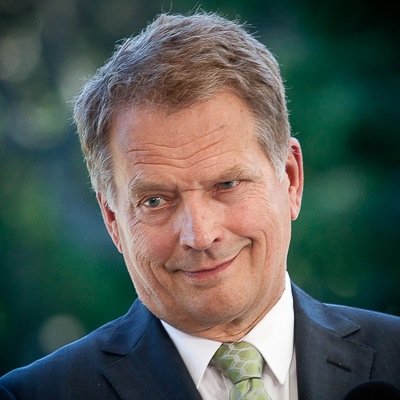

ALT Kaikki 30 Naton jäsenmaata ovat nyt ratifioineet Suomen jäsenyyden. Haluan kiittää niistä jokaista niiden osoittamasta luottamuksesta ja tuesta. Suomesta tulee vahva ja kyvykäs liittolainen, joka on sitoutunut liittokunnan turvallisuuteen. Suomi on nyt valmis liittymään Natoon. Odotamme, että saamme Ruotsin rinnallemme jäseneksi niin pian kuin mahdollista.

Heikki Pora retweeted

Use Zod to parse your environment variables once, then use that inference to type process.env throughout your app.
Best of all worlds.

Heikki Pora retweeted

Mitenköhän Putin käytännössä herätetään? Soittaako joku hänelle vai koputtaako makkarin ovea? Ja millä sanoilla kyseinen viestintuoja aloittaa keskustelun? Miten vaan niin taisi ääni väristä tänä aamuna.
Heikki Pora retweeted

President Zelenskyy's address on the 218th day of Putin's invasion of Ukraine. English subtitles.
Heikki Pora retweeted

Wednesday 21.9.2022 at 21.00 Finnish time.
Situation at Finnish Russian land border remains normal.
Next SITREP tomorrow. We will analyze tomorrow our border crossing data from today and get back with more detailed information.
Heikki Pora retweeted

Allekirjoittakaa kansalaisaloite Venäläisten viisumikiellosta!
Hallitus ei tunnu ilman painetta saavan mitään todellista aikaan.
Emme voi vain laskea Venäläisiä lomalle Suomen kautta, samalla kun tavalliset Venäläiset tekevät kansanmurhaa Ukrainassa!
kansalaisaloite.fi/fi/aloite…

That's a lot of GML MultipointCoverage xml entries (also known as lightning strikes)😆 at sataako.fi today
