

@ghcorps Uganda alumni, returned @peacecorps Ecuador volunteer, current ASPPH/CDC global epidemiology fellow based in Maputo, Mozambique
Atlanta, GA
Joined September 2009
- Tweets1.8K
- Following677
- Followers301
- Likes3.5K






Orrin Tiberi retweeted

This is the most incredible map of America I’ve ever seen. A literary map of the United States showing where the most famous American novels take place, along with their authors and the years they were published. Make sure to load in 4K!

Orrin Tiberi retweeted
New study! Answering the questions: What would it actually cost to achieve the 2030 HIV targets, and what impact would it have?
Read more about this study, drawing on resource needs estimation and epidemiological modelling across more than 118 countries: unaids.org/en/resources/pres…

Orrin Tiberi retweeted

The first generic lenacapavir has US FDA tentative approval, just 16 months after the originator’s approval. A twice-yearly injection at US$40pppy in 120 LMICs. First supplies expected in countries by year-end. ow.ly/Zu5S51038Rq
@UNITAID @WitsRHI @drreddys @GileadSciences

Orrin Tiberi retweeted

From breakthrough to affordable HIV prevention in just 16 months.
The first generic injectable lenacapavir has received US FDA approval, with an agreed price of just US$40 per person per year.
Read more: ow.ly/IEyO51028m0

Orrin Tiberi retweeted

A classic chart to counter the wisdom of crowds idea. US Americans are absolutely clueless about how common things are. They think over a quarter of Americans are Native Americans, one in five Americans is transgender, over a quarter of the population are Muslim, one in five households earn over half a million dollars. The right answer to all of these questions is 1%. They build their worldview on totally incorrect assumptions towards reality. Data literacy matters.

Orrin Tiberi retweeted
Closing her remarks at today’s UNAIDS PCB Special Session, Executive Director @Winnie_Byanyima underscored the stakes of the Joint Programme’s transformation.
UNAIDS is not closing. Its mission continues.
The road ahead demands a responsible transition that builds on past achievements, strengthens country ownership and protects the people we serve.


At the UNAIDS PCB Special Session, Executive Director @Winnie_Byanyima reminded the Board that the UNAIDS Joint Programme’s transformation must deliver for people: ensuring access to HIV treatment and prevention, empowering community-led organizations, and building sustainable national responses.
“The Joint Programme’s transformation must serve that larger transformation, not the other way around.”

Orrin Tiberi retweeted
PRESS RELEASE: UNAIDS board rejects sunsetting of UNAIDS
🔗 unaids.org/en/resources/pres…


Orrin Tiberi retweeted
Super cool graph for the history buffs out there. All the emperors of the Roman Empire from start to its divided finish.

Orrin Tiberi retweeted
How the American life changed from 1995 to 2026 is wild. More concerts, more exercise, more video games. Fewer books, less church, not staying at work longer (I guess you leave on time and continue work at home?). Source: buff.ly/QkmYfkv

Orrin Tiberi retweeted
This journal article on ancient trade networks connecting Roman and Asian empires features a cool map showing the trade routes between China and Rome. I love history maps like that! Source: buff.ly/3movjV8


Orrin Tiberi retweeted
This map shows the number of years each region was part of the Roman Empire. Everything bordering the Mediterranean was at some point part of the Roman Empire. Crazy fact. Only thing crazier is that the whole history of the Roman Empire was entirely tomato-free (They were only introduced in the mid-1500s to Italy).

Orrin Tiberi retweeted

One of the prominent characteristics of Armenian identity is its alphabet and also language. The precise origin of language could be little obscure, as it’s considered one amongst world’s ancient languages. Armenian alphabet isn't only an enigma when it involves its creation, it also holds many astonishing features. The primary is that it acts as a skilful numbering system used for complex calculations.
In 2005, Armenian alphabets celebrated its 1600th birthday. In commemoration 39 giant curved Armenian letters was given as present, strategically placed near ultimate resting placing of person who created alphabet, Meshrop Mashtots. To honour his work, Armenian architect J.Torosyan created stone cravings of each letter. Set against backdrop of Armenia’s Mount Aragats, letters and a statue of Mashtots pay tribute to complex and unique language, a national point of pride for Armenia.
Armenian letter was created within 4th Century AD which was a fundamental step in strengthening Armenian national identity. King who ruled Armenia Vramshapuh (r. 389-414) requested Meshrop Mashtots one among bureaucrat in his office and an eminent intellect, to make a replacement alphabet for Armenia. Before then, phonographic writing was used in Armenia which was considered unfitting for the religious works by the Armenian Church.
Mashtots travelled to Alexandria, Egypt; where he studied the concept of writing and came to the inference that the Greek alphabet was the simplest alphabet in use at that point because there was an almost individualized correspondence between sounds and letters. Mashtots used this illustration to return up with a brand-new alphabet, which he put forward to king when he came back to Armenia in 4th Century. New alphabet was prominent and agreeable. In 405 AD there was a renewal and issue of Armenian translation of bible. Other scholarly works soon followed.
From 1st-18th Century AD, until 1950s some 2000 books were published in Turkish written within Armenian alpha-bet and documentation produced during Ottoman pe-riod were within Armenian and Arabic scripts. Poet Sayat-Nova used Armenian to put in writing poems in Azeri, and it had been also official script for Kurdish in Soviet Armenia from 1921-1928.
Mashtots religious preference were clearly reflected within script, However, bible wasn't accessible within local language. Fundamental reason for creating their own written language was to convert holy book and make it available for natives.
Alphabet consists of 36 original letters and three more were added within 12th Century to accommodate foreign words. Those letters were “և; օ; ֆ”, however it should be noted that essentially two letters were added, as “և” stands for “and” in English. Therefore, there are 31 consonant’s and seven vowels. Natives call their language ‘Hayots Grer’- language has completely different punctuation marks than western languages. The complete stop or period in Armenian seems like a colon in English “:”, and also the punctuation mark may be a curvy line placed not at the top of the sen-tence; but above the word in an exceedingly sentence. In ancient calculations, you'll see Armenian letters rather than numbers, as each letter had a corresponding number. Foremost fascinating thing is that the Armenian calendar made with letters.
Natives were so happy with their script that they consider it as cultural asset and have it framed and hang it within lounge. They're embellished with jewelled images made out of trchnakir (letters made out of drawn bird shapes) or gold and they honour legacy of Mash-tots.
Armenian alphabets were also utilized for Kipchak language and therefore Kipchak is also Turkish language, then it was easy to mix up two. In spite of fact that it was possibly patterned after Pahlavi script, which was itself a posterity of Aramaic alphabet. Armenian script shows definite Greek influence by presence of alphabets for vowels and in direction of writing.
#archaeohistories

Orrin Tiberi retweeted

Mozambique finance minister gets 20-year sentence after $2B wire fraud and money laundering scheme that targeted U.S. investors
dailymuck.com/mozambique-for…

Orrin Tiberi retweeted

34 years ago today, the Ryan White CARE Act was signed into law, marking a significant step forward in the fight against HIV. Ryan White’s courage not only challenged stigma but also paved the way for vital healthcare that continues to save lives. #NOH8

ALT 34 years ago today, the Ryan White CARE Act was signed into law, marking a significant step forward in the fight against HIV. Ryan White’s courage not only challenged stigma but also paved the way for vital healthcare that continues to save lives. #NOH8
Orrin Tiberi retweeted
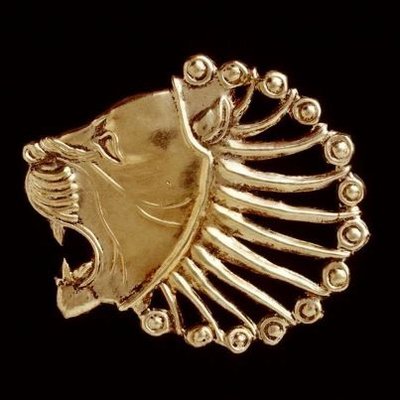
Tucked away in the sands of western Inner Mongolia, China, lie the haunting ruins of Khara Khoto, also known as the "Black City."
Founded in 1032, this place was once a bustling trading hub along the Silk Road. But by the late 14th century, it mysteriously fell silent, possibly due to warfare or a diverted water source. Buried under sand for centuries, Khara Khoto was rediscovered in the early 20th Century, and with it came a trove of fascinating artifacts—religious texts, artwork, and everyday items that give us a peek into the life of this long-lost city.
#drthehistories

Orrin Tiberi retweeted
Globally, of the 39.9 million people living with HIV, 30.7 million are receiving treatment. That's 77%.
A significant public health achievement!
The end of AIDS as a public health threat is in sight.
Find out more about the current status of HIV: crossroads.unaids.org

ALT 30.7 million people living with HIV globally are on HIV treatment