
Lawyer who likes Paine/Henry/Jefferson-type liberty. Former @google. Math @Cornell, JD @uw_law, LL.M. in Admiralty @TulaneLaw. Licensed in CA/WA/WY/CO/ND/TX.
Bellingham, Washington
Joined April 2008
- Tweets4.4K
- Following797
- Followers285
- Likes13.8K






O.Shane retweeted

J’ai entendu dire que la France était finie, qu’il était trop tard pour la sauver.
Mais la France est toujours aussi belle, enviable même. Sa grandeur n’a pas disparu, elle ne demande qu’à renaître.
Nous avons surmonté en un an un problème cent fois plus grave, sans avoir les moyens dont dispose la France.
La France pourrait y arriver en une semaine.
O.Shane retweeted

America has a gun
With (very few) apologies to Brian Bilston
England is CCTV.
France, a cop with lock and key.
Greece, once free, now bends the knee.
But, America has a gun.
Sweden jails the ones who fight.
Germany fines bad words at night.
Spain forbids the wrong to write.
But, America has a gun.
Holland fines what words you say.
Canada takes your knives away.
Australia says, "you must Obey."
While America has a gun.
Japan will bow and not resist.
Scotland bans what they won’t miss.
Freedom bleeds, but still exists
Because America has a gun.
Better risk the fatal cost
Than find that liberty was lost.
The price is high,
The fight, embossed
Because America has a gun.
This quoted post is unavailable.
O.Shane retweeted
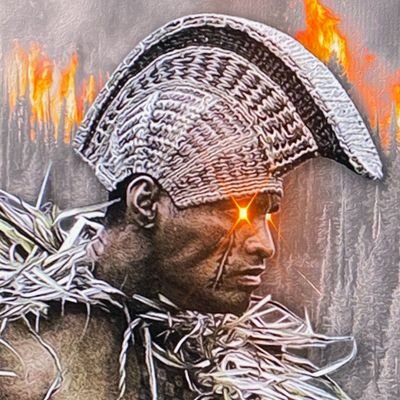
BREAKING: Tesla's Roadster flips off a ramp and hovers back to the ground.
"Flying cars are real."
O.Shane retweeted

A retired NASA engineer who had worked on the Space Shuttle program for 25 years was hired by SpaceX at age 62. He described the first week as the most disorienting experience of his professional life.
At NASA, a design change required 3 meetings, 2 committees, a review board, and 6 to 18 months of documentation. At SpaceX, his new supervisor said "if it works, build it. If it doesn't, change it by Friday."
He sat at his desk after the first day and called his wife. He told her he felt like a man who had been swimming with ankle weights for 25 years and someone just cut them off. He could move. He could decide. He could build something in the morning and test it in the afternoon. The constraint that he had accepted as the nature of aerospace engineering turned out to be the nature of bureaucracy.
Within 6 months he had contributed to more design iterations than he had completed in his last 5 years at NASA. Not because he was working harder. Because the time between having an idea and testing the idea collapsed from months to hours. The same brain. The same knowledge. A different operating system.
He described a specific moment where he proposed a modification to a Raptor engine component. At NASA, the proposal would have entered a queue. At SpaceX, the modification was machined by the end of the day and tested by the following morning. He watched his idea become a physical object in 18 hours. At NASA, 18 hours would not have been enough to schedule the first meeting to discuss whether to schedule a meeting.
He told an interviewer: "I didn't get smarter when I went to SpaceX. I got faster. The intelligence was always there. The system was in the way."
The difference between SpaceX and NASA is not talent. NASA has extraordinary talent. The difference is the time between a thought and a test. SpaceX compresses it. NASA elongates it. The same engineer produces 10x more at SpaceX than at NASA because the bottleneck was never the engineer. It was the meetings about the meetings about the work.

O.Shane retweeted

Like watching an AI play chess: beautiful but impossible to fully grasp. The patience, precision, and tossing grasp are beyond us.

Things are about to get alien.
Look at this proof. The answer isn't the crazy part. It's how it got there. The key step connects two ideas that no human thought were connected. Mathematicians reading it call it alien math. It works, it checks out, and it still feels like it came from somewhere else.
This is the beginning of alien math. Proofs that are correct but don't think like we do.
And it won't stop at math. Alien physics is next. New ideas about how reality works that no human would have come up with. Theories that work but feel like they came from another civilization.
After that, alien chemistry. Alien materials. Alien medicine. Alien engineering.
We're not just getting faster science. We're getting a different kind of science.
This is the least alien it will ever be.


O.Shane retweeted

And now for something totally different.
Imagine you’re involved in a legal battle overseas — whether in Europe, Latin America, or Asia — and you know critical evidence or witnesses are sitting in the United States. What if you could use American courts to get that evidence, even if your main case isn’t happening here?
That’s exactly what Section 1782 (28 U.S.C. § 1782) lets you do. It’s a powerful, often overlooked U.S. law that allows people, companies, or foreign courts to request documents, testimony, and other evidence from anyone in the United States for use in legal proceedings abroad.
This guide — written by me — breaks down how Section 1782 actually works in plain English. Whether you’re a business owner, executive, or international lawyer trying to level the playing field in a cross-border dispute, you’ll find clear explanations, real-world examples, strategic tips, and the latest developments.
O.Shane retweeted

Breaking: Michael Burry says the AI boom is running on one giant loop and time is running out
Here's his breakdown:
1. Burry shared a report from Wall Street lender Ares tracking $573B of AI financing from the last 12 months
2. All of it runs through just 8 companies: Meta, Oracle, Microsoft, Amazon, OpenAI, Anthropic, Broadcom and Nvidia
3. They lend to each other, guarantee each other's debt and buy from each other, so one company's loan is backed by another company's promise to keep spending
4. Every deal depends on one thing: AI spending never slowing down
5. If AI revenue disappoints for even one season, the guarantees could all get called at once, right when the companies backing them are at their weakest
6. Burry says it's the same circular financing that turned the 2000 telecom fiber boom into a bust
Burry claims the stock market in the first stage of grief and the crash is soon

O.Shane retweeted

Building at scale directly on the ocean is just a matter of repurposing existing technology with a few modifications.
Monolithic and others have been building up to 400ft diameter self supporting domes for the past 50 years.
The process is simply inflating a giant airform, spraying concrete inside, and removing the airform.
At sea this method can be used to make a variety of large scale shapes, including domes and towers, and spraying Ultra High Performance Concrete (UHPC) provides an incredibly strong and impermeable shell with a 100+ year life in seawater.
It’s not a big leap to go from land to sea with these methods to build floating communities of thousands of people each that can join and separate to form thousands of new cities.


O.Shane retweeted

People don't understand Napoleon's insane work ethic. Napoleon had secretaries rotating shifts so that he could wake up in the middle of the night and start dictating. Napoleon would sleep 3-4 hours on campaign in 15-30 minute segments so he could always be giving orders. Napoleon would read for 12hrs+ on abstruse subjects in a single day. Napoleon would position cannons himself when he saw soldiers not manning them. You think you're working hard enough but you're not. When you study the greats of history you realize the true level of output that it takes to be known by posterity.
O.Shane retweeted

America’s corporate governance system is broken, and it’s killing public companies. Look no further than Cracker Barrel: Decades of brutal mismanagement have seen one incompetent CEO after another walk away with a massive paycheck while customers and actual shareholders take a beating.
Why does this keep happening? Because proxy advisory firms like ISS are corrupt. They blindly rubber-stamp failing boards year after year, protecting the corporate elite while burning shareholder value to the ground.
The root of the rot is index funds. There's no question that indexing one's money is a smart financial move for most people. But just because you passively index your investments doesn't mean your corporate votes should be handed over to the managers of your fund so they can play politics. Right now, passive funds hold massive, unchecked voting blocks while having zero skin in the game themselves.
It is time for a simple rewrite of the rules: We need to index the votes of index fund investors.
Passive index funds should be forced to automatically split their votes to proportionately mirror those of retail and active institutional shareholders — the people actually doing the research, risking their capital, and fighting for performance in the companies they hold shares in. No more rubber-stamping. A change like this will immediately strip corrupt gatekeepers like ISS of their toxic influence.
True accountability happens when lazy, overpaid boards actually answer to the stakeholders they represent, rather than screwing them over.
Actual, logic-driven governance when your money is passive happens when your vote passively follows the voting decisions of the actual market.
We need to stop letting passive capital protect active incompetence. By stripping index funds of their arbitrary voting power and empowering engaged investors, we will finally torch corporate cronyism and usher American capital markets into a golden age of capitalism.
O.Shane retweeted

“The American culture is we start from scratch, and we beat you”
- Lee Kuan Yew, describing the USA


O.Shane retweeted

Helen Andrews recently made an observation that stopped me mid-scroll.
She pointed out that in the late Soviet Union, the 60s and 70s, not the Stalin era, no one was being thrown into gulags anymore. But it was still oppressive. Why?
Because the government had a clear, specific ideology, and it embedded that ideology into every institution. Every factory, every academic institute, every workplace had a commissar whose entire job was to enforce the Party line.
Her argument: We have that today. It's just called HR.
Any institution with more than 10 employees likely has an ideological enforcer on staff. The government doesn't just ask for legitimacy anymore, it demands acceptance of a specific ideology. It's evangelical about it. And that, Andrews argues, is fundamentally incompatible with what America was founded on: freedom of thought and freedom of philosophy.
Whether you agree with her or not, the structural parallel is hard to ignore:
• A mandated belief system
• A dedicated enforcer in every institution
• Dissent treated as a disciplinary matter
Her conclusion: You cannot have solid, independent, Republican citizenship if the government has an ideology it feels compelled to enforce on you.
Do you think workplace ideological enforcement has gone too far, or is it a necessary part of running a modern institution?

O.Shane retweeted

At Ground Zero, after the last living person was pulled out, the search dogs stopped eating.
So the police did something nobody had written down in any manual.
They climbed into the rubble, lay down, and pretended to be alive.
More than 300 dogs worked the World Trade Center site. They came from every corner of the country, on trucks and in cargo holds, with handlers who had been trained to do one thing. Find people who are still breathing under the ground.
That is what a search and rescue dog is built for. Not bodies. Life. They are trained on live human scent. When they find it, they bark, they dig, they light up, and the handler rewards them, and the whole thing means something.
The last living person recovered from Ground Zero was a woman named Genelle Guzman-McMillan. She had been buried for 27 hours. A dog found her.
She was the last.
After that, the dogs kept going out on twelve-hour shifts, across sixteen acres of smoldering steel, at temperatures that burned their paws, and they found nobody.
Nobody.
Day after day.
The handlers noticed it first. The dogs were changing. Their tails were down. They were not eating. They would come off the pile and lie flat and not look at anyone.
A veterinarian named Cindy Otto, who spent ten days there working night shifts to care for the animals, put it plainly. The dogs had been sent to find life, and every day they were finding the opposite.
It was breaking them.
An NYPD officer named Famiglietti described what happened next.
They pulled everybody off the rubble. Then they asked for volunteers.
The volunteers, police officers, went out into the debris and hid themselves. Under beams. In voids. Curled up in pockets of concrete. They were told to lie down like they were hurt. Then the handlers sent the dogs in.
Picture that.
A grown man with a badge, a man who had spent the last week pulling friends out of that same pile, lying down in it on purpose. Face down. Holding still. Waiting for a dog.
And the dog comes over the top of the wreckage, and catches the scent, and barks, and digs, and finds a person who is warm and moving and alive.
And the handler says good girl, good boy, and the whole team celebrates.
They called them mock finds.
They did it for the dogs.
They did it so the dogs would remember what they were for.
One of those dogs was a two-year-old golden retriever named Bretagne. She came from Texas with her handler, Denise Corliss. It was her first deployment. They worked ten days at Ground Zero. They found no survivors.
But firefighters would come off the pile, stone-faced, not speaking, and see the dog, and something would break open in them. They would kneel down. They would put their face in her fur.
One day a man walked up to Bretagne and started petting her. He told Corliss his best friend loved golden retrievers.
Corliss asked where his friend was.
The man pointed at the pile.
"He's in there somewhere."
He kept petting the dog.
Bretagne went on to work Hurricane Katrina and Rita. She retired at 10. She was the last known surviving search dog of 9/11.
On June 6, 2016, at age 16, she was carried into a veterinary office in Texas to be put to sleep.
Outside, a dozen firefighters from her fire department stood in a line in their dress uniforms, in the heat, and saluted as she went past.
They draped her in an American flag on the way out.
Three hundred dogs went into that pile looking for the living.
They found one.
And when they could not find any more, the men they worked beside laid down in the rubble and let themselves be found, so the dogs would not lose heart.
That is the whole story of Ground Zero, really.
Nobody could save the dead.
So they saved each other. 🇺🇸
O.Shane retweeted
After September 11, more than a million tons of the World Trade Center was loaded onto barges and shipped to a garbage dump on Staten Island.
Then hundreds of men and women stood at conveyor belts for ten months and picked through every ounce of it by hand.
They were looking for people.
The place is called Fresh Kills. For fifty years it was the largest landfill in the world. It took its last barge of household trash on March 22, 2001, and shut down for good. New York was finally done with it.
Five and a half months later, at two o'clock in the morning on September 12, the landfill's director got a phone call at home. He had just walked in the door.
Two trucks were at the gate. They were carrying pieces of the World Trade Center.
He drove back.
The man who ran the dump would later say, without any drama, that if Fresh Kills had not been closed, this could never have happened. There would have been no room. The garbage would have been in the way.
The site was empty. So that is where the towers went.
Here is how it worked.
At Ground Zero, cranes and grapplers lifted the debris into dump trucks. The trucks drove to a pier on the Hudson. There, the load went onto barges, six hundred tons at a time. The barges were towed down the harbor, past the Statue of Liberty, to Staten Island. More than fifteen hundred barges made the trip.
At Fresh Kills, sanitation workers unloaded them onto a hill.
And then the sorting began.
The debris was mechanically screened into three sizes. Chunks bigger than eight inches. Two to eight inches. A quarter inch to two inches. Anything smaller than a quarter of an inch, the size of a fingernail, fell through the last sieve.
Everything above that size went onto a conveyor belt.
And along the belts stood the detectives.
NYPD. FBI. Port Authority police. Medical examiners. Dressed head to toe in white Tyvek suits, in masks, in gloves, on a hill that stank of jet fuel and pulverized concrete and things nobody wanted to name. Looking down at the belt, hour after hour, as the towers rolled past them a fist-sized chunk at a time.
When they saw something, they reached in and took it, and placed it in a white bucket at their feet.
A wedding ring. A photo ID. A set of keys. A shoe.
A piece of a person.
The white buckets went to a tent that served as a morgue.
The volume was beyond comprehension. In mid-September the operation was processing 1,750 tons of debris a day. By mid-October, 17,500 tons a day. Ten times more. Round the clock. The 200-acre hill was declared a federal crime scene and stayed one for ten months.
A retired NYPD detective later wrote down what a shift looked like, because almost nobody outside knew it existed.
You wake at 3 a.m. You get a giant coffee. You drive two hours in the dark from Orange County, through New Jersey, to Staten Island. You park at the bottom of a hill that looks like the end of the world. You put on the white suit. You go to your belt. You stand there. You look.
Then you drive two hours home and do it again tomorrow.
Sanitation workers pulled sixteen-hour shifts, seven days a week. One of them, a supervisor named Barry Asnes, said afterward what kept him there. We were attacked on our own soil, in the city where I was born. This was personal.
The operation did not stop for weather. It did not stop for Christmas. It ran until July 2002. Ten months.
By the end, the men and women on that hill had recovered thousands of human remains. Tens of thousands of personal effects. Wallets, badges, wedding bands, photographs, all cleaned and catalogued and returned to families who had nothing else to bury.
When they were finished, the remaining material was placed in a 48-acre section of the landfill, a mound two hundred and twenty-five feet high, and covered.
It is a park now.
Many of the men and women who stood on that hill have lung disease. Asthma. Cancer. PTSD. The air they were breathing, eight and ten and sixteen hours a day, was full of the towers. Some of them have died of it.
Almost nobody knows their names. Almost nobody knows the place.
Mention Fresh Kills and 9/11 in the same sentence, the retired detective wrote, and most people will have no idea what you are talking about.
Here is what you should know.
Two thousand seven hundred and fifty-three people were murdered in those towers. Only about six in ten have ever been identified.
Every one of those identifications came out of a white bucket.
Every wedding ring returned to a widow. Every badge returned to a firehouse. Every fragment of bone matched to a name and buried with a headstone instead of a question mark.
Somebody in a white suit, standing at a belt on a garbage dump at four in the morning, reached into the World Trade Center as it rolled past, and picked that person up, and put them in a bucket, and sent them home.
They did that for ten months.
Nobody applauded on the hill. There was nobody to watch.
They did it anyway. 🇺🇸