

Assistant Research Professor -@UAZPublicHealth
Tucson, Arizona
Joined July 2009
- Tweets699
- Following545
- Followers268
- Likes245





Onicio Neto retweeted

Empowering rural communities for cholera outbreak detection using participatory disease surveillance! 🌍 Dr. Onicio Leal Neto shares his study in JMIR Public Health and Surveillance. Learn more: hubs.la/Q02YY_YG0
#MyJMIRResearch @onicioneto @UAZPublicHealth

Onicio Neto retweeted

Researchers from ETH Zurich, EPFL and the ISI Foundation are developing a wearable tracking system for healthcare facilities that can identify the risks of infections. Initial tests in Switzerland and Africa show its potential. 💓 brnw.ch/21wHmgO #TrackingSystem #COVID19

Our new paper is out about our perspectives on digital transformation of Public Health and huge opportunities for non-communicable diseases.

JMIR Public Health: #Digital Transformation of #PublicHealth for Noncommunicable Diseases: Narrative Viewpoint of Challenges and Opportunities dlvr.it/T1sXfQ

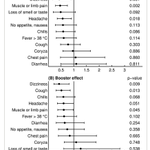
Our new study is out! It shows hybrid immunity reduces certain symptoms during SARS-CoV-2 breakthrough infections. Additionally, booster doses further lower symptom frequency. Key findings in the ongoing fight against #COVID19. Access full paper here onlinelibrary.wiley.com/doi/…

Excited to kick-start our groundbreaking scientific project in Africa, leveraging the power of #DigitalContactTracing to foster pandemic preparedness. Stay tuned for an exclusive sneak-peek into our project. cc @SrdjanCapkun @ciro @BorisDanev @carmelatroncoso @CSatETH
Had an amazing Sunday! Implemented #ChatGPT via MacOS terminal using #Homebrew & @OpenAI API. Its intelligence, understanding #GlobalFluView's importance for pandemic preparedness, blew me away! 🚀 Check globalfluview.org for real-time flu trends. #AI #PublicHealth
💥Our latest article comparing participatory surveillance (PS) and traditional surveillance (TS) data on COVID-19 infection rates in 9 Brazilian cities. PS data can be used for early detection and combined with TS data to increase accuracy in forecasting models. (1/5)
In our data, forecasting models integrating both approaches increased accuracy up to 3% relative to a 14-day forecast model based exclusively on TS data. Furthermore, we showed that PS data captured a population that significantly differed from a traditional observation. (4/5)
Our results shed light on the potential advantages and limitations of using Participatory Surveillance data. Link to the paper: publichealth.jmir.org/2023/1…
(5/5)
@glichand @danielapaolotti @jmirpub

New paper alert 🚨
Latest result from our healthcare workers cohort in eastern CH.
Booster vaccination might further reduce both the risk of Omicron breakthrough infection and the number of reported symptoms, although this benefit fades over time.
journals.plos.org/plosmedici…
Onicio Neto retweeted

#Remotelearning CAUSED worse learning outcomes during the pandemic, above and beyond other direct effects of #COVID19 and longer #schoolclosures CAUSALLY magnified these effects.
New paper from @glichand and @onicioneto in @NatureHumBehav 👇:
socialsciences.nature.com/po…
Excited to see our paper on the impact of remote learning in Brazil during first year of pandemic!

Lichand et al. find that remote learning in São Paulo during the pandemic substantially decreased learning outcomes. Middle and high school students learned 27.5% of the in-person equivalent and dropout risk increased by 365%. @glichand @onicioneto
buff.ly/3GjJ69n

Onicio Neto retweeted

Study found no association bw reopening schools & #COVID19 incidence or mortality in São Paulo State, Brazil, in a context where aggregate mobility was substantial even in absence of in-person classes. #AnniversaryMonth ja.ma/3smKDpk @glichand @onicioneto @joaocossi


Onicio Neto retweeted
Cross-sectional study found no association between reopening schools during the #COVID19 pandemic incidence or mortality in São Paulo State, Brazil, in a context where aggregate mobility was already substantial even in the absence of in-person classes. ja.ma/3HLYrQ3
Paper nosso que acabou de ser publicado na JAMA Health Forum mostrando que a reabertura das escolas não contribuiu para os casos ou mortes de COVID-19 no estado de São Paulo.
This Post is from an account that no longer exists. Learn more
Paper alert: our multicentric cohort showing evidences that respirators compared to surgical masks may convey additional protection from SARS-CoV-2 for HCW with frequent exposure to COVID-19 patients.
aricjournal.biomedcentral.co…

no Twitter, a pandemia trouxe dois tipos de divulgadores científicos: os que são pesquisadores, continuam publicando e sendo citados, e ainda utilizam seu tempo para comunicar a ciência por aqui (1/2)