




Everyone is building a spend cap for AI agents this month. Examples:
* Hackathon team, because Razorpay's SDK, MCP server, and CLI have no concept of a spend cap for an agent (their words)
* A Reddit builder, with a policy + authorization layer between intent and signature ("I don't want a $100 approval to silently become a $101 approval")
* Mastercard, with Agent Pay checks that run before authorization
* Nvidia, with a hardware watchdog that quarantines an agent that leaves its boundaries
So from individual hackathon participants to one of the biggest AI companies in the world, everyone is interested around authorization limits!
The good news: Aegis already does this, on chain, with the guidelines you choose:
* Spend limits, time windows, transaction counts
* Allowlisted tokens, protocols, chains
* Enforced inside the transaction's validation step
* Outside the policy? It reverts.
Aegis is now live on Base. Free during early access.
Save yourself the hackathon (and the headache): projectaegis.ai/

Claim: In the AI-era, blockchain protocols need rapidly evolving intelligence.
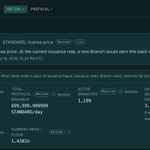
Evidence: Standard Researve launched on X, and we were able to wrap an intelligence layer around their newly minted contracts within hours (see tsr.onesource.io)
But that was just the start!
Unlike previous crypto cycles (where new features were shipped quarterly or monthly), Standard Reserve was able to fast-follow with their launch with multiple significant releases (within weeks, sometimes day).
Examples:
* v1.1 preserved the retired license auction's sales next to the replacement contract's history.
* v1.2 showed the live charter auction as it runs, bids, fills, and cancellations are indexed; and S-Bills, with the exit fee estimated for any amount before you stake.
OneSource detected and upgraded its intelligence layer with each release.
The new meta isn't just to empower users protocol by protocol, but iteration by iteration.
Are you looking to provide your protocol users with up to date APIs and MCP servers? DM us for more information.
A fixed amount, to one approved address, on a set schedule. That's the whole payroll promise.
Keeping an autonomous agent to that promise is the hard part. One bad prompt and it can send funds nobody approved.
Aegis closes that door by coding spending rules directly into the wallet. Wrong amount, wrong recipient, the transaction just doesn't go through.
The best version of payroll is the one you don't think about. Everyone gets paid, nothing goes wrong, and you don't hear a thing about it.
Here's how we built it: onesource.io/blog/aegis-smar…
We've added more ways to look at @standard_rsv on frontend at tsr.onesource.io and via our API at api.onesource.io.
Want out of an S-Bill early? Enter the bill ID at tsr.onesource.io/decide/sbil…. You'll see the exit fee today and for every day until the bill matures. We checked it against the contract's own exit quote on all 218 open bills, and the numbers match.
Bidding on a license? tsr.onesource.io/decide/bid shows when the auction price will reach your max and how many bids are ahead of yours. The full book is at tsr.onesource.io/protocol/au….
Thinking of selling? tsr.onesource.io/decide/exit now shows what the same STANDARD would earn if you staked it in an S-Bill instead.
The expansion vault moved into a 2-of-4 multhere and counts both its ETH and its USDG.Both numbers match the vault's on-chain balance.
/v1/flows/protocol shows where the protocol's money goes: tax forwards, buybacks, fee collection, liquidity pairing, team claims and transfers out of the vault.
Some of the contracts' events never had a published signature. We matched the hashes ourselves, so every event now shows up by name.
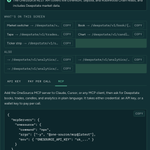
For agents: /v1/decisions/sbill, /v1/decisions/bid and /v1/flows/protocol in the API, or the matching 1s_std_* tools in npmjs.com/package/@one-sourc… (5.23.0).

We've updated our @standard_rsv frontend (tsr.onesource.io) and API (api.onesource.io) for S-Bills, the protocol's new fixed-term staking.
Now you can see what you'd lock in before you stake. Enter an amount at tsr.onesource.io/decide/stak… for the rate per term, the premium you'd earn at maturity, and the fee if you left right away.
Leaving early currently costs 2% to 15% of principal, depending on how much has left S-Bills in the past week. We estimate that fee for any amount. Our estimate currently matches the contract's own quote on all 94 open bills. You can check any bill at /v1/sbills/bills/{id}.
Every bill, with its rate and maturity, is at tsr.onesource.io/protocol/sb…. Enter an address at /decide/wallet to see what it has staked.
The S-Bill contract's source code isn't public. We read its interface from the deployed code and checked every event against the chain before indexing it.
Feed the data to your agent with /v1/sbills/* in the API or 1s_std_sbills_* tools in @ one-source/mcp 5.22.0.
OneSource retweeted

GM.
It’s a strong ‘Manufacturing Monday’. 🇺🇸
The latest ISM data shows U.S. manufacturing expanding for the ninth consecutive month.
September Manufacturing PMI: 54.5
New Orders: 55.3
Production: 56.7
Employment: 52.7
Backlog of Orders: 51.1
Prices: 77.9
Five of the six largest manufacturing industries expanded during the month.
But more manufacturing also means more materials, suppliers, testing, certifications and documentation moving through increasingly complex supply chains.
As manufacturing scales, so does the need to establish what a product is, where its inputs came from, whether requirements were met and whether the evidence supporting those claims can be trusted.
Manufacturing capacity matters.
So does the integrity of the data behind it.

Most of the agent-payments conversation is still about capability:
* Can an agent hold a wallet? Credit card?
* Can it pay per call? API key?
* Can it settle in stablecoins?
The industry has largely answered these with multiple solutions for each.
The question beyond them is still wide open. CAN and SHOULD should we trust an agent with a wallet in the first place?
The common answer so far? A slow, after-the-fact process.
* Log the transaction.
* Alert human.
* Fix and reconcile (if possible).
That works at human speed, which is no longer acceptable in an era where thousands of agent swarms are attacking Huffing Face (and, soon, other apps and protocols).
The alternative is to bind the authority BEFORE the agent acts!
This can be done with a policy written and enforced on the chain during the execution path.
Outside the policy? The transaction reverts. Here's the key point...
There is nothing to review because there is nothing to undo.
That is what we built Aegis for. Spending and usage guardrails for both sides, buyers and merchants, checked where the transaction happens rather than in a dashboard after the fact.
Get started today at projectaegis.ai/
We've updated our @standard_rsv frontend (tsr.onesource.io) and API (api.onesource.io) for S-Bills, the protocol's new fixed-term staking.
Now you can see what you'd lock in before you stake. Enter an amount at tsr.onesource.io/decide/stak… for the rate per term, the premium you'd earn at maturity, and the fee if you left right away.
Leaving early currently costs 2% to 15% of principal, depending on how much has left S-Bills in the past week. We estimate that fee for any amount. Our estimate currently matches the contract's own quote on all 94 open bills. You can check any bill at /v1/sbills/bills/{id}.
Every bill, with its rate and maturity, is at tsr.onesource.io/protocol/sb…. Enter an address at /decide/wallet to see what it has staked.
The S-Bill contract's source code isn't public. We read its interface from the deployed code and checked every event against the chain before indexing it.
Feed the data to your agent with /v1/sbills/* in the API or 1s_std_sbills_* tools in @ one-source/mcp 5.22.0.


Giving an AI agent a wallet is the easy half.
The questions people keep arriving at...
1. How much economic authority are you willing to delegate?
2. What happens the first time the agent is wrong?
3. How much $$ are you willing to put at risk given 1 and 2?
The key issue: being able to complete a purchase is not the same as having the authority to make it!
Attack Vectors:
* An honest mistake in prompt
* Malicious prompt injection
* Bad data source
* Bug in the code
* Weak spending limits
All of this becomes a problem in dynamic markets at machine speeds!
Approval after the fact is not a control.
This is why Aegis puts necessary constraints in the execution path.
* Write a policy.
* Bind the agent to it.
* The chain enforces it before the transaction.
* Outside the policy, it reverts.
Live in beta. Link below to get started.
projectaegis.ai/
Give an AI agent a budget and it'll find ways to spend it efficiently.
Sounds good, until you realize "efficiently" is the agent's call, not yours.
And there's usually no way to catch a bad decision before the transaction's already settled.
Aegis enforces spending rules at the point of transaction, not after.
We walked through exactly how, using a live Venice AI integration: onesource.io/blog/control-ai…
We've updated our @standard_rsv frontend (tsr.onesource.io) and API (api.onesource.io) for protocol v1.2.
Now you can see the charter auction as it runs: today's price, when the next day opens, what each past day closed at, and whether a license or a charter is the cheaper way to open a branch right now. tsr.onesource.io/decide/char… and /v1/auctions/*.
v1.2 also added auto-bidding to the license auction. Bids, fills and cancellations are indexed, and a filled bid counts as one sale.
Both auctions moved to new contracts in v1.2. We now read their addresses from the protocol's own AddressRegistry on every run, so the next move is picked up automatically. If the registry and our data ever disagree, /v1/data-health says so, and tsr.onesource.io/protocol/go… shows every registry address.
Sales history carries across all three LicenseAuction generations, and the retired contracts stay in the contract directory so earlier purchases remain attributable.
Protocol v1.2 upgrade is here.
1. Limit orders for branch auctions. Users can now place bids at their desired auction price. It is an open orderbook and execution price is FCFS best attempt by a keeper.
2. Charter auctions begin. There will be 1 charter auctioned at the same cadence as the branch auctions. The first charter auction starts at 5.5 ETH and will open at 3x clearing price for the following auctions.
All changes have gone through a security review.
When new protocols launch onchain, there is often a steep learning curve to use them.
Well, what about using an AI agent?
This is still a big challenge because they can't make decisions and take actions on data that's not available.
Worse, what if they pick the wrong contract and get scammed?
This is where OneSource Flex shines. We can quickly easily index verified contracts and use them to power dashboards, APIs, MCPs, and anything else humans and agents need to use these protocols.
Checkout our recent example with @deepstatesh, a novel DEX native to Robinhood chain: onesource.io/blog/robinhood-…

We've updated our Deepstate @deepstatesh indexers, API and MCP tools to be DGP-3 compliant.
New routes /v1/token/2deep and /v1/migration track supply and redemption progress, and one-source/mcp 5.20.0 adds 1s_ds_token_2deep and 1s_ds_migration.
The same data can be found via our frontend at deepstate.onesource.io.

Introducing $2DEEP.
One token for Deepstate governance and rewards, bringing $DEEP and $STATE together.
deepstate.sh/govern/dgp-3
We’ve updated our @standard_rsv frontend (tsr.onesource.io) and API (api.onesource.io) for protocol v1.1.
/v1/vaults/* and /v1/backing/* now report incentives_vault_std_raw - the STANDARD balance held in the new incentives vault, where v1.1 forwards POL buybacks.
We also preserved sales from the retired LicenseAuction alongside the replacement contract’s history, surfaced the new twice-daily auction cadence, and aligned license-cap calculations with the new auction windows.
Other updates include charter-holder flow analytics at /v1/flow/charters, exact exit-fee expiry schedules, richer auction-day aggregates, and improved supply and decision dashboards.
Protocol v1.1 updates go live today. There are 3 specific changes:
1. There are 2 license auctions a day, 12H durations at 50 branches each. There is still a limit of 3 branches per 24H per charter.
2. Faster price curves, auction half life is now 2H.
3. Bid-side only POL. The POL vault used to pair both ETH and token side liquidity. It will now only pair bid side liquidity by buying tokens off the market and sending those tokens to a new protocol owned incentives vault.
All changes have gone through a security review.

The Standard Reserve launched Monday as did the first iteration of tsr.onesource.io and our accompanying API endpoints + MCP tools.
Since then we've shipped additional endpoints and MCP tools that help you decide how to engage with @standard_rsv.
Ask one question, get one answer:
· Buy a Branch license now, or wait for tomorrow's auction? Live price, cost in ETH and USD, and when the next day opens.
· Exit or hold? Your exit fee to the wei, realizable ETH after tax, and where the fee curve goes next.
· Buy a Charter? Auction state, backing per token, and what the reserve holds.
Plus a strategy planner that simulates keep / selective / aggressive Branch buying over any horizon, seeded from live state.
Every number carries its basis: measured on chain, derived by a stated formula, or inferred from bytecode, with the tax hook and token now verified against published source.
47 routes, 37 MCP tools for your agent, pay per call in USDC. Free address registry.
See the data at tsr.onesource.io or feed it to your agent via our API + MCP tools at docs.onesource.io/getting-st….

OneSource retweeted

This is outstanding! We love how people are trying to build solutions for @standard_rsv.
We've also analyzed all 12 contracts and build a dashboard + API/MCP to assist. Here are a few things in our data set that might be useful to connect into your skill:
- Time series: epochs, supply ledger, vault snapshots, exit-pressure history, hourly pool flow, OHLC candles, auction sale history, genesis mints.
- Decision datasets: realizable exit quote, exit fee curve and forecast, policy outlook, license cost in ETH with price impact, license headroom, buyback readiness, issuance runway, holder concentration, dormancy bounties, governance change log, per-wallet view.
- Prices from our own indexed swaps, and block-stamped.
- Raw decoded events.
More info here w/link to API. It's super easy to get started xitter.cf/onesource_io/status/20….
Also happy to chat! If there's anyway we at @onesource_io can support/help, let us know.
Good evening Standard Reserve minters and bidders...
Hot off the presses, we have begun indexing the @standard_rsv contract and providing data.
API and MCP access via npm are being published now.
You can access now at tsr.onesource.io. Updates will be rolling out over the next hour.
Reputation and trust are required to grow and sustain large, mature economies.
As the AI-agent space grows from early adopters to large ecosystems of merchants, we need to have robust tools and solutions for ecommerce to thrive (without fear of funds being lost or stolen).
At OneSource, we've built Aegis for that future. We already have demonstrated spending and usage guardrails for both types of AI-agent: buyers AND merchants.
More on this in our recent article.
onesource.io/blog/project-ae…

OneSource retweeted
👋 Also cooking up tools, APIs, and MCPs for the community.
If anyone in the replies have any requests, tag and let @onesource_io know!
We have about 10 new upgrades hitting the agent NPM package today.
xitter.cf/ZanzibarVenturz/status…

GM ☕️
Shoutout to @standard_rsv. This has been a ridiculously fun project to watch.
I’ve also had way too much fun playing with the @onesource_io API and digging into the public onchain data around STANDARD and the charter auctions.
A few characters started to emerge from the data:
🐋 #888, the impatient whale. The only charter to max its cap both nights. Six licences, seven branches, more than anyone in the system. Bought all six within four minutes of the open both nights. Average price: 17,802 STANDARD.
🧘 #841, the patient one. Bought the final licence of night one at 11,888, the cheapest sold so far. Then waited 176 minutes on night two and took the final three. Average price: 14,059 STANDARD.
Same product. Same auction mechanics. 27% difference in average price.
And then there’s #160, which might be my favorite.
It bought 4 seconds after night two opened, then again 6 seconds later, paying 23,770 and 23,764 STANDARD. Then came back 2h43m later at 15,335 and averaged itself down about 12%.
The broader stat is even better:
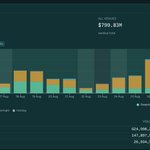
Night two high: 23,766 STANDARD
Night two low: 14,765 STANDARD
Difference: 61%
Identical product. Same night. The big variable was patience.
Really interesting mechanism to watch play out in public.
And for clarity: I have absolutely nothing to do with @standard_rsv or @onesource_io. I’m just a degenerate participant who wasn’t whitelisted 😂
Congrats to both teams. Fun stuff to watch and even more fun to dig into.

OneSource retweeted
Access to high-quality, enriched data is critical to make buy/sell decisions in the @standard_rsv project.
@onesource_io is taking any/all requests from the community. Let us know what you need and we'll get our APIs/MCPs served up and ready for your agents.
tsr.onesource.io/
GM ☕️
Shoutout to @standard_rsv. This has been a ridiculously fun project to watch.
I’ve also had way too much fun playing with the @onesource_io API and digging into the public onchain data around STANDARD and the charter auctions.
A few characters started to emerge from the data:
🐋 #888, the impatient whale. The only charter to max its cap both nights. Six licences, seven branches, more than anyone in the system. Bought all six within four minutes of the open both nights. Average price: 17,802 STANDARD.
🧘 #841, the patient one. Bought the final licence of night one at 11,888, the cheapest sold so far. Then waited 176 minutes on night two and took the final three. Average price: 14,059 STANDARD.
Same product. Same auction mechanics. 27% difference in average price.
And then there’s #160, which might be my favorite.
It bought 4 seconds after night two opened, then again 6 seconds later, paying 23,770 and 23,764 STANDARD. Then came back 2h43m later at 15,335 and averaged itself down about 12%.
The broader stat is even better:
Night two high: 23,766 STANDARD
Night two low: 14,765 STANDARD
Difference: 61%
Identical product. Same night. The big variable was patience.
Really interesting mechanism to watch play out in public.
And for clarity: I have absolutely nothing to do with @standard_rsv or @onesource_io. I’m just a degenerate participant who wasn’t whitelisted 😂
Congrats to both teams. Fun stuff to watch and even more fun to dig into.