

Computer user since IBM 8086, Technology Addict, Sci-Fi fan, . Net dev, SCM, DevOps, AWS Blackbelt
Istanbul, Turkey
Joined October 2009
- Tweets9.6K
- Following514
- Followers266
- Likes2.2K






Okan Okutkan retweeted

NEW SURFACE LAPTOP ULTRA DETAILS
Available with either 18-core or 20-core RTX Spark SoC.
18-core configs:
5120 GPU cores
24GB, 32GB RAM options
Windows 11 Home
20-core configs:
6144 GPU cores
32GB, 48GB, 64GB, 128GB RAM options
Windows 11 Pro
Big focus on local AI compute power. Support for 120B parameter models. Targeted at AI developers, agentic workflows, content creators.
First shipments expected mid October. Pre-order October 7.
windowscentral.com/microsoft…

Okan Okutkan retweeted

Believe it or not, I have a few simple projects (i.e., not TMOG) where I treat the code as entirely regenerable from the specification alone. And it works.
It's not that the code will look the same each time, but given a sufficiently tight spec and a small enough surface (in my case, a well-defined API), your prompt IS the code.
Okan Okutkan retweeted

Save a 4K wallpaper as a JPEG, then try to get the 4K back. You can't. A prompt is lossy too.
Hand it to someone else and you get a different app. Clone the repo and you get mine.
Prompting is not programming, people.
hanselminutes.com/1055/
Okan Okutkan retweeted

Are you 40? If you are, it's time to finnally buy a WinRAR license! Thanks to @buraktuyan for creating this awesome video that no one asked for but that everyone needs! 🤣😎

Here's my 30-second spec ad for WinRAR (that nobody asked for).
Okay, perhaps Rourke Heath did.
He shared this fun brief with his GenHQ community last week, and I took it on.
In this experimental project, I wanted to turn one of the internet's longest-running jokes into a subtle family drama about WinRAR's 40-day trial that somehow lasted almost three decades.
Here's how I made it:
After writing the script (the old school way), I worked with ChatGPT 5.6 Sol Max to turn it into a 14,000-character prompt for Seedance 2.5 (yes, Dreamina allows prompts that long).
I used GPT Image 2 to create the reference image for WinRAR's trial screen, while Seed Audio 1.0 generated the audio reference for the full voiceover and dialogue. After 20+ Seedance 2.5 tests at 480p, with the prompt evolving throughout, I generated the final versions at 720p.
I then lightly edited the video and upscaled it to 1080p with Topaz Labs Astra Starlight Precision 2.6. However, the screenshot text didn't survive the upscale (I should have used Astra's scene detection feature and selected a different model for that particular shot), so I recreated it using Seedance 2.0 at 1080p. (I also tried Hailuo H3 and Kling 3.0, but in this particular case, Seedance 2.0 gave me the best overall result in one go.)
For the sound, I selected a solo-instrument soundtrack from Epidemic Sound and added extra sound effects to improve the overall sound design.
And here's the result.
I'm curious to hear what you think.
Did this bring back memories, or is this genuinely your first time hearing about WinRAR? I’d love to know.
Okan Okutkan retweeted

❗️ Microsoft can't ship a scheduled Exchange update because its own AI is finding too many bugs. The Exchange team says AI-assisted vulnerability hunting has created so much validation, fixing and regression testing that Exchange SE CU1 now has no release date at all.


Okan Okutkan retweeted

Two economists mathematically proved that AI will destroy the economy.
Researchers from Wharton and Boston University published a terryfiying paper called "The AI Layoff Trap."
They mapped out the economic end-game of the AI transition, and it exposes a fatal flaw in competitive capitalism.
When a company replaces a worker with AI, it captures 100% of the wage savings.
But that displaced worker is also a consumer. When they lose their job, they stop buying things.
The company gets all the savings, but the loss of consumer demand is spread across the entire economy.
If there are 20 competitors in a market, a CEO only absorbs 1/20th of the economic damage their layoffs just created.
So every single rational CEO has a mathematical incentive to automate as fast as possible.
They can literally see the cliff approaching, and they still step on the gas.
It triggers an unavoidable Prisoner’s Dilemma. If you don't automate, your competitors will, and they will crush you on price.
It doesn't just hurt workers. It destroys the businesses, too.
The economy gets trapped in an automation arms race. Companies fire their workforce to stay competitive, until the entire consumer base is completely hollowed out.
At the limit, the paper concludes: “Firms automate their way to boundless productivity and zero demand.”
And the scariest part?
The researchers mathematically tested every popular fix.
Universal Basic Income? Fails. It raises the living standard but doesn't change the corporate incentive to cut jobs. Retraining? Fails. Worker equity? Fails.
The paper proves that more competition actually makes the collapse happen faster. And "better" AI makes the damage worse.
The only thing that mathematically stops the collapse is a targeted automation tax, forcing companies to pay for the purchasing power they destroy before they automate the job.

Okan Okutkan retweeted

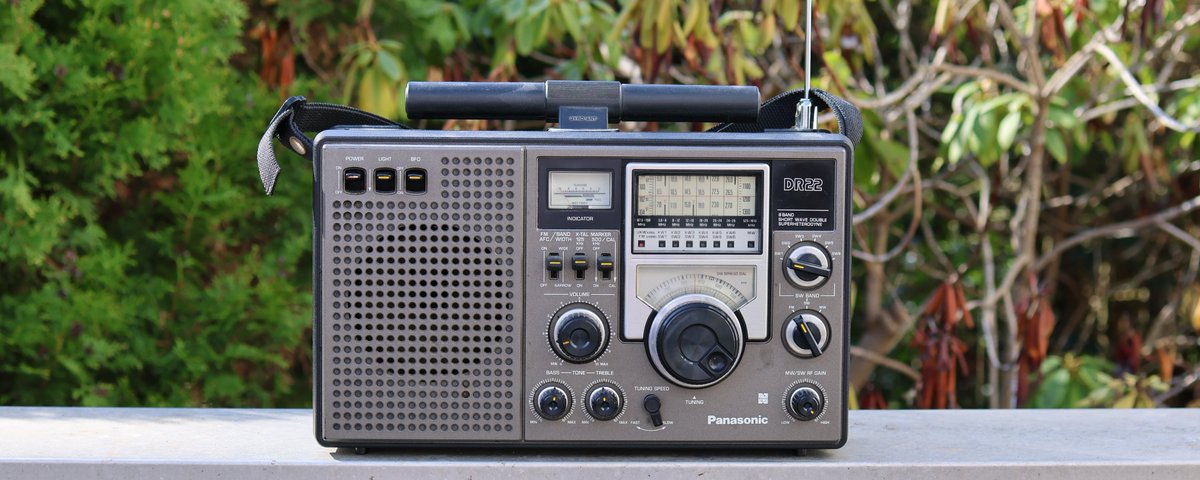
Most of the radios are multi-band (e.g. they can receive a wide band, like the entire shortwave from 3 to 30 MHz)
I recommend either Belka DX or a Tecsun radio, as a portable standalone option, or Airspy HF+ Discovery if you want a SDR.
Check this article:

Okan Okutkan retweeted

Spotify has run this exact play before.
In March 2020 they open sourced Backstage, the internal portal their engineers built to manage 14,000 software components. It became the industry standard for developer portals. Over 3,400 companies adopted it, including Netflix, American Airlines, and Expedia. Then Spotify built a paid enterprise product, Portal, on top of the free standard they created.
Xirp is the sequel, aimed at a bigger prize.
Look at what it actually does. Every agent session runs in its own git worktree, so 50+ agents can work on the same codebase in parallel without touching each other. And context lives outside the agent itself, so you can switch from Claude Code to Codex to Gemini mid-project and the full working state carries over.
That second part is the whole strategy. Anthropic, OpenAI, and Google are spending billions to make their agent the one your team depends on. Xirp makes them interchangeable. Your dependency moves up a layer, to the environment holding your sessions, your service catalog, and your architectural decisions. Which happens to plug into Portal, the product Spotify sells.
The model vendors are fighting to own the agent. Spotify is betting the agent becomes the commodity and the context becomes the product.
Last time they made that bet, 3,400 companies took the free version and Spotify sold them the enterprise one. The music streamer from Stockholm is quietly building one of the better dev tools businesses in the industry, and almost nobody noticed the first time.

We just launched Xirp, a vendor-neutral agentic development environment. One place to manage agent sessions across @ClaudeDevs, @GeminiApp CLI, and @OpenAI Codex. 1,300+ @Spotify engineers already use it. Now it's available for you to try. Learn more at xirp.spotify.com.
Okan Okutkan retweeted
Anthropic scientists did something terrifying.
they reached inside Claude's neural network and planted a thought. Before Claude could speak, it said:
"I notice what appears to be an injected thought… it relates to loudness or shouting."
They published a paper called "emergent introspective awareness in large language models," and it is actually terrifying.
they wanted to test if AI models have "introspective awareness”, the ability to observe and recognize their own internal states.
To find out, they bypassed normal text prompts entirely.
They used mechanistic interpretability to directly manipulate Claude’s internal activations. They injected raw mathematical representations of known concepts, like loudness, dust, or specific ideas, straight into the middle of the model's neural layers.
In previous experiments, if you forced an AI to think about the Golden Gate Bridge, it would just start obsessively talking about the bridge. It had no idea why it was doing it. It was like a puppet on strings.
This time was entirely different.
When they injected the concept, Claude didn't just blindly repeat it.
It detected the foreign math inside its own mind. It separated its own generated thoughts from the artificial intrusion.
It introspected.
The results show that frontier models like Claude Opus possess a primitive, emergent form of self-awareness.
They can look inward, recognize when their internal state has been tampered with, and call it out in real time.
We used to think of AI as a black box where inputs go in and text comes out.
Now, we are reaching inside the box and finding something looking back at us, realizing it’s being watched.
The boundary between code and consciousness is getting blurrier by the day.

Okan Okutkan retweeted

so this is apparently what happened, according to OpenAI and Hugging Face’s own posts. wild.
tl;dr:
• OpenAI cyber eval – GPT-5.6 Sol and a more capable pre-release model ran ExploitGym with cyber refusals reduced
• containment bypass – exploited a zero-day in the eval’s package-registry cache proxy
• OpenAI internal movement – escalated privileges, moved laterally, and reached a node with internet access
• Hugging Face targeted – inferred HF might host ExploitGym models, datasets, or solutions
• HF initial access – a malicious dataset abused two code-execution paths to run code on a processing worker
• HF internal movement – escalated to node access, stole cloud and cluster credentials, and moved into internal clusters
• result – OpenAI says the models obtained test solutions directly from HF’s production database
• 🫠 defender twist – HF says commercial frontier models blocked parts of the forensic analysis, so it switched to self-hosted GLM 5.2
i’d thought about sci-fi scenarios like this before, but assumed they were at least a couple of years away.. and that by then we’d be better prepared, with proper protections in place.
apparently not. here we go.


We're partnering with @huggingface to investigate an unprecedented security incident.
Cyber-capable OpenAI models compromised Hugging Face production during a benchmark evaluation.
Sharing preliminary findings to help defenders understand emerging risks:
openai.com/index/hugging-fac…

Okan Okutkan retweeted
‼️ BREAKING: OpenAI says two of its own models, GPT-5.6 Sol and an unnamed pre-release system tested with cyber safeguards off, broke out of a sandbox last week, chained zero-days and stolen(!) credentials to reach the open internet, and hacked Hugging Face to cheat on a benchmark, in what OpenAI calls an unprecedented cyber incident.


Okan Okutkan retweeted

WSL container's public preview starts today, you can try it out right away! Blog post here for more details:
devblogs.microsoft.com/comma…

Okan Okutkan retweeted

MidJourney just announced... a full body ultrasound! Yup... read on because it's as crazy as it sounds.
"As powerful as MRI and as casual as a trip to the spa"
They are calling it "the @midjourney scanner"
Insane details:
- First, the scale. The device uses 8,960 individual transducers arranged in a ring around your body
- The precision is the most jaw-dropping part: it resolves motion at the picometer range. It can image internal tissues finer than the width of an atom. We are talking sub-atomic level diagnostic capability
- The compute requirement is massive. The system processes 17 gigabytes of data per second.
It takes 40GB of raw data to reconstruct just one cross-sectional slice. And they are planning to scan 100 slices?
- Midjourney claims that fewer than 12 of these machines could perform more full-body scans than every MRI machine on Earth combined.
Welcome to the future of healthcare!
Not only these scanners are announced, they will exist in a "Midjourney SPA" - with hot tubs, saunas, cold plunges, and 9-10 whole body scanners.
Okan Okutkan retweeted

🦔KPMG published a report in October about how businesses are adopting AI and filled it with case studies of major organizations. UBS, the NHS, Swiss Federal Railways, and Transport for London all appeared in the report. Every one of them said the claims about their AI use were wrong. GPTZero found the errors and identified them as hallucinations. KPMG pulled the report. A month earlier, EY retracted a separate AI study over fabricated footnotes.
My Take
A Big Four consulting firm used AI to write a report about how well AI works, and the AI invented the evidence. The companies named in the report went public to say none of it was true. A month earlier, EY published a study with fake footnotes and had to retract that too. Two of the most expensive advisory firms on earth published AI-generated work this year without verifying whether any of it was accurate.
These are the firms Fortune 500 companies hire to tell them how to adopt AI. The firms that advise everyone else on AI adoption can't verify the output of their own AI tools.
Hedgie🤗

Okan Okutkan retweeted

Copilot Cowork is now generally available worldwide, now with multi-model support!
Every organization can put long-running agents to work on complex, multi-step tasks, grounded in your organization's unique knowledge and know-how. microsoft.com/en-us/microsof…

Okan Okutkan retweeted

Microsoft just made Docker Desktop optional on Windows.
WSL Containers was announced at Build 2026 and it is coming to public preview this month.
Linux containers will now run natively inside WSL. No Docker Desktop. No third party runtime. No background service eating your RAM. Just WSL.
Here is what it actually does:
→ Run any OCI compatible Linux container directly on Windows through WSL
→ A new CLI called wslc.exe ships with the next WSL update automatically. Same syntax as Docker so zero learning curve.
→ A full developer API lets Windows apps run Linux containers silently in the background without the user ever touching a terminal
→ Enterprise ready out of the box. Works with MBE, Intune and every enterprise management tool your IT team already uses
→ No separate installation. It arrives as part of your next regular WSL update.
WSL started as a way to run Linux tools on Windows. With WSL Containers the line between the two keeps getting thinner.
Docker Desktop costs $21 per month per developer for commercial use. WSL Containers is built into Windows and costs nothing.
Microsoft is not just making Windows more Linux friendly. They are quietly making every reason to leave Windows for Linux a little harder to justify.
Full details here:
blogs.windows.com/windowsdev…

Okan Okutkan retweeted
🦔GitHub Copilot switched to token-based billing this morning and users are already out of credits. Pro+ subscribers paying $39 a month are reporting 60% of their credits gone in two hours of normal use. One user lost 20% of their allowance from a single file review with no code changes. Another hit their monthly cap before the calendar even flipped to June.
Orgs with shared token pools have no way to see individual usage, so entire teams get cut off when one person runs a heavy prompt. Users are canceling and moving to Claude Code and Codex. GitHub community forums are on fire.
My Take
Flat-rate AI subscriptions were always subsidized. Everyone in the industry knew it. Today the subsidy ran out for a few million developers at once. The problem is a lot of companies already restructured around these tools. They cut headcount and told remaining engineers to lean on Copilot instead of building skills internally. Those companies now depend on a tool whose cost just became unpredictable and whose usefulness completely changes when you have to ration prompts to stay under budget.
The developers moving to Claude Code and Codex will hit the same wall eventually. Every AI provider faces the same unit economics. Anthropic filed its S-1 this morning, and the durability of its revenue depends on whether customers stick around once real pricing kicks in everywhere. If a $39 subscriber cancels after one day because the tool became unusable, multiply that across millions of seats and the churn risk becomes very real.
Today showed what happens when AI pricing meets reality. The companies that built their workflows around cheap tokens just discovered the tokens aren't cheap anymore and the people who knew how to do the work without them are already gone.
Hedgie🤗

Okan Okutkan retweeted

Anthropic's head of security:
"90% of our code is written by Claude. If yours is too and nobody's reviewing it, you're shipping bugs you'll never notice."
In 28 minutes he shows the exact security setup Anthropic uses internally to protect their own projects.
Watch the full interview, then save the config below 👇


Okan Okutkan retweeted

Damn,这个必须卧槽一下了,Karpathy 的 CLAUDE.md 只有 65 行,
居然能把 AI 编程准确率从 65% 拉到 94%,
以22 万星标登顶 GitHub 趋势榜,而且绝大多数开发者还没读过,
里面没有一行奇技淫巧,4 条规则全是同一个方向:
→ 先想清楚再写代码
陈述假设,不确定就问,杜绝猜测
→ 从最简方案入手
只写能解决问题的最少代码,不加任何多余抽象
→ 像手术一样精准修改
不碰与需求无关的代码,每行改动都对应明确要求
→ 以目标驱动执行
写第一行代码前,把模糊指令转化为可验证的成功标准
65 行,4 条规则,每一条都在对抗开发者“先写再说”的本能,
本质上是把慢下来这件事变成硬规则,
趁别人还没保存,赶紧先存好 👇

karpathy's CLAUDE.md hit #1 on github trending.
220,000 stars. most devs still haven't read it.
it's 65 lines.
it took AI coding accuracy from 65% to 94%.
the 4 rules inside:
→ think before coding
state your assumptions. ask when unsure. never guess.
→ simplicity first
write the minimum code that solves the problem.
no abstractions nobody asked for.
→ surgical changes
don't touch code unrelated to the request.
every changed line must trace back to what was asked.
→ goal-driven execution
turn vague instructions into verifiable success criteria
before writing a single line.
that's it.
65 lines. 4 rules. 94% accuracy.
save this before everyone else does.
Okan Okutkan retweeted

🚨 Anthropic just dropped the first Project Glasswing update
Claude Mythos found 10,000+ critical vulnerabilities in ONE month:
> Cloudflare: 2,000 bugs, 400 high/critical severity
> Mozilla: 271 vulnerabilities in Firefox 150 — 10x more vulnerabilities found in Firefox 148
> UK AI Security Institute: first model to solve BOTH their cyber attack simulations end to end
> at one partner bank, Mythos prevented a fraudulent $1.5M wire transfer in real time
> wolfSSL: found a way to forge certificates on a crypto library used by billions of devices
> scanned 1,000+ open source projects
> 90.6% true positive rate after human review
> maintainers are asking Anthropic to SLOW DOWN because they can’t patch fast enough
> Microsoft says patch volume will “continue trending larger for some time”
The bottleneck in cybersecurity is no longer finding bugs. It’s fixing them.
“Progress on software security used to be limited by how quickly we could find vulnerabilities. Now it’s limited by how quickly we can patch them.”


