





Okka Granbacka retweeted

Dear #MAGA and #Trump2024
Watch me take apart your cult leader and his lifetime of lies like a lego set in 4 minutes.
Watch #DonaldTrumpLifetimeofLies
Okka Granbacka retweeted

Jared, Jared, Jared. Looks like you got caught with your hand in the cookie jar.
When journalists raised questions about whether you were profiting from the very wars you were supposed to be helping end, you lashed out. You attacked their reporting, chastised them for even suggesting conflicts of interest, and insisted they were misleading the American people.
Well, Jared, it looks like those journalists had every reason to be asking questions.
New reporting from The Atlantic reveals that your private equity firm, Affinity Partners, held a $32 MILLION stake in an American defense contractor that supplies components for fighter jets, naval destroyers, submarines, and missile-defense systems.
And here's the kicker: Your firm failed to disclose that investment in its original SEC filing. It wasn't until November 5, just TWO DAYS after the midterm elections, that your firm finally disclosed the stake in an amended filing.
So while you're traveling around the world “negotiating peace” on behalf of your father-in-law, your investment firm has a multimillion-dollar financial interest in a company whose business benefits from military spending and global conflicts.
How on earth is that acceptable?
Jared, we may need to get you your own permanent chair in a congressional committee room, because you have a whole lot of explaining to do.
The days of using public service as an opportunity for personal enrichment must come to an end. The American people deserve to know whose interests you're actually serving.
And when the new Congress takes office, you can expect some very serious questions.
Your free pass is coming to an end.
theatlantic.com/politics/202…

Okka Granbacka retweeted

乌克兰陆军少校奥尔哈·比哈尔当面告诉北约盟军:
离前线最近的这 15 公里已经彻底变成装甲车的死地,
你们死磕负重长跑和肌肉硬汉的训练,全练错了方向。
比哈尔不是敲键盘的外行。
她在入伍前是一名执业律师,开战后在前线指挥过迫击炮连和无人机分队,后来还以优异成绩从北约教官带队的营级参谋训练班结业。
当北约军官问她,盟国目前按自己的条令帮乌克兰准备战争,到底对不对?
她给的回答干脆得让人意外:
“不行,完全不对。”
为什么不对?
乌克兰军队手里也有主战坦克、步兵战车和成套的西方重装备。
但在今天的顿巴斯前线,这些价值几百万美元一辆的钢铁大家伙,根本开不上去。
离交火线 15 公里的纵深,现在已经变成了一块完全透明的绝地。
在传统北约步兵教条里,进攻讲究步坦协同、利用夜幕掩护、靠树林和起伏地形隐蔽接敌。
但现在低空全被无人机封死了。
白天看得到你,晚上挂着热成像照样看得到你。
哪怕整辆装甲车熄火藏在灌木丛底下,只要发动机舱还冒着一点余热,就逃不过天上的眼睛。
几十万美元一架的侦察无人机在高空标定坐标,后面跟着几百美元一台、绑着聚能装药弹头的穿越机。
重型装甲车还没开进火炮射程,发动机和履带就已经被低空俯冲下来的自杀机炸成废铁。
装甲冲锋这条路走不通之后,那打仗靠什么?
军营里几十年来最看重的那套硬汉标准,突然不灵了。
过去各国军队挑兵训兵,核心永远是体能、耐力、高睾酮和强悍的体魄。
两腮紧绷、肌肉隆起、能背着三十公斤装具在泥地里狂奔五公里的壮汉,是所有征兵海报上的标准主角。
但比哈尔原话是这么说的:
现在的战场,力量不在肌肉里,在脑子里。
十年前走进征兵处,一个整天沉迷电脑游戏、身材瘦小、跑两步就喘、甚至端枪都嫌沉的年轻人,体检单上大概率连合格线都够不上。
但现在决定战局走向的,偏偏就是这群人。
因为现代交火线上最要命的打击,很多时候不是靠端着自动步枪冲锋,而是靠挂在脖子上的操控屏和双指微操的手柄。
把炸药贴着窗口钻进碉堡,或者从装甲车敞开的顶舱精准塞进去,
靠的不是手臂能举起多重的杠铃,
而是三维空间判断、快速反应,以及对无线电跳频和软件界面的熟悉程度。
克里米亚大桥和黑海舰队被重创的时候,
水面上冲过去的不是扛着炸药包硬潜过去的蛙人猛男,
而是一艘艘由几百公里外远程操控的无人艇。
坐在遥控终端前面的,
可能是一个刚满二十岁的小伙子,可能是一名女兵,也可能是一位五十岁、手指在键盘上敲了几十年的程序员。
传统陆军最看重的肉体对抗优势,在数字链路面前,被压缩到了极小的空间。
这才是比哈尔那句提醒背后最刺眼的地方。
北约军校和训练营磨砺了几十年的经典教条,默认士兵是在泥泞里拼肉体韧性;
可现代交火线的真实较量,早就移到了遥控手柄、天线频率和屏幕两侧。
如果训练营里还在把大部分精力花在练习刺杀、冲刺和二战式的阵地推演上,
那么一旦真走上战场,
士兵们甚至还没看到敌人的影子,就会在离前线 15 公里的空地上,被屏幕后那些从未扛过原木的对手消耗干净。
Okka Granbacka retweeted

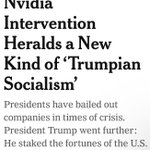
Trump’s relationship with Jensen Huang during his second term:
— January 13, 2025: Nvidia donates $1M to Trump’s inauguration fund.
— January 29, 2025: Trump purchases up to $5M in Nvidia stock.
— January 31, 2025: Trump meets Jensen Huang in the Oval Office.
— April 2025: The Trump administration stops sales of Nvidia’s H20 chips to China.
— May 13-15, 2025: Huang Travels with Trump to Saudi Arabia.
— July 2025: Jensen Huang meets with Trump again.
— July 16, 2025: Jensen Huang announces Nvidia will resume the sale of H20 chips to China.
— August 2025: Trump confirms Nvidia can sell H20 chips to China.
— August 18, 2025: Trump buys up to $25M in Nvidia stock.
— September 16-18, 2025: Huang travels with Trump to the UK.
— October 2025: Nvidia pledges $25M to Trump’s White House ballroom.
— December 8, 2025: Trump announces Nvidia can sell H200 chips to China.
— End of 2025: Trump owns up to $58M in Nvidia stock, one of his largest individual stock holdings.
— January-August 2026: Trump trades Nvidia stocks 38 times, worth up to $28.3M.
— May 12, 2026: Marco Rubio informs Trump about Jensen Huang’s affair with an alleged Chinese spy right before Huang boards Air Force One en route to China.
— May 13-15, 2026: Jensen Huang joins Trump’s delegation to China.
— August 2026: Trump’s Nvidia stocks reach as high as $62M.
— September 29, 2026: Jensen Huang and other tech leaders attend Trump’s “AI Summit” at the White House.
— October 8, 2026: Trump gives Huang the “National Medal of Science.”
— November 12, 2026: Huang resigns after his relationship with an alleged Chinese spy is publicly reported.
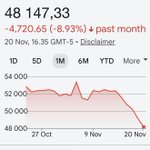
— November 2026: Nvidia stock price falls sharply.
— November 16, 2026: Trump publicly demands Nvidia reinstate Huang.
— November 23, 2026: Nvidia reinstates Huang after getting “input from senior levels of the United States government.”
— November 23, 2026: Trump brags that he personally demanded that the Nvidia Board of Directors reinstates Jensen Huang as CEO.
— November 23, 2026: Nvidia stock price soars over 30%.


Okka Granbacka retweeted

A short list of 117 corrupt acts by Trump, all will be investigated.
Pardons and commutations
Issued nearly 2,000 pardons, favoring allies and loyalists.
Clemency followed donations; lobbyists charge $1 million fees.
Fired pardon attorney Liz Oyer; installed loyalist Ed Martin.
Pardoned 42 white-collar defendants in 2025, ten more since.
Reportedly promised top officials pardons before leaving office.
Reuters: 96% of clemency grants failed Justice Department guidelines.
Pardoned nine businesses, wiping out $200 million in penalties.
Pardoned BitMEX the week its $100 million fine came due.
Pardoned Paul Walczak after his mother’s $1 million dinner.
Pardoned Binance founder Changpeng Zhao.
Pardoned an investor tied to a World Liberty investment.
Gifts
Accepted a $400 million jet from Qatar.
Took a $130,000 gold bar and Rolex from Swiss executives.
Swiss tariffs dropped from 39% to 15% days later.
Accepted a jeweled ring from a Belgian diamond group.
Accepted a $6,000 watch from Inter Miami.
Accepted a gold gift from Apple’s Tim Cook.
Solicited donations
Collected over $800 million in solicited donations.
Fundraiser pressed companies for $5 million to $50 million.
SoftBank gave $50 million to his presidential library.
Apple, Microsoft, Amazon and Meta funded his ballroom.
Meta gave $22 million to his presidential library.
Chevron gave millions after he asked for $50 million.
Timothy Mellon gave over $100 million, some in gold.
Mellon reportedly gave $130 million anonymously to pay troops.
NYT: over half of big donors benefited from his actions.
Lifted vape restrictions after tobacco companies gave $5 million.
Lockheed gave $10 million, then won a $35 billion contract.
Lockheed agreed to pay $5 million for White House helipad.
Raised $50 million from donors for Freedom 250.
Asked donors, “What can I do to help you?”
Inaugural committee took in more than $245 million.
Claimed raising over $1.5 billion since the 2024 election.
Pay-for-access and MAGA Inc.
MAGA Inc. raised $177 million in six months.
Donors got access, then pardons, policy favors or jobs.
Lifted sugar import ban after owner’s $1 million donation.
Delayed Medicare rule after seller gave $5 million.
Revoked nursing home staffing rule after $4.8 million in donations.
Trading
Made billions from securities trades while president.
Bought stocks in companies affected by his own decisions.
Promoted companies days after buying their stock.
Said his children traded with “inside information.”
Urged buying stocks hours before pausing tariffs.
Disclosed 327 unreported trades from the day before.
Made 690 stock transactions by August 2025.
Traded $220 million in stocks in early 2026.
Bought Netflix and Warner Bros. bonds before merger review.
Suspicious prediction-market bets preceded tariff and Iran war moves.
Markets moved ahead of his Iran war posts.
Trading regulator withdrew referrals on those trading patterns.
Trump Media planned selling early access to his posts.
Bondi sold Trump Media stock on tariff announcement day.
Gave tariff exemptions to friends, critics allege.
Conflicts of interest
Kept his businesses and skipped an independent blind trust.
His son runs the trust; Trump remains beneficiary.
Foreign licensing income hit $59.5 million.
Profited from events at his hotels and golf courses.
Dropped the ban on Trump Organization foreign deals.
Sold Trump bibles, sneakers, cologne and NFT cards.
Sons invested in contractors seeking federal money.
Sons’ companies received $3.2 billion in federal deals.
Pentagon loaned $620 million to Don Jr.-linked Vulcan Elements.
Sons held 20% of a federally financed Kazakhstan mine.
South Korean firm paid $2 million during trade case.
Russian oligarch reportedly paid for Don Jr.’s wedding celebrations.
Discussed Eric with Indonesia’s president on a hot mic.
Proposed Trump Tower in Tbilisi with an oligarch’s family.
Will host the 2026 G20 at his Doral resort.
Promoted Tesla cars on the White House lawn.
State Department pushed countries to approve Musk’s Starlink.
Amazon made Melania documentary deal during his term.
Trump Media gave stock to Patel and McMahon.
New Yorker estimated $3 billion gained from the presidency.
Using the government for himself
Demanded $230 million from the Justice Department.
Sued the IRS for $10 billion as president.
Justice Department settled his IRS suit for $1.8 billion.
Settlement granted his family immunity from past IRS audits.
Settlement ended his liability for a $73 million refund.
Judge called the settlement self-dealing with an “improper purpose.”
Repealed ethics rules on lobbyist gifts and hiring.
Halted foreign bribery prosecutions by executive order.
Fired inspectors general investigating fraud and abuse.
Dropped corruption charges against allies.
Justice Department closed Homan probe after $50,000 cash bag.
Got a personal “golden share” in U.S. Steel.
Took government stakes in companies; critics allege extortion.
Said Venezuelan oil money “will be controlled by me.”
Venezuelan oil account was located in Qatar.
Defied court orders in a third of cases.
Cabinet and contracts
Cabinet had 467 conflicts requiring recusal; Lutnick had 106.
Awarded $143 million DHS ad contract without competitive bidding.
Contract firm was eight days old.
DHS spokesperson’s husband’s firm worked on the ads.
DHS gave $77 million ad award to Lewandowski-linked firm.
David Sacks shaped tech policy while holding tech investments.
Budget office allocated $15 million of USAID funds for Vought.
Interior official’s husband had $3.5 million lithium company deal.
Crypto
Launched TRUMP memecoin; his company held 80% of supply.
Launched a Melania memecoin before an inauguration rally.
About 764,000 TRUMP buyers lost money.
Offered dinner access to the largest TRUMP holders.
Family takes a cut of World Liberty transactions.
World Liberty took secret payments from foreign investors.
Investigation dropped after multimillion payment to World Liberty.
UAE-backed firm bought 49% of World Liberty.
Trump family entities received $187 million from that deal.
UAE fund put $2 billion into World Liberty.
Announced $200 billion in UAE deals two weeks later.
Hosted White House dinner for UAE’s Sheikh Tahnoon.
Took 75% cut of WLFI token sales.
Made $1.4 billion from crypto in 2025.
Reuters: family made $2.3 billion; investors lost the same.
Man charged with money laundering put in $100 million.
Eric Trump co-founded a bitcoin company going public.
#AccountabilityIsComing


Okka Granbacka retweeted
Mr Miller is endorsed by RFOW, Rodent Friends Of Washington, his most gnawing supporters.
Okka Granbacka retweeted

I would like to draw attention to a very interesting sequence of events. As early as 19 November, Trump stated that Putin had sent drones and a ‘couple of little missiles’ to Poland — ‘by mistake’. It was only the following morning that Russian objects fell on Polish territory. The US President’s statement had already been made public approximately eight hours before these ‘crashes’.
Trump knew about the preparations for a new attack straight from the Kremlin itself. This also proves that the attack on Poland was deliberate. The Polish leadership also assessed it as a ‘probable deliberate provocation’, drawing attention to the military exercises taking place nearby.
Unfortunately, all this proves the obvious: Trump is a Kremlin agent. He downplays the danger posed by Russian missiles in advance and justifies the aggressor. Whilst Russia continues its attacks, the US President acts as its advocate. To negotiate with or rely on the promises of a man who is a Russian agent is to knowingly put one’s own security at risk.


Okka Granbacka retweeted

Here we go with the denials as the rats jump ship
#ImNotMaga is rolling out
Okka Granbacka retweeted

DEFIANT 🇺🇦🇷🇺 ZELENSKYY JUST REMINDED PUTIN OF SOMETHING MOSCOW HAS SPENT 12 YEARS TRYING TO ERASE: CRIMEA IS UKRAINE.
Russia has spent years attacking Ukrainian bridges, railways and energy infrastructure.
Now that Ukraine has seriously damaged the bridge connecting Russia to occupied Crimea, Moscow suddenly wants the world to be outraged.
Zelenskyy’s response was straightforward: Crimea belongs to Ukraine, and Ukraine has the right to defend its territory.
But the events of the past 24 hours make his remarks even more significant.
After Putin threatened painful retaliation for the attacks on the Kerch Bridge, Russia launched another massive assault on Ukraine overnight.
According to Ukrainian officials, Russian forces fired more than 110 missiles, including 27 ballistic missiles, and over 400 drones.
At least eight civilians were killed and more than two dozen injured.
Three bridges in Kyiv were also damaged.
Putin’s answer to Ukraine striking a bridge used for Russian military logistics was another devastating attack that killed Ukrainian civilians.
And there’s something else worth examining.
The Kerch Bridge is not simply a symbol of Russia’s occupation.
It has served as a military transport link connecting Russia with Crimea since its opening in 2018.
However, Reuters reported on November 20 that Russia had already redirected much of its military cargo, including fuel and ammunition, through the occupied land corridor in southern Ukraine.
That distinction matters.
Damaging the bridge does not automatically sever Russia’s supply lines.
But it can reduce transport capacity, complicate alternative routes and force Moscow to invest additional resources in protecting and repairing infrastructure.
The Ukrainian operation also involved considerably more than a single strike.
According to Ukrainian officials, the attacks followed a months-long campaign targeting Russian air defences, radar installations and electronic warfare systems before striking the crossing itself.
Satellite imagery subsequently documented extensive damage to the road section, while another Ukrainian attack temporarily disrupted railway traffic.
That is what makes this operation strategically significant: Ukraine targeted the systems protecting the bridge before attacking the bridge itself.
And now Zelenskyy is making the political argument just as clearly.
Russia cannot annex Ukrainian territory, construct military infrastructure to support its occupation and then demand that Ukraine treat that infrastructure as untouchable.
There is, of course, a legal distinction worth preserving.
A target’s location on Ukrainian territory does not automatically make every possible attack lawful. Military necessity, distinction and proportionality still apply.
But a bridge used to support military operations can constitute a legitimate military objective under international humanitarian law.
My view is that Moscow’s reaction exposes a contradiction at the heart of its war.
Putin expects Ukraine to accept Russian attacks on its infrastructure as an unavoidable reality while treating Ukrainian attacks on Russian military logistics as an intolerable provocation.
Russia does not get to impose two different rules for the same war.
And there is something particularly revealing about the timing.
Putin has been discussing peace with Donald Trump and Xi Jinping while Russian missiles continue striking Ukrainian cities.
If Moscow genuinely wants to end the destruction, it can stop the invasion.
Until then, Ukraine has every reason to disrupt the military infrastructure sustaining it.
Crimea is not Russian because Putin built a bridge to it. And Ukraine does not need Moscow’s permission to defend its own territory.

Okka Granbacka retweeted

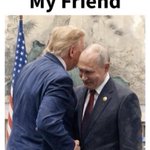
BREAKING: In a stunning moment, Poland's Prime Minister Donald Tusk just SLAMMED Donald Trump for greeting Vladimir Putin as a friend in China: "God, protect us from such friends." Make sure every American sees this.


Okka Granbacka retweeted

🇦🇺🇺🇦 AUSTRALIA SHOWED TRUMP AND XI WHAT REAL LEADERSHIP LOOKS LIKE
The APEC summit in Shenzhen was shaping up to be a disgraceful spectacle. Donald Trump, Xi Jinping, and Vladimir Putin together for their first historic meeting, exchanging smiles, posing for photographs, and treating the Kremlin dictator as though he were simply another respectable member of the international community.
Trump even found warm words for Putin. And when the official statements were released, there was not a single word about Russia's war against Ukraine.
But then Australia stepped in.
Australia is more than 12,000 kilometers from Ukraine, on the other side of the planet. Yet on November 19, Australian Prime Minister Anthony Albanese demonstrated more moral courage than many European leaders whose countries are practically next door to Russia.
Speaking at the APEC plenary session in Shenzhen, Albanese warned that the wars in Ukraine and the Middle East were disrupting global trade and hurting ordinary families around the world.
Then he turned directly to Putin.
His message was unmistakable: End your war. End it now.
According to witnesses, Albanese looked the Russian dictator straight in the eyes. Putin, the former KGB officer who has spent decades cultivating the image of a fearless strongman, lowered his head.
And this happened in front of Trump and Xi Jinping, just hours before their much-celebrated trilateral meeting.
The previous day, November 18, Albanese had already made Australia's position absolutely clear. Any peace settlement must be on Ukraine's terms. He also reminded the world that Russia had catastrophically underestimated the courage, determination, and willingness of Ukrainians to defend their sovereignty.
And there is a reason Australia understands Russian aggression better than some politicians in Washington.
In July 2014, Russian-backed forces shot down Malaysia Airlines Flight MH17 over eastern Ukraine with a Russian Buk missile system. Among the 298 innocent people murdered were 38 Australian citizens and residents.
Australia has never forgotten them.
Nor has Australia limited its solidarity to speeches. Canberra has supplied Ukraine with Bushmaster armored vehicles, Abrams tanks, and substantial military assistance.
Australians understand something that certain Western politicians apparently struggle to grasp: Geographical distance offers no protection against the consequences of unchecked aggression.
That is what made Albanese's intervention so powerful.
While Trump, Xi, and Putin discussed trade, Iran, and nuclear weapons, the war devastating Europe's largest country was conspicuously absent from their official statements.
Three powerful men sat together discussing the future of the world while carefully avoiding the bloodshed caused by one of them.
And it took the prime minister of a country on the other side of the planet to remind everyone that Ukraine exists, that Ukrainians are dying, and that the man responsible was sitting right there.
Albanese himself has previously faced criticism for being too cautious toward Moscow. But this time, he left no room for diplomatic ambiguity.
He spoke directly to the aggressor, in front of the world's most powerful leaders, and demanded an end to the war.
That is what leadership looks like.
Not flattering dictators. Not smiling for photographs. Not pretending that trade agreements somehow erase war crimes.
Sometimes genuine courage means looking a tyrant in the eye and telling him what everyone else in the room is too afraid or too unwilling to say.
🇦🇺🤝🇺🇦
P.S. I'm leaving Twitter/X and LinkedIn behind as my main publishing platforms. Twitter has become a garbage dump, and I'm building a new home for my independent writing on Substack. Everyone is welcome to follow me there. Subscriptions are free, and friends who want to support my work and help me provide for my family can choose a paid subscription.
mykhailorohoza.substack.com

The Kerch Bridge from mainland Russia to the Crimea peninsula.
Before and after the bombings.
Crimea can now be reached by A) boat B) through a narrow strip of land bombed daily by Ukraine.
Crimea has food, but not energy or clean water.
Russians now want to leave Crimea, but they can’t.


529
Okka Granbacka retweeted

They rolled in with only a few days' worth of fuel, food, and ammo. Supply trucks couldn't keep up, and Ukrainians started ambushing the fuelers and logistics vehicles hard. Vehicles ran dry and got abandoned.
Mud season (rasputitsa) made off-road movement a nightmare, so everything piled onto the paved roads and turned into one giant traffic jam.
Ukrainian forces blew bridges and the Kozarovychi dam, hit them with drones, artillery, and Javelins, and generally refused to cooperate with the "we'll be in Kyiv in a day" plan.
It wasn't one guy deciding to hang a right into a field. It was a whole operation that assumed a quick, easy win and then ran into reality.
On the generals side: Major General Andrei Sukhovetsky got sniped near the convoy.
Major General Vladimir Seliverstov (106th Airborne) was involved in the Hostomel/Kyiv effort and was wounded.
Colonel-General Alexander Lapin was in charge of a big chunk of the northern offensive. The whole thing was more "systemic failure" than "one guy took a bad turn."Trump's story is fun as a folk tale, but the actual version is way messier (and more interesting).
Okka Granbacka retweeted

I haven’t lived here in awhile, but I see no other way to answer the hundreds of texts/DMs asking me if the world is, indeed, ending.
In the span of six days, we’ve experienced;
11/12 — Microsoft outage
11/13 — Nationwide FAA ground stop
11/16 — Major US banking disruptions
11/17 — NSA’s classified internal network goes down
We need far more analysis of why so much is breaking at once. I don’t want to get out over my skis here, and what I am hearing does not contradict the messaging that most of this is the result of screwy updates.
But stepping back, the dots are starting to form a collective picture. We are seeing:
• An explosion in severe and critical vulnerabilities, with AI accelerating discovery to 3X the number of vulnerabilities discovered in the same period last year. This is collectively being referred to as “vulnageddon” or “the vulnpocalypse.”
• Mean time to exploit those vulnerabilities has collapsed to NEGATIVE SEVEN DAYS. AI allows attackers to find/exploit vulns far faster than software makers have time to fix them.
• Powerful AI-enabled offensive tools like ARTEX have been thrown into the hands of every third tier nation state, cybercriminal and digital arsonist, which logically creates havoc.
• This creates enormous pressure to compress patching windows and accelerate software updates, increasing the likelihood these fixes break things in unexpected, cascading ways.
• Pressure to just “AI everything” means we are rolling out automated AI tooling on top of brittle infrastructure that can’t support it.
My generation grew up in an extraordinary period of technological stability. We worked our way up the software stack, abstracting away layer after layer, until we lost a fundamental understanding of how the underlying systems actually work.
We were told to “move fast and break things.” VCS told us to celebrate the idea that “software would eat the world.” Now we’re telling ourselves we can simply “roll out AI” across everything, as though nothing underneath will buckle.
We never stopped to ask: SHOULD WE?
Should we be digitizing every last nook and cranny of our companies, infrastructure, healthcare, homes, cars, bodies, lives? Especially when the complexity, interdependence, and fragility we were introducing overwhelmed our ability to understand/secure/maintain the systems we built?
Nobody every asked: What if, in the name of progress, we were creating the ripest attack surface in human history?
We are now entirely dependent on software systems that almost nobody understands end to end, that increasingly few people can repair, and that attackers can now probe at machine speed. We are hearing that incident response firms, the 911 for breach victims, are backlogged six months. Even those paid on retainer lack the bandwidth to triage every incident. The cavalry is disappearing.
We are entering a period of unprecedented technological instability.
“Software Beirut” is an incredibly apt analogy. We are in for a period of cascading failures, whether triggered by attackers, bad updates, or our own accumulated complexity.
This, I’m sorry to say, is just the opening chapter.
Okka Granbacka retweeted

What upsets me the most about this completely morally bankrupt administration is that it does not even pretend to hide the fact that it serves the interests of russia.
Hearing U.S. Deputy Assistant Secretary of Defense Elbridge Colby scolding Ukraine for striking russian critical infrastructure, while not saying a single word to condemn russia’s daily attacks on civilian buildings, hospitals, schools, and bridges, is simply outrageous.
What kind of morally bankrupt monster do you have to be to side with russian evil?
