

Labor economics, demographics, technology. Senior economist at NYC Independent Budget Office. Mycophile.
Brooklyn
Joined August 2012
- Tweets3.4K
- Following1.4K
- Followers2.6K
- Likes15.5K





Owen Davis retweeted

What distinguishes the 1% from the merely affluent? How about having a third child.
New post on a topic I've long been fascinated by (the economics and financing of having a third kid) where I finally felt bold enough to go into the latest SCF microdata to get a good answer. /1


Owen Davis retweeted

🚜 New working paper: “Wheels of Change: Agricultural Automation and Human Capital in the 20th Century”
Q: How does the next generation adapt to automation?
A thread 🧵 (1/14)


This paper on the "divine coincidence" of monetary policy also features the divine coincidence that all of the key model parameters = ~1. May we all be so blessed. nber.org/papers/w35804

Owen Davis retweeted

There are lots of important questions to explore about our complicated intergenerational shifts and dynamics, and I do believe we can make loving space to do it
rcobooth.substack.com/p/on-p…

Owen Davis retweeted

The US labor share is at all time lows, but real wages are going up. So are things going well or not? It depends on whether people care more about consumption of the goods the economy produces, versus positional goods (that depend on relative status).
We wrote a one-page paper, keeping it as simple as possible, w/ @mireiagine.
Link to paper (although the whole paper fits in one image): papers.ssrn.com/sol3/papers.…

Owen Davis retweeted

Women in the US quote 26% lower hourly rates than men on Upwork, even after controlling for role, experience, and ratings.
And the gap is even wider in some countries. In Bangladesh, women quote rates about 30% lower than men. Across most countries we analyzed with at least 5,000 active accounts, women set lower hourly rates than comparable men.
But there are exceptions: in France, quoted rates are roughly equal, while in the UAE and Ireland, women quote higher rates than men after accounting for experience, role, and reviews.

Owen Davis retweeted

New from me @nytimes -- have we forgotten our Keynes?? u3 is a function of ag-demand. nominal GDP is hot+were running huge public deficits/private sector surplus. the Fed (till now?) has been dovish. so yea, u3 is low even as AI ramps
the early impact is job quality/wages/hiring


Google search trends for "early retirement." I expected to see the pandemic bump but what's up with 2025-2026?


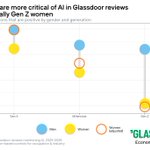
Workers in more AI-exposed jobs mention AI more in Glassdoor job reviews, which is not a surprise. But they also tend to be more positive in their mentions.


these bots are made for walking and that's just what they'll do


every time this discourse pops up

The Simpsons debuted in 1987 and this is the type of house the shows creators thought a single-income family could afford.
According to an episode in Season 1, Homer made 25k a year(60k in 2026 dollars).
In 1987 that house would cost about 100k(which was the national average) with a mortgage of roughly $700/month(assuming 20% down and interest rates consistent with that time)
How about today? The same house would cost 450k with a mortgage of roughly $2,500/month.
This means that while Homer was spending ~30% of his income on his mortgage in 1987 he would need to spend closer to 50% of his income on his mortgage today.
And of course, this doesn't include other areas of inflation such as food, gas or etc.
