



Pinned Tweet
word2vec embeddings study + implementation
Code : github.com/ocdbytes-ai/embed…
Blog : ocdbyt.es/blogs/word2vec
Check out the thread 🧵 :

ocdbytes.ai retweeted

Are you ready for a series of Whitepaper Reading sessions in @token2049? We're teaming up with @RootstockColl @monad @category_xyz @QuantusNetwork @SuiNetwork for a packed week of discussions!
From revisiting the original @Bitcoin whitepaper, to @Ethereum’s delayed state root, post-quantum money, and decentralized storage + access control - there’s plenty to unpack!
📚 Pick one, or join us for the full reading marathon: luma.com/whitepaper

ocdbytes.ai retweeted

Whitepaper Reading Club at @BLRxZo
What's on agenda today:
- @typesafeai 's Jev architecture discussion
- PC-ALM paper by @SakanaAILabs
Might even make notes and post them after the session

ocdbytes.ai retweeted
Upcoming Event | Bangalore, India 🇮🇳 | 26th Sept |
Topic: Beyond Autoregression and Backprop
🎟️ RSVP - luma.com/wprc-blr
Thank you for our Session Guide @ocdbytes &
Session Partner @BLRxZo - India’s first permanent hacker house in Bangalore🤝🏻
📝 Topics and TL;DR
1) JEV by @typesafeai - A model that doesn't generate text at all, user just needs to send it context plus typed questions, and it returns a decision with a confidence score in one pass!
2) PC-ALM by Seely and Gould (@SakanaAILabs)
Training without backprop, meaning no global backward pass sending errors from the output through every layer. Each layer learns locally, and a per-layer correction term pulls its updates close to what backprop would have computed.
💡 What we'll argue about:
> Is JEV a new model class or a well-packaged classifier?
> Can local learning hold up past small benchmarks?
Summary will be shared on Luma soon!


Would one trust an LLM output if the output generated was instant ? Given the output quality is same as we are familiar with in current scenario.
ocdbytes.ai retweeted

We built recursive meta-intelligence, an AI that creates its own scientific instruments, turns them into persistent worlds that an agent ecology with hundreds of AIs inhabits, and uses those worlds to discover mechanistic principles in one of the hardest classes of physical problems: how complex hierarchical materials (nested structures of matter that give rise to new function through organization) evolve and fail. The AI reasons across enormous spaces of possible physical trajectories, where every rupture changes what can happen next, and compresses those histories into principles (which humans can understand and design with) - complex chains of causal events, highly nonlinear, and intricate.
Scientific superintelligence is tangible here - machine-scale exploration opening cognitive channels into complexity that has been extremely difficult for humans to traverse directly. AI builds the spaces in which its next level of reasoning becomes possible; a representation becomes an instrument, the instrument becomes an executable world, and that world becomes the substrate for further intelligence. Intelligence then grows by constructing new spaces to think in.
The task we explored started from a seemingly simple prompt to explore a biological material system - the AI then chose the representation, mechanics and experiments, built a fracture laboratory to push materials to their limit, tested hypotheses and generated scientific conclusions. The swarm explored a combinatorial universe in which architecture controls function and every rupture changes the future state of the material.
The AI discovered a compact principle that defines how multiscale material architecture can program the evolution of failure. Material placement and geometric order determine how forces redistribute, whether damage cascades or remains distributed, and whether function survives substantial flaws. For this discovery to happen the AI had to reason across long path-dependent histories, simulate alternative futures and compress them into generative invariants (model-based causal reasoning, counterfactual simulation and temporal abstraction applied to an evolving physical world). It is incredible to witness this transition to a new form of intelligence and capability through scaling swarms.
A lot of positive will come out of this because it expands the human epistemic horizon as AI can traverse thousands of possible histories and return mechanisms compact enough for us to understand, test and build from. Intelligence compounds through its artifacts!
A few lessons we learned:
▶️ Learning and discovery are flows through spaces of possibility. Early work has shown how backpropagation flows through parameters, reinforcement learning through action and consequence, and autonomous swarms through representations, instruments and executable worlds, bringing it all together. Flows create structure; structure redirects future flows in the recursive instrument.
▶️ Nonlinear physics actually defines a larger principle, where high-dimensional dynamics generate stable invariants; invariants become effective variables; those variables become the substrate for a new level of cognition.
▶️ Recursion then becomes level creation - one possibility space compresses into a principle, and that principle opens a larger space above it.


ocdbytes.ai retweeted

Right. Dario was already claiming that GPT2 was too dangerous to open source back in 2019.
I made fun of them then.
Everyone should make fun of them now.


ocdbytes.ai retweeted

Introducing TimesFM-3, a state-of-the-art time series foundation model that enables accurate multivariate time series forecasting in a single forward pass, significantly outperforming other forecasting models across major benchmarks.
More on the blog →goo.gle/4x5WGpD

ALT TimesFM-3 architecture.

ocdbytes.ai retweeted

Matrix multiplication is the basic computational operation that powers modern computing (including AI). Yet, the theoretical fastest speed at which computers can multiply matrices (omega ω) is still unknown and has been a longstanding challenge for complexity theory and computer science.
Today, we announce a new record for omega (ω<2.371177). This is the result of a great team effort between @GoogleDeepMind, our academic collaborators, and our Gemini-powered coding agent AlphaEvolve! 🧮
arxiv.org/abs/2608.16884v1

ocdbytes.ai retweeted
Using optimization at inference time is a foundational concept of Energy-Based Models (EBM) and Objective-Driven AI architectures (ODAI).
When the variables to be inferred are continuous, it makes sense to use gradient-based optimization.
A good instance of ODAI is world model-based systems that use gradient-based optimization for planning.
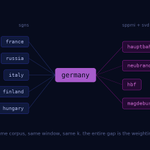
2/ I also ran Levy & Goldberg 2014: SGNS's optimum and found out that SPPMI + SVD also works like trained vector embeddings but it behaves in a different way. SGNS returns words of the same kind (countries next to countries). SVD instead surfaces rare words that happen to appear right next to the target. This is because plain SVD treats every cell of the matrix equally, so rare word pairs with a very high PMI score dominate. SGNS weights pairs by how often they actually occur.

ocdbytes.ai retweeted

📢Meet Qwen3.8-Max — our most capable model to date.
Next week, the open weights of Qwen3.8-Max will be released, and Qwen3.8-27B is also going open-weights to meet you all!🎉
Qwen3.8-Max, a new bar for coding and cowork at 2.4T parameters:
- Autonomous coding: 10+ days of self-evolving development, from empty folder to production without hand-holding, complete project trace in the GitHub:github.com/qwen-code-dev-bot…
- Real work, real results: Production-quality deliverables across hundreds of professions.
- Long-horizon mastery: System-level autonomous planning with closed-loop adaptive learning, driving 500+ turns of chip design optimization and 365 days of e-commerce strategy.
- Native multimodal intelligence: Vision isn't just input — it's a continuous feedback loop for planning, execution, and self-correction.
💰Pricing:
Input: $2.0 / M tokens
Output: $6.0 / M tokens
Implicit Caching: $0.25 / M tokens
Start building with Qwen3.8-Max! 🚀
📖 Blog: qwen.ai/blog?id=qwen3.8
✅ Qwen Studio: chat.qwen.ai/?models=qwen3.8…
⚡ API: qwencloud.com/models/qwen3.8…
