




トクリュウ絡みで防犯意識が高まってますね
防犯カメラまずはどうですか?
最近別件でつけました
家を傷つけるのと、設置に手間がかかるのは嫌だったのでマグネットタイプです
買ってマグネットで取付するだけで監視カメラできました
本当に簡単だし、自動で録画、監視してくれるし、アブリでいつでも見れるしお手軽です
amazon.co.jp/dp/B0CQ233LB8?r…

59

ゆなの米国株 retweeted

젠슨 황이 엔비디아에 빨리 복귀한 이유.
1. 일론은 내년 가장 큰 병목은 “현금”이라함.
2. 현재 엔비디아는 “현금은행”포지션임.
(젠슨황이 CEO일때 한정)
3. 결국, 수요는 넘치는데 “현금”이 없으니
AI개발 자체에 병목현상이 생기게 됨.
4. 현재 AI는 중국-미국의 “패권전쟁”이
된 상태로 둘다 쉽게 포기할 수 없음.
5. 엔비디아 임시CEO가 나와서
“현금지원”을 줄일수 있다고 발언하니
거의 뭐 연준의 긴축정책 느낌이 난거지.
6. 결국 다시 젠슨 황이 복귀해서
엔비디아는 시장에 현금을 풀어야 하는 상황.
결론 : 젠슨 황은 시장에 “현금”을 푸는
미션을 가지고 다시 돌아왔다.
끝.
$NVDA

本当は端末や設備にもAIが導入されて、こちらの需要も2028年には爆裂する想定で2年前から投資しました
しかし、メモリなどの高騰が想定を超えてシナリオが崩れて来たことを感じてます
頭の部分だけ成長しても、実社会に反映できる手足がない状態ですね
これでは経済への反映は一部に留まり、成長とは言えない形になっていると感じます

According to Chinese media reports, several major smartphone makers have set lower shipment targets for 2027.
- Xiaomi is targeting about 90 million units in 2027, down 25% from its 2026 target of about 120 million.
- Lenovo (primarily Motorola) is targeting about 40 million units in 2027, down 20% from about 50 million in 2026.
- Apple is targeting about 220 million units in 2027, down 5.6% from about 233 million in 2026.
- Samsung is targeting about 210 million units in 2027, down 9.5% from about 232 million in 2026.
- OPPO is targeting about 90 million units in 2027, down 14% from about 105 million in 2026.
- vivo is targeting about 60 million units in 2027, down 29% from about 85 million in 2026.
- Huawei lowered its 2027 target to fewer than 50 million units, a decline of at least 16% from its 2026 target of about 60 million.
42


$COHR 強気
何か材料があるのだろうから期待したい🤔

코히런트(COHR), 이사회 멤버 1,522만 달러 규모 주식 매수 - SEC 공시
코히런트(Coherent)의 이사회 멤버인 스티븐 파글리우카(Stephen G. Pagliuca)가 관련 투자법인을 통해 약 1,522만 달러 규모의 코히런트 주식을 장내 매수
매수 주식 수: 82,000주
평균 매수 단가: 185.59달러
총 매수 금액: 15,218,684달러
실제 거래 가격 범위: 183.08~190.05달러
매수일: 2026년 11월 20일
공시일: 2026년 11월 24일(미국 현지시간)
매수 방식: 8개 거래 내역으로 나뉜 장내 매수
매수 주체: SP Investment Associates Managed, LLC
3
229
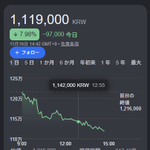
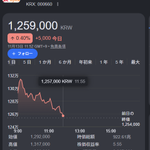
地合い悪すぎますね
良くないのは落として上げるの繰り返しでトレンドが長引きすぎています
トランプがまた余計な発言をしてるので落ち着かないとすると SK Hynix 減らすしかないかもしれません
回復するまでインデックスかFang積立が無難だと思います😥
安いので1,2年後は相当増えると思うので、AI テーマでリスク取る必要ないかも
1
559


後半が微妙ですが ASIC は必須不可欠で $AVGO の役割は拡大しています
次の決算見ておけ👍ということ

$AVGO COULD BE SETTING UP FOR A MONSTER 2027
One of the biggest comeback stories in 2027 could be Broadcom as the semiconductor market may focus too much on the recent declines, gross margin contraction, and $GOOGL custom silicon hurdles and, therefore, completely ignore one of the most dramatic inflections in semiconductor earnings in the space.
Broadcom has been spending years designing custom AI accelerators, as well as networking and optical systems to go with them. All of that R&D is now going to transition into a massive commercialization event, which will be one of the largest in the history of the semiconductor space.
This is a company of Broadcom’s scale, with Q3 revenues up 86% to $29.6B, with AI semiconductor revenues up 221% to $16.7B in Q3, with management outlining AI revenues of $58B in fiscal 2026, which could double to $115B in fiscal 2027, only to double again in fiscal 2028 to $230B.
And to the extent that there is risk in this scenario, Hock Tan has ensured the required manufacturing capacity to support these projected revenues, only to have the resulting demand exceed the allocated capacity of the company.
Importantly, Broadcom’s largest customer, Google, is currently trying to diversify Broadcom-designed TPU shipments to MediaTek and $MRVL, but that does not necessarily mean that Google is trying to eliminate Broadcom from the TPU custom silicon space, only to diversify across several different semiconductor program designs.
Furthermore, the economics of AI computing are increasingly moving in the direction of custom silicon, with much of this to be used in conjunction with general purpose processing from $NVDA.
The growing percentage of AI workloads devoted to inference (i.e. the actual production of useful intelligence) creates enormous economic incentive for the hyperscalers and frontier AI companies to optimize their respective computing infrastructure to produce intelligence at the lowest possible cost.
In terms of semiconductor content, this translates into custom designed XPUs, for specific workloads, in addition to much larger amounts of networking and optical semiconductor content.
The company’s Tomahawk switching platforms, optical DSPs, high performance lasers and emerging co-packaged optics all will see enormous increases in semiconductor content per unit of computing as bandwidth becomes an increasingly critical component to high performance computing.
Today, Broadcom already generates enormous amounts of free cash flow ($13.7B in quarterly terms) and operating income (adjusted for non cash items, $20.1B in the most recent quarter). Management projects operating margins of 66% in Q4′17, after a number of quarters of declining gross margins due to increasing mix of complex AI systems and high cost memory.
I’ve also considered that growth from the upcoming AI selloff. While a short-term anxiety for Broadcom, I believe the market is currently underestimating the scale of growth coming from future customer Anthropics.
The IPO of and subsequent funding rounds from investors of more than $100 billion in capital will greatly enhance Anthropics rapid enterprise adoption in need of dedicated computing to address their intelligence scale needs instead of paying a premium for short-term access to Broadcom’s planned and yet to be converted to shipped AI deployments.
Funding commitments will translate to recognized revenue however, and while Broadcom’s providing of residual value support on portions of the financing is beneficial, Google’s recently reported reduction in shipment of certain Broadcom designed TPUs with corresponding increase in design of TPUs for shipment by alternative semiconductor designers such as MediaTek and Marvell will become an additional competitive concern for investors to consider and monitor.
The depth of Broadcom’s current penetration into complex custom silicon for the TPU based computing market is substantial and should not be confused with Broadcom’s losing all strategic value to such a large future customer indenning strategic, alternating amongst designers of multiple semiconductor solutions for optimal set of characteristics for deployment in computing needs of such a large future customer. In addition to Google, other frontier companies such as OpenAI and Meta are designing and deploying their own customized silicon for AI computing needs.
Nvidia’s recent growth and increasing dominance in the field of AI computing will create additional economic reasons forhyperscalers such as Google to design and deploy customsilicon based accelerators in addition to their NVIDIA provided general-purpose accelerators.
So Broadcom could be one of the biggest comeback trades of the year as investors focus on the wrong part of the company’s semiconductor business. With the stock down to $313 or so, Broadcom could double or so in the space of a few years as earnings grow by 10% or so per year for several years in a row.
That said, a lot of things could go wrong. The worst that could happen is that Google’s diversification of TPU suppliers to companies like MediaTek and Marvell could reduce Broadcom’s portion of TPU spending dramatically.
And it’s possible that the huge growth in Broadcom’s AI semiconductor business could quickly fizzle out as customers struggle to deploy these increasingly complex computers.
Moreover, Broadcom’s increasingly large customer-financing commitment of residual value could become a big negative for the stock as Broadcom’s customers increasingly default on their obligations, which in turn could negatively impact Broadcom’s earnings. But none of these potential negatives would necessarily impact the stock’s potential to double or so in a few years, as I outlined above.
Instead, the big variable is whether Broadcom can in fact turn its pipeline of promising products into real operating leverage and higher earnings per share over time. And so, in terms of earnings growth and free cash flow, I think Broadcom could be a big comeback trade in 2027.
The December 9th earnings report will be a huge test for the semiconductor and AI computing stock and option positions that I have taken, in terms of growth in semiconductor revenues for AI computing, as well as growth in the company’s gross margin.
Finally, if the company’s AI semiconductor business does in fact deliver on the extremely promising near-term and longer-term earnings growth and free cash flow that I outlined above, then Broadcom could become one of the biggest and most important earners in the entire AI economy, over the space of the next two years or so.

120