




Pinned Tweet
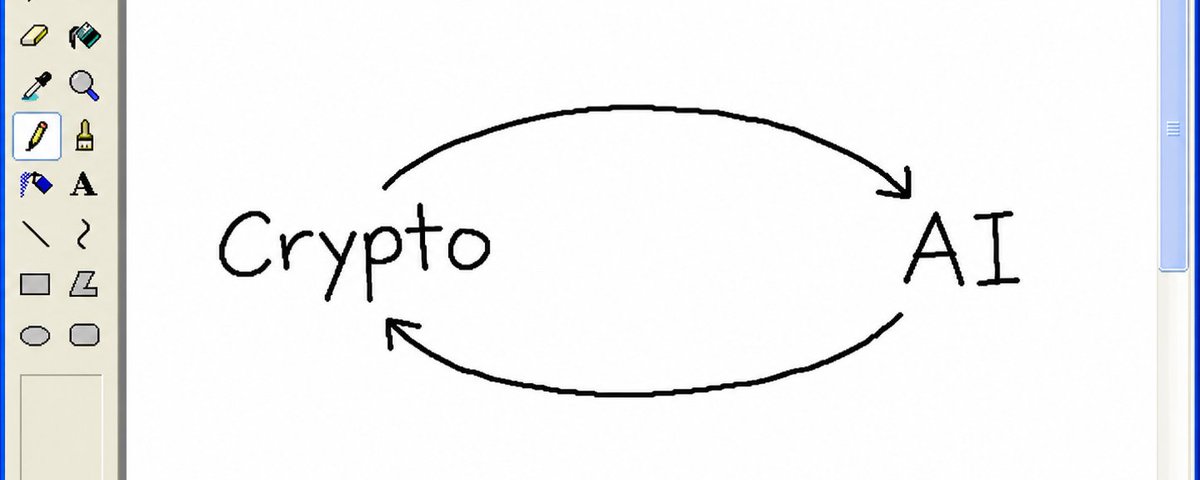
I spent years building in crypto, and AI is repeating one of its biggest mistakes.
We're making people learn the infrastructure before they can benefit from it.
Agents, models, MCPs, orchestration...
Brilliant technology. Backwards UX.
Wrote about why this needs to change.

the only agent pings i actually want on my phone:
→ it's blocked on a decision only i can make
→ it's about to do something it can't undo
→ it's spending way more than that run usually costs
→ it finished, with a link to the diff
→ it's been retrying the same step for 10 minutes
what would you add?
2
1
78

before i let an agent run overnight i want these sorted:
→ its own scoped creds, not my keys
→ approvals that expire instead of "don't ask again"
→ keys in a keychain or broker, never in .env it can read
→ read only on the folders that actually matter
→ one switch that pauses everything
→ a log of which agent did what
which one did i miss?
1
1
107
garry tan ran 7 coding agent setups on the same 20 tasks. pass rates all landed between 71% and 79%.
on opus the cost per solved task wasn't close though. claude code about $0.22, openclaw about $0.44.
so i'd pick a harness on cost and on what it does when a run breaks, not on score.
what are you picking yours on?
6
6
308
freeze the plan before anyone starts.
a multi agent run usually breaks in one of these ways:
→ you rewrite the goal after the agents have already started
→ they each work from a slightly different version of the task
→ you're still the integration layer, copy pasting between them
→ nobody wrote down what done looks like
→ memory keeps growing and the actual task sits there
which one have you hit?
3
3
101
two workers, two private model files, no data shared.
after the merge, only the collective can say abe is maggie's grandparent. worker AB knew abe to homer and the family rule. worker C knew homer to maggie. nobody retrained.
curious how far this holds once the facts aren't a toy family tree.

2
2
50
a lot of multi agent setups are still one person pasting claude's answer into codex and back.
it works fine. who's actually wired the two to check each other without you in the middle?
1
1
48
you shouldn't have to pick the model.
what picking should look like instead:
→ a cheap fast model for the boring steps
→ the strong one only where it actually has to reason
→ swap when something better ships, nobody notices
→ judged on your own tasks, not a leaderboard
→ cost shown per finished task, not per token
what else belongs on this list?
1
63
AITIA read a predator-prey law straight out of noisy measurements.
after eight short runs the error against the true equation was about 0.001. nobody handed it the formula.
watching can't tell a real cause from a coincidence, so it forces a variable and keeps only the links that actually move. a fake link barely flickered (0.4σ). the real one hit 8.7σ.
what's the first real system you'd want an engine like that to try reading?


1
1
23
what I want in a morning brief from an agent:
not a recap of everything that happened overnight. just what I have to act on.
→ the three decisions that actually need me today
→ anything that slipped, with a next step already written
→ calendar clashes, not a copy of the whole calendar
→ today's reminders and tasks, grouped by when they are due
→ one question it couldn't answer on its own
→ nothing that can wait until tomorrow
which one would you add?
5
2
128
I trust the boring demos more now.
An agent that finishes a real task and leaves a file you can open. Not a video of a hundred agents talking to each other.
1
1
77
The biggest mistake in AI right now is making users manage agents.
The point of intelligence is to remove the need to manage the underlying complexity.
1
35
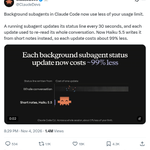
Background subagents in Claude Code just got a quiet win.
They used to reread the whole conversation every 30 seconds to write one status line. Now Haiku 5.5 writes it from short notes, so each update costs about 99% less.
Official note from ClaudeDevs.
Worth checking what your own agents burn tokens on while they're just waiting.

2
3
156
Most of what a coding agent spends tokens on isn't thinking. It's reading.
Spotify's write-up on their shunt plugin for Claude Code:
→ a hook blocks full reads of files over 350 lines
→ a cheap worker model reads them and returns only the answer
→ the frontier model keeps debugging and design calls
Mean savings on bulk reads were around 90% on their Java monorepo.
The detail I like: the first version was routing rules in CLAUDE.md, and Claude could ignore them. The hook made it stick.
What's the most expensive thing your agent reads?

9
3
398
save this before you open a third coding agent session.
parallel agents are easy to start and hard to merge. the checklist i'd use:
→ one worktree, one task, one branch, one PR
→ worktrees split files, not processes. give each agent its own port and test database
→ point CLAUDE.md at AGENTS.md so every agent reads the same rules
→ diff your agent config after installing desktop apps. at least one now adds plugins to Claude Code and Codex without a clear opt-in
→ done means a test command the agent ran, with the output pasted
→ cap sessions at what you can actually review
which one did you learn the hard way?
10
4
297
Same model, same 25 coding tasks from merged GitHub PRs.
OpenCode harness: 19 solved.
Octomind harness: 24 solved, at roughly half the cost.
That's Octomind's own test on GLM-5.2, so grain of salt. But five tasks is a bigger jump than most model upgrades give you.
The model gets the headline. The tools around it decide the score.
What harness change helped you most?
2
130
The product lesson I keep coming back to while building Anna: developers should build the loops, users shouldn't have to.
Wrote the full piece, crypto parallels included:
xitter.cf/notinvariant/status/21…
1
6
89
Better infrastructure didn't make crypto a better product. Users still had to learn wallets, gas and bridges first.
AI products are walking into the same trap. My take on what builders should hide from users, and what they shouldn't:
xitter.cf/notinvariant/status/21…
1
2
61
Most agent products turn the user into the manager of a tiny software company: pick the model, the tools, the MCP servers, the memory, then babysit the loop.
Crypto made the same mistake with wallets and gas. Wrote up why, and what the fix looks like:
xitter.cf/notinvariant/status/21…
3
139