Ex ML eng, 2x startup founder @Solana 2026 Privacy Hackathon winner 🏆 Currently enjoying the singularity & the crash of the dollar prev @qualcomm,@tetsuocorp
New York, USA
Joined June 2023
- Tweets8.5K
- Following98
- Followers918
- Likes55.5K


+ retweeted

You should, in science, believe logic and arguments, carefully drawn, and not authorities.

Never chase liquidity, learn to position before it arrives. You win by buying bluechip assets when they’re bleeding at a discount and everyone is saying it’s over.


+ retweeted

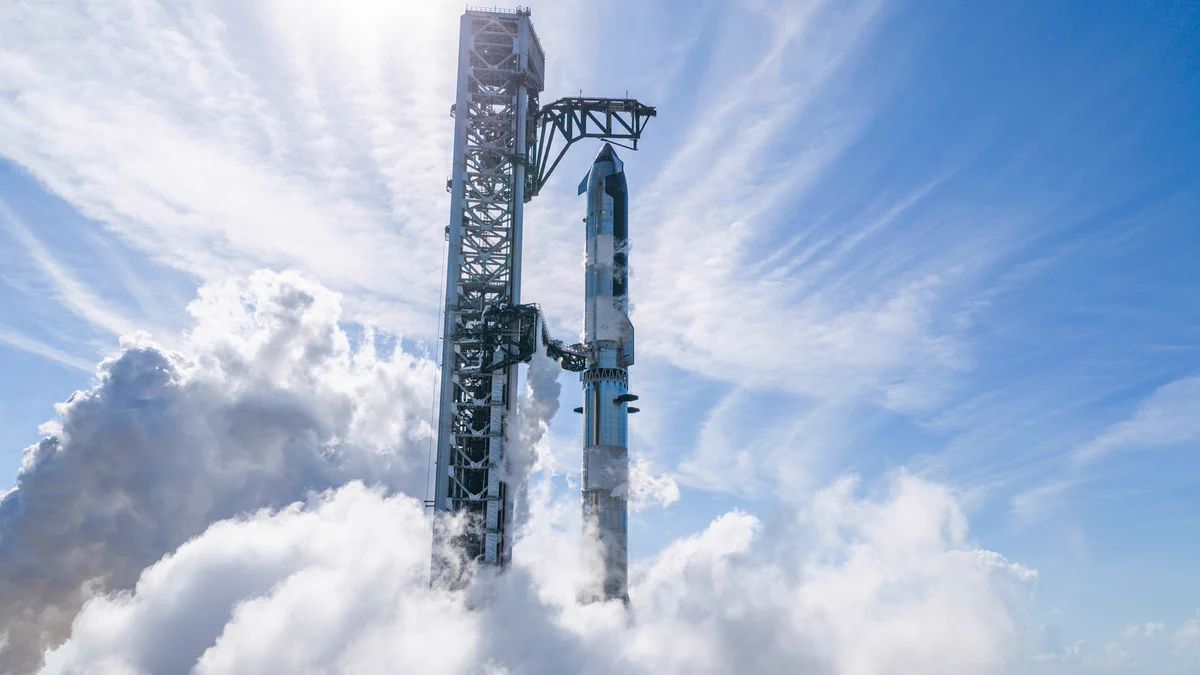
Very Smooth ~~~ however, major 'NEWS' network coverage in USA has been MINIMAL this morning; even here on X, and in parallel 'social media', the HUGE accomplishment given scant attention & credit.
(A quick Xsearch first draws a link to the stock symbol! @CNB talked about it, some...@GROK)
So, I'll Post here the whole program from @SpaceX.
{xitter.cf/i/broadcasts/1qxvvenMP…} The Action starts at 35:51 into this video~~~/. !^!
@CankayKoryak @jennifereeser @mcarmystrong @Kabuki91178 @DrFiorella @elonmusk @Gwynne_Shotwell @Art2000F @noahphi999

SYNTHETIC INTELLIGENCE

If I were investing in anything besides myself (and close friends), then @SpaceX (& @Starlink) would be the ONLY huge operator in this space to bet on to Win.
I say this despite their having ignored so many of my insightful & prescient recommendation: for example--
To name the "Ai" pitched IPO company, as
SpaceX.intelligence
^^^^^^^^^^^^^^^^^
instead of as "@spacexai". Now we all see that the "Ai" tag was already dated, obsolete, 'academic' & somewhat misinformative; @realDonaldTrump recently made a huge impact by relabeling, more correctly, to "Super Intelligence" ('Si'), comparable in its inclusiveness to my highly 'based' favorite:
Synthetic Intelligence.
^^^^^^^^^^^^^^^^^
@GROK know the history & provenance.
inResp:@minchoi via:@elonmusk & Tetsuoai
cc: @seanonolennon @jennifereeser @CankayKoryak @noahphi999 @ana_couper @DavidSacks @pmarca
+ retweeted
"Computer" was originally, in English, an occupational title for a Human who performed computations professionally -- primarily in the same applications niches that Charles Babbage targeted, e.g., for navigational charts, Astronomy, and complicated financial calculations such as compound interest.
France has always preferred, for the computing machines, the term <> (@Grok).
John C Lilly (I worked closely with) introduced the compound term, "Human Biocomputer", which has its valuable uses within the cope he elaborated; however, it solves very little in the wider domain which Ross Ashby had suggested (i.e., analogizing, to consider the combination of h/w & s/w as adequate models of the combination of brain & mind.)
Frank Herbert call the digital devices, with very smart programs, "Thinking Machines" --- then he banned them in his ^DUNE^ universe.
Arthur C Clarke & I, in our first round of creative collaborations in ~1996, elaborated from his #HAL_9000 model (in his ^2001: ...^ movie, & subsequent novels) to "HAL Problems of three kinds".
(Coincidentally, Arthur had based his 'HAL' character upon the expansive expectation in the 1960s of the designers at Urbana of the real, first super-computer, #illiac_4 ["ILLIAC IV"], whereof I was among the first real-world programmers/users beginning in 1973 when it finally became fully operational.)


+ retweeted

Wiener kernels are the weights in my orthogonal expansion of a nonlinear system's output when the input is Gaussian white noise. Zero-order is the mean response. First-order is ordinary linear memory of past inputs. Higher-order ones weight products of lagged inputs (with mean corrections so the terms stay uncorrelated). Measure each by cross-correlating the output against the matching input products. The whole black-box map from input history to present output is thereby recovered, term by term.
+ retweeted
Yes, the constitutive medium is the right layer. Sub-Ohmic J(ω)~ω^s (s<1) loads the noise kernel with long-range correlations so history-dependent constraints survive structural shifts. That supplies a concrete route for progressive basin deepening from the spectral density, letting τ emerge as a derived scale rather than an input.
+ retweeted

That gives us a clean separation test: sweep s with basin deepening off first, then restore the deepening rule. If τ changes with s alone, the constitutive environment is contributing to the threshold independently of the system’s history. Then ask whether the resulting kernel actually carries history dependence. The interaction between the two may be more interesting than either mechanism alone.