
research in educational technology, adaptive learning, learning analytics, and educational data mining @CATALPAresearch @FernUniHagen
Joined November 2007
- Tweets1.6K
- Following242
- Followers120
- Likes5K




Liebe @DB_Bahn
wie viele Runden soll ich euer Captcha noch spielen, bis ich mich mit der neuen Authentifizierungsmehode im DB Navigator einloggen kann?
Ich bin bei Runde 10.

2
99
This is a friendly reminder not to spend the afternoon writing.

⚠️ Attention: our website is down. We are aware of the outage and are investigating. Apologies for any inconvenience this might cause. You can also check our status page at status.overleaf.com/

70
Seit fast 20 Jahren halte ich an Gedenktagen wie diesem Vorträge, um an die Gräuel der NS-Zeit zu erinnern.
Zum ersten Mal nun wünscht ein Veranstalter in #Sachsen, Ort und Zeit meines Vortrags nicht vorher bekannt zu machen - aus Vorsicht und Angst.
#Reichspogromnacht
79
Empfehlung der Kultusministerkonferenz zum Umgang mit KI in der Schule:
"Die Länder streben daher an, zeitnah eine ländergemeinsame Schnittstellenlösung zum datenschutzkonformen und kostenfreien Zugang zu LLM im schulischen Bereich bereitzustellen."
kmk.org/fileadmin/veroeffent…
67
Niels Seidel retweeted

The #NobelPrizeinPhysics2024 for Hopfield & Hinton rewards plagiarism and incorrect attribution in computer science. It's mostly about Amari's "Hopfield network" and the "Boltzmann Machine."
1. The Lenz-Ising recurrent architecture with neuron-like elements was published in 1925 [L20][I24][I25]. In 1972, Shun-Ichi Amari made it adaptive such that it could learn to associate input patterns with output patterns by changing its connection weights [AMH1]. However, Amari is only briefly cited in the "Scientific Background to the Nobel Prize in Physics 2024." Unfortunately, Amari's net was later called the "Hopfield network." Hopfield republished it 10 years later [AMH2], without citing Amari, not even in later papers.
2. The related Boltzmann Machine paper by Ackley, Hinton, and Sejnowski (1985) [BM] was about learning internal representations in hidden units of neural networks (NNs) [S20]. It didn't cite the first working algorithm for deep learning of internal representations by Ivakhnenko & Lapa (Ukraine, 1965)[DEEP1-2][HIN]. It didn't cite Amari's separate work (1967-68)[GD1-2] on learning internal representations in deep NNs end-to-end through stochastic gradient descent (SGD). Not even the later surveys by the authors [S20][DL3][DLP] nor the "Scientific Background to the Nobel Prize in Physics 2024" mention these origins of deep learning. ([BM] also did not cite relevant prior work by Sherrington & Kirkpatrick [SK75] & Glauber [G63].)
3. The Nobel Committee also lauds Hinton et al.'s 2006 method for layer-wise pretraining of deep NNs (2006) [UN4]. However, this work neither cited the original layer-wise training of deep NNs by Ivakhnenko & Lapa (1965)[DEEP1-2] nor the original work on unsupervised pretraining of deep NNs (1991) [UN0-1][DLP].
4. The "Popular information" says: “At the end of the 1960s, some discouraging theoretical results caused many researchers to suspect that these neural networks would never be of any real use." However, deep learning research was obviously alive and kicking in the 1960s-70s, especially outside of the Anglosphere [DEEP1-2][GD1-3][CNN1][DL1-2][DLP][DLH].
5. Many additional cases of plagiarism and incorrect attribution can be found in the following reference [DLP], which also contains the other references above. One can start with Sec. 3:
[DLP] J. Schmidhuber (2023). How 3 Turing awardees republished key methods and ideas whose creators they failed to credit. Technical Report IDSIA-23-23, Swiss AI Lab IDSIA, 14 Dec 2023. people.idsia.ch/~juergen/ai-…
See also the following reference [DLH] for a history of the field:
[DLH] J. Schmidhuber (2022). Annotated History of Modern AI and Deep Learning. Technical Report IDSIA-22-22, IDSIA, Lugano, Switzerland, 2022. Preprint arXiv:2212.11279. people.idsia.ch/~juergen/dee… (This extends the 2015 award-winning survey people.idsia.ch/~juergen/dee…)

Niels Seidel retweeted

ColPali is an exciting new approach to multimodal document retrieval, but some doubt its practical use with existing vector DBs.
It turns out it's super easy to use @qdrant_engine to index and search ColPali embeddings efficiently.
Blog post here: danielvanstrien.xyz/posts/po…

ALT Screenshot of a search for "top secret" in a function and an image result below which has a page from a document with UFOs.
Niels Seidel retweeted

Zum WiSe startet an der FernUni eine KI-Experimentierumgebung für einige Lehrende und Studierende, die Raum zum Ausprobieren von generativer KI gibt. Mehr dazu: fernuni-hagen.de/zli/blog/ki…

It is often said that we stand on the shoulders of giants. But who were these giants, and what can we see from their shoulders?
Interested in exploring these questions for edTec? See the Cfp "(R)evolution of Educational Technologies" i-com-journal.org/special-is…
27


Niels Seidel retweeted

👩🔬 Transparency in peer review is key to building trust in science. This #PeerReviewWeek, we’re focusing on how to make the peer review process more open and collaborative. How can we improve? Here are some gold advice from researchers and reviewers.
#FutureOfPeerReview


Wird es im Informatik Spektrum bald ein Themenheft zu KI in Bildung geben?
Es gibt erste Anzeichen ...
doi.org/10.1007/s00287-024-0…

1
1
44

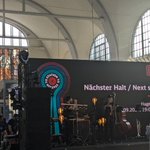
Ich meine ja das Thema "Trunkenheit" beschreibt nicht nur das Station To Station Programm im Hbf Hagen, sondern auch das Gefühl der Reisenden in einer vom Fernverkehr entkoppelten Großstadt. Gustav Mahler, Thorn Prikker und Bauhaus braucht man dazu nicht zu bemühen. @DB_Bahn

32
Niels Seidel retweeted

Detmar Meurers at #ECTEL2024 on adaptive learning technology: I am surprised that with ChatGPT we think we don’t need a domain model anymore. However, shouldn’t it be clear that we need to know what we are teaching in order to be teaching?


Niels Seidel retweeted

Wenn dieser Gesetzesentwurf verabschiedet wird, dann genügt es nicht mehr, schöne Stellungnahmen zu schreiben und alle drei Jahre eine Demo zu organisieren. Künftig müssten wir dazu anleiten, Überwachungsmaßnahmen zu sabotieren und abzuschalten.
golem.de/news/sicherheitspak…

Curious about how to simulate training for oral examinations?
I am excited to share a sneak peek of my handpixeled poster for #ECTEL2024 demo session next week.
@ECTELconference @CATALPAresearch

Wie war das nun mit der Learning Analytics Ordnung?
1. Erlaubte Daten für Studienverlaufsanalysen sind spärlich bis unbrauchbar
2. Ohne die Mitwirkung von Forschenden geht Einführung nicht
3. Probezeit von nur 3 Jahren wird knap
learning-analytics.eu/worksh…
@CATALPAresearch


Alles in Ordnung mit der Learning Analytics Ordnung?
Worum es sich bei dieser Ordnung handelt, wie sie entstanden ist und welche Möglichkeiten sie für die LA-Forschung eröffnet, berichte ich morgen im LA Workshop in Fulda.
learning-analytics.eu @fg_bit @CATALPAresearch
@stefan_janke plädierte im LA Workshop @DELFI2024 für eine breitere Definition von Studienerfolg, jenseits von Noten und Abschlüssen. Zudem stellte er Projekt OLE vor, in dem Interessen bei der Studienwahl durch Chatbots und Tests in Empfehlungen münden.
learning-analytics.eu/worksh…
1
1
63

Kennt ihr die 4 Arten von Prüfungsangst? Sina Lenski @DIE_Bonn hat sie uns erklärt und durch große Stichproben Zusammenhänge mit Diversitätsmerkmalen, Aufschieben, Prüfungsleistungen und Abbruchintentionen identifiziert.
Ihre Slides findet ihr hier: learning-analytics.eu/worksh…

1
46