

Journalist and historian, specialising in the First World War and its aftermath. Especially its aftermath (book on the way). Yorkshire, France, Craven Cottage.
Hebden Bridge
Joined November 2025
- Tweets837
- Following862
- Followers541
- Likes592



The memorial to the Liverpool men of the 55th West Lancashire Division was unveiled in Givenchy-lès-la-Bassée, France, in 1921 when memories of the First World War were fresh.
Today, the setting looks a lot calmer.


If you keep your eyes open in British cities, you can often see reminders of the Second World War Blitz.
This bomb damage is in Peter Street, close to Manchester's old Free Trade Hall, which was bombed out and later rebuilt (and is now a hotel).

nickjenkinshistory retweeted

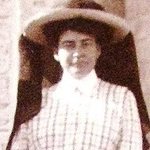
Meet E. Lillian Todd, believed to be the first woman in the world to design an aeroplane.
Here she is at the controls of the aircraft she designed and built in New York, 1909.
Todd was largely self-taught, studying mechanics and experimenting with model aircraft before constructing her full-sized biplane. Although she never flew it herself, the aircraft successfully took to the air in 1910, piloted by Didier Masson.
#Aviation #WomenInHistory #EdwardianEra

nickjenkinshistory retweeted

Very proud to announce that I've been made an Associate Fellow of the Royal Historical Society in recognition of my contribution to history! So it's now Nick Holland AFRHistS. Not bad for someone from a Barnsley comprehensive 😊


nickjenkinshistory retweeted

A Difficult Past - why the loss of The Eagle’s Nest matters. My latest #WW2 #Substack: ww2revisited.substack.com/p/…

Manchester's Grade 1-listed town hall has been closed for renovation since 2018. Looking forward to its reopening (currently slated for next year) after half a billion pounds of work.
It cost less than a million to build in 1877.

A fascinating story of an extraordinary woman, during and after the Second World War.


We tend to associate war memorials with the First World War, but some commemorate earlier colonial wars.
This one in St Ann's Square, Manchester, for example, is a Boer War memorial. And look how many names there are on it (on all four sides).

nickjenkinshistory retweeted

Adam and Eve at Péronne by Sir William Orpen (1918).
A French peasant girl offers a soldier an apple. They stand in an archway near the shell-damaged houses of Péronne. #WWI

For French people struggling to survive amid the devastation left by the First World War, a visit from abroad provided a little relief from their daily misery.
When Halifax councillors visited Metz-en-Couture in 1921, the temporary cafe roasted chickens for their welcome lunch.


I found this among my "stuff" - a tiny soldier doll in a knitted uniform. No idea of its age or provenance.
Any ideas about what/who it was for (surely too tiny for a child)? The knitting must have been difficult - or maybe, like a sampler, it was an exercise for a small girl?


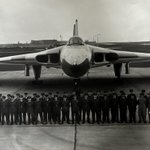
And another Vulcan (?) bomber picture from my uncle's collection - taken at RAF Cottesmore in March 1968.

One for the aviation enthusiasts... clearing out the belongings of my aunt's second husband, a former RAF man, who died last year.
He's the guy in the middle of the crew line-up, and I'm guessing the men posing in front of the plane are all those required to get it in the air?


Louisa Pesel taught embroidery to returning First World War soldiers at the Bradford Khaki Handicrafts Club as a way of helping them deal with their trauma.
The club had been set up with the support of the city's Abram Peel War Hospital for the treatment of "shell shock".


nickjenkinshistory retweeted

Painted Fabric Limited employed injured ex-servicemen to create beautiful handcrafted materials that were then sold around the world. Started by Annie Bindon Carter in 1923 at a disused army camp in Norton Woodseats.
bbc.co.uk/southyorkshire/con…

We were intrigued by this Edwardian "campaign desk", on sale for £5,950. What campaigns might it have travelled on? Did this fine, collapsible piece of furniture go to the Western Front, or maybe further afield?


