

Make AI work for your business. We turn outdated tools, messy data, and siloed systems into AI-native operations | Good Measure Studios + Learn AI with Nick
☕️
Joined July 2015
- Tweets2.7K
- Following453
- Followers1.5K
- Likes4.3K







Pinned Tweet
Four years ago, @mattcbasile and I started our agency: Markham Square. Today, we're becoming Good Measure Studios.
Project after project we keep realizing that the work that actually pushes a project from good to great is never what’s in the SOW. It's the small last pass. That one extra test case. The cleanup we did because it would've bugged us to leave it.
The things we do “for good measure.”
We started saying it so often it stopped being a phrase and started being the way we work. So, we're leaning all the way in.
Good Measure Studios is the same team, the same partner-level attention, with a sharper focus on what we've been doing more and more of: making AI actually work inside real businesses. Not the vibe coded prototype version. The one your team actually uses.
If you've been talking to us already, nothing changes. Same emails, same calls, same Matt and Nick.
If you haven't, now's a good time. We'd love to hear what you're working on.
Nick Basile retweeted

PHP has published their fix. You need to upgrade to these versions immediately 💯🚨
- 8.5.12
- 8.4.27
- 8.3.36
- 8.2.35
php.net/archive/2026.php#202…

Nick Basile retweeted
For everyone on high alert for the PHP patches, the latest and official status for serversideup/php can be found here.
We will be live updating this ⚡️
github.com/serversideup/dock…

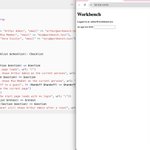
One of my favorite things AI makes possible is building small tools that fit your exact workflow, so you stop bending your team around software built for someone else.
In my own work, QA meant constant back-and-forth between test accounts, logging in and out to check that the code behaved the way I expected. So I built a little helper that shows my full QA checklist and lets me switch accounts in one click, and that one small tool gives me a bunch of time back.
That same pattern works in operations, sales, finance, and just about every other discipline.
What custom tools are you building?
#AI #Productivity

Everybody's shouting about using AI to 100x their revenue or 10x their operations, and it makes for great social content right up until you try to install it into your own business.
We watch that happen over and over at Good Measure working with real businesses to put AI into their workflows: the shiny social media hype train falls apart as soon as it meets reality.
So whenever we start working with a new owner, operator, or leader, we begin with a crash course on how AI actually works, so they can make reasonable trade-offs and informed decisions about what we're installing.
We turned that crash course into the Operator's Guide to AI. It's 18 video lessons in plain English, with no code anywhere in it. It's provides a nice, gentle onboarding to the world of AI and walks through all of these terms and concepts that you keep hearing about, but you haven’t had time to learn so far.
If AI has felt more overwhelming than useful so far, we’re here to help you push through the noise so you can make informed decisions about what gets installed into your business.
Check out the full course details in the link below!
#AIforBusiness #SmallBusiness

💯💯💯

I just had a conversation with a wide-eyed idealist programmer who was working alone (using an AI, but that's still alone) creating an app. He had no customers, not even potential ones, just a "great idea!" He'd spent months (and burned through savings) building this thing and had never had a single human being look at it, much less validate the idea. He was using an AI for that, and it was feeding his delusion.
I'm sorry, but unless the AI is going to buy your product, its "validation" is worthless.
Programming (or more precisely, product development including the technical aspect) is a social activity, impossible to do in isolation. Even if you are the sole programmer, you still need to collaborate with potential customers. Something like 90+% of startups fail. The unvalidated "great idea!" delusion is one of the big reasons for that. Nobody can go it alone. Talk to people. Get some help.
Going to start keeping a changelog.md for each of my skills, excited to see how it goes

Banger paper from Google.
If you maintain a skill library for your agents, you might want to check this out.
(bookmark it)
This work separates three things that skill-evolution systems usually collapse into one. Raw execution traces, a persistent wiki of accumulated knowledge, and the executable skills themselves.
Experience gets consolidated into the wiki, and every later skill update builds on that wiki instead of on a scattered optimization history.
Ablations confirm the wiki is what carries a lot of the gain. Two results stand out in particular. Smaller models with evolved skills beat substantially larger models without them. And skills evolved by one model transfer across families, where skills evolved elsewhere sometimes beat self-evolved ones.
Paper: arxiv.org/abs/2608.27454
Chat with Paper: academy.dair.ai/papers/wikis…


Spent yesterday afternoon trying to set up a job for a Hermes agent, and it kept running into problems 😅
Here's what I learned that'll save you some time:
1. Jobs run in a completely fresh agent session, so you need to be overly explicit in your instructions.
2. Because of #1, the job really struggled to run off it's own prompt. So, I ended up creating a dedicated skill for this job.
3. Nice side effect of #2, I can now invoke the job's behavior whenever I want. This is very useful for testing.
4. My job's skill uses two different sub skills with different auth patterns (MCP oauth vs API bearer token). This really tripped up the agent–it kept trying to use the first skill's auth pattern in the second skill. I spent most of my time adding instructions to the top-level skill about how the tools should be used and what access was available.
5. Adding error messaging to the skill was game-changing. Before it would fail silently and I'd have to catch that it didn't run and debug. Now, I get a notification whether it works or not, and helpful error messages to start from.
Altogether, I learned a ton along the way. It me reminded how powerful skills can be, and it reinforced my belief that they're the foundational ingredient for agentic success.
It also reminded of how difficult this would be for non-technical folks. I was jumping into terminals, dealing with an agent on a remote box, triaging oauth/api token access, restarting crons–all things I take for granted with my developer experience. For all the tooling out there and advances we benefit from, it still takes a ton of knowledge + experience to do it well.
One of my favorite skills is /nicks-rules-for-coding.
I started building it because I was tired of constantly re-explaining the same things to my agents. Now, it's grown into a running catalog of all my coding preferences and conventions.
I don't think the rules themselves are particularly groundbreaking, and they're super specific to me.
Instead, what I've found valuable is first the exercise of paying attention to what works well for me, documenting them in a clear way, and continuing to iterate on it. And second, having that reusable set of instructions I can share with agents to improve their output.
I like to use the skill two ways. Of course, I'll invoke it whenever I send an agent off to do some coding.
My other use case wasn't immediately obvious to me, but has quickly become one of my go-tos: a rubric for audits. I'll fire up a Fable session with a /goal like: "Audit this entire {feature/pr/codebase} for violations of /nicks-rules-for-coding. Do not edit or write anything, this a read only exercise. Compile your findings in a {markdown doc/soloterm scratchpad} for review."
What I love about this pattern is that it's not limited to just coding, it works for any discipline where you have strong opinions (or taste!!). I've since spun up /nicks-rules-for-design and I'm working on others too now.
I'll share /nicks-rules-for-coding in a comment below, and you're welcome to use it however you'd like. But, I'd encourage you to not worry too much about how I've set it up.
Instead, embrace the process and build your own personal set of rules–I think you'll be pleasantly surprised by how much better your agentic output will get 😄


Been iterating on my coding workflow and this is what I have today that's been working really well:
1. Spend a lot of time with Fable planning out a chunk of work with /grilling and then writing up a Soloterm scratchpad with the full plan (thank you @mattpocockuk & @aarondfrancis for these incredible tools!)
2. Break the plan down into focused Solo todos
3. Start a fresh Fable session to clear context, and set a /goal like this: complete this plan: {link to plan} do one todo at a time. delegate each todo to a sub agent on opus 5. the subagents must use /nicks-rules-for-coding and /nicks-rules-for-design. verify the task completion, tests, and lints when the sub agent is done. record any deviations, changes, or updates in the scratchpad and relevant todo. mark todo as done and cross off in the scratchpad. you are done when all of the todos are complete. (this is a skill for me locally)
4. Then I have an /explain-changes skill that writes up an explainer, does a multiple choice quiz on what was done, and writes up a manual QA checklist for me
5. Test everything manually (and run the automated suites myself), document tweaks in QA checklist
6. Read all the code (yes, this is needed!), document tweaks in QA checklist
7. Repeat 3-6 against QA checklist until happy with output
8. Run /capture-learnings skill to capture improvements to memory, skills, knowledge bases, etc
9. Commit, push, deploy
This is really so cool - love the idea of gadgets and being able to modify blueprints to suite your needs.

Meet Cloudflare OS - an open source platform to build custom AI agents for your company’s internal tools and data
blog.cloudflare.com/cloudfla…

One of the tricky parts I've run into with AI tools is that they feel so disconnected from where I actually work. So, I've been building a little Mac app that lives at the bottom of my desktop screen and centralizes all my tasks, docs, projects, and agent sessions.
I'm storing everything locally in markdown by default, but I have a whole connections layer that lets me sync to tools like Linear, Jira, Confluence, and Notion when I need to work on things with teams. This is starting to solve my single vs multi-player issues.
On top of that, everything is now completely accessible by my agents so it's so much easier to load in the right context and tools.
Still a work in progress and experimenting every day, but things are starting to click now 😄
What tools have you been building for yourself? Would love to see screenshots!

Very smart move from Notion

Introducing Ship OS: The agent-native way to ship software.
Run your entire product development cycle in Notion, from customer feedback to a merged PR.
Agents handle the triaging, routing, and summarizing. Your team handles the judgment calls.
Set up Ship OS → notion.com/ship-os
I know we're all scared of em dashes now, but there's another AI writing pattern that drives me crazy: the drumroll 🥁
Check out this example from Claude:
"Here's the design point we can't get wrong: an engagement that doesn't roll into a retainer leaves the core value on the table."
My skin is crawling! No one writes like this, but I see it all the time with AI writing. Now, here's how I edited it:
"We need to make sure engagements always become retainers. Otherwise, we're leaving money on the table."
What a difference! A real thought that doesn't waste your time with a ridiculous wind up.
While I've had my Claude instance update its memory to avoid this pattern, I feel like AI still struggles so much with writing.
What AI writing patterns drive y'all crazy and how are you dealing with them?