

Building fully-autonomous, quantitative-based, trading agents.
San Francisco, CA
Joined May 2009
- Tweets4.9K
- Following822
- Followers904
- Likes32.7K







nchoudri retweeted

Google trained an AI to predict your neighbourhood's income by counting the coffee shops, bus stops, and high-rises on a map. Nobody told it what income was.
The model is called S2Vec, and it was published by Google Research as part of their Earth AI initiative. It takes the built environment (every building, road, park, and business in an area) and converts it into a layered image. Three coffee shops and one park in a grid cell become pixel values. The AI then reads that image the same way a computer vision model reads a photograph.
The training method is the part that matters. S2Vec uses masked autoencoding: you show the model a patch of a city with chunks missing, and it learns to fill in the gaps. Show it a cluster of high-rise apartments next to a subway station, mask out a section, and it predicts a grocery store belongs there.
Do that millions of times across the globe and the model learns the deep spatial grammar of how cities organise themselves. No human ever labels a region as "financial district" or "suburban residential." The model figures out those groupings on its own from the geometry of what's built where.
The output is an embedding, a string of numbers that acts as a mathematical fingerprint for any location on Earth. Feed those embeddings into a prediction task and S2Vec can estimate population density, median income, and carbon emissions for regions it has never seen before.
On zero-shot geographic extrapolation (predicting for regions entirely absent from training data) S2Vec was typically the best-performing individual model.
It matched or beat satellite imagery baselines like RS-MaMMUT and outperformed GEOCLIP on socioeconomic prediction. The best results came from combining S2Vec with satellite image embeddings. Built environment data alone couldn't capture vegetation, terrain, or transportation patterns well enough for environmental tasks like tree cover and elevation. But fused together, the two modalities outperformed everything else.
The standard approach to geospatial ML has been hand-crafting indicators for every new problem. Predicting air quality meant building a bespoke feature set. Estimating housing prices meant building another one. S2Vec replaces that with a single general-purpose representation that transfers across tasks.
The training data is map features, not satellite pixels.
That distinction is pretty important to understand. It means: map data updates faster, costs less to process, and covers built infrastructure at a resolution satellite imagery can't always match.
A satellite sees rooftops. S2Vec knows there are three cafes, a pharmacy, and a bus stop underneath them.
Google's broader Earth AI pipeline now has three foundation models working in parallel.
1. PDFM for population dynamics.
2. RS-MaMMUT for satellite imagery.
3. S2Vec for the built environment.
Stack them and you get a system that can read a neighbourhood the way a local understands it.
More info on it here: research.google/blog/mapping…

nchoudri retweeted

The difference between good and great engineers is not technical ability.
It's these six things:
1. THEY DEFINE THE PROBLEM BEFORE SOLVING IT
Good engineers solve the problem they're given.
Great engineers ask whether it's the right problem.
The best solution to the wrong problem is still the wrong solution.
2. THEY COMMUNICATE UP, DOWN, AND SIDEWAYS
Technical excellence that can't be communicated doesn't scale.
Great engineers write clearly, speak plainly, and translate between technical and non-technical fluently.
This skill multiplies their impact by 10x.
3. THEY OWN FAILURES WITHOUT EXCUSE
Good engineers explain why something failed.
Great engineers explain what they will do differently.
Accountability without defensiveness is rare. It's also what builds trust.
4. THEY KNOW WHAT THEY DON'T KNOW
Good engineers are confident in their domain.
Great engineers are explicit about the boundaries of that domain.
"I don't know – but I know who does" is one of the most valuable sentences in engineering.
5. THEY THINK IN SYSTEMS, NOT COMPONENTS
Every component has a context.
Great engineers design for the context, not just the component.
The part that works perfectly in isolation and fails in the system is the most common engineering story.
6. THEY MAKE DECISIONS WITH INCOMPLETE INFORMATION
The real world never has all the data.
Great engineers develop judgement – the ability to make good decisions when the information is ambiguous, the timeline is short, and the stakes are real.
Technical skill gets you to good.
These six things get you to great.
nchoudri retweeted
You will never live if you are looking for the meaning of life. Fall in love with some activity and do it! Nobody ever figures out what life is all about and it doesn't matter.
- R. Feynman

nchoudri retweeted

John Tukey the Fast Fourier Transform (FFT) inventor, who coined both "bit" and "software" died exactly 26 years ago today.
The Fast Fourier Transform (FFT), one of the most important algorithms in signal processing and data analysis, was introduced by Tukey & Cooley in 1965.
In 1805, Gauss - studying the orbits of asteroids Pallas and Juno - came up with a method to interpolate their trajectories from discrete samples. What he came up with was mathematically very close to the modern FFT but Gauss never published that work, and didn’t analyze its computational complexity. It predated even Fourier’s 1822 work on heat diffusion - but without the framing or generalization that Cooley & Tukey would bring 160 years later.
In 1965, Cooley & Tukey published their now-famous algorithm that reduced the cost of computing a Discrete Fourier Transform from 𝑂(𝑛²) to 𝑂(𝑛 log𝑛). This leap made real-time signal processing and digital media compression feasible.
From radio telescopes to JPEGs, from audio codecs to quantum mechanics - the FFT is everywhere. It’s one of the most important (and elegant) algorithms of the 20th century - rooted in the genius of Gauss, but brought to life in the computer age.

nchoudri retweeted
Fall in love with some activity, and do it! Nobody ever figures out what life is all about, and it doesn't matter. Explore the world. Nearly everything is really interesting if you go into it deeply enough. Work as hard and as much as you want to on the things you like to do the best. Don't think about what you want to be, but what you want to do. Keep up some kind of a minimum with other things so that society doesn't stop you from doing anything at all.
-- R. Feynman

nchoudri retweeted

“No man treats a motorcar as foolishly as he treats another human being. When the car will not go, he does not attribute its annoying behaviour to sin; he does not say, ‘You are a wicked motorcar, and I shall not give you any more petrol until you go.’ He attempts to find out what is wrong and to set it right.”
— Bertrand Russell

nchoudri retweeted
Maxwell's equations have had a greater impact on human history than any ten presidents.
- Carl Sagan

nchoudri retweeted
The difference between a good student and a great one is that a good student is concerned more about the outcome while a great one is fascinated by the process of learning.
-Richard P. Feynman

nchoudri retweeted
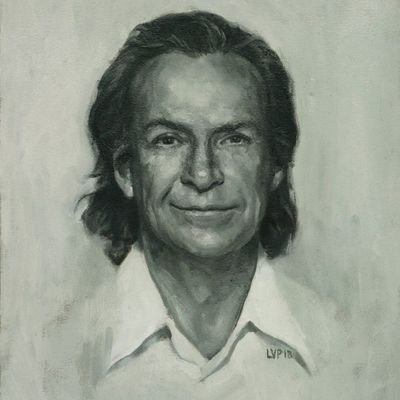
For those who want some proof that physicists are human, the proof is in the idiocy of all the different units which they use for measuring energy.

nchoudri retweeted

Newton was intensely self-taught and learned immensely from the written works of his predecessors.
When he wrote in a 1675 letter to Robert Hooke, "If I have seen further it is by standing on the shoulders of Giants," he was referring to the European intellectuals whose work he synthesized.
Instead of relying solely on the standard Aristotelian curriculum taught at Cambridge, Newton spent his free time intensely studying René Descartes' La Géométrie, which bridged algebra and geometry. He also absorbed the planetary laws formulated by Johannes Kepler and the kinematics of Galileo Galilei.

nchoudri retweeted
Carl Sagan explains why a child’s simple question may be deeper than most adults realize.
“Mommy, why is the grass green?”
And very often the child gets an answer like:
“Oh, who knows?”
But that is not a silly question.
It is an extremely profound question.
Because hidden inside it are the fundamentals of biology, light, chemistry, and physics.
How much better it would be to say:
“That’s a good question.”
“Maybe we can look it up.”
“Maybe when you grow up, you can find the answer.”
The tragedy is that many children learn the wrong lesson.
They learn that asking deep questions is somehow bad.
And when that happens, we lose something precious.
We lose intellectual resources.
We lose curiosity.
We lose future thinkers.
Because the complex and subtle problems we face can only be solved by people capable of complex and subtle thoughts.
A child’s question is not an interruption.
Sometimes, it is the beginning of science.
nchoudri retweeted
What I am going to tell you about is what we teach our physics students in the third or fourth year of graduate school... It is my task to convince you not to turn away because you don't understand it. You see my physics students don't understand it... That is because I don't understand it. Nobody does.

nchoudri retweeted

Edwin Krebs and Edmond Fischer showed how proteins in the muscle cell make the energy supply accessible for muscular work and how the breakdown of glycogen to glucose is controlled in the skeletal muscles.
Read more: bit.ly/2QBeJ95
#NobelPrize

ALT Illustration of muscle fiber structure showing components such as the sarcolemma, mitochondria, myofibrils, nucleus, T tubule, terminal cisterna, triad, and sarcoplasmic reticulum.
nchoudri retweeted
True skepticism isn't about rejecting new ideas; it is about testing them with the exact same intensity, regardless of how comforting or exciting the idea might be.
nchoudri retweeted

A good scientist is a person with original ideas. A good engineer is a person who makes a design that works with as few original ideas as possible. There are no prima donnas in engineering.
— Freeman Dyson

nchoudri retweeted
“Life is like riding a bicycle. To keep your balance, you must keep moving.”
@AlbertEinstein's life advice in a letter to his son Eduard on 5 February 1930. In the picture, Einstein is riding a bicycle in Santa Barbara, USA in 1933.
#WorldBicycleDay

ALT Black and white image of Albert Einstein riding a bicycle and smiling.
nchoudri retweeted
Knowledge grows when you ask stupid questions. Stupidity grows when you don't ask anything.
nchoudri retweeted
"I was delighted too when I heard about the Nobel Prize, thinking as you did that my bongo playing was at last recognised."
Physics laureate Richard Feynman was known for being a brilliant mind, an exceptional communicator and – who can forget – an enthusiastic bongo player.

ALT Richard Feynman posing with several bongos.

ALT A 24-year-old Richard Feynman's Los alamos ID badge.

ALT Richard Feynman standing in front of a chalkboard at California Institute of Technology in 1988.
nchoudri retweeted
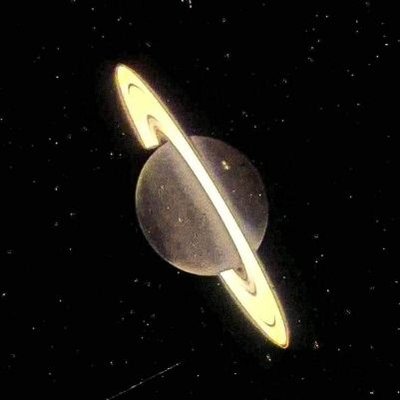
🚨: Nobel prize-winner physicists Kip Thorne says wormholes could theoretically allow humans to travel across space and time.

nchoudri retweeted
Today would have marked the 108th birthday of legendary physicist, science communicator and #NobelPrize laureate Richard Feynman.
Feynman was awarded the 1965 Nobel Prize in Physics for his work on quantum electrodynamics, including the introduction of the Feynman diagram.

ALT Black and white portrait of Richard Feynman sitting casually, smiling with hand on chin.