

Scientist / Founder | Neuro + AI | Prof @stanford | https://xitter.cf/t.co/6XVm4BOEeY & @metamorphiclabs
San Francisco
Joined March 2018
- Tweets791
- Following3K
- Followers6.4K
- Likes2.4K




Pinned Tweet
🧠 Mechanistic interpretability for the brain 🧠
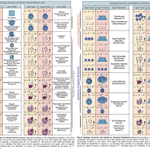
Early visual neurons have had a clean mathematical description for decades (Gabor functions), while higher visual areas have remained notoriously hard to characterize.
Our new paper, led by @vedanglad, shows that natural language can provide that missing framework: concise, human-readable, verifiable descriptions of what higher visual neurons encode.
To get there, we pair neural digital twins with vision-language models to run virtual neuroscience experiments at scale.
Check out the full paper below.

Sophia Sanborn retweeted

We’re excited to announce the 2nd International Workshop on Neuro for AI & AI for Neuro, taking place Feb 22–23, 2027, in Montreal 🇨🇦 alongside @RealAAAI 2027! 🎉
📢 Call for Papers is now open!
For more info and submission details: neuroai-multimodal-workshop.…
#NeuroAI #AAAI2027

Sophia Sanborn retweeted

Come join us for the second Neuro for AI and AI for Neuro workshop. Looking forward to seeing YOUR paper submission.

We’re excited to announce the 2nd International Workshop on Neuro for AI & AI for Neuro, taking place Feb 22–23, 2027, in Montreal 🇨🇦 alongside @RealAAAI 2027! 🎉
📢 Call for Papers is now open!
For more info and submission details: neuroai-multimodal-workshop.…
#NeuroAI #AAAI2027
Sophia Sanborn retweeted

[1] Securing AI weights from nonstate actors will take 6-12 months: rand.org/pubs/research_repor…
[2] EA and safety: xitter.cf/ai_frontiers_/status/2…
[3] Mathematical AI Safety Institute: maisi.org
[4] Enigma: enigma-brain.github.io/letti…
[5] LawZero: lawzero.org/
[6] Safetywashing: safetywashing.ai


Sophia Sanborn retweeted
“What would we even do during an AI slowdown?”
Containment. It will take at least a year of dedicated work to harden security to ensure AIs can't self-exfiltrate, and that adversarial nations can't steal the weights of cyber-offensive AIs [1].
Propensities. Capabilities (what an AI can do) are different from propensities (what it tends to do). We can work on improving AI propensities to ensure they have a negligible rate of lying, cheating, and wanton harm.
Adversarial robustness. We can also harden AIs against jailbreaks, prompt injection, and backdoors. Obtaining high levels of robustness requires careful, assiduous work, as with autonomous vehicles.
Institutional adaptation. We have to greatly increase state capacity to understand and manage AI. Communities also need time to figure out how to handle AI (like AI in education). Civil society also needs to be diversified: nearly all funding for AI safety organizations is directed by the EA/utilitarian network [2]; risk management needs more independent funders, values, and centers of power.
Moonshots. We can explore different paradigms for safety: mathematical foundations [3], neuroscience-based interpretability [4], safe-by-design architectures [5], and beyond.
AI for good. We can collect targeted post-training data to make AI exceptional at radiology, weather forecasting, agriculture, and so on. Fortunately, we can detect if data or avenues of research actually target beneficial use cases or just secretly push general capabilities [6].
A slowdown means we don't have to bet the species to capture the benefits of AI.
Sophia Sanborn retweeted

🧠‼️ New track at NeurReps 2026: the Findings Track.
It's for experimental neuroscience papers that find geometric, topological, or algebraic structure in neural data. Think early versions of journal-quality work, experimentalist + theorist collaborations, no ML required.

Sophia Sanborn retweeted

We’re excited to announce DiG-bench, a new benchmark for discovery!
Over the last few weeks we’ve been testing frontier AI models on our novel discovery games and seeing how they score. Each game is a text-based environment, so they probe discovery capabilities in the natural domain of language models, rather than requiring additional, potentially confounding, visual understanding.
TL;DR frontier models have improved a lot over the last few months. But they are still stumped by some surprisingly simple problems, even in their native text domain.
With
@cocosci_lab (@Princeton) @MITCoCoSci (@MIT) @SchmidhuberAI (@KAUST_News) @misovalko (@Inria) @tri_dao (@PrincetonCS) @RMBattleday @zebkDotCom @FraserGreenlee @akaijsa @ClareMaguire @TimMuller1 @kubicek_ales @physicscat0x7d @SukritSumant @thoughtchannel_
(1/5)

Sophia Sanborn retweeted
In January, we ran a workshop "Neuro for AI & AI for Neuro: Towards Multi-Modal Natural Intelligence" at @RealAAAI 2026.
The proceedings are now online in PMLR: proceedings.mlr.press/v308/
Check it out!
Congrats to all the participants.Really appreciate all your contributions.🎉🖥️🧠

Sophia Sanborn retweeted

Very excited that our paper is now out at @arxiv🎉
As a neuroscientist🧠, I wand to understand how (single) neurons encode the visual world. But how to do this in an automated yet interpretable way when we record thousands of neurons to complex natural stimuli?
Here, we use vision language models, specifically @GeminiApp, to convert neural selectivity in monkey visual cortex into language, i.e. a semantic hypothesis, which we verify with text-to-image generation!
Check out the below post and this beautiful homepage by @vedanglad: enigma-brain.github.io/letti…
Great team effort with @AToliasLab @naturecomputes @SuryaGanguli @TamarRottShaham Nikos Karantzas & star first author @vedanglad 😍
This work was done at @StanfordMed and funded through The ENIGMA Project by @jamesfickel 🙏
Sophia Sanborn retweeted

A hundred years ago, Edgar Adrian recorded from a single nerve fibre and showed the stimulus out in the world is carried in the rate of its firing — he started calling the impulses a "code." We've been trying to read that code ever since.
For parts of the brain like V1 we've had a good answer for more than fifty years, and it was written in math: a Gabor filter. Orientation, spatial frequency, phase — compact, and you could measure how well it fit. Deeper in the hierarchy, in areas like V4, we never had the equivalent. We mostly had qualitative descriptions — they fire to shape, color and texture — but couldn't write down a more precise one for a single neuron, let alone put a number on how well it captured what the neuron responds to.
Our new paper from The Enigma Project, led by @vedanglad, uses vision-language models to write that correspondence in ordinary human words. The words don't just give a qualitative description of what each neuron is tuned for; crucially, they let you quantify how well that language captures the tuning. Take a neuron's description, regenerate fresh images from it with a diffusion model, show them to a digital twin, and measure: descriptions written to drive V4 neurons pushed 96.1% of them into the top 5% of their responses to natural images; descriptions written to suppress pushed 97.6% into the bottom 5%.
So we now have an automated way to describe the map between neurons and the world — in human language, in the macaque brain.
That opens a new avenue: describing biological neurons in the same currency we use to interpret artificial ones, and comparing mechanistic interpretability across brains and AI directly.
This work is together with Nikos Karantzas, @kfrankelab @naturecomputes @SuryaGanguli @TamarRottShaham
Many thanks to the rest of the team at the Enigma Project @Stanford and @jamesfickel for generous support
Sophia Sanborn retweeted

Our new paper lead by @vedanglad w/@AToliasLab "Letting the neural code speak..." arxiv.org/abs/2605.12485
We show how to get *monkey* visual neurons to TELL us in *human* language what images make them fire. We do this is an automated verifiable way at scale! How?
1) Build a digital twin of monkey visual areas that can accurately map visual inputs to neural activity.
2) Perform in-silico experiments on this twin to find many complex images that make a model neuron fire.
3) Use a vision-language model to describe these complex images.
4) Verification: use a language-conditioned diffusion model to generate new images, and check they make the monkey digital twin neurons fire a lot.
To our knowledge, for the first time, we have a way to convert monkey vision to human language, and from *human* language to sample infinitely many images that make any given *monkey* visual neuron fire, all in an algorithmic fashion.
For more exciting details, see @vedanglad's excellent thread!

Sophia Sanborn retweeted

How well can you describe the feature selectivity of a vision neuron … with words? Interpretability has long borrowed from neuroscience — and maybe it can give back too! 🧵
Sophia Sanborn retweeted
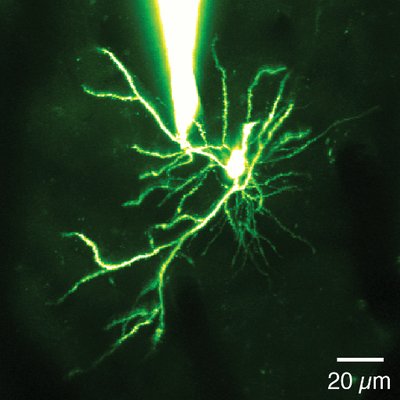
Neuropixels Opto is out! 🎉🥳🍾🚨 Congratulations to a fantastic team!
nature.com/articles/s41592-0…

Sophia Sanborn retweeted
If you're at @CVPR this week, come meet the Metamorphic team. We're hosting a happy hour tomorrow evening with @SpiralDB on NeuroAI, AI for Science, and multimodal modeling — and we're hiring. Find @KonstantinWille and @AdrianoCardace
there. 👇 metamorphic.com

Metamorphic is at @CVPR this week.
Join us tomorrow evening for a kick-off happy hour co-hosted with @SpiralDB to talk AI for Science, multimodal modeling, and what comes next.
We’re growing the team - find @KonstantinWille
and @AdrianoCardace there if you’re curious.
luma.com/i4wjq5lu

Sophia Sanborn retweeted

If you are interested in the intersection of AI x Science (neuro, bio), you're going to want to meet this team @CVPR tonight
Metamorphic is at @CVPR this week.
Join us tomorrow evening for a kick-off happy hour co-hosted with @SpiralDB to talk AI for Science, multimodal modeling, and what comes next.
We’re growing the team - find @KonstantinWille
and @AdrianoCardace there if you’re curious.
luma.com/i4wjq5lu
Sophia Sanborn retweeted

Tonight's the night! AI is in its Science era
Come join us if you're @CVPR in Denver this week!
Metamorphic is at @CVPR this week.
Join us tomorrow evening for a kick-off happy hour co-hosted with @SpiralDB to talk AI for Science, multimodal modeling, and what comes next.
We’re growing the team - find @KonstantinWille
and @AdrianoCardace there if you’re curious.
luma.com/i4wjq5lu
Metamorphic is at @CVPR this week.
Join us tomorrow evening for a kick-off happy hour co-hosted with @SpiralDB to talk AI for Science, multimodal modeling, and what comes next.
We’re growing the team - find @KonstantinWille
and @AdrianoCardace there if you’re curious.
luma.com/i4wjq5lu
Sophia Sanborn retweeted

'Mapping neuronal selectivity and invariance in the mammalian visual cortex using digital twins'
cell.com/trends/neuroscience…
TINS 'Spotlight' by Xiaoxuan Jia, discussing Ding, Tran, et al. 2026 Nature Neuroscience
nature.com/articles/s41593-0…

Sophia Sanborn retweeted
Super excited to see OmniMouse 🐭 released 🎉
A single model of mouse visual cortex — queryable for many different questions:
• Predicting neural activity from video 📹 👉 🧠
• Predicting neural activity in one population from activity in another 🧠 👉 🧠
• Forecasting neural activity forward in time, given video, past activity, or both 📹 &🧠 👉 🧠
• Decoding behavior (gaze, pupil size, running speed) from neural activity 🧠 👉 🐁
• Predicting neural responses conditioned on behavior 📹 & 🐁 👉 🧠
This kind of multi-modal & multi-task flexibility is an exciting approach for systems neuroscience, enabling systematic in silico exploration of hypotheses about single neuron and population coding
The dataset comprises >2 million neurons across 78 mice and 328 sessions of mouse visual cortex, with naturalistic and parametric stimuli alongside behavior. Both the dataset and the pretrained models are available on @huggingface 🙌
Congratulations to @KonstantinWille @pollytur1
@alexrgil14, and the wider team across the @AToliasLab, @alxecker, and @sinzlab labs and the Enigma Project /w @naturecomputes. Paper, code, data, and models in the original post 👇

🧠Introducing OmniMouse: One of the largest datasets in neuroscience ever assembled along with a systematic study of scaling properties of brain models
Co-led with🤩@pollytur1 @alexrgil14
3M neurons, >150B tokens from @AToliasLab @stanford, @alxecker @sinzlab @uniGoettingen
🧵
Sophia Sanborn retweeted

🧠Introducing OmniMouse: One of the largest datasets in neuroscience ever assembled along with a systematic study of scaling properties of brain models
Co-led with🤩@pollytur1 @alexrgil14
3M neurons, >150B tokens from @AToliasLab @stanford, @alxecker @sinzlab @uniGoettingen
🧵