

Crypto Rekt Class of ‘17 "Long term players play long term games"
Republic of the Philippines
Joined March 2015
- Tweets1.7K
- Following2K
- Followers272
- Likes4.1K






nateowle 🦉 retweeted

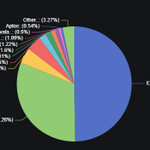
This chart is very misleading, and yes Ethereum still has the largest developer community of any ecosystem.
Here's why:
* This chart is only counting developers active in github/ethereum, a repo maintained by the @ethereumfndn. It contains things like the ethereum .org website, the geth client, and EIPs.
* But that is only a small portion of the Ethereum ecosystem. It is not counting any of the other independent client teams (Besu, Nethermind, Erigon, Reth, Lighthouse, Lodestar, Nimbus, Prysm, Teku, Grandine) or other core infra (e.g. MEV-boost) nor is it counting app developers, defi developers, devtoolling, any of the Ethereum L2 repos, or any of the thousands of other repos that form part of Ethereum.
* Because every other chain mostly centralizes its development inside one organization, this chart undercounts Ethereum relative to them.
* @ElectricCapital's developer report actually tries to map all of the relevant repos for every ecosystem, maintaining a high quality database, and here's what their most recent (2024) report shows for total developers:
Ethereum: 9,297
Solana: 3,868
Polkadot: 1,260
BNB chain: 967
xitter.cf/chainspect_app/status/…


👨💻 Most Active Blockchains by Developer Activity
Chainspect tracks the dev pulse across the entire market to reveal which ecosystems are truly building the future of Web3
Here are the 25 most active networks by total developer count
📊 Track it live → chainspect.app/dashboard/dev…


nateowle 🦉 retweeted

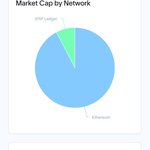
🥧 There is actually a huge network effect between Layer 2s
🔹 12.54% of Arbitrum One active addresses were also active on Base in the *first week of August.
Last week:
🔹 Over 600k addresses were active on 2 or more chains within the Ethereum Ecosystem.
🔸 23% of Arbitrum One active addresses were active on multiple chains
🔹 6.1% of Base active addresses were active on multiple chains
*This is a fairly typical week and was the most recent calculation that intern could get his hands on broken down to the chain level.


nateowle 🦉 retweeted

With all due respect to Matt, the notion that Tempo will in any way be neutral is a fantasy.
First, the very fact the he is billed as the "project lead" while sitting on the board of Stripe, a corporation who is clearly central to this effort, and being a GP at a VC firm that will likely be heavily invested in it, is a problem. That screams "not neutral."
(counterintuitively, the better Matt is at being project lead, the less neutral the chain will be).
Second, he is conflating the chain being permissionless with it being public. Public means "anyone can transact or issue on it" and permissionless means anyone can be a validator. As stated by Matt, Tempo will start as a permissioned chain.
A permissioned chain will never be public.
To wit: will North Korea be able to freely issue tokens on Tempo? What if Do Kwon decides to launch an algorithmic stablecoin on there from jail? And then Putin says "we will route payments for our sanctioned oil being sold on the black market via stablecoins on Tempo"?
Will the permissioned, known, and regulated corporations who run the validators be OK with all of this? Will the general council of Visa declare "Yes: we are clearly violating many US Federal laws and risk losing or licenses and possibly going to jail, but the docs said Tempo is a public blockchain, so we will process all of these transactions?"
I don't think so. As I argued yesterday, permissioned networks do not provide validators the plausible deniability required for a chain to be neutral:
xitter.cf/malekanoms/status/1963…
Third, no permissioned network has ever successfully transitioned to being permissionless. Hyperliquid is trying, but they have a long way to go, and are a special use case because it's mostly an app-chain, one whose primary margin asset still remains "elsewhere", something that might be OK for perps but not for payments.
Tempo will have an even harder time transitioning, because per the announcement, there is heavy involvement from various payments incumbents, most of all Stripe.
To believe that the network can transition to permissionless is to believe that corporations that accrued hundreds of billions of dollars in value over recent decades by owning a network will now launch a new network that they own (cause it's permissioned) but then magically decide to give all the power and profits that come with it away, quite possibly to competitors that will try to destroy their incumbent businesses.
That is highly unlikely. As @ccatalini pointed out yesterday, even Libra's original plans to someday decentralize nwere pushed to the back burner rather quickly. And Facebook did not have an incumbent payment business to protect. Stripe, Visa, Nubank, etc etc all do.
Y'all really think they'll give it away?
This has never happened before in the history of shared corporate infrastructure - which is what Tempo will be on day one.
Every other shared corporate infra (Visa, Mastercard, CME, NASDAQ, SWIFT, The Clearing House, etc etc) has gone in the opposite direction - it has centralized power and become more permissioned and censorable over time.
This is literally why Satoshi invented Bitcoin.
And I say this not as an ideological opposition to Tempo, but as an observation of what will be debated in the conference rooms of every potential issuer, user, etc etc.
Y'all really think Mastercard will jump all over a permissioned network controlled by Stripe and Visa?
Or Amazon or Walmart - fresh off their endless lawsuits against Visa and Mastercard for being oligopolies?
Lastly, It's hard enough to bootstrap a PoS chain from scratch because of the "rich get richer" problem of staking. Ethereum is still the only PoS chain that's achieved a diverse token-holder set that can deem it "a neutral L1." It got there by :
a)having a tiny premine by modern standards and b)being PoW for years.
Tempo will start with a massively concentrated token holder set and permissioned validator set. To argue it'll easily become neutral is to make a whole bunch of assumptions that are contrary to the ideals and lived experience of this industry.

On Tempo, permissionlessness, L1 vs L2
Tempo will be a permissionless chain. On day 1, anyone will be able to deploy a token, and anyone will be able to transact on the chain. Some projects think that attracting real-world usage and serious institutions requires giving up on base layer neutrality. We do not think that, and that's not how we're building Tempo.
The plan for Tempo is to have permissionless validation and permissionless smart contract deployment as well as permissionless usage: just like Bitcoin, Ethereum, Solana, etc. We’ll start with a permissioned validator set to get going and decentralize further from there.
We’re building in features to make it easy for entities interacting with the blockchain (like asset issuers, money transmitters, etc.) to comply with their relevant obligations, but the base layer will remain neutral. This is a principle we feel incredibly strongly about (see: paradigm.xyz/2022/09/base-la…).
As many parts of the mainstream world look to adopt crypto, we think there is a risk that they adopt permissioned systems. Our goal with Tempo is to help onboard them onto crypto rails that solve specific payments needs while still being truly permissionless.
—
Why L1 rather than an Ethereum L2?
At Paradigm, we are heavily invested, both intellectually and literally, in the Ethereum ecosystem. We will continue to help it scale, and invest in and support companies building on Ethereum. We are also extremely excited about single-sequencer L2s for many use cases, including trading.
But building a network for global payments will require bringing together thousands of partners that may not trust us, or Stripe, or anyone as a platform. We think a decentralized validator set—for the chain itself—is a necessary requirement for those partners, and to ensure that the chain is unquestionably neutral in the long run.
From an operational perspective, we feel urgency to build for the demand that’s coming and want fewer dependencies, including on the rate of Ethereum L1 progress. With Tempo, we tried to remove all crypto tribalism and alignment games from our thinking and just focus on building the right product for crypto payments.
At a technical level, we are prioritizing attributes like fast finality (L2s are generally only as final as the underlying L1), multiple validators (vs. single sequencer), and custom transaction lanes and gas pricing. Some of these are technically possible for an L2, but could be complex, slow to implement, and/or introduce many external dependencies. Tempo is stablecoin-focused, so interoperability through native issuance is more relevant to us than the native bridge to Ethereum that L2s have.
We aren’t Bitcoin, Ethereum, or Tempo maximalists. We’re maximalists for permissionless crypto. We want Ethereum L1 to scale, and we want L2s to thrive. We love Bitcoin as a monetary asset. We find substance in Solana, Hyperliquid, and many other ecosystems. We want to ensure real-world payment flows happen on crypto rails, and that’s why we’re building Tempo.

nateowle 🦉 retweeted

"But building a network for global payments will require bringing together thousands of partners that may not trust us, or Stripe, or anyone as a platform. We think a decentralized validator set—for the chain itself—is a necessary requirement for those partners, and to ensure that the chain is unquestionably neutral in the long run."
You are literally describing Ethereum here and with a properly constructed L2, you can inherit these properties from Ethereum L1 + scale way beyond what an L1 design can give you.
On neutrality - how is Tempo going to be neutral when it's backed by Stripe? Why would Stripe allow competitors to use their chain to grow? Why would competitors even want to use Tempo instead of creating their own chain? We already have like 4 new stablecoin L1's with more on the way - this should tell you all you need to know about how much businesses trust other businesses to be "credibly neutral".
The economic and business incentives here make no sense - you can't just say "we're going to be neutral" and expect people to believe it - especially when the whole thing is being created by very centralized entities.
Real and lasting credible neutrality is not something that can be promised - it is extremely hard to achieve and I'd argue only 2 networks have been able to achieve it to this day - Ethereum and Bitcoin.
Google will soon realize:
- how siloed they are from dev network effects that they’ll try to launch an exec environment alongside their VM or add transpilers/compilers from Python to EVM
- how siloed they are from liquidity network effects that they’ll try to launch trusted bridges, trust-minimized bridges or even a compatible stablecoin to attract more liquidity
- how siloed they are from boader network effects that they'll just say 'f*ck it, we will just run an L2'

Google just announced a new L1 (on LinkedIn lmao) and I don’t think they know what they’re doing
🚩 Corporate L1
🚩 Python for smart contracts
🚩 Barely marketing it → probably not serious
Just launch an L2 guys @sundarpichai


nateowle 🦉 retweeted

I’m very pro Bitcoin and pro Ethereum. I also like many things of Solana, Aptos and Sui.
I don’t get people that are so against Ethereum. It’s almost like they want a good thing to lose. Ethereum community and decentralization ideals should be supported by everyone.


nateowle 🦉 retweeted

R u ready lube up your J-Hole?
Will Jay cut and become Trump's twink, or choose violence becoming Volker 2.0?
I want no cut bc it forces Trump get funky w/ the brr btn. Just like Bad Gurl Yellen in 2022 issues more bills than bonds to drain the RRP after Powell refused to cut.

nateowle 🦉 retweeted

BREAKING NEWS: Federal Reserve Reverse Repo drops to the lowest level in 1,596 days. What happens tomorrow?

nateowle 🦉 retweeted

“Ethereum is outdated technology while BTC head to 150K range this year”
ser, Bitcoin had 2 upgrades in 10 years, and the community spent the last 3 years arguing about a single op code.
Meanwhile, Ethereum is the hub for Stablecoins, Tokenization, DeFi, NFTs, L2s & Zk technology.


nateowle 🦉 retweeted

imagine watching how successful base has been as an L2 and thinking your giant corporation should launch and manage its own validator set without the security of a substrate that would let you maximize for scale and speed
insanity
nateowle 🦉 retweeted

If everyone is launching their own L1 I have to hop between, why shouldn't I just use a bank?


