

Optimism. Entrepreneurship. Design. Basketball. Plant-based Nutrition. Subtraction. Curiosity.
Remote
Joined April 2008
- Tweets8.4K
- Following433
- Followers356
- Likes11.2K


Nate Lynch 🤙🏻🎉🤗 retweeted
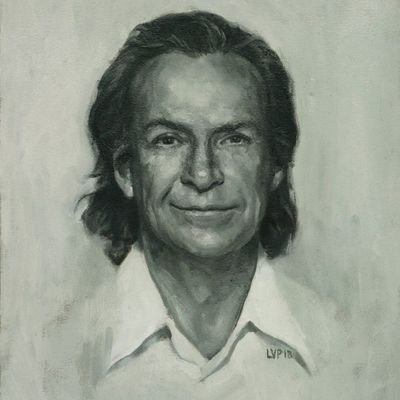
Education is not about knowing everything, it’s about understanding that there is always more to learn and discover.
Nate Lynch 🤙🏻🎉🤗 retweeted

Shark Week is a good time to remind you that the mayor from Jaws is still the Mayor in Jaws 2. This is why it is so important to vote in your local elections.
Nate Lynch 🤙🏻🎉🤗 retweeted

I love this litmus test for if a company has a strong brand or not.
From Seth Godin:

Nate Lynch 🤙🏻🎉🤗 retweeted

thinking: “naive and brilliant, and a great learner” is a killer combo - and the advantages of lacking a huge bias to traditional best practices is an advantage in startups. in big co’s with tenure-driven hierarchies, naïveté tends to diminish credibility which is a real loss.
Nate Lynch 🤙🏻🎉🤗 retweeted
“In mathematics the art of asking questions is more valuable than solving problems."
- Georg Cantor (1845 - 1918)
Nate Lynch 🤙🏻🎉🤗 retweeted

There are only two ways to live your life. One is as though nothing is a miracle.
The other is as though everything is a miracle. —Albert Einstein
Nate Lynch 🤙🏻🎉🤗 retweeted

In 2007, I was 1 of 2 designers on Google Maps.
The app was growing like wildfire.
But it was becoming a cluttered mess — new features were being shoved into every pixel.
Here’s the 4-step process we used to redesign Google Maps into one of the most loved apps in the world: 🧵
–––
But first, it’s important to understand it is normal to build a product based on the underlying technical structure.
In 2005, Google Maps queried one of three databases for any search:
• Maps data
• Local business data
• Directions data
Not surprisingly, the first version of the website had three tabs, one for each of these databases: Maps, Local Search, Directions.
–––
By 2007, Google Maps still wasn’t the dominant mapping application.
But it had hit PMF, its user base was growing quickly, and we were rapidly adding new content and features like:
• Satellite and Terrain views
• Streetview, 3D buildings, Traffic
• Editable map data, Reviews, Photos
• Transit Data
We were wedging new features into any space we could find in the UI.
It became clear the user experience was suffering and the product was growing increasingly complicated.
At that time, our VP, Marissa Mayer likened Google Maps to a Christmas tree that we kept adding more and more ornaments to until it started to fall over…
We tried many different ways to rearrange the UI to accommodate new features.
Eventually we had to step back and rethink Google Maps based on what we knew was working, what brought people to the product, and what we believed the future might look like.
–––
These were the 4 key steps we took to simplify the design of Google Maps to be the intuitive, durable, much-loved product that 1B people still use today:
1. Deconstruct
We wrote down all of the product’s current and upcoming content, features, and functionality and loosely grouped them into categories:
• Core features — The most common tasks people came to do (search, get directions, find businesses)
• Aspirational use cases — Tasks we wanted people to start doing (adding their own content, correcting inaccurate information, using Maps to explore new places, etc.)
• Global actions — Actions that impacted the entire page (print, share, save, etc.)
• Use case specific actions — Actions that were relevant only within a specific use case (eg while getting directions, being able to drag a route or add a destination)
• Related features — Things that weren’t a part of Google Maps at the time, but existed and were closely related. (eg transit information, business searches on Google.com)
–––
2. Reframe
We leveraged a combination of user research, business goals, and our own intuition to make the product better, simpler, and scalable over time. We focused on understanding:
• What brought people to the product
• How they navigated through the product
• What was working well
• What flows were confusing
• What things were missing
• What information was valuable when
• What functionality was redundant
We emerged with several key points:
• “Searching” was the most pivotal task in Maps
• Searching addresses, businesses, parks, mountains, cities, etc could all be thought of as searching for “places”
• Getting directions was important, but rarely happened between two specific addresses. Directions searches usually had a known start or end point, like home or work. It was also more intuitive to be able to search for directions by a place name e.g., Carmel Library rather than having to look up the address first.
• It was strategically important for people to be able to contribute content to Google Maps and to be able to explore the world around them.
–––
3. Reconstruct
Based on what we learned, we then explored ways to reshape the product.
We held these general usability principles in mind:
• Entry points to core use cases should be prominent
• Flows within core use cases should be intuitive
• Common actions, interactions, and views should be consistent
• Contextual actions should be accessible when relevant
This is one exploration of clustering tasks and connecting relevant content:
Our explorations of how to reconstruct the site around people’s needs and flows led to several key design changes:
• There would be only one search box for everything
• Directions would live as a secondary feature
• Other features would appear in context (eg, transit became a mode within directions)
–––
4. Scale for the future
This was 2007. We knew the product would continue to evolve, the information set would grow exponentially, and the feature set would continue to expand.
But by focusing on key use cases and folding information in to the UI where it was relevant, we created a framework to support future growth.
16 years later, Google Maps has continued to evolve, yet is still a simple, intuitive, much-loved product that 1B people use around the globe.
For more on design, follow @elizlaraki


Nate Lynch 🤙🏻🎉🤗 retweeted
The problem with making it look easy is that people think it is easy xitter.cf/_ELJUST/status/1678531…
Nate Lynch 🤙🏻🎉🤗 retweeted

A Harvard researcher asked retirees what they liked most about retirement.
They said:
- No meetings
- No commute
- The ability to pursue a hobby
That sounds like "remote work with a reasonable boss."
Folks, let’s not wait until retirement to start living.
Nate Lynch 🤙🏻🎉🤗 retweeted
Many times experts fail because they are experts in the past version of the world.
—@vkhosla

Nate Lynch 🤙🏻🎉🤗 retweeted

“Great players and great teams want to be driven. They want to be pushed to the edge. They don't want to be cheated.
Ordinary players and average teams want it to be easy.”
— Pat Riley
Do you want to be great or do you want it to be easy? Champions crave challenges.
Nate Lynch 🤙🏻🎉🤗 retweeted
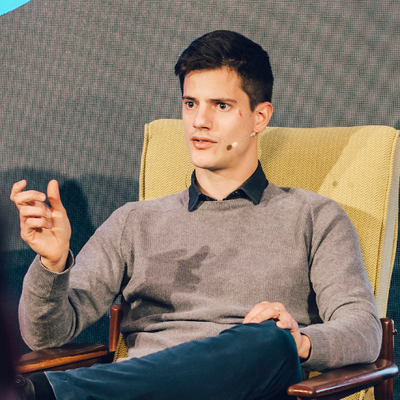
Async communication is key for successful remote teams.
It allows for:
- Multiple time zones,
- Flexible work schedules,
- Time for deep work without interruptions,
- Improved written documentation.
Don't underestimate the power of async communication in your remote team.




Nate Lynch 🤙🏻🎉🤗 retweeted

Udonis Haslem turns 43 today. He has 20,000 friends coming to his birthday party at 8:30.
Nate Lynch 🤙🏻🎉🤗 retweeted
The biggest influence in life is habit. To get better results, adopt better habits.


