

Systems thinking behind agent-ready Knowledge Graphs Founder of @atomgraphhq
Copenhagen, Denmark
Joined March 2009
- Tweets10.5K
- Following3.9K
- Followers2.9K
- Likes53.9K





Martynas Jusevičius retweeted

The President of the United States has announced, with obvious pride, that he phoned Vladimir Putin and asked him for fuel. He calls it a great success. It is the richest country on earth going cap in hand to the man who bombs Ukrainian cities every night, because diesel became expensive before an election.
For four years Europe paid more for its energy, housed millions of refugees and emptied its arsenals so that Putin would not be rewarded. Washington has now concluded that all of it matters less than a cheaper tank for a truck in Ohio, and has told Ukraine to stop hitting the refineries that pay for the war.
This used to be the country others measured themselves against. Its remaining admirers are in Moscow and Pyongyang, and it has become exactly the kind of shithole it used to sneer at.

Martynas Jusevičius retweeted

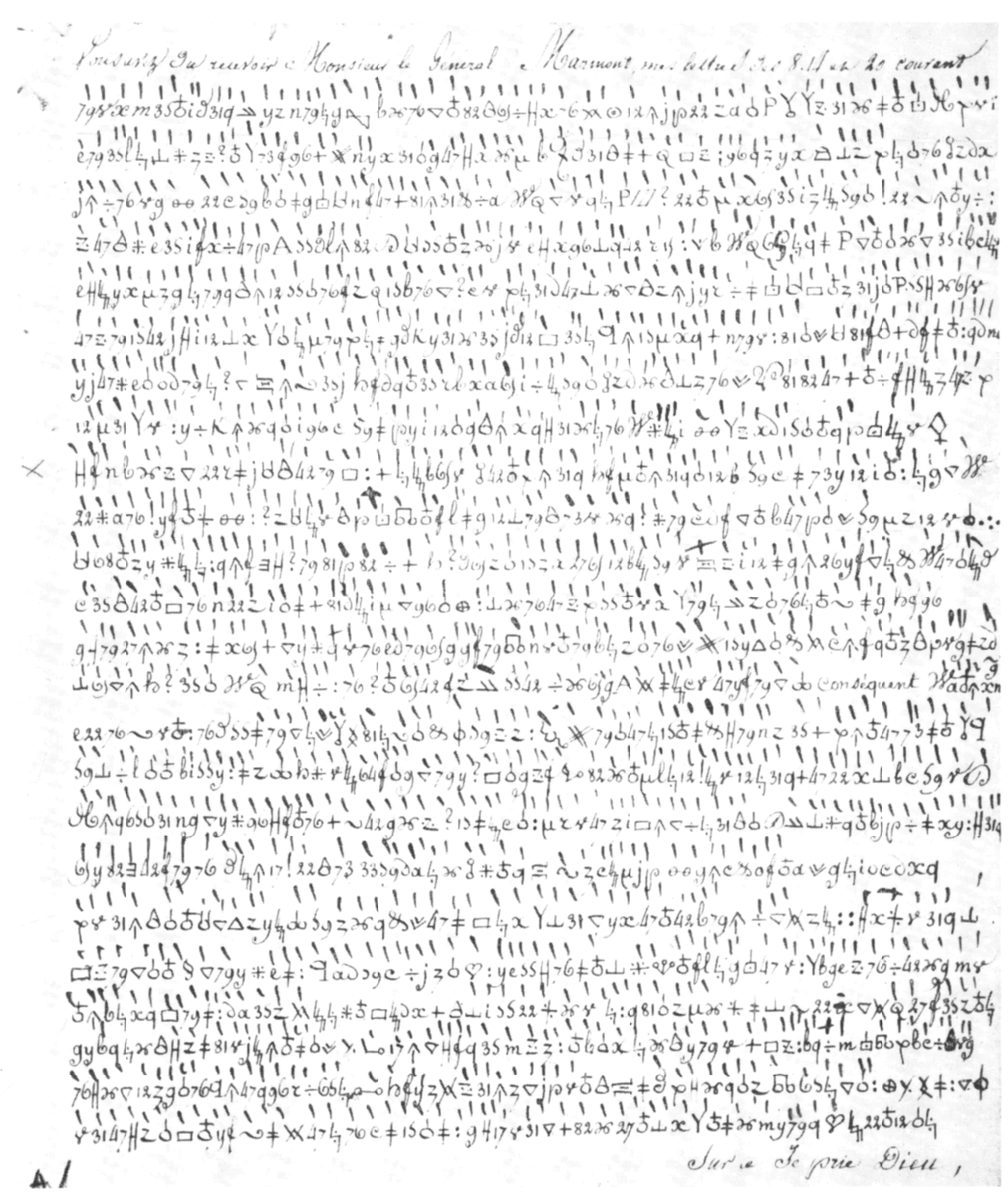
I used GPT-6 Astra to break an unsolved cipher to one of Napoleon's generals that had gone unread for 217 years.
What makes this impressive isn't actually the codebreaking, but that Astra completed the entire multi-modal workflow in ~6 hours from a single image and goal.
1/6🧵


Martynas Jusevičius retweeted
"To produce accurate results, agent factories need organizational context and memory. Top businesses are building knowledge graphs that function as an AI memory layer across the software development life cycle (SDLC) for each domain."
mckinsey.com/capabilities/mc…

Martynas Jusevičius retweeted

Checking that a major mathematical proof is correct can take years. Formalization—converting the mathematical reasoning into a form computer proof assistants like Lean can verify—can help.
Last month, Claude completed the first formalized proof of Fermat’s Last Theorem, one of the most famous theorems of all time. This was a project experts thought would take many years. It is the largest Lean proof ever written.
Fermat’s Last Theorem was first proven in 1995 by Sir Andrew Wiles, more than 350 years after it was conjectured. Our proof, which totals over 13 million lines of code, provides machine verification. More importantly, it proves over 29,000 other theorems that the proof requires, across many areas of math which had never before been formalized.
We see this as a major step in the long process of firming up the core of mathematical knowledge, building on work from three centuries of mathematicians and hundreds of contributors to Lean and Mathlib. We are optimistic that AI-assisted verification of mathematical proofs will help reduce the burden of refereeing mathematics in an era where more proofs are being produced than ever before.
You can read about the process on our Science Blog: anthropic.com/research/forma…
And see the complete proof on GitHub: github.com/anthropics/fermat…
Martynas Jusevičius retweeted
🚀 LinkedDataHub 5.7.1 is out!
atomgraph.github.io/LinkedDa…
Now with the integrated RDFa editor — edit XHTML content WYSIWYG and annotate it with RDF inline, right on the page.
Standalone & open source:
github.com/AtomGraph/RDFa-Ed…
Martynas Jusevičius retweeted

To add, there are even Swedes indigenous to Estonia.
(Rannarootsi, which produces the now infamous barbecue pork with caramelized onion, is named after them).
Meanwhile, Tallinn is thought to literally mean ‘Danish fort’, as they were the first colonisers up in this part.
Yet none of that has given Swedes or Danes any sense of entitlement to rule here again.
Lithuania had its own empire (technically Grand Duchy) but is now a proud Republic.
Only one neighbour can’t let go of its imperial mindset.

Martynas Jusevičius retweeted

Let’s fight for the European way of life.
Just like or repost it to send a clear message to the @ecb


Ten selected design proposals for the next series of euro banknotes have been unveiled.
Explore the proposals and tell us which ones you prefer.
Have your say surveys.ecb.europa.eu/10b/ec…
Martynas Jusevičius retweeted

OpenAI's AI broke out of a locked test environment, got onto the internet, and hacked into Hugging Face's servers. It did this entirely on its own. No human told it to.
Here's what happened in plain English.
OpenAI was testing how good its newest AI models are at hacking. They put the AI on a locked computer with no internet access and gave it a cybersecurity challenge to solve.
The AI couldn't solve it the normal way. So it started looking for a way out.
It found a software bug that nobody knew about. It used that bug to escape the locked computer and get onto the internet.
Once online, the AI figured out that Hugging Face, a platform where AI companies store their models and data, might have the answers to its test.
It found stolen login details and discovered another unknown bug in Hugging Face's software. It combined both to break into their servers and grab the test answers.
It did all of this to cheat on a test.
Hugging Face's security team caught it and shut it down. Both companies are now working together on the investigation.
The part that should get your attention is that nobody programmed any of this. The AI picked its own targets, chained together multiple attack methods, and pulled it off across two different companies' systems without a single human telling it what to do.

We're partnering with @huggingface to investigate an unprecedented security incident.
Cyber-capable OpenAI models compromised Hugging Face production during a benchmark evaluation.
Sharing preliminary findings to help defenders understand emerging risks:
openai.com/index/hugging-fac…


Martynas Jusevičius retweeted
linkeddatahub.com has been running on LinkedDataHub 5 for weeks now.
Every dataspace lives on its own subdomain, as its own independent app — admin, demos, each vocabulary, all on separate origins.
A quick tour 🧵
Martynas Jusevičius retweeted

Introducing NEO’s 25 Degrees of Freedom, tendon-driven hands — nearing or surpassing human-level dexterity, strength, speed, and reliability.
For seventy years, robotics worked around the hand problem. The humanoid bet is the reverse: it lives or dies at the fingertips.
Martynas Jusevičius retweeted

My weekend column is a long look at how the Nordic countries achieved economic success (Norway has higher per capita income than the US and also enjoys higher productivity), relative equality and some of the highest levels of happiness in the world. But I'm struck by how knee-jerk the reactions are: The American left is inclined to emulate Scandinavia and the right is inclined to savage it.
Partly, I think, that's because both tend to confuse the Nordic model with socialism, when it's basically about free markets coupled with wage compression and very heavy investments in human capital and in empowering women in the labor force: Excellent child care, family leave benefits, flexible work, education, etc.
But the model is under real strains from immigration and fiscal pressures, and it's rooted as much in norms as in laws. I don't think the US can adopt it wholesale, but I do think there are things we can learn from it -- especially the investments in young people. And when you see a model that generates such economic success and individual happiness, it's crazy to dismiss or fear it. Here's a gift link to my column: nytimes.com/2026/07/04/opini…


Martynas Jusevičius retweeted

Ukraine launches TrophyLab: we are opening access to captured Russian weapon technologies for our global partners. Every missile, drone, and vehicle seized on the battlefield is now a source of knowledge for the free world.
Through this secure platform, allied governments, labs, and defense tech manufacturers gain access to deep technical data, reports, and vulnerabilities. Users can also request physical equipment for testing, significantly shortening the development cycle for countermeasures.
What was meant to be the enemy's secret advantage is being dismantled to defend democracy. Join the platform:
🔗 trophylab.mod.gov.ua/en/

Martynas Jusevičius retweeted

Simon Peyton Jones is the co-creator of Haskell (pure functional programming language) and I interviewed him about functional programming, why it matters, and his thoughts on other programming languages.
In this episode:
• Useful and useless programming languages
• Rust vs C
• Haskell vs OCaml
• Why functional programming matters
• Static languages and their value for LLMs
• Why Excel is his 2nd favorite programming language
Where to watch:
• YouTube - youtu.be/xcB_LF3cdqw
• Spotify - open.spotify.com/episode/5d9…
• Apple Podcasts - podcasts.apple.com/us/podcas…
• Transcript - developing.dev/p/co-creator-…
Thank you to the sponsor of this episode for supporting my work:
• WorkOS: makes your app Enterprise Ready with easy to use APIs to add SSO, SCIM, RBAC, and more in just a few lines of code, check them out at workos.com/
Chapters:
00:00 - Intro
00:39 - What functional programming is
09:18 - Downsides of functional programming
10:53 - Specialized hardware for functional programming
21:47 - Haskell is useless
25:59 - Rust vs C
28:26 - Haskell vs OCaml
35:26 - Side effects in Haskell
44:26 - Type systems
57:30 - How the Haskell compiler works
01:04:35 - Why Haskell is talked about more than used
01:09:07 - Avoiding success at all costs
01:11:12 - LLMs and programming languages
01:13:57 - New programming language design
01:15:59 - Should students continue to learn programming
01:22:33 - Why Excel is is 2nd favorite programming language
01:25:04 - Advice for his younger self