

Building | Research Resident @PrimeIntellect | Maya (https://xitter.cf/t.co/ebaV9lpXU6) | @litehouseio | Alum @backstage_cap, @meraki, @intel, #TEDx @TBSNetwork
San Francisco, CA
Joined April 2009
- Tweets3K
- Following1.6K
- Followers1.7K
- Likes4K





Pinned Tweet
Launching the first release of World Models from Scratch book. A hands-on, open-source book for builders who want to understand and build world models from first principles
Here’s what’s inside 🧵


Nahid Alam retweeted

🚀 Session 4 for World Model from Scratch book is on Thursday, October 15, at 9AM PST. We will look into Chapter 5 — Architectures of Modern World Models -> Plan: cover DreamerV1, V2, V3, and V4 in one session, focusing on the architectural deltas and engineering motivations between versions
luma.com/euoop1sm?tk=WwNpnZ
Session Overview of the third session for the book via @Cohere_Labs
🎙️ Hosted by @nahidalam, a computer vision researcher and 4-year Cohere community member, currently working on a world model project for drones
🌐 The session walks through building a compact, transformer-based video world model inspired by the Cosmos architecture
🏗️ The world being modeled is an excavator arm performing sand mining — chosen for continuity with a previous chapter's video
GPU & Model Size
📉 Original plan was a ~3B parameter model; revised to target 8GB and 16GB consumer GPUs so attendees can run training locally
⚙️ Two model configs are currently available; two more (for larger GPUs) will be added later
Model Architecture Components
🗜️ VAE (3D Causal VAE from Wan 2.1): Compresses raw video into compact spatiotemporal latent representations before passing them to the transformer; our Cosmos-style implementation leverages Wan 2.1's pretrained Causal VAE
🎞️ Spatiotemporal compression works because consecutive frames and neighboring pixels share high temporal and spatial redundancy, allowing 8×8 spatial and 4× temporal downsampling without losing critical detail
🧩 Patchification: Latents are grouped into 2×2 patches to reduce the sequence length of tokens fed to the attention heads; given the VAE's 8×8 spatial downsampling, a 2×2 latent patch matches a standard ViT's 16×16 pixel receptive field
⚡ Larger patch → fewer tokens → lower compute footprint but coarser spatial-contextual representation
🔬 Smaller patch → more tokens → richer fine-grained dynamics learning but quadratically higher compute; careful trade-off needed
🎯 Attention Head / QKV:
🔍 Query (Q): what the current spatiotemporal token is looking for (e.g., the next kinematic state or position of the excavator arm)
🔑 Key (K): what each token offers (its own spatiotemporal feature representation)
📦 Value (V): the actual information payload routed forward once attention weights are computed
🧮 Self-attention scales as O(n²) across total token count n; 3D VAE compression + 2×2 patchification drastically reduce n to make local training tractable
🌊 Flow Matching Network (Denoising):
🌫️ Direct single-step L2/MSE latent prediction learns the conditional expectation (the blurry average of many plausible futures) — undesirable for multimodal, dynamic scenes
✨ Conditional Flow Matching starts from Gaussian noise and iteratively integrates a learned velocity field toward a clean target latent over multiple ODE steps
🔗 The Diffusion Transformer (attention backbone) directly parameterizes this velocity field, unifying spatiotemporal context conditioning with iterative generation
🎭 Prefix Mask: Tells the transformer which latent frames are observed conditioning context (input) vs. which future frames it must generate; under Wan 2.1's 1 + 4k → 1 + k causal temporal stride, 5 raw frames compress into exactly 2 latent frames
⏩ The model conditions on observed frames 0–4 (2 latent frames) and generates target frames 5–16 (3 latent frames) as an example
🛡️ Target frames are interpolated with noise for flow matching training, while observed prefix frames receive light conditioning-noise augmentation (or per-frame noise levels) so the network stays robust against compounding rollout errors
Q&A Highlights
🧬 VAE source: Our implementation uses the open-weights 3D Causal VAE from Wan 2.1 rather than training a custom tokenizer from scratch or using NVIDIA's proprietary Cosmos Tokenizer
⚖️ Patch dimension choice: Driven by available compute and spatiotemporal redundancy trade-offs; strictly problem-specific with no universal rule
💸 Redundancy: Token redundancy is primarily a compute and memory budget concern (training/inference cost), not necessarily a representation quality bottleneck
🎯 Design trade-offs generally: Reaching 80% quality with 20% engineering effort is feasible; the final 20% of fidelity requires 80% of the effort and is typically domain-specific or an open research question
gitbook: world-models-from-scratch.gi…
github: github.com/nahidalam/world_m…

Session 4 is tomorrow 9AM PDT. We will look into Dreamer series models, evolution from V1 to V4 and going deep specifically on V4
luma.com/euoop1sm?tk=gig4CA
Come join us


Nahid Alam retweeted

I get blown away every time I read this paragraph by Carl Jung, written in 1944:
“People will do anything, no matter how absurd, to avoid facing their own souls. They will practice Indian yoga and all its exercises, observe a strict regimen or diet, learn theosophy by heart, or mechanically repeat mystic texts from the literature of the whole world—all because they cannot get on with themselves and have not the slightest faith that anything useful could ever come out of their own souls.”
took some time to write why I am doing it. Thank you @Cohere_Labs for the support

New blog from our community! @nahidalam (Embodied AI Co-Lead in the Cohere Labs Open Science Community) introduces us to a hands-on project building video world models from scratch. 🚀
Read the full post at labscommunity.cohere.com/blo…


Session 2 starts on Oct 1st at 9AM PDT @Cohere_Labs
please join us luma.com/vrp8j55s?tk=av619g
We are going to learn how to build a world model that fits on a consumer GPU

Session 2 for World Model from Scratch book is on Thursday Sept 17 at 9AM PST. We will look into an existing World Model architecture and evaluating it with existing benchmarks. Please join us @Cohere_Labs
Nahid Alam retweeted
Session 2 for World Model from Scratch book is on Thursday Sept 17 at 9AM PST. We will look into an existing World Model architecture and evaluating it with existing benchmarks.
luma.com/ymbl73af?tk=EoQlJ5
Summary of the first session for the book
📋 Session Overview & Logistics
🎙️ Hosted by @nahidalam, a computer vision researcher and 4-year Cohere community member, currently working on a world model project for drones
📅 This is a bi-weekly series of ~10 chapters covering world models from theory to hands-on implementation
🎓 Attendees who complete ≥75% of sessions will receive a certificate from @Cohere_Labs
📖 GitBook (open, interactive) will be published publicly after this session ends; GitHub repo is already public
📈 Chapters 4 and 5 are expected to generate the most interest; earlier chapters build foundational concepts
🧠 Chapter 1: Core Concepts
🌍 What is a "world"? A bounded environment — not necessarily visual or video-basedExamples: self-driving cars, drones, computer-use agents (clicking through Slack), Excel-operating agents in banking
⚙️ What is a world model? A learned system that models how an environment changes — predicting possible futures given current state and actionsKey distinction: world model ≠ video model; video is just one possible world type
🔑 Key vocabulary defined:
👁️ Observation — what the world looks like now (e.g., camera frames, sensor data)
📦 State — encoded representation of the current situation
🕹️ Action — input that drives the agent (e.g., braking, speed change)
🔄 Transition — one predicted step from current state to next
🛣️ Rollout — a full sequence of transitions representing one possible path to a goal
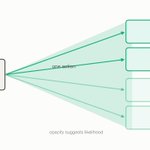
🛤️ Multiple futures: A model naturally produces multiple probable next states; the highest-probability outcome is typically selected, but all possible futures can be explored
🌪️ Dynamics are environment-specific (e.g., drone aerodynamics, car vehicle physics, biological processes)
🎯 Why world models? Core value is reasoning over possible futures — especially useful for rare/edge-case scenarios (e.g., a child unexpectedly crossing the road, or simulating impact of a new medicine on a geography)
🏗️ Simulators: Historically rule-based; increasingly integrated with learned world models and RL. Seen as a space ripe for disruption, especially for startups
💻 Chapter 2: Hands-On Demo (NVIDIA Cosmos Model)
🌌 The series will use the NVIDIA Cosmos ~2.5B parameter model for inference; a similar model will be built in Chapter 4 (capped at ~3B parameters)
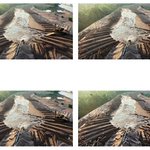
⛏️ Demo showed a rollout explorer using a sand-mining input videoSteps: load video → encode frames → load Cosmos model → generate one or multiple rollouts using different seeds 🔍 A disagreement map can highlight where two rollouts diverge
🎛️ Key parameter: guidance scale — controls how strongly the prompt influences output (lower = less controlled)
💾 Pre-generated outputs are committed to the GitHub repo so attendees without GPUs can follow along
🚀 Tested on NVIDIA A40 (48 GB VRAM); inference may be possible on smaller GPUs; Mac GPU not tested and likely challenging
💡 Q&A Highlights
🧬 Is the world model generative? Yes — the series uses generative models similar to transformers
🔁 Can a rollout be categorized as continual learning? Unanswered — flagged as a good open question
🕸️ Is it related to graphs? Potentially — the tree-like rollout structure is graph-like in CS terms, but no direct graph-world-model work was cited
📉 World model vs. tabular RL? World models handle complex, high-variation environments; tabular/rule-based methods suffice for deterministic, low-variation scenarios
🎲 How is uncertainty represented? Through the probabilistic nature of the learned system (e.g., Markov models, LLM-based approaches); probability is the representation of uncertainty
🔗 Where is causality embedded? Likely in actions (direct events) and in environment-specific dynamics, possibly also trickling through the loss function — noted as an interpretability question
⚖️ World model vs. RL? RL is a type of learning; world model is a type of model — RL can be used to train a world model but is not required
☁️ Can inference run on Google Colab? Likely yes for inference (Chapters 2–3); training may be limited depending on Colab tier
💽 GPU Resources for Upcoming Hands-On Sessions
⚡ Modal — $30 free compute credits on the starter plan
🌩️ Lightning AI — previously offered free credits; current status unclear
☁️ Google Colab — works but may require workarounds for memory constraints
⏳ Hands-on session (Chapter 4 build) is approximately one month away; attendees encouraged to prepare GPU access in advance
gitbook: world-models-from-scratch.gi…
github: github.com/nahidalam/world_m…

Cohere Labs Open Science Community is launching 'World Models from Scratch', a hands-on technical series led by @nahidalam, co-lead of our Embodied AI group, who is writing an open book on the subject. This 9-session series will follow the book as it is developed. 🚀🏗️🌍
Build along from first principles with runnable code, diagrams, and interactive tools. Starts Sept 3. Certificate for 75%+ attendance.
Join our community: cohere.com/research/open-sci…

Session 2 for World Model from Scratch book is on Thursday Sept 17 at 9AM PST. We will look into an existing World Model architecture and evaluating it with existing benchmarks. Please join us @Cohere_Labs
Sign Up: luma.com/ymbl73af?tk=IJ0sUG
Book: world-models-from-scratch.gi…
Github: github.com/nahidalam/world_m…

The repository is designed to be executable -
• Interactive explorables
• Generated figures and videos
• Reproducible experiment artifacts
Read it, run it, and inspect where the model succeeds or fails.
First two chapters are out today. Others coming soon.
📖 Book:
world-models-from-scratch.gi…
💻 Code:
github.com/nahidalam/world_m…

