





Pinned Tweet
My advice to 20 yo yield farmers as a 30 yo yield farmer
1. Yields are about long term holds, unless you are airdrop farming, don't speculate on them and chase new shiny assets.
2. Understand the asset, it's backing, its redemption mechanism and DD the issuer. If you can't, don't touch it.
3. If you still want to speculate on the yield of an asset, buy @pendle_fi YTs.
4. Oracles are your best-friends, having reserve oracles on your strategies makes surviving 10X easier. Read about oracles in depth here: xitter.cf/GearboxProtocol/status…
5. Check the Interest Rate curve. Check at what utilisation it'll be more expensive to borrow than the underlying yield you get paid.
6. Check the liquidity of the asset you want to farm and the routes the protocol has available. You don't want to get stuck on an illiquid asset. This also decides your slippage, which can cost months of yield.
7. If airdrop farming, check with the project if they'll have varying terms for the farmers. You don't want to pay borrow costs and then be left with a lot less than you expected.
8. Don't farm with your entire stack. Even the best of assets depeg, keep some to add to your stack later.
9. Don't leverage farm assets below 88 LTV with more than 50% of max leverage. (especially without fundamental oracles)
10. Don't leverage farm unless your APY is at least 2.5X of the underlying asset with leverage.
11. Lend part of your stack. You wont have to actively manage this and will be able to focus on your main farms much better.
12. Always compare projected vs. realized returns after gas, borrow, and slippage.
13. Stay in touch with your curator, check what changes they are planning and adjust accordingly. Curator channels are live on Gearbox.


Muggles⚙️🧰 retweeted

FYI we have pretty good risk reports at tidresearch.com/reports
6 or higher = pretty solid
5 = probably good to farm
4.5 = farm while monitoring
4 = degen, farm with heavy monitoring and alerts
its free. use it instead of aping shit based on vibes and accountable dashboards.

Muggles⚙️🧰 retweeted

We just released a super comprehensive report mapping the perpetual trading ecosystem, with interviews with @Lighter_xyz, @variational_io and @OndoPerps, here's what you can expect:


Mapping the Perpetual Trading Ecosystem
A Comparative Analysis of Perp Trading Venues across Design, GTM and Microstructure
Read the full report here: docsend.com/v/sjv2g/mapping_…

Sounds like 30+ txns to get in and out. Sounds like waiting 10+ redemption windows.
Sounds like it needs Gearbox’s automated leverage. 🫡

Muggles⚙️🧰 retweeted

Our partnership with @GearboxProtocol is more than another integration.
It’s what Frax has been building frxUSD toward: the liquidity layer for institutional tokenization.
@mugglesect worked tirelessly to make it happen.
Time to retokenize the world with frxUSD on Gearbox.

If you believe tokenisation is the next big thing, then for a stablecoin the end game becomes being accepted as currency by the largest issuers.
And Frax just beat Tether, Paxos and Ripple to be accepted by one of the most coveted issuers, Midas. Becoming only the 2nd stable after USDC to be accepted by Midas for mF-ONE, and soon mGLOBAL.
Gearbox's leverage mechanism was designed not just around how we can offer best-in-class leverage UX to borrowers, but also around how we can offer a better lifecycle to the stables that get borrowed.
Currently, most lending protocols treat stablecoins as routing inventory rather than as currency. Borrowers borrow them from a pool and dump them to buy another asset they want to leverage. This creates three structural consequences:
1. Persistent sell pressure: Borrow-driven swaps generate continuous mechanical sell pressure.
2. Paying for the sell pressure: Scaling borrowing requires deep DEX liquidity. Issuers spend millions every year to ensure the stable can be sold at low slippage.
3. No institutional acceptance: The stable never reaches the issuer.
The stablecoin never becomes embedded in real economic activity. The stablecoin team can't BD their way into getting the issuer to hold their stable as liquidity or use it to pay the underlying institutions. The existing mechanism effectively kills any possibility of the stable finding institutional adoption or being integrated into the issuer's payments side.
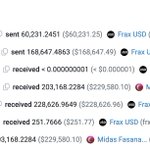
Gearbox's leverage design was meant to change this. Instead of swapping the stablecoin for another asset, Gearbox developed a leveraged minting mechanism. When a borrower mints the RWA with leverage, they also deposit the stablecoin with the issuer, as we see with frxUSD being deposited at Midas.
This eliminates any additional DEX liquidity costs, gains the stablecoin institutional adoption and opens up pathways for its BD team to negotiate for more and find organic holders and utility.
Borrowers pay no slippage and access automated RWA leverage, the issuer sees minting increase, and the stable saves millions and gets institutional adoption. A truly win-win-win mechanism.
Retokenise the world.

Muggles⚙️🧰 retweeted

USDAI is open for business

Crucible Capital founder @Melt_Dem reveals how she financed her own GPU cluster with stablecoin debt and personal credit risk because she refused to sit out the AI boom:
"We're a no-name operator. They're like, who are these two women building compute? Their perception's like, who's this crypto lady?"
"We got debt from USDAI, which is a protocol that crowdsources capital through stablecoins, and the GPUs back the loans. We also took on some personal credit risk. I think being levered to the tits is a great way to live."
"In the greatest build-out of infrastructure in human history, are you really just gonna sit on the sidelines and tweet? I'm gonna ship some bangers, and I'm gonna take some risks, and if I die, I die."
"I'm not gonna sit there and tell my children, during the AI boom I sat back and I tweeted."
@CrucibleCap
Muggles⚙️🧰 retweeted

Frax and Gearbox now let you borrow against tokenized real-world assets in one click, the first step toward doing the same with stock tokens.
@robbieklages on a new @fraxfinance $FRAX and @GearboxProtocol $GEAR integration that just went live.

1/ Frax and Gearbox are unlocking automated RWA leverage.
frxUSD is now the underlying stablecoin asset for @GearboxProtocol's new RWA market, bringing institutional-grade liquidity to one-click RWA leverage, starting with @MidasRWA mF-ONE.
Leave it to two DeFi OGs to unlock RWAfi.

Muggles⚙️🧰 retweeted
Step 1: Tokenize the world
Step 2: Pair the tokens with frxUSD
Step 3: Automate leverage with @GearboxProtocol
Step 4: Profit

Muggles⚙️🧰 retweeted

This is good

Gearbox is a great example of why you shouldn’t confuse lack of attention with lack of progress, the market hasn’t exactly treated them kindly, but while everyone moved onto the next narrative they just kept grafting on the same core architecture.
This RWA leverage solution they’ve just released is where that strategy is really going to pay off imo.
I’ve spent a bunch of time looking into the different approaches being built here but what @GearboxProtocol has done is by far the most elegant design I’ve seen.
It’s not just better looping ux, looping naturally assumes the underlying asset is liquid and everything settles atomically so you borrow, buy the asset, deposit it again and repeat, which is great for crypto native assets but doesn’t really work for RWAs where you have different redemption timelines, transfer restrictions, KYC requirements and in a lot of cases barely any secondary liquidity.
So gearbox gets around all these issues by using the credit account to borrow the full amount upfront and subscribe directly with the issuer.
Instead of needing 5 or 10 or however many separate loops and waiting through the settlement process each time, you can create the entire leveraged position in one go and redeem the entire thing in one go on the way out.
What I really like about this is that leverage no longer needs to depend on secondary market liquidity to the same extent, because it was always pretty silly to expect an issuer to bootstrap $50m or $100m of dex liquidity before people can take levered positions on the asset.
With this model the position can scale against available credit instead because the credit account is interacting directly with the issuer, which means the lending side can support assets that would have been impossible or just really inefficient to support through the normal loop model.
Even the asset specific stuff like KYC, transfer restrictions, redemption and specialised liquidation logic can sit inside gearbox’s infra rather than the lending protocol having to figure all of that out.
And because gearbox is separating the asset specific execution and risk machinery from the funding layer, I think the bottleneck for lending protocols changes quite a bit too.
Because the problem is no longer whether an asset has enough secondary liquidity to be listed and what really starts to matter is whether somebody can actually originate good borrow demand against the liquidity sitting there.
If an issuer can bring the asset, gearbox can handle the market specific plumbing and a lending protocol can provide the funding, which is just a more efficient way of creating leverage around assets that never really fit the normal money market model in the first place.
These guys have done a great job of addressing the actual market specific pain points and creating a structure where everybody wins, RWA issuers get leveraged distribution without needing deep secondary markets first, stablecoins get a new structural source of borrow demand and lending protocols get access to a much wider set of credit opportunities.
What I’m really excited to see now is how much leverage this can support in practice, because if you can get a decent amount of leverage on assets that were basically unleveragable before then you open up a pretty massive new market.
Really excited to see how this plays out and wishing the chads at gearbox all the best with this launch.
Muggles⚙️🧰 retweeted

Increasingly impressed with how protocols like @GearboxProtocol and @AlchemixFi are making you 'feel' something in their latest videos.
Feeling is a subtle thing. Go find the vids and check em out.
DeFi is back!
Muggles⚙️🧰 retweeted

Everyone working RWA knows the catch. You can't get levered exposure unless the issuer bootstraps a real secondary market first. Gearbox just shipped a way around it and nobody's looking yet

Automated Leverage for @MidasRWA's mF-ONE and mGLOBAL, managed by @FasanaraCapital, is now live on Gearbox
Eligible users can access one-click leverage and one window redemptions by borrowing @fraxfinance's frxUSD
No waiting, no looping: real RWA leverage. Curated by @kpk
Muggles⚙️🧰 retweeted

I wanna pull the slider to maximum.
Automated Leverage for @MidasRWA's mF-ONE and mGLOBAL, managed by @FasanaraCapital, is now live on Gearbox
Eligible users can access one-click leverage and one window redemptions by borrowing @fraxfinance's frxUSD
No waiting, no looping: real RWA leverage. Curated by @kpk
Muggles⚙️🧰 retweeted

“If an issuer can bring the asset, gearbox can handle the market specific plumbing and a lending protocol can provide the funding”
The ideal mechanism. If you are a lending protocol still trying to figure out RWAs and quality RWA leverage, let us take care of that for you.
Gearbox is a great example of why you shouldn’t confuse lack of attention with lack of progress, the market hasn’t exactly treated them kindly, but while everyone moved onto the next narrative they just kept grafting on the same core architecture.
This RWA leverage solution they’ve just released is where that strategy is really going to pay off imo.
I’ve spent a bunch of time looking into the different approaches being built here but what @GearboxProtocol has done is by far the most elegant design I’ve seen.
It’s not just better looping ux, looping naturally assumes the underlying asset is liquid and everything settles atomically so you borrow, buy the asset, deposit it again and repeat, which is great for crypto native assets but doesn’t really work for RWAs where you have different redemption timelines, transfer restrictions, KYC requirements and in a lot of cases barely any secondary liquidity.
So gearbox gets around all these issues by using the credit account to borrow the full amount upfront and subscribe directly with the issuer.
Instead of needing 5 or 10 or however many separate loops and waiting through the settlement process each time, you can create the entire leveraged position in one go and redeem the entire thing in one go on the way out.
What I really like about this is that leverage no longer needs to depend on secondary market liquidity to the same extent, because it was always pretty silly to expect an issuer to bootstrap $50m or $100m of dex liquidity before people can take levered positions on the asset.
With this model the position can scale against available credit instead because the credit account is interacting directly with the issuer, which means the lending side can support assets that would have been impossible or just really inefficient to support through the normal loop model.
Even the asset specific stuff like KYC, transfer restrictions, redemption and specialised liquidation logic can sit inside gearbox’s infra rather than the lending protocol having to figure all of that out.
And because gearbox is separating the asset specific execution and risk machinery from the funding layer, I think the bottleneck for lending protocols changes quite a bit too.
Because the problem is no longer whether an asset has enough secondary liquidity to be listed and what really starts to matter is whether somebody can actually originate good borrow demand against the liquidity sitting there.
If an issuer can bring the asset, gearbox can handle the market specific plumbing and a lending protocol can provide the funding, which is just a more efficient way of creating leverage around assets that never really fit the normal money market model in the first place.
These guys have done a great job of addressing the actual market specific pain points and creating a structure where everybody wins, RWA issuers get leveraged distribution without needing deep secondary markets first, stablecoins get a new structural source of borrow demand and lending protocols get access to a much wider set of credit opportunities.
What I’m really excited to see now is how much leverage this can support in practice, because if you can get a decent amount of leverage on assets that were basically unleveragable before then you open up a pretty massive new market.
Really excited to see how this plays out and wishing the chads at gearbox all the best with this launch.
Literally could not have said it better myself.
This is the absolute best description of the bottlenecks RWAs and protocols faced, whats needed for efficient securities leverage and how we designed to make it function without any reliance on liquidity at all.
Love this
Gearbox is a great example of why you shouldn’t confuse lack of attention with lack of progress, the market hasn’t exactly treated them kindly, but while everyone moved onto the next narrative they just kept grafting on the same core architecture.
This RWA leverage solution they’ve just released is where that strategy is really going to pay off imo.
I’ve spent a bunch of time looking into the different approaches being built here but what @GearboxProtocol has done is by far the most elegant design I’ve seen.
It’s not just better looping ux, looping naturally assumes the underlying asset is liquid and everything settles atomically so you borrow, buy the asset, deposit it again and repeat, which is great for crypto native assets but doesn’t really work for RWAs where you have different redemption timelines, transfer restrictions, KYC requirements and in a lot of cases barely any secondary liquidity.
So gearbox gets around all these issues by using the credit account to borrow the full amount upfront and subscribe directly with the issuer.
Instead of needing 5 or 10 or however many separate loops and waiting through the settlement process each time, you can create the entire leveraged position in one go and redeem the entire thing in one go on the way out.
What I really like about this is that leverage no longer needs to depend on secondary market liquidity to the same extent, because it was always pretty silly to expect an issuer to bootstrap $50m or $100m of dex liquidity before people can take levered positions on the asset.
With this model the position can scale against available credit instead because the credit account is interacting directly with the issuer, which means the lending side can support assets that would have been impossible or just really inefficient to support through the normal loop model.
Even the asset specific stuff like KYC, transfer restrictions, redemption and specialised liquidation logic can sit inside gearbox’s infra rather than the lending protocol having to figure all of that out.
And because gearbox is separating the asset specific execution and risk machinery from the funding layer, I think the bottleneck for lending protocols changes quite a bit too.
Because the problem is no longer whether an asset has enough secondary liquidity to be listed and what really starts to matter is whether somebody can actually originate good borrow demand against the liquidity sitting there.
If an issuer can bring the asset, gearbox can handle the market specific plumbing and a lending protocol can provide the funding, which is just a more efficient way of creating leverage around assets that never really fit the normal money market model in the first place.
These guys have done a great job of addressing the actual market specific pain points and creating a structure where everybody wins, RWA issuers get leveraged distribution without needing deep secondary markets first, stablecoins get a new structural source of borrow demand and lending protocols get access to a much wider set of credit opportunities.
What I’m really excited to see now is how much leverage this can support in practice, because if you can get a decent amount of leverage on assets that were basically unleveragable before then you open up a pretty massive new market.
Really excited to see how this plays out and wishing the chads at gearbox all the best with this launch.
Muggles⚙️🧰 retweeted

Gearbox is a great example of why you shouldn’t confuse lack of attention with lack of progress, the market hasn’t exactly treated them kindly, but while everyone moved onto the next narrative they just kept grafting on the same core architecture.
This RWA leverage solution they’ve just released is where that strategy is really going to pay off imo.
I’ve spent a bunch of time looking into the different approaches being built here but what @GearboxProtocol has done is by far the most elegant design I’ve seen.
It’s not just better looping ux, looping naturally assumes the underlying asset is liquid and everything settles atomically so you borrow, buy the asset, deposit it again and repeat, which is great for crypto native assets but doesn’t really work for RWAs where you have different redemption timelines, transfer restrictions, KYC requirements and in a lot of cases barely any secondary liquidity.
So gearbox gets around all these issues by using the credit account to borrow the full amount upfront and subscribe directly with the issuer.
Instead of needing 5 or 10 or however many separate loops and waiting through the settlement process each time, you can create the entire leveraged position in one go and redeem the entire thing in one go on the way out.
What I really like about this is that leverage no longer needs to depend on secondary market liquidity to the same extent, because it was always pretty silly to expect an issuer to bootstrap $50m or $100m of dex liquidity before people can take levered positions on the asset.
With this model the position can scale against available credit instead because the credit account is interacting directly with the issuer, which means the lending side can support assets that would have been impossible or just really inefficient to support through the normal loop model.
Even the asset specific stuff like KYC, transfer restrictions, redemption and specialised liquidation logic can sit inside gearbox’s infra rather than the lending protocol having to figure all of that out.
And because gearbox is separating the asset specific execution and risk machinery from the funding layer, I think the bottleneck for lending protocols changes quite a bit too.
Because the problem is no longer whether an asset has enough secondary liquidity to be listed and what really starts to matter is whether somebody can actually originate good borrow demand against the liquidity sitting there.
If an issuer can bring the asset, gearbox can handle the market specific plumbing and a lending protocol can provide the funding, which is just a more efficient way of creating leverage around assets that never really fit the normal money market model in the first place.
These guys have done a great job of addressing the actual market specific pain points and creating a structure where everybody wins, RWA issuers get leveraged distribution without needing deep secondary markets first, stablecoins get a new structural source of borrow demand and lending protocols get access to a much wider set of credit opportunities.
What I’m really excited to see now is how much leverage this can support in practice, because if you can get a decent amount of leverage on assets that were basically unleveragable before then you open up a pretty massive new market.
Really excited to see how this plays out and wishing the chads at gearbox all the best with this launch.
Automated Leverage for @MidasRWA's mF-ONE and mGLOBAL, managed by @FasanaraCapital, is now live on Gearbox
Eligible users can access one-click leverage and one window redemptions by borrowing @fraxfinance's frxUSD
No waiting, no looping: real RWA leverage. Curated by @kpk
Muggles⚙️🧰 retweeted

This is the big news.
The ONLY two eligible Stablecoins are USDC and frxUSD.
One more step further to become THE default for DeFi and RWA.
-Frax
2/ Another institutional milestone for frxUSD:
As part of this launch, frxUSD is now a mint asset for @MidasRWA mF-ONE.
Besides USDC, frxUSD is the only stablecoin with this status.
That means frxUSD is becoming part of the primary flow for institutional onchain assets.
Muggles⚙️🧰 retweeted

Much respect for the good folks at Gearbox for iterating, pivoting and re-inventing themselves in the middle of a bear market.
There's chewing glass, and then there's whatever the crew here has been doing.
Automated Leverage for @MidasRWA's mF-ONE and mGLOBAL, managed by @FasanaraCapital, is now live on Gearbox
Eligible users can access one-click leverage and one window redemptions by borrowing @fraxfinance's frxUSD
No waiting, no looping: real RWA leverage. Curated by @kpk