




Pinned Tweet
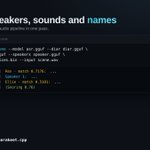
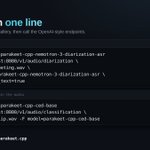
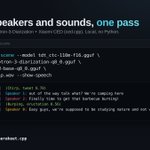
Your local agent can now hear what was said, who said it, and what happened around them.
parakeet.cpp transcribes audio, separates speakers, detects 527 sound classes, and now enrolls and remembers named voices across recordings. One pass, local C++.
Ettore Di Giacinto retweeted

The reason I haven't posted about Tankie much more yet. I'm going down the rabbit hole of benchmarking visual/multimodal models for navigation now ;)


Upload done!
huggingface.co/mudler/LFM2.5…

I'll probably sound grumpy, but I've been involved in OSS for quite a while now. And without pointing fingers or fueling this any further, I just browsed the website of , and after just four months, they're already selling books on how to become popular and offering services to set up inference engines, in a way that feels like blatant marketing and community farming.
On top of that, my timeline has been flooded for weeks by now with nonsensical soap-opera posts about he/she fighting with someone else. If you are enjoying a bit of show on socials, go ahead, sure.
But I don't know what to say. It's not the first time something like this has happened, but I've never seen it done so blatantly, and the community seems to be encouraging this behavior.
I really miss the days when we had simple HTML pages explaining the projects we were working on, having a bit of netiquette, talking via mailing lists, maybe with a link or two and a way to support genuine and honest work in the open.
WTF.
And this is what should worry you.
I see many users going for speed rather than quality. Sure, speed is great, but at the cost of quality, what's the sense of it? Can you use it besides demos or trust it even for small tasks? Did you really used on a daily basis to see what are the limitations of such quants? going lower than Q4 is really hard to digest if you want to do some (serious) Local AI usage.
Also.. comparing drafters vs non drafters. How does this makes even sense?

Finally we have it:
Strata against llama.cpp on my RTX 5090. Same model file, same prompt. Strata wrote this city in 28.8 s, llama.cpp needed 104.2 s.
The model is Qwen3.8-Flash-Next. It doesn't fit in 32 GB, so part of it sits in system RAM. Strata with MTP writes 204 tok/s, llama.cpp 68 tok/s. That's 3x. Both pass all 15 quality checks with thinking off.
The catch: ask Strata the same thing twice and you almost never get the exact same text (1 of 27 repeats matched). llama.cpp matched 27 of 27.
Runs out of the box on parakeet.cpp! Trying it out right now and adding it to @LocalAI_API !

We took NVIDIA's Parakeet and made it better.
Introducing Fluid Speech Mini: the best Open Source Model purpose-built for Dictation 🚀
With SOTA performance under 300 MB
Run it on your iPhone, Mac, or PC. No cloud, no internet.
Dictation shouldn't need a server.
Your voice should be yours and we will make sure of that.
Open weights and more info below!

I've always told my rustacean friends that Rust looks like Perl in some aspects, whether you believe me or not, also in the syntax (that I used to love).
The porting wave community shares the late '90s sentiment of "let's port everything to Perl."

A huge thanks to @niels_gron for supporting @LocalAI_API with a brand new M5 Max MacBook Pro!
Generous support like this helps drive open-source forward.
Excited to start optimizing and making all our projects work natively for Apple Silicon!


Wow the locate-anything models just reached almost 11M download, and are in the most downloaded models of @huggingface , in the first page !
Thanks @fabiolalli for telling me, I didn't notice 😅
Now, I don't know about the download stats and how that's calculated, but, in any case, happy to see community is using my locate anything port to @ggml_org ! you can also use it in @LocalAI_API in a couple of clicks away, published for all platforms we support.
In any case, I'm happy to contribute to the Open source community! Let's push Open source Local AI!


Knowing to pick the right tool for the job is the hardest part.

DHH is fundamentally right about Rust. For context, Vercel has been undergoing a Rust-ification (carcinization, technically 🦀) for a while.
One of the first projects we migrated was Turborepo, from Go to Rust¹. The migration completed, but the RoI was actually quite controversial internally.
While Rust was in our eyes better for low-level OS access, something crucial for a build system like Turbo, the human migration costs were very sustantive.
Go is very fast. It's beautifully designed. It's easy to iterate on. We were very conflicted about the migration, because it was *humans* writing the code, *even if we knew Rust was a better choice*.
The calculus has now changed. What's "best for humans" is no longer necessarily "best for business".
FWIW, it's also quite unlikely that Rust is the end-all-be-all toolchain. I'm quite certain there's greener pasture ahead, because Rust itself was designed before the 'supersonic tsunami' of agents hit.
¹ https://vercel.com/blog/how-turborepo-is-porting-from-go-to-rust
Ettore Di Giacinto retweeted

Introducing my new project - KhazLAS Engine (KhazAkar's Local AI Stack - Engine part)
Simply put: llama.cpp fork focused on HIP + CPU for heterogenous commodity systems, like laptops. Includes deep dives into various parts - kernel too.
gitlab.com/khazlabz/khazlas-…

Ettore Di Giacinto retweeted

LocalAI 4.11.0 is out
- You can now transcribe recordings with speaker labels and detect sounds alongside speech
- New Decisions API
- Model failover
- text-to-animation with Kimodo
- Much more, check links below
Thanks to everyone who contributed, tested, and reported issues!

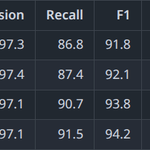
parakeet-redux is a really interesting beast. You can extract the VAD head and then, you discover that has better recall than Silero. Despite the footprint compared to it, offline might have other uses.
@vikhyatk cooked hard here, congrats for the release, and thanks for working in the open!
By the way, all Parakeet-redux models are now in parakeet.cpp (links below). And you can use parakeet now as standalone VAD with both.


The new part: pick a voice from any recording, give it a name, and parakeet.cpp can recognize it in later recordings
Code: github.com/mudler/parakeet.c…

