

BSG Chairman. Author of Number One Bestseller “Betting on a Darkie”. Mteto is a Yale University World Fellow and South African Academy of Engineering Fellow.
Johannesburg, South Africa
Joined February 2009
- Tweets8.9K
- Following7.8K
- Followers33.6K
- Likes4.1K





South Africa’s economic underperformance is not an accident of history - it is largely the result of the choices we continue to make.
We talk endlessly about creating an enabling environment for business and investment, both local and international. Yet too often the actions do not match the rhetoric. Red tape, inconsistent policy, and slow decision-making continue to choke investment across almost every sector of the economy. Investors - and our own entrepreneurs - do not wait forever. Capital is mobile. Talent is mobile. Opportunity is mobile.
If we are serious about growth, jobs and shared prosperity, our leaders across government, business and civil society must become more self-critical. We cannot keep blaming external factors while avoiding the hard internal work: simplifying regulation, speeding up approvals, creating policy certainty, and treating business as a genuine partner rather than a problem to be managed.
The solutions are known. Many countries have done the hard work of cutting bureaucracy and prioritising execution. We can too - but only if we are honest enough to confront where we are falling short and disciplined enough to change.
What are we prepared to do differently, starting now?
#SouthAfrica #EconomicGrowth #Leadership #Investment #RedTape #Accountability

If you do not know where you are going, any road will take you there. That is South Africa today.
Voters gave us the GNU - a real chance to grow. Instead, ministers and parties are driving separate agendas. A wasted opportunity.
South Africa should become the African home for the world’s companies.
The place global firms put their African Headquarters, regional treasury, talent and growth capital - because it is easier and more predictable here than anywhere else on the continent.
That single destination gives every minister one test: does this make it easier or harder for a serious company to base itself here?
Permits in days. Licences in months. Ports and rail that move. Energy that stays on. Visas on time. Courts that settle while the opportunity still exists.
We have the assets. We lack the discipline to make them usable. Countries that win headquarters remove friction faster than everyone else.
The GNU can still do this. But only if the parties stop driving their own agendas and start driving toward one place. #ProudlySA
🤖 Made with AI

Congratulations to Justice Navi Pillay on being awarded the 2026 Nobel Peace Prize.
She is the fifth South African to receive this honour, joining Albert Luthuli, Desmond Tutu, Nelson Mandela and F.W. de Klerk. Among developing countries, this is exceptional. Only a handful of nations anywhere have produced more Peace Prize laureates, and none in the developing world have matched South Africa’s record.
What ties these five together is deeper than geography. They represent the full arc of one of the most difficult human challenges of the last century: confronting a system of institutionalised racial oppression, choosing negotiation and reconciliation over continued conflict, and then exporting the hard-won lessons of accountability into the world. Luthuli and Tutu led non-violent resistance. Mandela and de Klerk, from opposite sides of the divide, chose to dismantle the system peacefully. Justice Navi Pillay defended those who stood against apartheid and later helped build the international legal frameworks that prosecute genocide and war crimes. The common thread is not just resistance. It is the deliberate choice to build something better from the ruins of injustice.
This is South Africa’s distinct contribution to the world. Few places have demonstrated, at this scale, that people from radically different backgrounds and histories can choose justice over revenge, inclusion over exclusion, and shared progress over perpetual division. We have shown the world that diversity, when held together by integrity and a commitment to the rule of law, can produce extraordinary outcomes.
The uncomfortable truth is that we have been better at exporting this idea than living it fully at home. Our country still struggles with the very principles our laureates modelled: embracing difference, insisting on justice for all, and refusing to let past wounds dictate the future. We have the talent, the resilience and the moral capital. What we have not yet done consistently is apply the same discipline to ourselves that we have offered the world.
South Africa has the potential to be one of the great success stories of this century. Realising it requires us to stop treating excellence, inclusion and accountability as aspirations and start treating them as non-negotiable standards of how we work, lead and live together.
As I wrote in Betting on a Darkie: “When people transcend their differences and work together to achieve a common goal, greatness is possible.”
The world has already bet on South Africa’s capacity to show a better way. The question is whether we will bet on ourselves.
#LiveWhatYouExport #BetOnSouthAfrica #TranscendTheDifferences

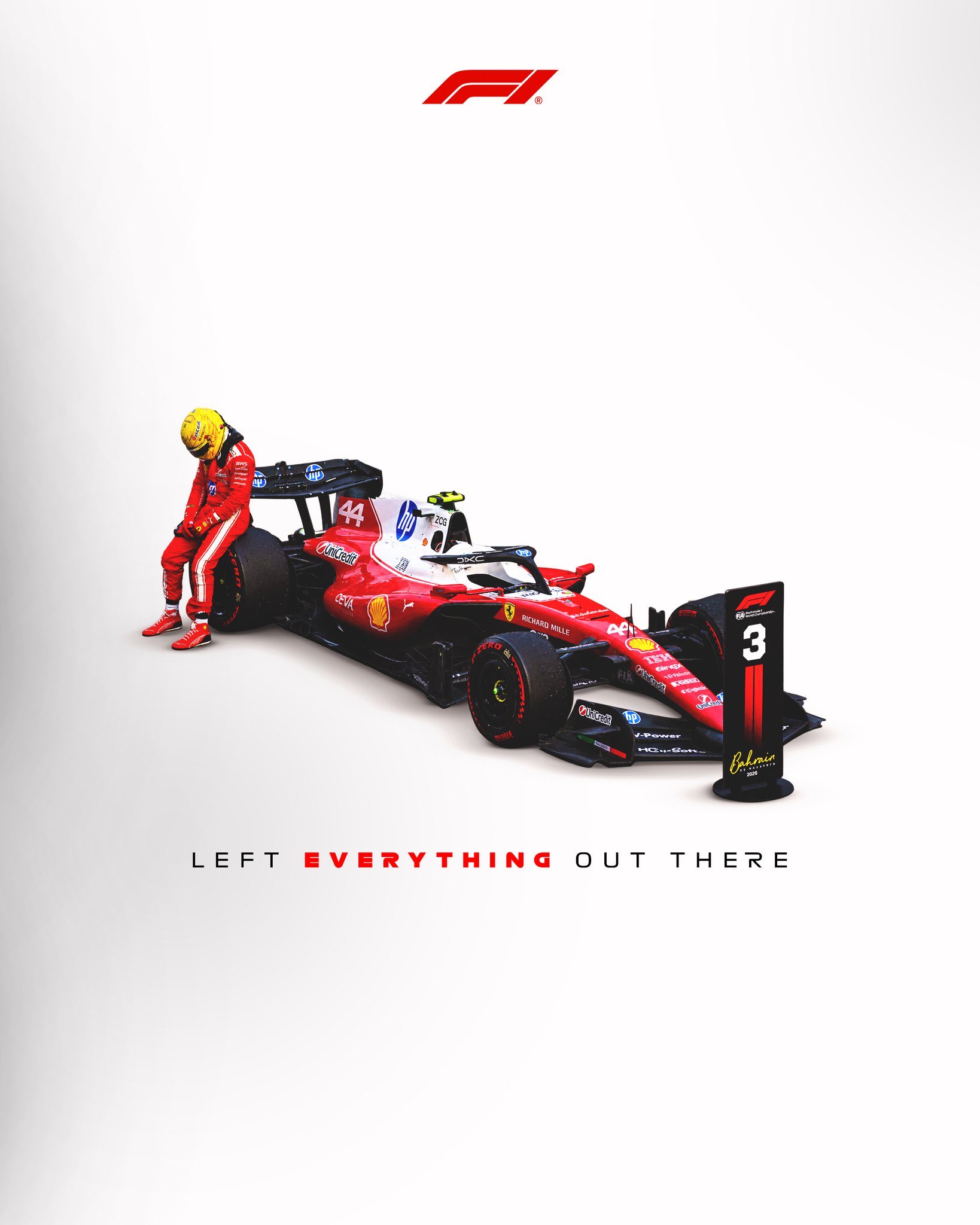
Opportunity is missed by most people because it is dressed in overalls and looks like work. From the back to third. Everything left out there. The opportunity never announced itself. It just looked like work.

Eskom, as sole shareholder, is inviting applications for Independent Non-Executive Directors of the National Transmission Company South Africa (NTCSA).
NTCSA will be a stand-alone, asset-owning transmission system operator. Its mandate includes expanding and operating the national grid, with a programme to build about 14,000 km of new transmission lines, and enabling a more open, competitive electricity market as South Africa liberalises the sector.
We are looking for directors with deep experience in transmission and energy infrastructure, infrastructure finance, governance, engineering, risk, strategy, or related fields, and the independence and judgement to oversee a complex public institution through a critical transition.
Applications close 19 October 2026. Send your résumé, quoting “NTCSA Independent Non-Executive Directors,” to [email protected].
Full requirements are in the attached notice.

MaXhosa Africa did not arrive in Paris by accident.
Yesterday the brand became the first South African house to stage a full official runway show on the Paris Fashion Week calendar. Many will call it overnight success. That reading misses the point.
This is the result of years of disciplined work. A clear identity. An intentional geographic expansion strategy. Repeated applications. Presentations before the runway. Factories in Johannesburg and East London. Craft that is unapologetically African and designed, from the start, to travel.
That is what some strategists call glocal. Stay rooted in what your geography uniquely offers, then take it to the world with excellence.
The collection title, Izihlwele Zivumile - the ancestors have approved - is a reminder that breakthroughs rest on more than one generation’s effort. They rest on inheritance, persistence, and the decision to keep doing the work when no one is watching.
MaXhosa Africa challenges the rest of us. Move from protest and complaint to finding what we uniquely have, and then taking the right actions to make those ideas real. That is how ownership patterns in the economy change. We have to make things happen ourselves.
Stick to your knitting. Do it at a standard the world cannot ignore.
Congratulations to Laduma Ngxokolo, Lihle Ngxokolo Nqini, and the entire MaXhosa Africa team. Africa is not asking for a seat. It is taking one.

dailymaverick.co.za/opinioni…
I do not usually comment on commentary about me. Today I am making an exception.
Redi Tlhabi has written a piece that goes beyond personalities. It asks a more important question: when an institution starts to recover, who is allowed to own the work - and who is still treated as a problem to be managed.

A week ago I spoke at Stellenbosch University’s Faculty of Engineering because a third-year mechanical engineering student, Mogomotsi Moeletsi, reached out on LinkedIn and asked me to come.
He chairs the SAIMechE student chapter. He was not a dean or a vice-chancellor. He simply had the courage to ask.
The university opened the session. Students from Stellenbosch, UCT and CPUT filled the lecture theatre. I came to talk about a national utility. What I found was something larger than a lecture.
Courage is a muscle. Build it early.
Thank you, Mogomotsi. South Africa needs your skill and your nerve.
su.ac.za/en/faculties/engine…

Mteto Nyati retweeted

WATCH | Eskom board chairperson Dr Mteto Nyati says he has not seen any evidence of employee sabotage at the utility. However, he says corruption remains a reality, adding that stronger financial controls have made it more difficult for wrongdoing to occur.
I want to thank Minister Dr Kgosi Ramokgopa, Cabinet and the President for the trust they have placed in me. To continue as Chairman of Eskom is not a formality. It is a responsibility I accept with humility.
The turnaround was not achieved by a title. It was earned by Eskom’s executives, the Board and, above all, our employees - in plants, control rooms and night shifts that many had written off. They proved that “impossible” is not a fact. It is an opinion.
The country now expects more: affordable energy, integrity, and an Eskom that serves the public. That is the work of Eskom 2.0
The work continues. And we are ready. #Eskom #KeepGoing


Over the past two months, the bodies of nine women have been found across Ekurhuleni in and around Kempton Park, and in places such as Rhodesfield, Olifantsfontein, Clayville, KwaThema and Dawn Park.
They were young women, most of them in their twenties and thirties. Several have been identified. Others still wait to be named by their families.
One of them, Elizabeth “Tsontso” Moselakgomo, left home for an afternoon run and did not return. Her eight year old daughter was the one who raised the alarm. That child’s life has been changed forever. That is not a statistic. That is a wound in a family, and in a nation.
Police have said many of the women were found unclothed or only partly clothed, and that some showed signs of violence. They have not confirmed that these deaths are the work of one man, or of one group. A suspect was arrested in connection with the first case in July. That person remains in custody. The other cases are still being investigated, including whether they are linked. We must not outrun the evidence. We also must not hide behind it.
What we already know is enough to confront ourselves. These were women. They died violently. And in this country, the people who inflict this kind of harm on women are overwhelmingly men.
In African society, men are often granted respect simply for being men. We are told we are protectors. That title is not an inheritance. It is a duty. When we look at how too many of us actually live, the question becomes unavoidable: has that unearned respect been misplaced?
We are too often the ones who disappear from our children’s lives, leaving boys and girls to grow up without fathers or male role models. We fill the prisons. We are too often the ones who turn homes into places of fear. We are too often the ones who violate other people’s dignity and safety. In moments of xenophobic violence, it is frequently our voices and our hands that lead.
That is not the whole of us. The majority of men are decent. Many are God fearing. Many work, provide, love their families and want this country to stand. But a decent majority that stays silent is not innocent. Silence is a form of permission.
We know this. In too many families, workplaces and circles of friends, we know men who harm women. There is a male code that treats speaking as betrayal. We once called the person who spoke impimpi. That word was born in a different struggle. We are in a different era now.
Protecting women is not gossip. Taking information to the police is not selling out. It is patriotism. It is the defence of the next generation. It is the only way the silent majority stops being defined by a violent minority.
If you know something, say something. If a friend jokes about hurting a woman, stop him. If a relative’s behaviour towards women is dark, do not look away. Raise your sons to believe that strength is restraint, presence and protection not domination.
These women were not headlines. Their children and families are not collateral. The police must do their work, thoroughly and without fear. Men must do ours.
Break the code. Make courage ordinary. Make silence the shame.
That is how we earn the respect we have been given for free.
Yesterday I presented the Eskom turnaround story at Stellenbosch University’s Faculty of Engineering, at the invitation of Mogomotsi Moeletsi, a third-year mechanical engineering student and chair of the SAIMechE student chapter. The university opened the session more widely and invited engineering students from other institutions, including UCT and CPUT. I had come to talk about a national utility. What I found was something larger than a lecture.
I completed my BSc in Mechanical Engineering at the University of Natal, now the University of KwaZulu-Natal, from 1982 to 1985. In those years, black students needed ministerial permission to study at the historically white universities. Standing in that Stellenbosch lecture theatre, I could not help remembering the days of not belonging. The weight of scarcity and silence that follows you into rooms you were never meant to enter. The loneliness of standing in places that feel borrowed, while the life you left behind still calls you by your name.
A great deal has changed since then. It was heartwarming to see a room that looked like South Africa. The questions were sharp and incisive. Our country has made progress, and it is beautiful to see.
The students were fascinated by the role engineers from different disciplines played in diagnosing and fixing the crisis at Eskom. I could see how proud many of them were of the profession they have chosen. Engineering, at its best, is not only about machines. It is about restoring dignity to people’s lives.
One of the last messages I shared with them came from Maya Angelou: courage is one of the most important of all the virtues, because without it none of the other virtues can be practised consistently. I said that because of Mogomotsi. He reached out directly. He asked. He convinced me to come. Anaïs Nin put it well: life shrinks or expands in proportion to one’s courage. I encouraged them to treat courage as a muscle. Build it early. It will make a huge difference in their lives.
We were honoured to have the Dean of the Faculty of Engineering and the President of SAIMechE, with us. They were gracious hosts.
To Mogomotsi and every student who showed up: thank you. Keep going. South Africa needs your skill, and it needs your courage. #Eskom #Stellenbosch #Engineering


Yesterday my daughter, who is studying in the United States, attended the Springboks versus All Blacks match in Baltimore.
She spent five years of her life in that city before moving to Cleveland. At the stadium she bumped into an old school mate from Dainfern College who now lives in Florida. Two South Africans, far from home, finding each other in a crowd of more than 68,000. It was already an emotional moment.
What neither of them expected was how deeply they would be moved by our national anthem. Standing there, thousands of kilometres from home, singing Nkosi Sikelel’ iAfrika. Pride in our roots. Pride in our diversity. Pride in excellence. And faith - watching the circle and the kneeling that followed the final whistle.
That image stayed with me.
There is a well known observation in India, popularised by Gurcharan Das, that “India grows at night while the government sleeps.” It captures a country whose people and enterprises often advance despite, rather than because of, the state. South Africa has that same untapped potential. We see it in the Springboks. World-class performance is not confined to the rugby field. It exists across our people, our businesses, our communities. We have what it takes.
What we still need is simple, and it is hard:
Create a genuinely business-friendly environment.
Confront crime with seriousness and consistency.
Appoint leaders in both the private and public sectors on merit.
Those three interventions would allow this country to occupy the place it deserves among the winning nations of the world.
We are a resilient people. Our character has been forged in difficulty. In a volatile world, that character is not a weakness. It is an advantage.
The Springboks keep showing us what is possible when talent, discipline, purpose and belief come together. The rest of the country can do the same.
We have the people. We have the potential. Now we must get our act together and grow during the day as well.
#Springboks #RugbysGreatestRivalry #BetOnSouthAfrica #Leadership #Merit #SouthAfrica #ProudlySA


Yesterday I spoke at the Belt and Road Summit 2026 in Hong Kong, on a panel about unlocking new markets. The conversation was not about whether the Initiative has built roads, ports and power. It has. The real question is what those assets are for.
For three decades the dominant pattern looked like this: China became the factory of the world. Countries with existing industrial capacity - South Africa has assembled vehicles since 1924 - sold commodities and imported finished goods. That equation produced extraordinary poverty reduction in one place and a structural squeeze in another. Growth on one side. Resentment on the other. It is not sustainable.
The next chapter has to change the equation from “we sell you raw materials, you sell us cars” to “we both sell goods.” That is what shared prosperity actually means.
South Africa’s practical offer is electric vehicles. Not just assembling kits. Local manufacturing of batteries and components, plus beneficiation of the critical minerals already in the ground. Energy security has been restored and surplus generation now exists. The constraint is no longer power. It is whether partners are prepared to locate capability, not just offtake.
European and American multinationals crossed this line years ago: they produce in South Africa where they sell. As Chinese manufacturers take market share, host countries catch the cold unless industrial capability travels with the investment.
Infrastructure without factories is a trade route. Factories, skills and supply chains together are a development route.
Partnership is not charity. It is the disciplined work of building both. The work starts now.
#BeltandRoadSummit #SharedProsperity #EVManufacturing #Localisation #IndustrialPartnership #CriticalMinerals

At the Microsoft South Africa town hall I bumped into former SARS Commissioner Edward Kieswetter. He is one of those great South Africans I truly admire.
The work he and his team did turning SARS around has been phenomenal.
He told me his first leadership job was at Eskom. They bet on a young man with enormous potential. In the early 1990s it was uncommon for a coloured person to run a power station and manage largely white teams. He won people over one by one - through focused actions that showed he saw them as individuals and that he cared. He went on to become, by his own account, one of the first people of colour in South Africa to run a power station.
He also shared how they introduced local methods of maintaining turbines and rotors instead of shipping them to original equipment manufacturers, cutting both cost and time. He has a nose for improving productivity while motivating people.
What I appreciated most was his focus on discipline. He spoke about how work from home has damaged culture and how disengaged some employees become when they join meetings only via Teams. At SARS he insisted that those based in Gauteng attend his management meetings in person - including union shop stewards, who in many organisations are treated as untouchable.
In my observation, the decline in performance across both private and public sectors is linked to this issue of discipline. Too many leaders and managers are uncomfortable leading and managing. Difficult conversations are not their cup of tea. Standards slip. Even high performers start asking why they should go the extra mile when there are no consequences for those who simply do not show up.
I call it tough love - the leadership style that combines a big heart with discipline and the willingness to have difficult conversations.
That is the standard we need if we are serious about building a country that works. #LeadershipMatters #ProudlySA


Yesterday I was invited by the CEO of Microsoft South Africa, Vukani Mngxati, to be a guest at their town hall. It was a walk down memory lane.
Microsoft is one of the companies that shaped who I am - and in particular how I lead.
When I had the privilege of leading Microsoft South Africa, our mission was clear: to empower individuals, businesses and government to realise their full potential. That purpose informed everything we did.
In South Africa we focused on being relevant to the country we served. We tackled youth unemployment through Student2Business. We made Microsoft software available at no cost to public schools. We supported emerging entrepreneurs through BizSpark. And we trained teachers and principals to use technology to improve education outcomes.
Purpose first. Relevance to South Africa always.
Today Microsoft is one of the global leaders in Artificial Intelligence, with a distinct advantage in Knowledge Graphs.
Their focus should be on the emerging ontology layer that will determine whether AI systems actually understand the world they operate in.
My message to the team was simple: use that advantage to enable more local partners in the AI ontology space. Give South African companies a real seat at the Knowledge Graphs layer. That is a genuine win-win for local partners and for Microsoft South Africa.
Their team is as smart and as patriotic as ever. It is always a pleasure to be in a room with motivated people who are prepared to give the company discretionary effort. That spirit is still there.
I wish my brother Vukani the very best as he takes this great company to the next level in our geography. South Africa needs institutions that combine world-class capability with a deep commitment to this country.
The next chapter should be written with local partners at the centre.
#LocalRelevance #Microsoft #BSG


Creating the future we want. Opportunities are missed by most people because they are dressed in overalls and look like work. #Eskom #Hardwork #Setbacks #Resilience


“The right thing to do and the hard thing to do are usually the same thing.” - Steve Maraboli
The most useful conversations we have been part of lately have not been about winning an argument. They have been about finding a position that can survive contact with reality.
When institutions matter to the whole economy, the temptation is always the same: ease the pressure now, protect the relationship, leave the difficult arithmetic for later. That path is understandable. It is also how balance sheets quietly deteriorate and how trust is spent faster than it can be rebuilt.
What we have learned is that durable alignment does not come from everyone getting what they asked for. It comes from a shared refusal to treat financial integrity as negotiable. The right outcome is the one that keeps the institution capable of delivering, investing, and reforming - not the one that merely postpones the cost.
That requires a particular kind of discipline. It means sitting with people who carry different mandates and still agreeing that short-term relief cannot be purchased by weakening the very platform on which growth depends. It means accepting that some concessions look generous in the room and expensive in the accounts. It means preferring an agreement that is hard to announce over one that is easy to regret.
None of this is about being rigid. It is about being clear. Stewardship is the decision to protect the long-term position even when the short-term conversation would be more comfortable. The lesson is simple, and it is not new: if the easy thing and the right thing diverge, choose the one that still works after the meeting ends.
The hard thing and the right thing are usually the same thing. That is the standard worth holding. #Eskom #Reforms #KeepGoing