

Entrepreneur. Investor. Padawan. Lover of technology, innovation, people, travel, wine, sneakers, basketball. Views on here are my own.
Vancouver / San Francisco
Joined May 2010
- Tweets5.6K
- Following1.8K
- Followers1.9K
- Likes14.2K








New rule: as long as a government is in a fiscal deficit, the media has to substitute the word with "taxpayers" for any spending program announcement. Headlines read very differently once you make this one small adjustment.
Bocar Dia 🇨🇦 retweeted

“When Mark Carney said, ‘The middle powers should get together’—it’s a fantasy. They did that, it’s called Europe,” says Jamie Dimon, chairman and CEO of JPMorganChase. “The GDP of Europe has gone from 90% of America to 70%. And in our view, it will probably continue to erode over time because [of] high taxes.
🔗 Watch the full conversation: bit.ly/3QmGPnr
Bocar Dia 🇨🇦 retweeted

Canada’s not going for gold with this strategy.
On the consumer side, this strategy gets a lot of things right and this government deserves credit for that.
But from a digital and economic sovereignty perspective I think it falls short. What the AI industry most needs is for governments to create the free market conditions for AI companies to start, scale and thrive here.
There are important elements in the strategy: sovereign compute, a public supercomputer, AI Missions starting in health care, a fund to scale Canadian champions, commercializing the Photonics Fabrication Centre, and the government as an anchor customer. Members of the Build Canada community have publicly written about many of these ideas and it's good to see these show up in the plan.
But we have to be honest about what this strategy is – and what it isn't.
This is primarily a strategy to help Canada use artificial intelligence, with government in a main character role in framing public perception.
It is not a strategy to make Canada the best place on earth to build it. Its own organizing goal – adoption, moving Canadian businesses from 12% to 60% uptake – is necessary but not sufficient to make Canada a global AI leader.
The strategy says it wants Canadian champions. But you don't build champions with government cheques and deferred studies – you build them by making Canada the best place on earth to start and scale a company.
Using AI and Building AI are different goals, and they require different instincts.
The companies that will define this century will get built where four things are true:
1. founders and engineers keep what they create;
2. capital is deep enough to write billion-dollar cheques; 3. energy and compute are cheap and fast to build; and 4. the rules are light enough to move at the speed of the technology.
Measure this strategy against those conditions and the pattern is clear:
On founder and employee economics – the single biggest reason talent leaves Canada – it does nothing now. The one capital-gains idea it raises, a reinvestment rollover, is deferred to a study due by Budget 2026.
On capital, it makes the government the venture capitalist instead of unleashing private capital to back Canadian companies.
On energy, it promises to double the grid by 2050. The build is needed this decade – and the strategy offers no permitting reform to get there.
On regulation, it adds a new layer – a trusted-AI certification program, watermarking, plus new privacy and online-safety laws – and compliance always lands hardest on the startups least able to carry it.
And it adds a dozen new programs on top of the 130-plus innovation programs founders already can't navigate. The answer was always fewer and faster, not more.
Prosperity is not something that the state can spend into existence. Prosperity is what happens when you clear the runway and let the free market work. No government can subsidize its way past the friction it is responsible for creating.
Playing to win would look different. It would look like:
--> Let founders defer capital gains reinvested in Canadian companies, and fix how we tax employee equity – now, not in a future budget.
--> Treat energy and permitting like the emergency they are. Approve power and data centres in months, not years, and build at wartime speed.
--> Set a hard speed limit on regulation: apply the laws we have, and clear new products fast.
--> Collapse the ~130-plus innovation programs into fewer than ten – and cut the friction founders hit at every step.
Canada invented modern AI. We have the talent, one of the cleanest grids in the world, and the research base to win. The opportunity is ours to lose.
This strategy is a genuine start – but a country that wants to win doesn't plan to be the world's best customer. It plans to build the companies the world cannot live without.

Ottawa’s AI strategy includes more than $2.3-billion for training, adoption and startups theglobeandmail.com/business…


Democracy in #Canada: in the last federal election 8,595,488 Canadians voted Liberal and 8,113,484 voted Conservative: a difference of 482,004 votes or 2.45%. A few floor-crossers and a couple bi-elections in April and Carney is likely to get 172 seats vs. 141 conservative seats. A majority government with a 31 seat advantage that gets to govern uncontested. In the 2021 elections 190,781 more Canadians voted Conservative than voted Liberal before Trudeau cut a deal with the NDP. If you don’t understand why conservative voters are frustrated, ask yourself what 11 years of Liberal rule has objectively accomplished, and how you would feel if you were on the other side of this.
If you want to listen to an insightful conversation on US-Canada trade and #USMCA negotiations, Listen to this podcast from @TheHubCanada with @Sean_Speer and @oren_cass You will learn more in 45mn than 100 hours of Trump-obsessed content from @CBCNews youtu.be/qWFH40mzqFE?si=Hv1m…
Unpopular opinion: While Mark Carney’s #Davos speech this week was very good and well articulated, it may not have been a smart speech to give in the middle of a #USMCA trade deal negotiation given the July 1st review and built-in sunset clause. The fact of the matter is that the US still represents ~75% of #Canada’s trade. Antagonizing the US president and indicating a rupture in relations may lead to a very negative USMCA outcome - this following an EV deal with China and other moves on the international stage that were not seen favourably by the current US administration. I fear we may look back on this moment and realize that #Carney traded years of further economic pain for Canadians for ten seconds of intentional fame. We should tend to our garden first. It’s been a year of what was supposed to be a “changed” Liberal Party and from where I am sitting I have yet to see tangible actions and/or results that are a departure from the past 10 years. This may play well with the boomer base but Canadians (especially young Canadians) are in “show me” mode - more speeches, more big spending programs and flashy announcements are just more of the same unless they break their habit of consistently failing on execution and outcomes.
Bocar Dia 🇨🇦 retweeted

California started with the Gold Rush and might end with the Golden Exit.
it has been underreported how much wealth has left CA because of the asset seizure tax being proposed.
a private poll was conducted amongst affected individuals a few days ago and 80-90% surveyed said they have already left CA in 2025 or will leave in 2026 if the ballot measure looks likely to pass.
$2-2.5T of assets gone, representing about $20B of annual revenue for the state government. and likely hundreds of thousands of jobs now at risk.
less reported is the bigger exodus underway from folks who are NOT directly affected but worry (as they should) that this law will quickly transition from billionaires to everyone else...
the initiative actually gives CA legislators the right to take anyone's post-tax assets anytime in the future based on a majority vote. this isn't about billionaires. it's a new "tax system" that simply destroys private property rights in America.
all private property is now public property.
even after paying your taxes, it's not legally your property anymore. it's the government's, you're just borrowing it.
legislators will decide what you get to keep and temporarily use each year.
countless founders, CEOs, and other business leaders are actively looking to move their companies out of state. not just tech, not just AI, not just billionaires, but the core engine of California's prosperity since 1847 is unraveling.
and here is how this initiative risks unraveling America:
- ~10 states have explicit or implicit prohibitions against an asset seizure tax...
- individuals affected in CA (and other states trying to do the same) will move to these states that endow private property rights.
- CA already has a $20-30B annual budget deficit, an unfunded ~$1T pension liability for public employees/unions, and $500B of debt outstanding. the state can not afford to borrow much more and will launch more asset seizures to meet its obligations.
- asset seizures will first transition to "millionaires" and eventually to the entire middle class as more asset seizures drive more people to leave the state.
- the deficit, debt, and job loss will spiral. the Golden Exit.
- no US state has ever declared bankruptcy. in addition to CA, dozens of other states face similar fiscal crises - legislators promised future benefits that can't be paid or theft and waste have been allowed to run rampant and unabated for years.
- struggling states will eventually request federal government assistance, as they always have in times of fiscal crisis, effectively "federalizing state debt".
- states not in crisis will declare "enough is enough", individuals in those states will refuse to pay their federal taxes (why pay for other people's mistakes?), some states may try to secede from the Union, and a constitutional and civil crisis will erupt.
this may seem far-fetched but it is the obvious domino effect of selectively deleting private property rights for some people in some states.
i am not a billionaire and this CA bill does not affect me, but i care about the country and the state of CA. i want both to thrive. it's obvious that there are people in CA in desperate need of support and assistance, and inequities may exist that need to be rectified, but eliminating private property rights is the wrong path for everyone.
a few alternatives to consider first:
1) with a $350B annual budget, CA can cut programs that result in theft and little-to-no benefit for citizens. $50B per year is likely recoverable.
2) if more taxes are needed, tax loans against unrealized capital gains (very few objections will arise), eliminate tax-free rollover of certain appreciated assets (real estate industry will fight), create a step up in basis on inheritance (some will fight but most will support). likely $10Bs of incremental revenue can be realized.
3) restructure all public retirement programs from Defined Benefit to Defined Contribution. eliminating the unfunded retirement liabilities ($1T+) will be the release valve on the future the state so desperately needs.
we must address what ails us without dividing and destroying our state, our nation, our home.
ignore the rhetoric, these are the facts.


The role of the media in a democracy should be to 1) inform citizens and 2) hold power accountable. Canadian media (and I read almost all of it) generally fails on both fronts imo. The worst offender being the @CBCNews but @CTVNews, @globeandmail don't do much better: too many opinion pieces and surface level reporting with very little depth or insight and serious institutional bias that consistently plays opposition to opposition parties themselves. Then they wonder why readership is plummeting and @X is the top news app in the country. Take a page from @TheHubCanada - by far the most useful news site out there with consistently interesting pieces from @Sean_Speer @davidfrum @Pagmenzies and others. Yes, they tend to lean right from an economic policy standpoint but they back up their arguments with true analysis. I am not opposed to reading arguments on the other side but I simply just don't see it from mainstream networks.
Bocar Dia 🇨🇦 retweeted
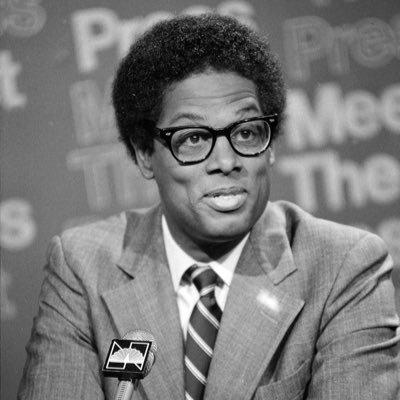
“One of the great mistakes is to judge policies and programs by their intentions rather than their results.”
— Milton Friedman

Bocar Dia 🇨🇦 retweeted

👇🏻 we @Boldstartvc can concur on this data from @Beezer232
First, inception/seed is the most competitive we have ever seen
Second, your fund size at inception/seed is your strategy
Mgrs, ask yourself how big you can get before you have to level up and compete for those leads/co-leads and what size round can you actually lead/co-lead and get ball control
No ball control, hard to dictate your allocation
As data shows, the larger the round (higher the valuation), the more you will compete against multistage/mega mgrs
If you want to battle for those super experienced founders, then put on your helmet and cleats and make sure you have a serious competitive advantage - be there first, deep domain expertise, longstanding relationships - yes, you can always sell the "you're not an option check" to the founders but you need more than that to win your lead/co-lead opportunities


Bocar Dia 🇨🇦 retweeted

Benedict Evans' new presentation just dropped: "AI eats the world"
90 slides on macro and strategic trends in tech.
His biannual overview is always worth the time:
ben-evans.com/presentations

Bocar Dia 🇨🇦 retweeted

Why are young people anxious and agitated? Is it principally about economic outcomes or cultural trends?
Answering this question correctly is key for conservatives to put forward the right policy and political programme.
My latest for @TheHubCanada.
thehub.ca/2025/11/15/the-wee…
