

Head of research @blockspace_eth | @blockspaceforum | fmr. head of research @ChorusOne | block building enthusiast
Switzerland
Joined September 2022
- Tweets637
- Following215
- Followers814
- Likes2K






Michael retweeted

When I wrote "Sharding the Builder" in 2022, my naive solution to builder centralization was multiple builders competing to each win a chunk (Near nightshade style) of the execution block. There would be three competitive MEV auctions per block enforcing a gas cap on each, along with one non-competitive censorship resistance chunk. The proposer would aggregate the winning chunks. This was a multi builder design with an inclusion list in it, written before the Merge.
Seeing the concept come to fruition over the years with contributions from many brilliant researchers, developers, operators, and teams is pretty sweet.
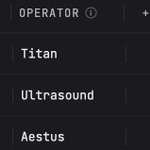
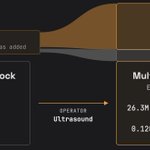
It was even sweeter to get to talk to @mostlyblocks about @Blockspace_ETH MPBC design and its growing adoption (Shout out to TOOL and BuilderNet as well!) We spent a good chunk of the episode going over the mechanism and dashboard including a few thought experiments. There is a ton of alpha in this episode if you listen carefully.

Michael retweeted

The way to save Ethereum: The community needs to create an organization that's economically aligned with Ethereum and accountable to it.
The EF now holds less than 0.1% of all ETH. There is no flow of Ethereum staking or fee revenues to it.
If we want to get Ethereum back to winning:
- create an organisation with credible funding, minimum $1b as a start. That's very reasonable for an ecosystem with $250b market cap
- find a leader who is competent and wants to fight
- make it accountable: a board of people who want ETH to go up, and a charter that holds the org accountable to it
- fund it permanently: A significant amount of staking revenue needs to go to it. A governance mechanism that can adjust it (also part of accountability).
Very hard to imagine now, but I think this is the only way (and it will probably happen, but it might take a long time before it is consensus).
Michael retweeted

Want a gentle intro to distributed computing for blockchain?
I've been turning my notes "Consensus in 50 pages" into a short book called “A Quick Consensus”. Most of the way through, and what's there should already serve as a rigorous but accessible intro to the essentials.
Covered: Tendermint, PBFT, HotStuff, Simplex, accountability, player reconfiguration, asynchronous SMR (and a bunch more).
Still to add: erasure coding, DAG protocols, 2-round finality, recovery, and the Pipes model.
Current draft (updated frequently): Lewis-Pye.com

Michael retweeted
The transaction pipeline will also play a large complementary role in scaling demand.
A recent example are pAMMs giving better fills than CEXes.
Predictable (multi-channel) inclusion is a big target.
Censorship resistance for some, reduced adverse selection risk for others.
Michael retweeted
App Chain MEV as the promised land for validators -
No VM & all logic is executed natively by the validator.
=> Can take every opportunity.
=> Pay gas fees to yourself.
Ran this previously and the ceiling was just liquidity.
The best solution for a chain is threshold encryption, i.e. validators combine keys to decode transactions after their order has been set.
Michael retweeted

Structural issues in the PBS pipeline are slowing, reducing its throughput, impacting UX and most importantly, impacting the robustness of Ethereum! The answer is not simply, "decentralize the builder", but much deeper. Read more here!
ethresear.ch/t/an-observatio…

Michael retweeted
Ethereum produces the highest-grade blockspace on the planet today.
PBS has been criticised a lot, but it’s actually done a great job alleviating centralisation pressure on the core protocol. The job isn’t done yet though, let’s keep pushing the status quo forward 🫡
Post Below 👇


Michael retweeted
I had a great time chatting with Luis from Gelato.
We dug into block building, Based Sequencing, Preconfirmations, and making based rollups a reality - @titanbuilderxyz x @gattacahq pushing Ethereum’s L2 endgame 💪
Thanks for having me!

Did you know @titanbuilderxyz builds ~50% of all Ethereum blocks?
Now, with @gattacahq, they’re pushing the frontier again, bringing Based Sequencing & Preconfirmations to Ethereum’s L2 endgame.
I had @kubimensah on the pod to unpack it all. A must-watch 👇
Michael retweeted

Someone is burning $100k a month, making zero ETH transfers to the Maestro router, but why?
Whilst trawling etherscan, I noticed an unusual amount of high-priority fee empty transfers to Maestro: Router 2. Opening the Maestro router showed these were extremely frequent, often occurring more than actual swaps and almost always paying ~35 Gwei in priority fees.

Michael retweeted

🔭 New research from @fabric_ethereum 🔭
Introducing SCOPE: the Synchronous Composability Protocol for Ethereum.
It’s about healing fragmentation by creating an accounting framework for synchronous cross-chain calls.


Michael retweeted
Think TL;DR, whenever there is (1) performance incentives for validators (2) sufficient flow, then traders will want to trade late with maximum information, and there will be validator timing games which are geographically centralising.
Limiting the window / magnitude for these is feasible, but eliminating them totally is hard to solve just due to having to account for network jitter.
Michael retweeted

SIMD-228 is out for discussion. It is important to draw conclusion backed with data, and we've built a dashboard to evaluate some impacts
flipsidecrypto.xyz/MostlyDat…
We will soon release an article to make a sense of data we have now, and study the impact of SIMD 228 on @solana 🧑🍳🧑🍳🧑🍳

Market-based emissions aims to move from dumb emissions to smart emissions, where Solana's issuance is directly correlated to the percent of total supply staked. This will allow the market to find it's desired risk-free rate (i.e. staking yield) and for some staked SOL to move to better use cases in Defi.
Michael retweeted
In our latest dashboard, we unravel Solana MEV dynamic. Our key finding: MEV on Solana is still immature, leading to most of on-chain proceeds flowing away from Solana's stakeholders. Follow this thread for more insights
flipsidecrypto.xyz/umbnat92/…
Michael retweeted

Thank you especially to the @ChorusOne team for the early testing and helping to work through ambiguous logs and bugs! Top notch team.

Michael retweeted

@tzhen if it helps, I can add "MEV Definition" to the task lists for my weekly community charity work:

Michael retweeted
One toy idea at EthCC was to run a “relay reputation” scheme in mev-boost.
Define desirable attributes & their weights, derive a preference factor for each relay, and weigh its bids by it.
More of a thought experiment ofc but I like the approach of imposing margins instead of a binary decision (..which is just a sub-case with max. weighing anyways).
cc @danielkivanov who has thought about this type of thing.