

Educator, leadership coach, geek. PhD in change leadership. Aotearoa, New Zealand.
Tāmaki Makaurau, Aotearoa
Joined December 2009
- Tweets17.3K
- Following572
- Followers4.4K
- Likes5.6K




Most bad decisions aren’t about intelligence; they’re about bias.
Framing effect = the way information is presented shapes our decisions. 90% success or 10% failure are the same thing.
Effective leaders consider framing before they decide.
More: bit.ly/4tgw2td

Most bad decisions aren’t about intelligence; they’re about bias.
Sunk cost fallacy = continuing because we’ve already invested time, money, or effort.
Effective leaders focus on what’s next, not what’s spent.
More: bit.ly/4tgw2td

Most bad decisions aren’t about intelligence; they’re about bias.
Pro-innovation bias = we assume that new is better, and we overlook what already works.
Effective leaders test before they adopt.
More: bit.ly/4tgw2td

Most bad decisions aren’t about intelligence; they’re about bias.
Urgency bias = acting on what feels pressing, not what matters most.
Effective leaders prioritise impact, not immediacy.
More: bit.ly/4tgw2td

Most bad decisions aren’t about intelligence; they’re about bias.
Loss aversion = we fear losses more than we value gains, so we play it safe.
Effective leaders weigh trade-offs, not just risks.
More: bit.ly/4tgw2td

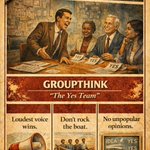
Most bad decisions aren’t about intelligence; they’re about bias.
Groupthink = harmony over honesty. We go along to get along.
Effective leaders invite challenge, not just agreement.
More: bit.ly/4tgw2td

Most bad decisions aren’t about intelligence; they’re about bias.
Confirmation bias = seeking evidence that proves us right and ignoring what doesn’t.
Effective leaders invest effort into testing their thinking, rather than defending it.
More: bit.ly/4tgw2td

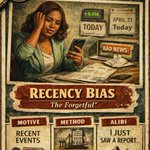
Most bad decisions aren’t about intelligence; they’re about bias.
Recency bias = overweighting what just happened. One result distorts months of evidence.
Strong leaders look for trends, not moments.
More: bit.ly/4tgw2td

Middle Leadership Moments is our video series on high-impact leadership ideas, tools, and routines. It's not about adding more to your plate; it's about sharpening how you use the time and influence you already have.
themiddleleadershipmanual.co…

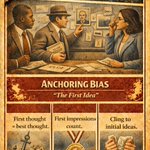
Most bad decisions aren’t about intelligence; they’re about bias
Anchoring bias = the first thing we hear often sets our reference point even when later info disproves it. First impressions count
Effective leaders reset the anchor before deciding.
More: bit.ly/4tgw2td

What are the six cognitive biases that most typically undermine the effectiveness of teacher reflection and inquiry? Another way to consider the question is to ask 'Who sabotaged my thinking?' This clip from my latest webinar explores the main culprits: youtube.com/watch?v=7Skdri-0…

Check out our webinar series on teaching as inquiry. The next one is 'Bias and the Brain' or the cognitive biases that limit our ability to analyse situations deeply.
leadinglearning.co.nz/resour…


Our next webinar looks at the cognitive biases that often limit our decision making. More importantly it looks at how we can limit the impact of those biases on


Co-teaching for Differentiation: practical strategies to ensure your #coteaching engages and accelerates all learners #collaboration #teaching #education
leadinglearning.co.nz/resour…


Free webinar on Accelerating Teacher Inquiry 18th Feb 3:30pm NZT.
leadinglearning.co.nz/resour… #teaching #leadership


A Little Learning is a Dangerous Thing - Summer Special - mailchi.mp/leadinglearning.c…
The Middle Leadership Manual - Start Stop Continue - mailchi.mp/leadinglearning.c…
The Middle Leadership Manual - Free Playbook! - mailchi.mp/leadinglearning.c…
The Middle Leadership Manual - After Action Reviews - mailchi.mp/leadinglearning.c…