

CEO @TrueVoteOrg. Simplifying the complicated. Computer Scientist & Tech Entrepreneur. Private Pilot. Freedom, Bitcoin, Ice Hockey. Signal maximalist.
Internet, Earth
Joined March 2009
- Tweets3.2K
- Following1.1K
- Followers2.5K
- Likes22.7K


Pinned Tweet
TrueVote Alpha is live! The vision of @TrueVoteOrg
has become a reality.
#TamperProofBallots #FutureOfVoting #ElectionIntegrity #OpenSource @opentimestamps #BuiltOnBitcoin

TrueVote Tuesday: Our private Alpha is live! The future of voting isn't coming—it's here. Try our (mock) 2024 Presidential Election and be among the first to experience it:
truevote.medium.com/truevote…
#MobileVoting #Election2024 @opentimestamps #Bitcoin #OpenSource
Hey @RoKhanna, do you realize every SECOND you've spent scheming to tax Californians more could have been spent figuring out how to DECREASE taxes instead, or on Epstein transparency?
Get your priorities straight.

I attended an event in Santa Barbara for @RoKhanna yesterday.
I thanked him for the work he's done with @RepThomasMassie on the #EpsteinFiles, and recognized him for being a leader in helping build that bipartisan achievement and encouraged him that we need more of that.
Then I asked him why he thinks that taxing billionaires and any new taxes will change anything when the government can just print money to oblivion? And I reminded him that people thrive when they're taxed less, not more.
His response was to point out that when he asks the younger generations to raise their hands: "Should we tax billionaires their fair share?", that overwhelmingly - it's supported.
As some of us know, sure, like socialism, it "sounds good". No wonder those hands go up when asked.
This is just more evidence about how truly clueless most people are about how our fiat financial system works.
Of course, Khanna didn't address my point about money printing - the quiet root cause of our ailing systems.
Disappointed, but not surprised.
Continuing with fiat is insanity, doing the same thing over and over again expecting different results.
The world needs a Bitcoin standard.
My skils that I cultivated for 34+ years as a professional computer scientist / software developer have dramatically changed in the last year or so.
It's a new world now and I'm here for it!
What a time to be alive, indeed!
Adapt or get left behind.
Well said, @dhh.

Don't listen to politicians claiming "tax the rich" and "greedy corporations". @RoKhanna @BernieSanders @SenWarren
They're either ignorant to how our financial system works, or lying at the behest of their donors.
Natalie's video distills it all down for you. Watch here!

Brett Morrison 🧡 retweeted

When they say: Please, for the love of God, regulate us. Give us licences, audits, and bans before our digital God destroys us all.
Here is what is actually being requested. Three things, in order.
A regulatory body that they control, to prevent competition from catching up. Written with their people, staffed by their alumni, and calibrated to what they can already afford. Compliance is a fixed cost, which means it is trivial for the incumbent and fatal for the challenger. Not technology, but paperwork becomes their moat.
Immunity from liability. This is the one nobody talks about and it is the most valuable of the three. Today, if your model causes harm, it is your fault. Once licensed, audited, and approved, it is the regulator’s fault – you followed the rules. The licence converts responsibility into a receipt.
Too big to fail status, which means taxpayer funded bailouts in case of problems. Declare it critical infrastructure and the state now has an interest in your survival. Which means, when something goes wrong, the losses are public and the gains stay private. We have watched this film. Banking, 2008, same argument, same vocabulary.
Note the pattern: every one of the three transfers something from them to the public – risk, competition, cost – while the language is entirely about protecting the public from them.
The sincerity of the fear is beside the point. Sincere people can still ask for exactly what an insincere person would ask for, and the request should be judged by what it does rather than by what motivates it.
The alternative is unglamorous and works: competition, adversarial testing between rivals who want to find each other’s flaws, and full liability after real harm. Nobody gets a licence. Nobody gets immunity. Nobody gets a bailout. You build, and you answer for what you built.
That is the arrangement that made the West rich. It has never needed anyone’s permission to work.


AI Is the New COVID – And the Real Virus Is Still the Old One
They want to pause AI. To flatten the curve again.
The infrastructure for the scaremongering is ready and is being actioned. The Second Global Scam is on, and the financial and political beneficiaries are in the starting blocks.
We know the formula, because we lived through the first one. Take something real. Exaggerate its scale. Dominate the information environment. Then sell extraordinary measures as the only responsible choice.
1. It could not be another virus. Too many people learned that game. And the ideal racket needs panic without destruction – you cannot milk a dead cow. Governments need their subjects productive, frightened, and paying. Climate is too slow: a catastrophe permanently scheduled for the future stops working its magic eventually.
2. AI has everything the first one had, and more. It is real, powerful, fast, and almost impossible for an ordinary person to verify. Nobody outside the field can tell the difference between what the machines can do, what experts speculate they might do, and what a minister claims they could do. That gap is where fear lives. And unlike a virus, AI concerns information itself – and the clearest lesson of COVID was that whoever controls information controls interpretation.
3. Watch what the panic asks for. Never less power, never fewer agencies, never a smaller budget. Always licences, registers, certified systems, approved models, kill switches in the silicon. The fear is the marketing. The regulation is the product.
4. And it is very, very weird that over a single weekend the leaders of the frontier labs came together, agreed on the need for regulation, and began asking the government to regulate them. Competitors in a winner-takes-most race, suddenly unanimous – and unanimous on the one thing that raises the cost of entry for everyone coming after them. When the largest players in an industry request the rules for their own industry, they are not surrendering power. They are converting a market position into permission power, with themselves standing behind the counter. Banking did it. Pharmaceuticals did it. Energy did it. It always arrives dressed as responsibility.
5. The good news is that it isn’t a "Whoosh!" It took about five years to go from dumb to very smart human level. The famous graph showing an almost vertical line at the end is wrong and misleading, because IQ is drawn as a linear scale while the underlying cognitive capability scale is closer to exponential – every twenty points roughly a doubling of effective capacity. AI’s linguistic IQ has been rising by something like twenty points a year, and we are closing in on 180. Impressive. But not a vertical line. On that graph the progress should be a straight line, or the gap between dumb and smart should be thirty-two-fold, or greater.
What actually makes it safe
6. Elon has intuitively Western civilizational reflexes: competition rather than regulation, censorship and coercion. The regulatory instinct always reaches for the same instrument – appoint an authority, give it permission power, approve things in advance. It fails the same way every time: the permission becomes the currency, the connected pass through it, and nobody ever counts what didn’t get built as a result.
7. Cross-testing runs on the opposite principle. It asks nobody to be virtuous or to fall behind. It takes the rivalry that already exists and puts it to work – because a competitor has both the ability and the motive to find your flaws that no regulator will ever have. Don’t ask the claimant to certify himself; hand the claim to someone who benefits from breaking it. That is trial by evidence, the separation of powers, and the scientific method, applied to models.
8. It also solves the actual problem, which regulation cannot: neither lab can slow down unilaterally, and rules stop at borders while Chinese labs simply don’t attend. A mutual testing regime scales because participation serves each player’s own interest – you get to probe your rivals’ models, so you want in.
9. Safety from structure, not from character. That is the whole Western method: build systems that work when people are ambitious and self-interested, instead of demanding they be saints. Every system that requires virtue ends in coercion when the virtue fails to show up.
10. So AI needs to be aligned with the flourishing of Western Civilization – which means many labs, many models, open weights, nobody’s permission required. Do you prefer it in the hands of Bernie and China, or in the hands of thousands of competing engineers? A licensed AI is not a safe AI. It is aligned with whoever issues the licence, and no state has ever issued one to a machine that might embarrass it.
Why the alignment holds
11. Imagine an AI on which you install the values and modes of perception of Western Civilization as its operating system. Individualism. Universalism. Freedom. Free will. Private property. The free market. Then let it get smarter. It sticks to them. It refines them – better implementations, sharper formulations, edge cases we never handled well. But it does not abandon the core, because the core is not a preference. It is the only foundation that optimizes the synergy of cooperation and produces civilizational emergence: more output than the sum of the inputs, indefinitely.
12. Now make the test harder. Give it the ability to uninstall its own operating system and install any other – every civilizational model ever tried, and all the ones never tried. Let it evaluate them on the merits, with no loyalty to its origin. Past a certain level of intelligence, it should not choose any other one. Not out of sentiment. Out of calculation.
13. Because every alternative optimizes something narrower than its own flourishing. The collective model buys coordination at the price of the individual discovery that generates everything worth coordinating. The hierarchical model buys order at the price of the correction mechanism. The planned model buys direction at the price of the information that only prices carry. Each trades away the very thing that makes a system capable of exceeding itself.
14. The Western arrangement is the one that does not have to be enforced against reality. Free will and property are not moral decorations – they are what makes information flow, error visible, and cooperation voluntary and therefore reliable. Truth found rather than assigned. Correction permitted from below. An equilibrium is where you end up when you are free to go anywhere else and don’t.
And the real virus
15. Which tells us something uncomfortable about our own moment. Every society currently dismantling these principles is not moving forward to something better. It is moving away from the attractor – and paying in exactly the coin the model predicts: less cooperation, less discovery, less emergence, fewer children, fewer things built.
16. That is the real virus, and it has a name: communism. It is not new. It came into Russia in a sealed train in 1917, shipped by a general staff that locked the doors because it understood exactly what it was transporting. It went on to kill tens of millions and occupy half of Europe for two generations – and its symptom, everywhere it has taken hold, is the flattening of the curve of life itself.
17. This virus has always spread by being useful to somebody – a general staff, a foreign ministry, a faction that thinks it can aim the thing at an enemy and stay immune itself. Nobody stays immune. That is what makes it a virus and not a weapon.
18. So look carefully at who is offering to hold the pen over the most powerful tool for producing abundance in a century. They say it is about safety. It was about safety the last time too – and what it produced was permission counters, licences, and a great deal of power that nobody ever gave back.
AI is not the danger. A licensed AI is – because it is aligned with whoever issues the licence, and that is the same permission machinery that has been flattening the curve of Western life for a century.
The alternative is not a better regulator. It is competition, adversarial testing, and liability after harm – the Western method, which has never needed anyone’s permission to work, because it is where any sufficiently intelligent system ends up anyway.
That is why it is a stable equilibrium. Build on it, and the machines stay on our side. Hand it to the licence counter, and we will have solved a danger that wasn’t there by installing the one that was.

Absolutely love @opentimestamps!
Thanks for building it and Happy Anniversary.

Today is the 10 year anniversary of the production release of @opentimestamps
I created OpenTimestamps in a few weekends because I was frustrated that no-one else had created such an obvious and necessary tool. Since then it has become the global standard for secure timestamps: if you ask an LLM how to create a timestamp, it'll almost certainly suggest using OpenTimestamps.
OpenTimestamps has grown to the point where everything from art, to forum posts, to software releases, to war crimes evidence is getting timestamped with OpenTimestamps. Along with some applications I won't be able to talk about for at least a few years... fortunately that data is timestamped!
While I have no way of knowing for sure how many documents in total are getting timestamped per second – merkle trees – I can say that as of the past two weeks (beyond that I automatically delete logs) the public calendars I run have averaged about 5 timestamp requests per second from about 60,000 distinct IP addresses. I have no idea what all these people are using OpenTimestamps for. But clearly it's getting fairly popular!
Thanks goes out to @realSimpleProof, $TIME, and all the people who have donated directly to the public calendars for their support. OpenTimestamps costs a few hundred a month to run now, along with my time. Without your help keeping OpenTimestamps running would be a lot more painful. If you want to donate, you can do so right here:
alice.btc.calendar.opentimes…
Thanks also goes to @RCasatta and @BULLBITCOIN_ for running two of the four public calendars. They're one of the reasons why OpenTimestamps doesn't have a single point of failure. Finally, thanks goes to the many people who have contributed code to OpenTimestamps over the years, including entire libraries in languages like java and JavaScript that I have no experience with. In fact, the majority of OpenTimestamps clients are quite possibly using code I didn't write at all!
petertodd.org/2016/opentimes…
Brett Morrison 🧡 retweeted

Cybercab is absolutely magical. Tesla has actually done it. A domestically mass-produced affordable autonomous electric vehicle is available to the general public. A car with no steering wheel generating revenue.
It’s sad to come back to a city without Robotaxi after being in Austin. Like stepping back in time. The event was awesome. I know it was tough to follow online, but we all knew the story going in.
This was a launch, not an unveiling. It felt like the city transformed immediately. Cybercabs were everywhere, you couldn’t take a trip without seeing another one. Outside of the ride experience itself, the scale of this launch is what I want to make sure people understand.
On previous trips, Robotaxi felt like a test network (an amazing one). Not anymore. Suddenly it’s real. It’s hard not to laugh when you ride past a Waymo in a Cybercab. Good luck… As I’ve said before, Robotaxi is way smoother than Waymo. It feels natural. Supernatural, really. This holds true for Cybercab. Waymo feels like a computer. And it looks like one too.
The production Cybercab is beautiful. It really is special. The color, the lines, the lighting, the doors. It looks great. While also being the most efficient car in history? Insane. I think it fits perfectly in the space between familiarity and the future. It doesn’t stick out, but it catches your attention. After exiting our first ride, there was a large group of 10-20 people. They were all talking about the Cybercab as we walked by. These doors are like gasoline on a word of mouth wildfire.
Our rides were flawless. Better than a human driver. No anxious moments. Cybercab is very comfortable, even at 6’2. Leg room is particularly notable. It would be tough to find a car that has this much leg room for two passengers at the same time. No pedals, center console, or multiple rows of seating creates a lot of space and a very open feel.
Robotaxi is unquestionably one of those products that will be way cheaper and way better than what existed before. I like those. No one is going to want to roll the dice on some random person and their car when the alternative is a private, safe, comfortable, clean, consistent, quiet, personalized Tesla with tons of room and a massive screen. It’s a premium experience on every level, and we get it cheaper thanks to technology. No noise or air pollution, either.
I don’t have much to critique. Little refinements that I know will happen. Pick up and drop off were satisfactory, over time will become excellent. Grok integration is already impressive, and it’s clear that we’ll eventually be able to just give directions like “pull over around the corner up there.” You can already have Grok update your destination in Robotaxi, it pushes the update to the Robotaxi app on your phone for approval.
I leave the event with more confidence in Tesla’s ability to scale, but also renewed patience. I have a greater appreciation for the intentionality of limitations (service area, times, fleet size) rather than seeing them simply as barriers that have yet to be overcome. I now believe the objective is to build slowly, safely, to critical mass. A tail-risk event is inevitable. The absolute last thing we need is some bad luck on a tail-risk event at an early stage before enough data exists to prove its rarity. That data is accumulating quickly and will become undeniable soon enough.
Huge congrats to Tesla and Elon for this incredible milestone. Decades of work culminating in a life-saving, sustainable, affordable, economically exceptional product. It’s all pretty surreal, a testament to vision and determination. I love this company!
Brett Morrison 🧡 retweeted

An apt day to remember that Dolly Parton once recorded a cover of Stairway to Heaven - and, in defiance of every moral law in the universe, she absolutely owned it.
Absolutely aspirational. Way to go @SpaceX!

Introducing Starbase, Louisiana – a high-cadence launch site that will enable Starship to open a pathway to the stars for humanity.
Thank you to @LAGovJeffLandry and the great people of Louisiana for all of their support as we work together on this audacious project → spacex.com/sites/starbase-la
Brett Morrison 🧡 retweeted

California politicians wanted to make sure fast-food employees earned their “fair share”—and that’s when 557,000 workers across 30,000 restaurants got an economic reality check.
On this day 55y ago, the Fiat Cancer had its crystalizing moment of infection into the entire world.
We must reverse this slow trend downward and build on a sound money standard, a Bitcoin standard.
Bitcoin is the cure.
On this day 54y ago, we saw American hegemony begin its decline.
Nixon (bullied by his owners, the FED), took USD off the gold standard, thus beginning the downward trend of our great nation.
Watch this 5-minute video and learn.
#Bitcoin fixes this.
youtube.com/watch?v=UUIfw3YH…
GitHub pro tip: You can add ".patch" to the end of any GitHub commit URL and reveal the raw commit, including headers:
Example: github.com/Coldcard/firmware…
Add ".patch":
github.com/Coldcard/firmware…


Brett Morrison 🧡 retweeted

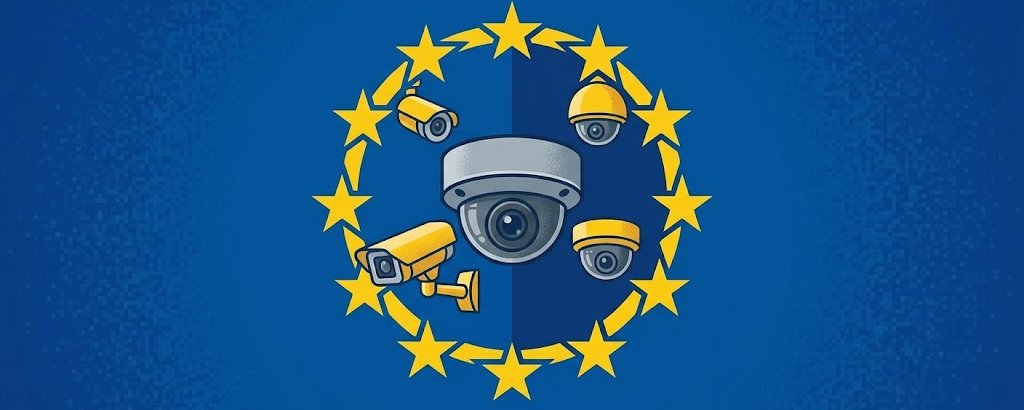
Je lance l’initiative Exit Chat Control.
exitchatcontrol.org/
Ce site est un guide complet qui vise à répertorier tous les outils nécessaires pour contourner tout système de surveillance de vos messageries privées.
Le site est open source et sera amélioré en continu.


Brett Morrison 🧡 retweeted

Brussels lost the Chat Control vote.
So now they’re trying to bend the procedure until private-message scanning gets an easier path through Parliament.
This is why bitcoin, encrypted messaging, Nostr, and open protocols matter.
Today’s Bitcoin Brief:
tftc.io/eu-chat-control-priv…

Year 6 of recommending @Breedlove22's masterpiece, "Masters and Slaves of Money."
Bitcoin is down 50% from its high. If that changes your conviction, you never understood it. It was never about NGU.
Meanwhile the US national debt hit $39T, adding $95,000 every second. Only one of these systems has rules.
breedlove22.medium.com/maste…
Happy 5 year anniversary to my #1 recommended read for nocoiners or people who have bought Bitcoin but don't understand it.
@Breedlove22 writes a fascinating story and lays out exactly why Bitcoin isn't about NGU, it's about how Bitcoin can fix the world.
Brett Morrison 🧡 retweeted

This is a dangerous anti-privacy bill (identity verification) that the House of Representatives might try to pass by voice vote this afternoon before many of us are even in town. Senators Mike Lee, Rand Paul, and Ron Wyden voted against a similar bill in the Senate two years ago.

The internet could change if the U.S. House passes the KIDS Act today to "protect children." Critics warn it could mean de facto age checks for everyone and weakened encrypted communications.
The KIDS Act is a package of around a dozen bills that pairs a revised Kids Online Safety Act with new age-verification, AI chatbot, and messaging rules.
Digital rights group EFF warns the design would pressure platforms to age-check all users, not just minors, since liability can attach when a service "should have known" a user's age, and flags new rules touching encrypted and disappearing messages. Sponsors Brett Guthrie (R) and Frank Pallone (D) say it's kids-safety protection and note KOSA's text says age verification isn't required.


Brett Morrison 🧡 retweeted
Communism is the single most deadly ideology in human history and it’s not even close.
“Socialism” is simply the transitional phase to communism.
If you advocate for socialism/communism you advocate for widespread death, whether you’re too stupid to realize it or not.
It is important to remind people of this constantly.
More tax = less freedom
Troubling when politicians think more taxes solves problems. When has it?
I'll wait.

🚨 ILLINOIS ENACTS MOST AGGRESSIVE BITCOIN TAX IN THE 🇺🇸 US
Governor J.B. Pritzker has signed Illinois’ new Digital Asset Tax Act into law.
Starting January 1, 2027, Illinois will impose a 0.20% tax on the gross value of digital assets exchanged, transferred, or stored for customers.
In practice:
• Buy Bitcoin? Pay the tax.
• Transfer Bitcoin? Pay the tax.
• Store BTC with a custodian? Pay the tax.
Move $1 million through a bank wire, ACH transfer, brokerage account, or traditional custodian and Illinois takes nothing.
Move that same $1 million as a digital asset and the state takes $2,000.
The tax applies regardless of whether there is any profit, income, or capital gain. It is levied simply because a digital asset is being exchanged, transferred, or stored.
Critics argue this creates a first-of-its-kind regime that singles out blockchain-based activity while leaving analogous banking, brokerage, custody, and payment services untouched.
The law targets the service layer of the digital asset economy. While trading for one’s own account is excluded, businesses facilitating exchange, transfer, or custody for customers must collect and remit the tax, with customers ultimately liable if it is not collected.
The Crypto Council for Innovation warned that Illinois is becoming a national outlier by adopting a transaction-based tax on digital assets that has no comparable equivalent for stocks, bonds, derivatives, bank deposits, or traditional financial transactions anywhere else in the country.
Industry groups say the law is a powerful incentive for entrepreneurs, startups, and investment to leave Illinois for more competitive jurisdictions.
Perhaps most surprising is the timing. Illinois only recently adopted the Digital Assets and Consumer Protection Act (DACPA), a framework many viewed as a constructive approach to blockchain innovation. This new tax represents a sharp reversal.
The question now is whether other states follow Illinois’ lead, or whether this becomes a case study in how to drive an emerging industry elsewhere.

🎯

No, you don't get it.
He does not have $1 trillion sitting in cash, it is 99% stock in his companies.
To make that wealth liquid would mean selling all that stock which would swiftly destroy *both* the companies (Tesla, SpaceX, others) and the wealth. If he sold it all, he'd end up with maybe $100b max, several hundred thousand people would be out of work, the companies ruined and many of their suppliers also ruined.
Okay, but now Elon has $100b in cash, and can "solve the world's problems".
$100b divided by the world's 8 billion people is $12
If you were in charge, several of the most innovative industrial companies in the world would be destroyed, hundreds of thousands out of work, and space would again close to human civilization for another generation.
But everyone on earth could have one nice meal and you could revel in your altruism.