



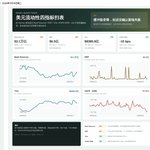




最近用 xbangdan.com 让agent做一个舆情监控
最后发现有人看多,有人看空,没有数值,没有阈值,根本进不了模型,最后只会变成噪音。
回头想,这事还用折腾一个 skill?
VIX、CNN 恐慌贪婪指数早就更成熟、更准。
不能量化的“舆情”,简直就是噪音,不要为了用agent而去用
53
Victor retweeted
I think the main reason the hype died down comes down to architectural flaws, instability, and other issues. But that doesn't mean cloud-hosted bots are inherently bad.
In my experience, desktop clients like Codex have largely gotten in the way of getting things done. Instead, cloud-hosted tools like Hermes have unlocked a lot of new scenarios, especially during fragmented pockets of time when you can call on your bot to prep and start working on things ahead of time.
we're going to see a new wave coming very soon.
It is just like a stock going up in waves
this narrative won't die all at once; it will only evolve again.
我觉得头部的企业发展这么快,用户反而是跟不上的
最近刚好用 hermes 建立了一个这样的 Agent,发现其实这是一个真实的痛点,而不是伪需求。决定中午吃什么,其实会消耗一定的决策精力,而且有时候还拖延。
随着harness的建立,主动根据之前的喜好推送我可能想吃的,这无疑会逐渐减少决策时间
要说这个产品真的有问题,我觉得主要在于它推销给了中老年人群体。你让他们理解 AI 都困难,更不用说去使用这些产品了,带来的是否定和批判而已

2
182
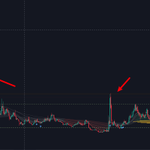
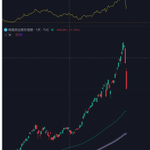
过度恐慌的情绪出现了,忍住

$BTC will fall bellow $35k
65% of orders on prediction markets are now betting $BTC drops below $50k this year.
The whole timeline is calling $50k the bottom. And that's exactly the problem.
Last cycle everyone called $28k the bottom. People piled in. Price dropped to $19k. They bought more. It fell to $15k. The market only turned when everyone got scared and capitulated.
Price almost never moves the way the crowd wants it to.
Last cycle $BTC dropped 78% before it flew. This cycle might be shallower, but don't rule out the $3x,xxx range.
So this time I don't think it stops at $50k. How far is anyone's guess, but always plan for the worst case.
Be careful with how you allocate capital buying $BTC. Don't trust the crowd, go heavy, then lose control of your emotions. That only makes everything worse.
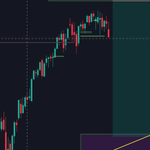
Technically it looks bad. Heavy red candles, strong sell volume. Lower highs, lower lows. The downtrend hasn't broken.
Whales are pushing supply onto exchanges. 8,200 $BTC on June 4. 6,400 $BTC on June 6. The monthly average jumped from 1,200 to over 2,800 $BTC in just a few weeks. You don't move coins to Binance to hold them.
Institutional money is still flowing out. Four straight weeks of net outflows, totaling -$5.4B. Spot ETF net assets dropped from $106.6B to $75.1B in a single month. BlackRock took back 2,515 $BTC, but $150M against $5.4B is a drop in the bucket. One green day is not a reversal.
Everywhere you look there's supply. No demand.
Sentiment is near the floor but hasn't touched it. Fear & Greed is at 13. History says it takes a reading under 10 to mark a real buy zone. GlassNode shows 47.7% of $BTC is in profit at $61k, meaning more than half the market is sitting in the red. Capitulation isn't done.
Some whales are longing $BTC hard. Carrying $86M in unrealized losses, all-in on leveraged longs at 15-20x. Between June 3 and 7 they deposited another $40M USDC purely to push their liquidation price further out.
This isn't conviction. This is a performance. Deploying that much capital into longs while the trend is down doesn't make you bullish, it makes you bait. The goal is to make retail feel safe enough to buy in so there's exit liquidity when it matters.
Don't be the exit.
So what do I do next?
$65k-66k: if price bounces back here, it's most likely just gathering momentum to push lower. Bull trap, not a buy signal.
$50k: the level everyone's calling the bottom. I'd put in 5% of my allocation here, no more. The fact that everyone agrees on this level is exactly why I doubt it.
$38k: I'd add another 10% here and keep watching.
Below $38k if possible: I add another 5% at the exact moment it hurts, when the frustration kicks in and everyone around me is giving up. That feeling is the signal. It's the capitulation the data is still waiting for.
My goal is to DCA up, not DCA down.
The bottom hasn't called anyone's name yet. When it does, nobody will want to answer.
Winter Soldier out

1
68
I can't believe such a high-quality video actually came from the official White House account.
The production value for promoting China was impressive, and with this all-star lineup, you can really tell the cooperation was full of sincerity.

192
他的观点,与谷歌CEO和我的不谋而合:
程序员不但不是第一批失业的,反而需求增加了,甚至成为主流
PS:Andrew Ng是不是偷偷看了人家podcast
youtube.com/watch?v=bTA8sjgv…

There will be no AI jobpocalypse.
The story that AI will lead to massive unemployment is stoking unnecessary fear. AI — like any other technology — does affect jobs, but telling overblown stories of large-scale unemployment is irresponsible and damaging. Let’s put a stop to it.
I’ve expressed skepticism about the jobpocalypse in previous posts. I’m glad to see that the popular press is now pushing back on this narrative. The image below features some recent headlines.
Software engineering is the sector most affected by AI tools, as coding agents race ahead. Yet hiring of software engineers remains strong! So while there are examples of AI taking away jobs, the trends strongly suggest the net job creation is vastly greater than the job destruction — just like earlier waves of technology. Further, despite all the exciting progress in AI, the U.S. unemployment rate remains a healthy 4.3%.
Why is the AI jobpocalypse narrative so popular? For one thing, frontier AI labs have a strong incentive to tell stories that make AI technology sound more powerful. At their most extreme, they promote science-fiction scenarios of AI “taking over” and causing human extinction. If a technology can replace many employees, surely that technology must be very valuable!
Also, a lot of SaaS software companies charge around $100-$1000 per user/year. But if an AI company can replace an employee who makes $100,000 — or make them 50% more productive — then charging even $10,000 starts to look reasonable. By anchoring not to typical SaaS prices but to salaries of employees, AI companies can charge a lot more.
Additionally, businesses have a strong incentive to talk about layoffs as if they were caused by AI. After all, talking about how they’re using AI to be far more productive with fewer staff makes them look smart. This is a better message than admitting they overhired during the pandemic when capital was abundant due to low interest rates and a massive government financial stimulus.
To be clear, I recognize that AI is causing a lot of people’s work to change. This is hard. This is stressful. (And to some, it can be fun.) I empathize with everyone affected. At the same time, this is very different from predicting a collapse of the job market.
Societies are capable of telling themselves stories for years that have little basis in reality and lead to poor society-wide decision making. For example, fears over nuclear plant safety led to under-investment in nuclear power. Fears of the “population bomb” in the 1960s led countries to implement harsh policies to reduce their populations. And worries about dietary fat led governments to promote unhealthy high-sugar diets for decades.
Now that mainstream media is openly skeptical about the jobpocalypse, I hope these stories will start to lose their teeth (much like fears of AI-driven human extinction have).
Contrary to the predictions of an AI jobpocalypse, I predict the opposite: There will be an AI jobapalooza! AI will lead to a lot more good AI engineering jobs, and I’m also optimistic about the future of the overall job market. What AI engineers do will be different from traditional software engineering, and many of these jobs will be in businesses other than traditional large employers of developers. In non-AI roles, too, the skills needed will change because of AI. That makes this a good time to encourage more people to become proficient in AI, and make sure they’re ready for the different but plentiful jobs of the future!
[Original text in The Batch newsletter.]

198

确实反弹还有可能再继续一下。
反映到宏观上面,就是川普可能再次想要TACO,因为看起来面临着许多的压力。
真正危险的是月底到下个月,要小心TACO未遂的情况

BRS在3/18最低降至10,没有触碰到零轴,意味着目前的回调不代表反弹已结束。但BRS已降至25以下,通常都表示反弹的进程已近尾声。等BRS=0时,对应BTC价格高点可能不会比$76,000(前高)再高出很多。
最大的变数,就是3月20日期权行权日后,到3月27日季度期权行权日之前,$75,000处的Short Gamma对价格波动产生的影响。
交易上,我在74,400挂过一笔5倍空(已成交),计划是如果继续反弹到7.8-7.9w就再补一笔,或者拿到6.5-6.7w左右分批止盈;反之,如果突破8w就全部止损。仓位不大,仅作为对自己分析判断的一种验证而已。


72
Victor retweeted

一个秘密:
这个时代不用闲鱼买东西,你几乎一定在溢价
拒绝京东
拒绝天猫
拒绝线下购物
买任何东西之前
先让闲鱼识别一下价格
你会看到一个
震碎三观的市场价
朋友送礼
就别用闲鱼识别了
会失去友谊
慢慢你会意识到:
几乎没有什么东西
是闲鱼买不到的
甚至包括很多
你原来以为不能买、不能卖的东西
宁愿买更贵的二手
也不买更便宜的一手
因为:
一手价格来自权力
二手价格来自市场
没有一枚金币比另一枚更高尚
但二手价格永远比一手更高尚
因为它来自于
自由
不要抄一底
永远抄二底
刘邦、李世民
都是抄二底得天下
孙学就是赢学
买东西
也要赢
Victor retweeted

08年以来三次大宗商品牛市的规律都遵循“金银先动→铜确认→油引爆→农收尾”的轮动节奏。麦通这个时候上新全球农业全产业链ETF和农业农头ETF,这时机把握的相当好了。这里可以稍微聊聊大宗商品轮动节奏的核心逻辑:
1)当经济不确定性抬升、或衰退预期升温、地缘博弈加剧时,以黄金为代表的贵金属会率先启动行情,凭借抗通胀、避险的双重属性,成为资金的核心 “避风港”。
2)随着全球制造业进入补库周期、工业复苏动能逐步释放,以铜、铝为核心的工业金属会承接涨价主线,需求端回暖叠加供给端刚性约束,推动价格进入上行通道。
3)随后原油及石油化工品接力上行,作为连接工业生产与居民消费的核心中游品类,它既受益于工业需求回暖,也同步反映终端消费复苏预期,补全了资源品轮动的中游传导链路。
4)当贵金属、工业金属、能源化工的涨价行情充分演绎、价格与估值进入高位区间后,涨价的传导效应会向终端民生领域全面扩散。此时,与粮食安全、居民消费深度绑定、供需格局持续偏紧的农业资源,往往会成为资源品轮动的收官主线,迎来确定性较强的补涨行情。
从这个角度农产品确实很有可能接棒成为下一个主线。


要不出现一个新的框架替代Openclaw,不要就是未来升级安全机制
一直认为codex、claude cowork会发展成最终形态,codex skill、自动化已经足够用了
openclaw只是大步往前迈了一大步,暴力中失去了很多,稳定性、安全性,甚至很多重要的无法东西不放心交给它,无法稳定用于生产,但是这样也让大家看到了一个有潜力的方向

从我玩死十多只 OpenClaw 的感受来看,我其实是不信任 OpenClaw 的稳定性或韧性的,但我对 Claude Code 挺放心。这可是软件工程的核心目标之一…
安全重视上,两家对安全的重视力度都很高,我马甲提交的漏洞有得到很及时的反馈。题外话:某些 OpenClaw fork 或参考版本,对安全的积极性就差了许多,估计作者也只是玩玩而已。
安全场景上,OpenClaw 虽然也有 Sandbox 机制,也试图在工具权限上做更细粒度的设计,但如其名“OpenClaw”,Open 是其最大魅力,束手束脚的 OpenClaw 就不是 OpenClaw 了。又希望它自由,又希望它可控,这是大家纠结的一点。但真正生产环境下,过度自由的 OpenClaw,容易失控…
我在 OpenClaw 上看到了暴力美学,有大力出奇迹的惊喜,也有对它搞砸一切的担心…
一点感受,供大家参考。
2
92
