
Ingeniero en Producción Agropecuaria.
Pergamino, Argentina
Joined April 2016
- Tweets7.4K
- Following1.2K
- Followers1.2K
- Likes19.3K







Maximiliano Cueto retweeted

🌥️ !Cuántos días nublados, justo durante el período crítico del trigo! .
¿Pueden afectar su potencial de rendimiento?🌾☁️
Mira el cociente fototermal 👇
¿Cómo están transitando éste período los trigos en el norte de Bs As?
Lee la nota completa en repositorio.inta.gob.ar/xmlu… – at Pergamino, Argentina

Maximiliano Cueto retweeted

Un campo de General Cabrera será parte de un ensayo Internacional de tres años para medir el impacto real de la agricultura regenerativa
Un iniciativa de @AgroBayerAR
valoragregadoagro.com/2026/0…

Maximiliano Cueto retweeted

Acuerdo. Bayer y el mayor productor mundial de combustible de aviación sostenible producirán un supercultivo lanacion.com.ar/economia/cam… a través de @LANACION/

Maximiliano Cueto retweeted
🛑Supersojas, herbicidas nunca vistos y un maíz revolucionario.
Un gigante reconfigura la agricultura con una batería de avances de alto impacto lanacion.com.ar/economia/cam… a través de @LANACION/


Maximiliano Cueto retweeted

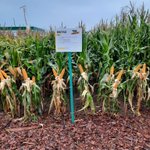
Estuvimos recorriendo el Learning Center de Gothenburg-Nebraska-USA; donde estan invetigando los materiales Preceon (shortcorn) que tienen desde selección genómica a los nuevos con eventos biotecnologicos; cuya dif. es en estos últimos mismo largo de entrenudos en toda la planta. – at Lincoln, NE
🤖 Made with AI


Maximiliano Cueto retweeted

FADA vuelve a ponerle números al costo de las retenciones: Sin ellas, el agro podría sumar 25.800 millones de dolares y más de medio millón de empleos, casi lo mismo que proyecta Vaca Muerta bichosdecampo.com/fada-vuelv…

Maximiliano Cueto retweeted

Luego de una lenta cosecha en dos fases: Julio para el DK69-62 y agosto para el DK73-03, se cierra la historia con una diferencia (side by side) de +660 Kg/ha a favor del fungicida en el híbrido DK69-62.


Maximiliano Cueto retweeted

Agriculture used to employ most of the population. Today, in many developed countries, fewer than 5% of people work in farming, yet they produce food for millions.
A powerful reminder of how much agriculture has evolved and why innovation matters more than ever.

Maximiliano Cueto retweeted

🚨 EU CORN MARKET IS HEADING FOR A SUPPLY SHOCK.
EU corn production in 2026/27 is now forecast at just 50.2 MMT — potentially the lowest level in nearly 20 years.
And the deficit is widening.
🇪🇺 EU corn imports: 23.5 MMT ↑ 1 MMT
🇪🇺 EU corn exports: only 1.6 MMT
🇺🇦 Ukraine exports: 22 MMT ↓ 1 MMT
🇧🇷 Brazil exports: 43 MMT ↓ 1 MMT
🇺🇸 US exports: 83 MMT ↑ 2 MMT
The problem is brutally simple: Europe needs more corn precisely when its traditional suppliers are becoming less reliable.
Ukraine’s Black Sea logistics are under severe pressure, while stronger Brazilian domestic demand — particularly from biofuels — is restricting export availability.
That leaves the United States in an increasingly powerful position.
Global corn trade flows are being forcibly reshaped.
A weaker EU crop + Black Sea disruption + constrained Brazilian exports = potentially explosive demand for US corn.
The next battle in global corn markets could be fought over availability, freight and origin — not merely price. 🌽⚠️
#Corn #Maize #EU #Ukraine #Brazil #USA #Commodities

Maximiliano Cueto retweeted
De estado pobre a potencia.
Mato Grosso, un lugar donde no se sale del asombro lanacion.com.ar/economia/cam… a través de @LANACION/

Maximiliano Cueto retweeted

Como si a la Argentina le sobrara plata, ahora hay rechazo a los extranjeros a.ln.com.ar/3SgVvoW

Maximiliano Cueto retweeted

A legacy of innovation and a future of possibility. Follow along as we celebrate 30 years of Bollgard® and its lasting impact on the cotton industry. bit.ly/4w2aq47
#Bollgard30 #Cotton
Maximiliano Cueto retweeted

Dado el pronóstico de fuertes lluvias p/la próx campaña, es bueno recordar que el maíz toma N muy lentamente al principio del período vegetativo (sólo 5% hasta v6 y 25% hasta v10) y de manera importante recién al inicio del período reproductivo.
Fundamental partir la aplicación.


Maximiliano Cueto retweeted
Thirty years ago, Bollgard® helped redefine what was possible in cotton. Today, we're telling that story through the people, progress and possibilities that continue to shape its legacy. Follow along as we celebrate 30 years of innovation. bit.ly/3R6Btgv
#Bollgard30 #Cotton
Maximiliano Cueto retweeted

Los primeros lotes de NewGold emergiendo!!! A 14 días de la Siembra.@AgroBayerAR @ElzandiO @mncueto @ScandoloNicolas @TotoKirton @josemguti

Maximiliano Cueto retweeted

Familia Busilli: así resisten al viento los nuevos maíces de alta performance.
@bayeragro
🚜
Canal 13 Satelital | Sábados 09 horas
Metro | Sábados 13 horas
Youtube | Instagram | X | Facebook | LinkedIn
@agrotvcomar
Toda la tecnología agropecuaria en acción
#agrotvcomar

Maximiliano Cueto retweeted

🚨NUEVA ALERTA ROJA: Brassica rapa
Resistencia múltiple y primer reporte mundial a diflufenican (PDS), en el sudeste de Bs. As. (Tandil).
🗂️Investigadores: Ing. Agr. M. Sc. Victor Juan, Ing. Agr. Lucía Ledesma e Ing. Agr. M. Sc Federico Núñez Fré (@UNICEN_Oficial )
📲 Conocé más ingresando aquí: aapresid.org.ar/es/novedades…

Maximiliano Cueto retweeted

Bloomberg Intelligence team did a nice deep dive on Brazil agriculture: 2026 outlook, global food and fuel demand, and the extension of the boom in the $500 billion sector.

Maximiliano Cueto retweeted

Brazilian agribusiness can do five things no other country on Earth can replicate.
The first: two harvests on the same land in the same year.
About 40% of Brazil's soybean fields are immediately replanted with corn after the soy harvest.
In Mato Grosso, irrigated farms are now growing three crops per year on the same hectare.
The second: eucalyptus that matures in 6 to 7 years.
Pine in the U.S. South takes 22 to 40 years.
Pine in Canada and Scandinavia takes 60 to 100 years.
The third: cattle finished primarily on grass.
About 78% of Brazilian beef still comes from grazing systems.
In the United States, almost all beef cattle pass through feedlots in their final phase.
The fourth: sugarcane that produces both sugar and ethanol on the same crushing run.
Brazilian flex plants switch the output ratio between sugar and ethanol based on which price is higher.
The fifth: coffee, soy, beef, cellulose, and orange juice all grown on the same continental landmass.
Brazil is the world's largest producer or exporter in every single one of those categories.
Brazil functions as an agricultural civilization.
Climate, soil, and decades of breeding research at Embrapa built it.
Three structural advantages no other country can replicate.
The world's quiet bread basket is operating at a scale most investors have never measured.
