
Crypto, Koinon Payments, Digital Assets, PAYE Token
Christiansted, Virgin Islands
Joined March 2009
- Tweets576
- Following78
- Followers74
- Likes6.4K


Matthew Mecke retweeted

I've just seen a video of these two Panga boys threatening to go door to door attacking people, and I asked myself, when did we reach this point as a country?
Mombasa is not a safe place. Every day, there are cases of robbery with violence. A day will not pass without hearing that someone has been killed by Panga boys.
There is insecurity in Mombasa and the Coastal region in general, but if you ask me, the biggest problem in the Coastal region is drug abuse. I was in Malindi a few months ago, and I have never seen an area with such a high number of mentally ill people.
It's a shame that you will find most drug dealers are well-connected, and some even work for the Government. Young men are being wasted in the Coastal region. The police need to act. We don't want our country to become like Haiti.

Matthew Mecke retweeted

Published: #BegBorrowSteal - our investigation into the theft of funds from loans and taxes - and the alleged involvement of the China road and bridge and China communication construction company: youtube.com/watch?v=hdD9gXEB…

Matthew Mecke retweeted
An Africa Uncensored investigation examines allegations that China’s CRBC and its parent company, CCCC, were involved in the theft of millions of dollars in Kenyan taxes and public debt.
Drawing on whistleblower accounts, tax records and banking documents, the investigation traces alleged wrongdoing linked to major infrastructure projects.
Watch the full documentary here: youtu.be/vc5QsUzDkyk
Credit:@johnallannamu
Matthew Mecke retweeted

Meet @Moshaikh
The guy behind Aptos, a $20B Scam.
He Co-founded Aptos, raised $400M from major VCs, watched $APT holders lose over -99% of their value, and stepped down as CEO right after his token compensation vested.
His explanation? A much-needed “mental health break.”
Fast forward to 2025: launches his own $50M crypto VC fund, then casually tweets:
“I have a nice $SUI bag now ;-)”
Yes, SUI. Aptos’ direct competitor, built using the same Diem technology.
So the guy who raised hundreds of millions building Aptos, collected his compensation, walked away, started a VC fund, and bought into the competition while $APT holders were left holding the bag.


Matthew Mecke retweeted

Once we take office, the first thing we will do is recover everything Ruto has stolen from Kenyans and return it to them - Rigathi Gachagua

Matthew Mecke retweeted

Kenya 🇰🇪 which one is your favorite?
Kindly check ALL of @WilliamsRuto posts & comments of today: how holy words describe our NOW…


Matthew Mecke retweeted

JUST IN: 🇺🇸 Senator Blumenthal gives Binance, Tether and Trump family crypto firms until January 4th to hand over records for investigations.


Matthew Mecke retweeted
“Who is ruto and why do they say he is the most corrupt?”
When I came to Kenya 🇰🇪 in 2024 I had never seen corruption by government or killings of citizens directly. Now I know it’s a cartel not a government.
SPEAKING OUT SHOULDN’T COST YOUR LIFE.
In Kenya, asking “Where did the money go?” should never leave a family asking “Where did our child go?”
Yet the record shows why people are afraid.
EACC’s 2025 survey found:
▪ 98.6% of public-sector bribe-payers did not report their latest payment to an official institution.
▪ Among those who reported bribery, 42.3% said nothing happened afterward.
▪ Among non-reporters, 33.4% felt reporting was useless or nobody would care.
Imagine being asked to “just report it” when you fear retaliation—and doubt anyone will act.
Source, pp. 53–59:
eacc.go.ke/en/default/wp-con…
The danger of demanding accountability is documented too.
For the crackdown linked to the June 2024–July 2025 protests, Amnesty International estimated:
▪ At least 128 killings.
▪ 83 enforced disappearances.
▪ At least 3,000 arbitrary arrests.
Its report also documents threats, surveillance and coordinated online attacks against young activists.
amnesty.org/en/documents/afr…
The scandal fades. The powerful remain. Families are still waiting for answers.
That cycle needs a public record.
The REKODI team has been building REKODI.org - Kenya’s accountability archive, bringing together around 130 public-source documents to help keep corruption and abuses of power visible.
Public money. Bribery. Procurement. Police violence. Killings. Disappearances.
Source links. Documented allegations. Official findings. Court decisions. Outcomes. Unanswered questions.
The aim is to make it harder for a case to disappear simply because the headlines have moved on. Readers should be able to follow what was alleged, what was established, what happened afterward—and what remains unresolved.
Source protection is fundamental to that mission. People exposing abuse deserve a way to communicate without being forced to publicly expose themselves.
The goal is protected anonymous reporting with confidential follow-up. That channel is not open yet; current ordinary accounts are not anonymous. Do not send sensitive evidence through public replies.
The REKODI team is looking for an independent Kenyan-led team - journalists, lawyers, human-rights researchers and security/civic-tech specialists - to help manage and govern REKODI, or potentially take over its long-term stewardship.
Qualified teams are welcome to review the code, governance, evidence handling and security design.
Interested? Reply with your role, DM or any organizations to connect with.
Public attention should not expire before accountability arrives.
PROTECT THE SOURCE. KEEP THE RECORD.
Ushahidi usipotee.
rekodi.org/archive


Matthew Mecke retweeted

For many years, Nairobi was a safe place for those running away from repression at home, refugees fleeing the ravages of war and for pro-democracy campaigners from the region and beyond.
This is no longer the case.
Kenya is increasingly becoming the abductors’ paradise and East African centre for transnational repression.
The security collusions of rogue states is eroding the stature of Nairobi as the haven of democracy and security.
The abduction of Ugandan leader Kizza Besigye Kifeefe and the recent abduction of Tanzanian activist Twaha Mwaipaya are just two examples of what is a now long list of State sponsored transnational abductions.
We must not let this continue.
We must restore Kenya's image and previously sparkling reputation as a safe community for democracy and human rights advocates.

Matthew Mecke retweeted

Kiharu MP Ndindi Nyoro has just dropped a massive bombshell, making explosive allegations about what he describes as William Ruto’s massive corporate capture and greed.
Ndindi Nyoro alleges that Ruto has interests in nearly every major business and company in Kenya. Nyoro claims the President owns Bamburi Cement, Portland Cement and several tile companies. He further alleges that Ruto has bought two TV stations and newspapers through proxies to control what Kenyans see and hear.
Nyoro reveals that Ruto has already taken and spent seven years’ worth of future Road Maintenance Levy funds upfront through “securitization.” Furthermore Nyoro reveals that Ruto has allegedly already taken and spent 15 years worth of future stadium construction funds upfront! Nyoro warns that Ruto is destroying everything and creating such a difficult financial situation before leaving office next year that the next president will struggle to manage the country.
Nyoro further exposes that Ruto allegedly called the NSSF, PSSF and PCF retirement bodies seven months ago, commanding them to invest the retirement money of ordinary Kenyans into Kenya Pipeline Company shares. The shares were valued at KSh 9, and Ruto allegedly manipulated the sale to a private entity linked to Dangote and him at KSh 9.02. Nyoro reports that, in the last five days alone, a joint venture between Ruto and Aliko Dangote allegedly made a massive KSh 16 billion in profit from these deals!
Nyoro message to Ruto: “I want to tell you, Ruto, punguza ulafi! Ruto, hata ukimwambia nchi inachomeka, it won’t bother him. All he cares about is where he benefits. Ukiguza mahali pesa yake iko, he gets concerned. Ruto, you must stop na mambo ya biashara! You are the President of Kenya. Huwezi kuwa unatetea interests za Wakenya ukienda kwa meza ya Kenyan investment, and at the same time, you have a personal interest. Stop being greedy!”
My problem is that President William Ruto stood before Kenyans, preached about the importance of fighting conflicts of interest and separating public office from private business, and even signed the Conflict of Interest Act into law on July 30, 2025! The law is meant to prevent public officials from using their positions for personal gain, favouring businesses in which they have interests, or allowing private interests to influence public decisions.
Wakenya, look at the reality on the ground! William Ruto does the exact opposite of what he preaches! How can a president preach one thing to Kenyans, sign it into law, and then be accused of doing the exact opposite? Isn’t that breaking the very law he signed and disrespecting the Constitution?
When you add this bombshell to the other revelations Gachagua has shared with Kenyans, you are left shocked and in disbelief! For the first time in Kenyan history, we have a sitting President who, in my view, completely disrespects the law and the Constitution, running the state like a personal kiosk! Are you shocked by these revelations?

Matthew Mecke retweeted
I can share all the tea from meeting the elites and their attitudes.
Toxic tea though

Matthew Mecke retweeted
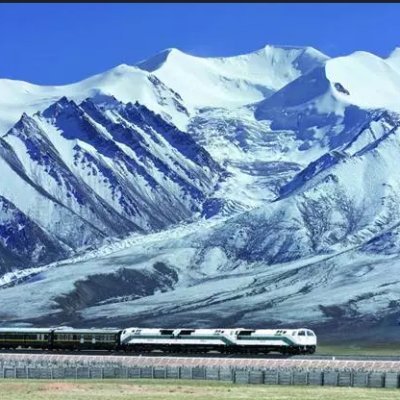
Deepseek创始人梁文锋出逃。梁文锋被冠以爱国企业家的头衔,所以这里不得不面对一个问题,为什么在大陆,爱国企业家也会润?是什么原因让他们润的?
其实对于爱国企业家会润,我一点不奇怪,因为我认识的做企业的,也有被现在的政策逼得跳楼自杀的。
现在大陆的现状已经没有了营商环境。


Matthew Mecke retweeted

🇮🇷 JUST IN: Binance reportedly processed nearly $850 million in transactions tied to an Iranian network allegedly used to evade U.S. sanctions and move IRGC-linked funds, a WSJ investigation found.


Matthew Mecke retweeted
I was so naive when I came to Kenya 🇰🇪 years ago. I saw ruto smiling & promising great things. Only to see on the ground from all Kenyans on the streets the opposite: they hated him, I saw an oppression to speak freely & live safely, poverty, corruption & complete mistrust in the system & leadership.
RUTO AT 4Y: FALSE CLAIMS, BROKEN PROMISES & HUMAN-RIGHTS RECORD
FALSE OR MISLEADING CLAIMS
• Just yesterday, Ruto said maize production rose to 71m bags in 2025. KNBS reports 45.8m 90kg bags — a 25.2m-bag gap.
• In May 2025, he said there were “no missing persons” and every abducted Kenyan had returned home. HRW later reported that KNCHR still counted 26 people missing from the 2024 protests and 15 from 2025.
• Africa Check tested 10 claims in his Nov 2025 State of the Nation speech: 6 were incorrect, 1 exaggerated, 1 mostly correct and only 2 correct.
BROKEN OR UNFULFILLED PROMISES
• Mzalendo’d independent tracker, updated 30 Aug 2026: 254 Kenya Kwanza pledges; 25 completed, 41 broken, 15 stalled, 19 not started and 150 ongoing. Didn’t he claim he just needed a year?
Mzalendo rates these major promises as broken:
• reducing fuel and unga prices in the first 100 days
• giving women 50% of Cabinet and implementing the two-thirds gender rule
• ending extrajudicial executions
• ratifying the convention against enforced disappearances
• creating a special tribunal for gross human-rights violations
• enabling mortgages of KSh10k or less and expanding mortgages from 30k to 1 million
• Housing was promised at 250k new units a year. By Aug 2026, government reported about 8,807 completed, although more than 270k were under construction…with delays and money missing. Announcements and construction starts are not completed homes.
HUMAN-RIGHTS RECORD
• 2023 protests: HRW and Amnesty documented at least 31 killings and said no police officer or government official had been prosecuted.
• 2024 anti-Finance Bill protests: KNCHR documented at least 60 deaths, 610 injuries, 1,376 arbitrary arrests and 74 enforced disappearances; 26 remained missing.
• 2025: KNCHR recorded 19 deaths, 531 injuries, 15 disappearances and 179 arrests on 25 June. Another 31 people died and more than 500 were arrested during Saba Saba. Blogger Albert Ojwang died in police custody; autopsy findings cited by HRW pointed to torture.
• Authorities ordered an end to live protest coverage and switched off KTN, NTV and K24; the High Court ruled the ban illegal.
• 2026: KNCHR documented seven disappearances and 361 arrests after the 25 June protests, including 18 human-rights defenders and two journalists. Six protesters were later found injured after alleged torture.
• The government denies directing abductions. But denial is not accountability.
Where are the independent investigations, prosecutions, public case files and justice for victims?
Sources: KNBS, KNCHR, HRW, Amnesty International, Africa Check and Mzalendo.

Matthew Mecke retweeted

The Ghost in the Ledger: How Africa’s Elite Tenders Fuel the Global Arms Trade
The tragedy of public infrastructure in developing economies isn't always found in what is built, but in what the building budget secretly buys. When regional tycoon Wicknell Chivayo and his wife tragically perished in a private helicopter crash in Marondera last month, they left behind a web of unanswered questions that stretched far beyond Zimbabwe’s borders. For months, investigative journalists and intelligence analysts had been quietly pulling at a thread that wound from Harare's elite circles right into the heart of a geopolitical nightmare: the illicit arms pipeline feeding the civil war in Sudan.
Hypothetically, if a flamboyant regional proxy wanted to bankroll a multi-million-dollar international weapons shipment without triggering Western banking alarms, they wouldn't use duffel bags of cash. They would use the ultimate legal camouflage: the state procurement system.
In the world of high-level corruption, this strategy relies on a well-worn playbook known as "tenderpreneurship." To move massive quantities of capital across borders, a well-connected proxy first needs a legitimate, state-sanctioned cash cow. A proxy secures massive, inflated government contracts—often in critical, high-budget sectors like renewable energy, national grid upgrades, or public infrastructure. Because these projects involve complex supply chains and foreign equipment, the government legitimately authorises the movement of millions of dollars out of the country to pay international suppliers.
Once the public funds hit the corporate accounts of a front company, the real financial gymnastics begin. Through trade-based money laundering, the proxy can easily over-invoice for services. A shell company might claim it is spending $20 million on high-tech solar components from an overseas manufacturer, when in reality, the physical goods are only worth $5 million. The remaining $15 million vanishes into a secondary tier of offshore accounts. It is this manufactured surplus—taxpayer money disguised as legitimate corporate expenses—that is redirected to finance the logistics of the arms trade.
This hidden capital is what breathes life into clandestine air bridges. It pays the hefty charter fees for Soviet-era cargo planes, bribes the necessary customs officials, and secures the end-user certificates required to make a weapons shipment look like a legal transfer to a sovereign army. When a cargo plane loaded with heavy weaponry lands at an airport like Lilongwe, the paperwork says the cargo belongs to the state. But the money that put it in the air belongs to a completely different phantom ledger.
When these operations are exposed, the proxy is left stranded as the only visible link. While intelligence agencies like the CIA use sophisticated tracking tools to follow the digital footprints left in the global banking system, the true architects—the foreign financiers and rogue state actors—remain comfortably anonymous, shielded by layers of corporate paperwork and the tragic silence of those who carried their secrets.
