

I'm on Facebook, but do drop by here occasionally.
Melbourne
Joined April 2009
- Tweets2.4K
- Following1.3K
- Followers468
- Likes14.4K






Pinned Tweet
❤️❤️❤️❤️❤️❤️❤️❤️❤️❤️❤️❤️❤️❤️❤️❤️❤️❤️❤️❤️❤️❤️❤️❤️❤️❤️❤️❤️❤️❤️❤️❤️❤️❤️❤️❤️❤️❤️❤️❤️❤️❤️❤️❤️❤️❤️❤️❤️❤️❤️❤️❤️❤️❤️❤️❤️❤️❤️❤️❤️❤️❤️❤️❤️❤️❤️❤️❤️❤️❤️❤️❤️❤️❤️❤️❤️❤️❤️❤️❤️❤️❤️❤️❤️❤️❤️❤️❤️❤️❤️❤️❤️❤️❤️❤️❤️❤️❤️❤️❤️❤️❤️❤️❤️❤️❤️❤️❤️❤️❤️❤️❤️❤️❤️❤️❤️❤️❤️❤️❤️❤️❤️❤️❤️❤️ ❤️❤️❤️❤️❤️❤️❤️❤️❤️❤️❤️❤️❤️❤️🩹

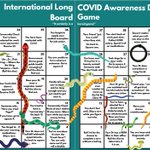
In Melbourne,Australia today we made history…. Long COVID awareness day lay down….Parliament House
First country in the world to have monuments lit up for International Long COVID day
#WakeUpToLongCovid


Elise Jones retweeted

University of British Columbia researchers conducted a randomized trial of 160 Long COVID patients.
Low-dose naltrexone (LDN) did not significantly improve fatigue, pain, physical activity, or quality of life compared with placebo after 16 weeks.
medrxiv.org/content/10.64898…

Elise Jones retweeted

“chronic down-regulation of vasopressin, mimicking central diabetes insipidus, is an important measurable part of the disease mechanism that potentially contributes to criterial symptoms of ME/CFS.”

Low Vasopressin in Myalgic Encephalomyelitise/Chronic Fatigue Syndrome
Vasopressin is also known as antidiuretic hormone
endocrinepractice.org/articl…
Screenshot from AMMES October 2026 newsletter
#MEcfs #PwME

ALT Photo of someone lying, collapsed on sand looking exhausted With the following text LOW VASOPRESSIN IN MYALGIC ENCEPHALOMYELITIS/CHRONIC FATIGUE SYNDROME In a consecutive series of ME-CFS patients, majority had very low vasopressin levels, relatively high plasma osmolality and low urine osmolality, in absence of overt hypothalamic or hypophyseal pathology. Chronic down-regulation of vasopressin mimicking central diabetes insipidus may contribute to the core symptoms of ME/CFS. Read more here>>
Fascinating! “[C]hronic low-grade intestinal inflammation and a microbiome characterized by high expression of bacterial flagellins” predicted fever from Covid vaccine. Science is cool.

1
28
Elise Jones retweeted
Charité Berlin researchers studied 49 Long COVID patients receiving head and neck lymphatic drainage.
Brain fog, concentration, headaches and fatigue improved, raising questions about the brain’s waste clearance system.
Controlled trials are needed.
researchsquare.com/article/r…
Elise Jones retweeted

Hamsters were given SARS2 in a lab - against uninfected controls. The infection itself changed how their nervous system controls the heart. Eight weeks later the change hadn't faded. It was still deepening. And a drug given in the first days after infection prevented it🧵
Johns Hopkins University, 11 hamsters. SARS-CoV-2 caused lasting cardiac autonomic remodeling.
Early blocking of innate immune signaling or mitochondrial oxidative stress prevented the postacute dysfunction.
heartrhythmopen.com/article/…

Elise Jones retweeted

#LongCOVID research is entering a new phase: from describing symptoms to testing mechanisms.
➡️ At the first major international LongCOVID conference in Amsterdam, researchers focused on viral persistence, immune dysregulation/autoimmunity, neurological dysfunction and vascular injury—while acknowledging that several trials have produced disappointing results.
➡️ The field is increasingly moving toward “mechanisms first” trials—rather than giving one drug to everyone, researchers want to identify the biological pathway driving a patient’s illness and then deliberately switch that pathway on/off to see what happens. 1/

Elise Jones retweeted

Endocrine complications of COVID-19: diabetes, musculoskeletal, thyroid, pituitary, adrenal, and gonadal disorders
🚨COVID can trigger new diabetes, crash calcium, inflame the thyroid, and suppress testosterone or cortisol. Benefits of vaccination still dwarf the rare endocrine side-effects, says a 2026 Endocrine Society review.
➡️The USA review synthesizes English-language reviews and meta-analyses from March 2020 to June 2026 on endocrine effects of acute SARSCoV2.
➡️SARSCoV2 enters cells via ACE2, aided by TMPRSS2 and ADAM17. Damage occurs through direct invasion, cytokine release, autoimmunity, and medication effects, hitting pancreas, thyroid, pituitary, adrenals, gonads, and parathyroid/bone.
➡️1. Pancreas.
- New-onset diabetes rises after infection (relative risk 1.41 in a 12-study meta-analysis, about 1.37% prevalence in a 43-study review of 4.4 million patients, mostly type 2),
- Diabetic ketoacidosis and severe outcomes increase, especially in type 1 diabetes,
- Risk peaks in the first year and varies with severity, variant, age, and comorbidities,
- Metformin and DPP-4 inhibitors are noted as potentially protective,
➡️2. Thyroid:
- Non-thyroidal illness syndrome is the commonest change (pooled prevalence about 26%),
- Subacute thyroiditis and new autoimmune hypo- or hyperthyroidism also occur and track with severity (odds ratio 3.77 for abnormal tests in severe versus milder disease),
- Dysfunction can persist into longC0VID,
➡️3. Pituitary:
- Reported effects include hypophysitis, apoplexy, SIADH, rare central diabetes insipidus, and hypopituitarism (secondary adrenal insufficiency or hypogonadism), mainly after severe illness, via hypoxia, thrombosis, or inflammation,
➡️4. Adrenals:
- Adrenal insufficiency appears in roughly 3.5–6.8% of mild and 7–38.5% of severe cases, mostly central and often reversible.
- Primary failure is rare (haemorrhage, infarction, or adrenalitis).
➡️5. Gonads:
- Low total testosterone with normal LH, reduced libido, and erectile dysfunction are described, especially in longC0VID,
- Permanent infertility is not established,
- Higher male severity is not fully explained by androgens,
➡️6. Parathyroid/bone:
- Hypocalcaemia occurs in about 55% (range 23–78%, up to 87% by ionized calcium) and tracks with severity and mortality,
- Mechanisms include parathyroid invasion, vitamin D deficiency, and calcium use during viral entry,
- Remodelling shifts toward more osteoclasts, lower bone density, and higher vertebral-fracture risk,
- Hypercalcemia is rare.
➡️Most selected studies are non-randomized and heterogeneous.
‼️So, AGAIN, any tissue expressing ACE2 can be injured by SARSCoV2, so the largest absolute endocrine burden falls on the millions with mild-to-moderate infection rather than only the critically ill!
‼️Mild COVID-19 is not trivial for the endocrine system. The review notes that while severe infection produces the starkest individual complications, the largest overall burden falls on the far larger group with mild-to-moderate illness. Unexplained fatigue, rising blood sugar, neck pain, muscle weakness, low libido, or menstrual change after even a mild case therefore justify checking glucose or HbA1c, TSH, and calcium—and, when symptoms point that way, morning cortisol or testosterone, rather than dismissing them as ordinary post-viral tiredness. People who already have diabetes or adrenal insufficiency still need tighter sick-day attention, because a “mild” infection can unmask or worsen those conditions!
#AvoidSars #AvoidReinfections
academic.oup.com/jes/article…

Elise Jones retweeted

📢 Published in the final form is the first Delphi consensus on #POTS and #Dysautonomia from the International POTS and Dysautonomia Collaborative! I am honored to serve as a Co-Chair, along with @KSivakoti89360, for this amazing collaborative group - all top POTS/dysautonomia experts. Uniting our colleagues from different specialties across the world, we had only one goal in mind: to improve the care of patients with POTS and Dysautonomia globally. 🌍
🫂 This work is a true labor of love, perseverance, resilience, professionalism and integrity. The paper has been already translated into several languages and shared by different academic, healthcare and government agencies. Thanks to our International POTS and Dysautonomia Collaborative members for investing their own time and effort into this important work! 🙏
@FudimMarat @ArturFedorowski @DH_Lau @DINETorg @HopkinsMECFSC @AANmember @BrainHealth_AAN @Jacobs_Med_UB @UofUHealth @ahsheadache @HRSonline @AASAutonomic
amjmed.com/article/S0002-934…

Elise Jones retweeted
The choroid plexus again. The vascular tissue inside the brain's ventricles that makes cerebrospinal fluid and forms the barrier between blood and the CNS.
In people with post-COVID syndrome it's enlarged.
A new study from King's College shows how mild the infection can be and still leave it that way.🧵
Elise Jones retweeted
1 in 8 cancers worldwide is caused by infection - 2.3M cases in 2024 (IARC, Lancet Oncology). So much for - the immune system needs training.
No. 4: EBV, a Group 1 carcinogen. Studies report its reactivation in tens of percent of COVID patients. Whether and how much that adds to cancer risk is still unclear.

One in eight new cancers are likely caused by infections—there’s an easy way to protect yourself | Scientific American
scientificamerican.com/artic…

Elise Jones retweeted
CDC sent me the 2025 NHIS data this week, and one number stuck with me.
8.7 million American adults were living with Long COVID in 2025.
That's 1 in 30 of us.
It's easy to stop seeing a crisis once it stops being new.
It's still happening.
cdc.gov/nchs/nhis/documentat…

Elise Jones retweeted

Fantastic outcome and one more powerful infection-prevention tool against #COVID and #LongCOVID (because the only way to prevent that is NOT getting COVID). Great work @Invivyd 🎉

Invivyd Announces Positive Topline Results from LIBERTY Phase 3 Study Demonstrating VYD2311 Safety and Tolerability Superior to mRNA-based COVID-19 Vaccine; Announces Regulatory Submission Plans for VYD2311 investors.invivyd.com/news-r…

Elise Jones retweeted
Our first microtesla magnetic therapy trial in #LongCOVID is through peer review and out in the world!
As a reminder, this was a triple-blind, placebo-controlled trial of a novel intervention - microtesla magnetic therapy - in 30 ppl with LC
academic.oup.com/braincomms/…
1/

Elise Jones retweeted

The irony of it all.
Yesterday, @NEJM posted a new essay suggesting that the US government attacks on biomedical science will now subside. nejm.org/doi/full/10.1056/NE…
On the same day, it was announced the President wants control of NIH funding.
reuters.com/business/healthc…


Elise Jones retweeted

VACCINE COST-EFFECTIVENESS
I want to talk about vaccine cost-effectiveness analysis & the methods used to determine eligibility for various vaccines.
You might think there’d be a consistent methodology for this important analysis…
…but apparently not.
Let’s dig into it… 🧵

Elise Jones retweeted

POTS identified in nearly two-thirds of Long COVID patients
'Published in Journal of American Heart Association..study is believed to be the first to look at autonomic symptoms, heart rate response, inflammatory markers & autoantibodies in people w/LC'
news-medical.net/news/202609…

Elise Jones retweeted
Encouraging topline results from @BioVie_Pharma's ADDRESS-LC trial of Bezisterim on people with #LongCOVID, where @CoRESinai was a trial site. Bezisterim is a very interesting oral medication that effectively crosses the blood brain barrier and reduces
1/
investors.bioviepharma.com/n…

Elise Jones retweeted

Today, we announced positive results from our Phase 2 signal finding ADDRESS-LC trial evalulating bezisterim for the treatment of neurological symptoms associated with Long COVID. Read: investors.bioviepharma.com/n…
$BIVI
Elise Jones retweeted

🚨We have positive results from a #LongCovid clinical trial!!
“These results are among the most promising we have seen in this field so far” — Michael Peluso
“We have not seen anything like this from any other trial” — Ezra Spier

Today, we announced positive results from our Phase 2 signal finding ADDRESS-LC trial evalulating bezisterim for the treatment of neurological symptoms associated with Long COVID. Read: investors.bioviepharma.com/n…
$BIVI
Elise Jones retweeted

BioVie announces successful Phase II Clinical Trial Results for Bezisterim for Long COVID!
Our team just tuned into their webinar - the replay will be posted on the @BioVie_Pharma site (link below).
Today, the @BioVie_Pharma team, along with leading Long COVID researcher @MichaelPelusoMD and patient advocate Ezra Spier, shared some really helpful insights. Recap below! 👇
Bezisterim is an anti-inflammatory drug which crosses the blood-brain barrier. It works by inhibiting two major inflammatory pathways, ERK and Nf-kB.
The SARS-CoV-2 spike protein is known to trigger inflammation via these pathways. So, the thought behind this trial is that if the virus or fragments are persisting in Long COVID, bezisterim might be able to block its downstream inflammatory effects - although it would not be directly targeting the virus itself, like the Paxlovid or monoclonal antibody trials. 🦠
Bezisterim met all of its endpoints of reducing fatigue, post-exertional malaise, and cognitive dysfunction with statistical significance, amongst the subgroups of patients who scored high on these symptoms at the start of the trial.
In other words, patients had to have a significant symptom burden at the beginning of the trial, in order to demonstrate significant improvement.
This is an important lesson for researchers to keep in mind in future trials: patient selection is important.
A treatment that could be effective for patients with specific symptoms may not show statistical significance when trialed across a large, heterogenous group of patients that don't necessarily score high on the specific symptoms being targted by the drug.
On the call, BioVie discussed their plans for a Phase III clincical trial.
They're planning to run a decentralized arm, so severe patients who aren't able to travel to a trial site can receive the drug at home, as well as an open-label arm, so that patients who received the placebo can eventually receive the drug as well.
It's super exciting to see a drug finally demonstrate such a strong treatment for Long COVID!
As Dr. Peluso said, ""These results are shocking to me, in the best possible way."
We're excited to see where the Phase III trial goes!
We do believe there is so much reason for LC patients to have hope, and are grateful to everyone working to solve this problem!
We're excited to see where the Phase III trial goes! We do believe there is so much reason for LC patients to have hope, and are grateful to everyone working to solve this crisis! 🙏✨
biospace.com/press-releases/…
