
https://xitter.cf/t.co/3HTQ0d3M5J is a project to quantitatively estimate the COVID risk to you from your ordinary daily activities. Check out our calculator!
Joined August 2020
- Tweets251
- Following28
- Followers1.3K
- Likes184


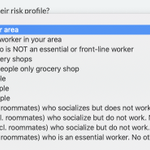


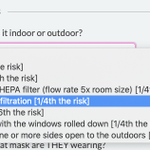
microCOVID blog: Deep dive on vaccine efficacy vs Delta variant, ongoing risk of "long COVID" symptoms, and what precautions we think make sense now. microcovid.org/blog/delta

ALT How the Delta Variant affects fully vaccinated people: Infection risks are higher than with the original strain, but hospitalization rates are still low. Long COVID symptoms (life-interfering symptoms 3+ months after infection) between 2 and 30% of cases -- worthy of concern!
Calculator updated for the Delta variant! Infection risk up more than 2x ⚠️even if you're vaccinated⚠️ Please visit microcovid.org to get updated risk for your current activities.
Blog post coming soon w details about Delta and vaccines + long COVID and other risks.
The calculator and Risk Tracker now include support for Johnson & Johnson's vaccine. Pfizer & Moderna's effectiveness have been updated. Waiting time between receiving a dose and getting the benefits from it increased to 14 days. Learn more here: microcovid.org/paper/13-q-an…
Small bug fix for the Risk Tracker. Latest version is v2.2.2. You can update to the latest version following these steps: docs.google.com/document/d/1…

Vaccines Update! 💉 We just released v2.2.1 of the Risk Tracker. It can now help you calculate your microCOVID score if you're vaccinated AND the score of seeing someone else who has been vaccinated. Get the latest copy here: microcovid.org/tracker
Still using a cloth mask?
Upgrade to a sealed N95! Better protection for yourself AND others!
Explore the new numbers at microcovid.org/. How much better would your protection be?
Read microcovid.org/blog/masks for what to buy!
Muchas gracias a todo los traductores que han trabajado con el proyecto! Ahora tenemos una traducción al español, así como a otros cinco idiomas.
microcovid.org/?lng=es
cc @esp_covid19 @jljcolorado

microCOVID project retweeted

9/ …being near 1 person to 4 raises chance of transmission a lot. This is all nicely shown by my fave “How Risky Is a Given Activity?” calculator: @microcovid. Plugging in this scenario (in SF, inside, 15 minutes, 1 other person, masks, 6ft apart), it shows a transmission risk…
In light of data about the new COVID-19 variant, B117, we have increased activity risks by 50%.
The largest effect is yet to come: we expect the virus to become even more prevalent, increasing continually month after month.
More on our blog!
microcovid.org/blog/b117
1/
🧐 how many microcovids is it to leap tall buildings in a single bound?
(probably none, if you are alone and outdoors!)

microCOVID project retweeted
The thing people don't account for enough is the rate of COVID spread in their area. Indoor tennis with one person is gonna be relatively dangerous in North Dakota, but relatively safe in NYC (for now, but monitor as caseloads rise).
microcovid.org/?distance=ten…
The first step in protecting your family and community is to avoid getting COVID yourself 👨👧
Knowing your risk is crucial to keeping other people safe!
As Rachel @Maddow emphasized today: protecting your loved ones starts with your choices about your own risk.

New blog post about Thanksgiving plans!
Ben from our team walks you through the precautions his family considered, and how they used the microcovid calculator to understand their options.
Ben’s family used this information to decide whether to cancel.
microcovid.org/blog/thanksgi…
microCOVID project retweeted

The key takeaway here is to quarantine for 7 days after any exposures, and *then* get a test. At that point you’re likely to have detectable virus if you’re infected, and a negative test puts you at the same probability of still being positive as 14d symptom-free without a test.
PSA: A negative test result does NOT mean you're COVID-free!
It means that you don't YET have enough virus in your body to detect.
If you were infected right BEFORE the test, the virus might be there, but growing slowly
Or you might've caught the virus AFTER you took the test.
MIT cites Kucircka et al:
"during the four days of infection prior to symptom onset, the probability of a false negative on the PCR test went from 100 percent on Day 1 to 67 percent on Day 4 [...] dropping to 20 percent three days after symptom onset."
medical.mit.edu/covid-19-upd…
