

Former child.
Toronto, Ontario
Joined August 2021
- Tweets8.8K
- Following1K
- Followers1.4K
- Likes27.8K





Pinned Tweet
As of yesterday, I’m now 100% allocated to $TSLA. Main reasons:
1. I think V15 will progress faster and further than most people expect. It’s currently being used in the Robotaxi fleet, and following FSD testers will be one of the best ways to track its progression over the coming months. In my opinion, this is the single most important thing for Tesla investors to understand and monitor.
2. I see a high probability of a merger announcement in H2 2026, with a premium and fixed exchange ratio. Ultimately, I believe Tesla and SpaceX are worth more together than apart, and a fixed ratio with a premium could drive substantial appreciation in $TSLA. A floating ratio, which I view as less likely, could produce a much larger immediate move in Tesla, but may be less strategically attractive to Elon if SpaceX appreciates as rapidly as he, and I, expect over the coming quarters.
The time to buy $SPCX is not now imo, it will be immediately or shortly after the merger announcement.
3. Sentiment is extremely low. Retail sentiment is near all-time lows while institutions are buying. I’ve invested long enough to know that some of the best opportunities come during periods like this, when there’s blood in the streets and seemingly everyone wants out.
I allocated all of my remaining cash to $TSLA yesterday.
Cyber Dawg retweeted
Tesla–SpaceX: The Work to Announce a Merger Could Already Be Done
Tesla and SpaceX could absolutely have completed the work required to announce a merger by now. The central mistake I see in much of the timing commentary is a failure to distinguish the preparation needed to reach a definitive agreement from the substantially longer process required to complete the transaction. These stages have different requirements, dependencies and constraints. Most importantly, the longest and least controllable parts of the process occur after signing. Understanding that distinction fundamentally changes how an announcement timeline should be assessed.
One of the first things I did when tackling this problem was establish a conceptual framework of the entire merger process, from initial consideration through closing. I separated it into distinct phases: pre-announcement preparation, signing and announcement, announcement to shareholder vote, and vote to closing. I then examined what must be completed at each stage, which activities can proceed simultaneously, and where the actual bottlenecks arise. Once that framework is established, game theory and strategic reasoning can actually become useful. You can assess the incentives of the parties involved, their relative leverage, what they can accelerate, and the consequences of waiting. Without that foundation, projecting an announcement date becomes little more than speculation about how long a complicated transaction should take.
The clearest place to examine this distinction is the pre-announcement window. Bloomberg reported consideration of a Tesla–SpaceX combination on January 29, 2026, roughly four and a half months before SpaceX's June IPO. Although that doesn't establish when formal negotiations began, both companies could have used that period to retain advisers, conduct diligence, develop valuations and transaction structures, and assess the regulatory and security requirements. A transaction of Tesla's magnitude advancing toward a definitive agreement would have raised significant IPO disclosure considerations, making post-IPO signing strategically understandable. But the IPO did not prevent substantive preparation beforehand, nor did it reset the clock on work already completed. The companies have had roughly four and a half months before listing and another four months afterward to advance the transaction and reach an executable agreement. Anyone ruling out an announcement now needs to identify the specific pre-signing obstacle that could not already have been resolved, rather than treating the IPO as though it erased months of available preparation.
Consider what actually needs to happen before signing. Independent negotiators must evaluate the economics, advisers must conduct reciprocal diligence, lawyers must establish the transaction structure and terms, and specialists must assess regulatory, security and contractual risks. The companies also need appropriate corporate authorizations and a defensible allocation of the remaining execution risks. This is substantial work, but much of it can proceed in parallel. Financial analysis does not need to finish before lawyers begin drafting, nor must every regulatory question be definitively resolved before the companies can negotiate how to address it. With dedicated teams and coordinated decision-making, these workstreams can advance considerably within months.
The objective is to reach an informed, executable agreement that both sides can authorize. It is not to complete the entire merger before announcing it. Final regulatory approvals, shareholder authorization, security arrangements and numerous closing deliverables can remain outstanding, provided the agreement properly addresses those requirements and the risks they create. A fundamental valuation disagreement or an unacceptable structural issue could certainly prevent signing, but those are specific negotiating obstacles. They are not evidence that the preparation phase inherently requires another year or more.
China is a useful example. My base case remains that Tesla becomes a SpaceX subsidiary, with Tesla China retained beneath Tesla and appropriately separated from sensitive SpaceX operations. This requires serious diligence concerning data, intellectual property, government contracts, security restrictions and applicable Chinese approvals. Before signing, the companies need sufficient confidence that the proposed structure is workable and a clear contractual framework for addressing the remaining risks. They do not need every final clearance or implementation requirement completed before entering the agreement. Those processes can continue alongside the shareholder approval process and, where necessary, beyond the vote. An analyst citing China as an obstacle to an early announcement needs to identify what specifically prevents signing, rather than pointing to a regulatory process that can continue afterward.
The announcement-to-closing phase is where the distinction becomes especially important. Following signing, the companies must complete the applicable SEC registration and disclosure process, satisfy shareholder notice requirements and obtain the necessary approvals. Meanwhile, antitrust investigations, foreign regulatory reviews, security negotiations and contractual consents can proceed concurrently. The shareholder vote is another milestone within this process, not necessarily its conclusion. Required clearances can remain outstanding after shareholders approve the transaction, delaying closing without automatically requiring another vote.
This is where the longest delays can occur, precisely because the timeline becomes substantially less controllable. A U.S. antitrust second request, for example, requires the companies to respond to an actual regulatory investigation before the subsequent waiting period can begin. Preparing documents in advance is useful, but it cannot substitute for the investigation itself. Some formal filings can begin before definitive signing under qualifying circumstances, yet private preparation alone does not start the relevant review periods. Regulatory authorities determine the course of their investigations, and the companies cannot simply accelerate those decisions by assigning more internal resources.
Broadcom's acquisition of VMware illustrates the magnitude of this distinction. The merger agreement was announced on May 26, 2022, shareholders approved the transaction on November 4, 2022, and closing did not occur until November 22, 2023. Approximately eighteen months elapsed between announcement and closing, including more than a year after shareholder approval. The companies had already negotiated and announced their agreement, obtained shareholder authorization and still faced a prolonged period before completing the transaction. This demonstrates why understanding where time is consumed matters enormously when evaluating whether an announcement can occur sooner.
There is also a strategic cost to delaying execution. An eighteen-month signing-to-closing scenario beginning in November 2026 reaches May 2028. The same scenario beginning in August 2027 reaches February 2029, beyond the January 20 presidential transition. That eighteen-month duration is an extended-review scenario included in my timeline, not a mandatory completion period. Nevertheless, delaying signing by nine months sacrifices nine months of execution time before a potentially significant change in the political and regulatory environment. An earlier agreement provides substantially more room to absorb prolonged investigations, additional information requests and difficult remedy negotiations. The possibility of an extended review therefore strengthens the incentive to begin formal execution sooner.
This is why I find the projections from analysts expecting an announcement in H2 2027 particularly difficult to reconcile with the actual process. From the initial January reporting, that would imply approximately seventeen to twenty-three months before a definitive agreement is announced. Even starting the clock after SpaceX's June IPO, which was not legally necessary for preliminary preparation or negotiations, that still leaves roughly thirteen to nineteen months. What specific pre-signing requirement justifies that much time? Is there an identifiable structural obstacle, an unresolved economic disagreement, or a strategic advantage to waiting that outweighs the cost of delaying execution? Those are the questions a credible timing forecast needs to answer.
I see enormous attention devoted to refining Tesla DCF projections and long-term valuations, yet comparatively little detailed analysis of the transaction mechanics and strategic incentives surrounding one of the most consequential catalysts in Tesla's history. Valuation is essential to determining acceptable terms, but it does not establish how long the pre-announcement phase must take. Analysts who use the complexity of obtaining regulatory approvals and completing the merger to dismiss an earlier announcement are assigning the most time-consuming requirements to the wrong stage of the process. That is a fundamental analytical error, not a minor disagreement over dates.
This brings us to the strategic incentives of the people involved. Elon has considerable influence over the direction and priorities of both companies, even though independent negotiations and corporate approvals remain essential. More fundamentally, I see him as a builder whose overriding objective is to accelerate Tesla and SpaceX toward achieving their respective missions. If bringing these businesses together advances those objectives, every unnecessary month of delay carries an opportunity cost. Understanding that motivation is essential to evaluating why he would favor accelerating the transaction once acceptable terms and a workable structure are established.
The companies have had ample opportunity to prepare an executable agreement, including before SpaceX's IPO. The burden is on those dismissing an early announcement to explain what specifically prevents it. The complexity of completing this merger is not that explanation. If anything, it's a compelling reason to get the process underway sooner.
$TSLA
I've followed $TSLA's price action daily for nearly two years and spent a considerable amount of time listening to and evaluating different Tesla analysts. Dan is hands down the best and most accurate analyst I've found. He combines technical analysis with a deep understanding of economics and Tesla as a business, while consistently maintaining an objective, evidence-based perspective. I'd highly recommend subscribing to his work.


Tesla–SpaceX: The Work to Announce a Merger Could Already Be Done
Tesla and SpaceX could absolutely have completed the work required to announce a merger by now. The central mistake I see in much of the timing commentary is a failure to distinguish the preparation needed to reach a definitive agreement from the substantially longer process required to complete the transaction. These stages have different requirements, dependencies and constraints. Most importantly, the longest and least controllable parts of the process occur after signing. Understanding that distinction fundamentally changes how an announcement timeline should be assessed.
One of the first things I did when tackling this problem was establish a conceptual framework of the entire merger process, from initial consideration through closing. I separated it into distinct phases: pre-announcement preparation, signing and announcement, announcement to shareholder vote, and vote to closing. I then examined what must be completed at each stage, which activities can proceed simultaneously, and where the actual bottlenecks arise. Once that framework is established, game theory and strategic reasoning can actually become useful. You can assess the incentives of the parties involved, their relative leverage, what they can accelerate, and the consequences of waiting. Without that foundation, projecting an announcement date becomes little more than speculation about how long a complicated transaction should take.
The clearest place to examine this distinction is the pre-announcement window. Bloomberg reported consideration of a Tesla–SpaceX combination on January 29, 2026, roughly four and a half months before SpaceX's June IPO. Although that doesn't establish when formal negotiations began, both companies could have used that period to retain advisers, conduct diligence, develop valuations and transaction structures, and assess the regulatory and security requirements. A transaction of Tesla's magnitude advancing toward a definitive agreement would have raised significant IPO disclosure considerations, making post-IPO signing strategically understandable. But the IPO did not prevent substantive preparation beforehand, nor did it reset the clock on work already completed. The companies have had roughly four and a half months before listing and another four months afterward to advance the transaction and reach an executable agreement. Anyone ruling out an announcement now needs to identify the specific pre-signing obstacle that could not already have been resolved, rather than treating the IPO as though it erased months of available preparation.
Consider what actually needs to happen before signing. Independent negotiators must evaluate the economics, advisers must conduct reciprocal diligence, lawyers must establish the transaction structure and terms, and specialists must assess regulatory, security and contractual risks. The companies also need appropriate corporate authorizations and a defensible allocation of the remaining execution risks. This is substantial work, but much of it can proceed in parallel. Financial analysis does not need to finish before lawyers begin drafting, nor must every regulatory question be definitively resolved before the companies can negotiate how to address it. With dedicated teams and coordinated decision-making, these workstreams can advance considerably within months.
The objective is to reach an informed, executable agreement that both sides can authorize. It is not to complete the entire merger before announcing it. Final regulatory approvals, shareholder authorization, security arrangements and numerous closing deliverables can remain outstanding, provided the agreement properly addresses those requirements and the risks they create. A fundamental valuation disagreement or an unacceptable structural issue could certainly prevent signing, but those are specific negotiating obstacles. They are not evidence that the preparation phase inherently requires another year or more.
China is a useful example. My base case remains that Tesla becomes a SpaceX subsidiary, with Tesla China retained beneath Tesla and appropriately separated from sensitive SpaceX operations. This requires serious diligence concerning data, intellectual property, government contracts, security restrictions and applicable Chinese approvals. Before signing, the companies need sufficient confidence that the proposed structure is workable and a clear contractual framework for addressing the remaining risks. They do not need every final clearance or implementation requirement completed before entering the agreement. Those processes can continue alongside the shareholder approval process and, where necessary, beyond the vote. An analyst citing China as an obstacle to an early announcement needs to identify what specifically prevents signing, rather than pointing to a regulatory process that can continue afterward.
The announcement-to-closing phase is where the distinction becomes especially important. Following signing, the companies must complete the applicable SEC registration and disclosure process, satisfy shareholder notice requirements and obtain the necessary approvals. Meanwhile, antitrust investigations, foreign regulatory reviews, security negotiations and contractual consents can proceed concurrently. The shareholder vote is another milestone within this process, not necessarily its conclusion. Required clearances can remain outstanding after shareholders approve the transaction, delaying closing without automatically requiring another vote.
This is where the longest delays can occur, precisely because the timeline becomes substantially less controllable. A U.S. antitrust second request, for example, requires the companies to respond to an actual regulatory investigation before the subsequent waiting period can begin. Preparing documents in advance is useful, but it cannot substitute for the investigation itself. Some formal filings can begin before definitive signing under qualifying circumstances, yet private preparation alone does not start the relevant review periods. Regulatory authorities determine the course of their investigations, and the companies cannot simply accelerate those decisions by assigning more internal resources.
Broadcom's acquisition of VMware illustrates the magnitude of this distinction. The merger agreement was announced on May 26, 2022, shareholders approved the transaction on November 4, 2022, and closing did not occur until November 22, 2023. Approximately eighteen months elapsed between announcement and closing, including more than a year after shareholder approval. The companies had already negotiated and announced their agreement, obtained shareholder authorization and still faced a prolonged period before completing the transaction. This demonstrates why understanding where time is consumed matters enormously when evaluating whether an announcement can occur sooner.
There is also a strategic cost to delaying execution. An eighteen-month signing-to-closing scenario beginning in November 2026 reaches May 2028. The same scenario beginning in August 2027 reaches February 2029, beyond the January 20 presidential transition. That eighteen-month duration is an extended-review scenario included in my timeline, not a mandatory completion period. Nevertheless, delaying signing by nine months sacrifices nine months of execution time before a potentially significant change in the political and regulatory environment. An earlier agreement provides substantially more room to absorb prolonged investigations, additional information requests and difficult remedy negotiations. The possibility of an extended review therefore strengthens the incentive to begin formal execution sooner.
This is why I find the projections from analysts expecting an announcement in H2 2027 particularly difficult to reconcile with the actual process. From the initial January reporting, that would imply approximately seventeen to twenty-three months before a definitive agreement is announced. Even starting the clock after SpaceX's June IPO, which was not legally necessary for preliminary preparation or negotiations, that still leaves roughly thirteen to nineteen months. What specific pre-signing requirement justifies that much time? Is there an identifiable structural obstacle, an unresolved economic disagreement, or a strategic advantage to waiting that outweighs the cost of delaying execution? Those are the questions a credible timing forecast needs to answer.
I see enormous attention devoted to refining Tesla DCF projections and long-term valuations, yet comparatively little detailed analysis of the transaction mechanics and strategic incentives surrounding one of the most consequential catalysts in Tesla's history. Valuation is essential to determining acceptable terms, but it does not establish how long the pre-announcement phase must take. Analysts who use the complexity of obtaining regulatory approvals and completing the merger to dismiss an earlier announcement are assigning the most time-consuming requirements to the wrong stage of the process. That is a fundamental analytical error, not a minor disagreement over dates.
This brings us to the strategic incentives of the people involved. Elon has considerable influence over the direction and priorities of both companies, even though independent negotiations and corporate approvals remain essential. More fundamentally, I see him as a builder whose overriding objective is to accelerate Tesla and SpaceX toward achieving their respective missions. If bringing these businesses together advances those objectives, every unnecessary month of delay carries an opportunity cost. Understanding that motivation is essential to evaluating why he would favor accelerating the transaction once acceptable terms and a workable structure are established.
The companies have had ample opportunity to prepare an executable agreement, including before SpaceX's IPO. The burden is on those dismissing an early announcement to explain what specifically prevents it. The complexity of completing this merger is not that explanation. If anything, it's a compelling reason to get the process underway sooner.
$TSLA
There's so much confusion around this when it really doesn't need to be complicated. People are quote-tweeting fake Citrini reports about Tesla being bought for $420 and debating exchange ratios without even establishing whether they're fixed or floating.
We're 47 pages into the math homework and nobody's read the question.
Put the calculator down for five seconds.
Take a deep breath and repeat after me: OWNERSHIP PERCENTAGE.
As in what percentage of the combined company will $TSLA and $SPCX shareholders actually own.
Start with that, and the rest of the transaction becomes a whole lot easier to understand.

50/50 ownership split between $TSLA and $SPCX shareholders, @InvestAnswers.
Forget the exchange ratio, stock prices, and everything else for a moment.
The real battleground is the ownership stake each shareholder group secures in the combined entity
Still haven't received a response from the guys at @Rebellionaire. According to them, a merger announcement won't happen until H2 2027. I'd be genuinely interested in understanding the logic and reasoning behind that projection. I'm always trying to learn and challenge my own assumptions, and considering that analyzing $TSLA is part of their full-time job, I'd expect something more substantive than surface-level commentary when discussing what could be one of the most consequential catalysts in Tesla's history.
Solid video and analysis. I have a few questions on the merger and would love to hear your thoughts in more depth at some point, especially given how significant a catalyst this is for both companies.
When you say the merger likely comes by next summer, do you mean the announcement or the actual closing? And why do you think TSLA shareholders waiting for the merger could backfire? Are you expecting the eventual terms to be unfavourable?
SpaceX outperforming is my base case too, but that’s exactly why I think there’s an incentive to announce sooner. We may be in a Goldilocks zone where they can agree something around 47.5–50% for Tesla holders before the valuations move further apart. Then, if SpaceX performs the way I expect during the 3–5 months leading into the Tesla vote, the value of the offer rises under a fixed exchange ratio and gives TSLA shareholders a stronger reason to approve it. The Tesla vote isn’t a formality, and Elon can’t pass it himself, so shareholders have real leverage. Why wait until SpaceX has already pulled further ahead and that same ownership allocation becomes harder to justify?
On China, my base case is that Tesla China stays under Tesla, with Tesla becoming a SpaceX subsidiary, while the China operations are firewalled from sensitive SpaceX work. This is exactly the kind of issue that gets worked through during pre-signing diligence, which is likely where they are now and probably have been for months. Tesla was already being discussed as a potential SpaceX combination back in January. Since then, advisers probably have been working through Chinese filing requirements, data and IP restrictions, government contracts, DCSA and other security concerns, and whether a firewall is sufficient. They don’t need every approval before announcing. They need to know the structure is workable and have a clear path for whatever remains before closing.
Any remaining reviews and security arrangements could continue alongside the S-4, SEC process and Tesla vote. If required clearances are still outstanding when shareholders vote, they could hold up closing without necessarily preventing the vote itself. So if you mean the announcement next summer, what specific China issue do you think prevents earlier signing? A required sale or spin-off, a prolonged Chinese review, or a US security issue that has to be resolved before either side will commit?
And where are you starting the clock on the work behind this? If serious feasibility work began around January, why couldn’t a meaningful amount of this already be well advanced?
Thanks
Cyber Dawg retweeted
Tesla–SpaceX: The Game Theory Between Signing and the Vote
The ownership split of the combined company is the battleground between $TSLA and $SPCX investors. Every additional percentage point for one group leaves less for the other. But timing determines whether SpaceX’s appreciation makes that split harder to negotiate or easier to approve. To understand this, I’m stepping out of the investor’s seat and imagining myself at the negotiating table, responsible for getting a valuable deal signed and approved. The question becomes: how do we offer Tesla shareholders enough to secure their support without asking SpaceX to give up more than necessary?
My negotiating target would be 47.5–50% of combined economic ownership for legacy Tesla shareholders, the range I regard as necessary to build decisive support. Tesla holders have genuine leverage. Under the SpaceX-parent structure I’m analyzing, Elon can deliver SpaceX’s ordinary shareholder vote, but he cannot independently deliver Tesla’s required majority of outstanding shares. Retail participation matters because shares that do not vote contribute nothing toward that majority. Institutions will scrutinize valuation, negotiating independence, conflicts and the weaker voting influence Tesla holders would receive under SpaceX’s dual-class structure. Getting the deal approved means addressing all of those concerns.
This is two-level bargaining: the negotiators have to agree on terms that their shareholders will then accept. Using backward induction, I start from that vote and ask what Tesla holders would realistically support. My premise is that enough shareholders will resist accepting a smaller stake simply because SpaceX has surged while Tesla has remained flat, particularly when they see enormous unrealized upside in Optimus and robotaxi. They can reject the transaction and remain independent. That makes the threat credible, and it needs to influence the negotiations before anyone casts a vote.
My expectation that SpaceX will outperform creates a dynamic bargaining problem: waiting changes what each side will accept. If SpaceX pulls further ahead before signing, Elon faces an increasingly uncomfortable choice. He can offer Tesla a smaller stake and risk rejection, or offer a much larger premium to preserve the allocation its shareholders demand. The percentage SpaceX gives up stays the same, but it is now a bigger economic concession relative to Tesla’s unchanged value. Elon has an incentive to settle that argument earlier, before securing Tesla’s approval requires an offer considerably harder for SpaceX’s side to stomach.
The crucial distinction is that the terms are settled at signing, while Tesla shareholders assess what those terms are worth again when they vote. On the expedited timeline I’m working with, that vote comes roughly three to five months later. A fixed exchange ratio acts as a commitment device: the agreement establishes how many SpaceX shares each Tesla share receives, subject to its adjustment and termination provisions. Further SpaceX appreciation alone does not reopen the bargain.
Here’s a simple example, ignoring synergies and holding share counts fixed. Say Tesla is worth $1.5 trillion, SpaceX $2.2 trillion, and Tesla holders get 50% of the combined company. Their stake is worth $1.85 trillion, a $350 billion premium over Tesla on its own. Now suppose SpaceX’s standalone value rises 20% to $2.64 trillion while Tesla’s remains unchanged. That same 50% is now worth $2.07 trillion, a $570 billion premium. Sign late, and SpaceX’s side must approve that larger concession. If it refuses, Tesla’s allocation has to fall or negotiations stall. Sign early at a fixed ratio, and the agreed stake gains $220 billion without another share being promised. The final economics are identical if both paths preserve 50%. The advantage of signing early is securing that allocation before the rally, then approaching the vote with a stake that has grown from $1.85 trillion to $2.07 trillion since signing.
That is what makes the announcement-to-vote window so interesting. Start with an allocation Tesla holders consider acceptable, then let SpaceX’s expected growth strengthen the value of what they receive. Holders focused on ownership retain their agreed participation, while those focused on valuation see a more attractive exchange relative to Tesla’s standalone value. The advantage depends on SpaceX outperforming, which is a central assumption of my thesis. If SpaceX falls instead, the same mechanism works against the vote.
Elon also has a way to bridge a remaining ownership gap: contribute some of his existing low-vote Class A shares. This side payment would improve Tesla’s allocation without additional issuance diluting SpaceX’s other holders. Subject to transfer restrictions, he could personally fund part of the improvement while retaining his high-vote Class B shares. His incentive would be to secure support sooner rather than risk needing a larger concession later. Counterintuitively, giving up some ownership could help secure a deal that makes his remaining stake substantially more valuable.
Assuming the pre-announcement work is already well advanced, my call is for a definitive merger agreement to be signed and announced by November 19, 2026. That would allow Tesla to incorporate the deal into its late-December AGM materials, ahead of Nasdaq’s year-end deadline, with a separate merger vote likely in Q1–Q2 2027. The strategic opportunity lies in the months between signing and the vote: secure an acceptable ownership allocation before further SpaceX appreciation makes it harder to negotiate, then let that appreciation strengthen the value of Tesla shareholders’ agreed consideration and their incentive to approve. Before signing, SpaceX outperformance can work against the deal. After signing, it can work in its favour. That's the timing advantage I believe Elon has every incentive to capitalize on.
I can't pretend I didn't see the pumpkin wink😂. I still think there is a chance we see Optimus V3 tonight. If not tonight, potentially on Halloween.
$TSLA
My #1 Optimus V3 reveal theory:
Optimus V3 will be the surprise second reveal at the Roadster event on October 15.
Tesla’s Halloween teaser opens with a pumpkin winking, then shows a covered vehicle that appears to hover, pointing toward the Roadster and its teased flight capability.
Then lightning strikes and Optimus’s hand begins moving, followed by a Frankenstein-style groan. It’s the classic motif of electricity bringing an artificial being to life.
The “Open Trunk” prompt adds another layer. Tesla has done the surprise-cargo reveal before: the Roadster itself emerged from a Semi trailer at the 2017 Semi unveiling. This time, the product that was once the surprise could introduce the next one.
Put it together, and that opening wink feels like a knowing hint that the car isn’t the whole story. The covered vehicle sets up the expected reveal; Optimus coming alive hints at the unexpected second reveal.
Roadster first. Optimus V3 as the surprise.
$TSLA
To the arbitrage traders,
You might want to be paying very close attention to $TSLA from now until November 19th 🚀🚀🚀
@RandyWKirk1 I think the announcement comes anytime between tonight and November 19. That window still lets Tesla include the merger details in the proxy materials for a December AGM.
$TSLA $SPCX

There are plenty of ways this could play out, but I'm trying to focus on what I see as the most probable sequence rather than constantly running through every possible scenario.
A December AGM that includes the merger vote is still technically possible, but I would put the odds at <5%. Tesla could also announce the merger and communicate the details separately, without incorporating them into the AGM proxy.
From a merger and AGM coordination perspective, I think the cleanest sequence is an October to early-to-mid November announcement, followed by a December AGM where Elon and the board can explain the deal, answer questions and build shareholder support ahead of a dedicated merger vote in 2027.
Including a summary of the merger in the AGM proxy would make a lot of sense strategically. Shareholders would receive an official summary of the terms ahead of the meeting, giving them time to digest the information before Elon and the board make their case. Tesla could supplement this with a more detailed investor presentation, while the S-4 process moves forward in parallel. It's a clean, coordinated approach to informing shareholders and building support before the actual merger vote.
And like everyone else, I'm trying to figure out why Tesla has waited so long to announce its 2026 AGM. If the merger preparations are already substantially complete, coordinating the announcement, proxy materials and AGM discussion provides a logical explanation for the delay.
Ultimately, I'm trying to piece together the most likely timeline based on the incentives, legal and regulatory requirements, and everything we've learned so far. I'm approaching this objectively and I'm not attached to any particular timeline. If new information changes the picture, I'll adjust my expectations and analysis immediately.
$TSLA $SPCX

December 6 isn't a hard AGM deadline. It's simply 13 months since Tesla's last annual meeting, at which point Texas law allows shareholders who have formally requested a meeting to petition a court to order one. It doesn't mean Tesla is legally required to hold its AGM by that date.
The actual Nasdaq deadline is December 31, and even that allows some flexibility. Nasdaq can grant Tesla a discretionary extension of up to 180 days, to as late as June 29, 2027, subject to an approved compliance plan. Holding the AGM after December 6 would also require Tesla to update its shareholder proposal deadlines, something it already did last year. None of this prevents a later meeting.
In my view, the timing of the merger announcement will play a major role in when Tesla chooses to hold its AGM. If Elon announces the deal around the October 15 Roadster event (LFG TSLA shareholders), an AGM in early December makes a lot of sense. Tuesday, December 1, or Thursday, December 3, would fit Tesla's historical Tuesday/Thursday scheduling pattern while keeping the meeting before the December 6 threshold.
This is also why October 15–23 looks like a particularly clean announcement window. Under the standard notice-and-access process, a December 1 AGM requires notices by Thursday, October 22. A December 3 meeting requires them by Saturday, October 24, making Friday, October 23 the sensible operational target. Announcing before the AGM notices go out also lets the proxy materials reflect the deal. Assuming those materials are substantially prepared, an announcement around the Roadster event would fit neatly into that schedule, avoiding unnecessary procedural complications while giving shareholders several weeks to digest the merger terms before Elon and the board explain the strategic rationale, build support and encourage retail voting participation.
If the merger announcement comes in November or early December, Tesla could still hold its AGM on December 15 or 17. Alternatively, it could move the AGM into 2027, either before the merger vote or combined with it, although that would mean missing Nasdaq's December 31 deadline and relying on discretionary relief.
What I consider far less likely is Tesla trying to squeeze the actual merger vote into its December AGM. Under the expected stock-for-stock structure, SpaceX would need to file an S-4, work through the SEC review process and deliver the final proxy/prospectus materials. Using the expected incorporation-by-reference approach means those materials generally need to reach shareholders at least 20 business days before the vote. Completing that entire process before year-end would be extremely ambitious, even with a mid-October announcement.
The cleanest sequence, in my view, is an October merger announcement, an AGM around December 1 or 3 to explain the strategic case, followed by a dedicated shareholder vote in Q1–Q2 2027 once the SEC process is complete. The timing works, gives shareholders time to evaluate the merger and keeps the annual meeting separate from the actual approval process. That makes October 15–23 a strategically useful window that I'll be paying attention to
$TSLA $SPCX @DivesTech
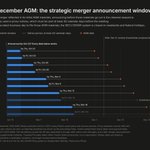
Here's a visual breakdown of how Tesla's merger announcement could align with its December AGM.
The chart shows the possible AGM dates in December and the corresponding deadlines for sending shareholders their meeting notices. Tesla typically uses a process requiring at least 40 calendar days' notice.
The key takeaway is that an October 15–22 merger announcement would fit every December AGM date shown, allowing Tesla to incorporate the deal into its initial meeting materials. The blue bars show how much longer that announcement window extends for each later AGM date.
These aren't hard merger announcement deadlines. They're the windows that would allow Tesla to coordinate the announcement with its AGM preparations, ahead of a separate merger approval vote in 2027.
$SPCX $TSLA

December 6 isn't a hard AGM deadline. It's simply 13 months since Tesla's last annual meeting, at which point Texas law allows shareholders who have formally requested a meeting to petition a court to order one. It doesn't mean Tesla is legally required to hold its AGM by that date.
The actual Nasdaq deadline is December 31, and even that allows some flexibility. Nasdaq can grant Tesla a discretionary extension of up to 180 days, to as late as June 29, 2027, subject to an approved compliance plan. Holding the AGM after December 6 would also require Tesla to update its shareholder proposal deadlines, something it already did last year. None of this prevents a later meeting.
In my view, the timing of the merger announcement will play a major role in when Tesla chooses to hold its AGM. If Elon announces the deal around the October 15 Roadster event (LFG TSLA shareholders), an AGM in early December makes a lot of sense. Tuesday, December 1, or Thursday, December 3, would fit Tesla's historical Tuesday/Thursday scheduling pattern while keeping the meeting before the December 6 threshold.
This is also why October 15–23 looks like a particularly clean announcement window. Under the standard notice-and-access process, a December 1 AGM requires notices by Thursday, October 22. A December 3 meeting requires them by Saturday, October 24, making Friday, October 23 the sensible operational target. Announcing before the AGM notices go out also lets the proxy materials reflect the deal. Assuming those materials are substantially prepared, an announcement around the Roadster event would fit neatly into that schedule, avoiding unnecessary procedural complications while giving shareholders several weeks to digest the merger terms before Elon and the board explain the strategic rationale, build support and encourage retail voting participation.
If the merger announcement comes in November or early December, Tesla could still hold its AGM on December 15 or 17. Alternatively, it could move the AGM into 2027, either before the merger vote or combined with it, although that would mean missing Nasdaq's December 31 deadline and relying on discretionary relief.
What I consider far less likely is Tesla trying to squeeze the actual merger vote into its December AGM. Under the expected stock-for-stock structure, SpaceX would need to file an S-4, work through the SEC review process and deliver the final proxy/prospectus materials. Using the expected incorporation-by-reference approach means those materials generally need to reach shareholders at least 20 business days before the vote. Completing that entire process before year-end would be extremely ambitious, even with a mid-October announcement.
The cleanest sequence, in my view, is an October merger announcement, an AGM around December 1 or 3 to explain the strategic case, followed by a dedicated shareholder vote in Q1–Q2 2027 once the SEC process is complete. The timing works, gives shareholders time to evaluate the merger and keeps the annual meeting separate from the actual approval process. That makes October 15–23 a strategically useful window that I'll be paying attention to
$TSLA $SPCX @DivesTech


A merger announcement and an Optimus V3 reveal are both in the cards for October, IMO.
It's an incredibly exciting time for $TSLA and $SPCX shareholders who recognize the enormous potential of a merger to accelerate both companies toward achieving their ultimate missions. Put the financial considerations aside for a moment. Accelerating progress is what matters most to those who genuinely believe in what these companies are building, and it's also what drives Elon. His overriding motivation has always been advancing his missions, not maximizing his personal wealth. That is the fundamental driving force behind an expedited merger, and why I believe the "let's just wait" crowd fundamentally misunderstands the incentives and strategic urgency of bringing these companies together.
This broader perspective also shapes my investment strategy. When I invest in $TSLA, I'm consciously thinking about my potential future ownership in $SPCX, and I believe $SPCX investors should be approaching their investments with the same consideration in reverse. My investong strategy/objective currently is to maximize my ownership percentage in the eventual combined entity. Yet much of the analysis I see overlooks this perspective, particularly the implications of merger terms, relative ownership, and shareholder dilution.
Interestingly, nothing seems to piss off $SPCX shareholders more than being reminded that $TSLA shareholders have a vote, and that the outcome of that vote has enormous implications for the eventual deal structure. But shareholder approval isn't some minor technicality. It's a central strategic consideration that influences negotiating leverage, ownership allocation, and ultimately what terms are required to get a deal across the finish line. Ignoring these dynamics doesn't make them any less consequential.
This is precisely why I believe technical analysis is far less important at this stage than understanding the underlying incentives, shareholder voting dynamics, and strategic considerations that could ultimately determine the timing, terms, and ownership structure of a merger.

Oct 2026 will likely go down as the most pivotal month for $TSLA since August 2020 with 69% gains.