AI Compute & Power Capacity Site selection • Interconnection risk • Energy strategy Own the requirements. Own the capacity.
Palo Alto, CA
Joined October 2007
- Tweets305
- Following336
- Followers346
- Likes77






Behind-the-meter is not free.
There are only a handful of operational U.S. data centers running off-grid or partially grid-connected right now, and several have already reported cracked turbines, forced diesel operation, and accelerated equipment failure. Schedule value has to exceed the higher all-in cost and reliability risk. Most models still underweight that trade-off.
ERCOT’s queue is sitting at roughly 474 GW. Record peak demand is a fraction of that.
When the ratio gets this distorted, the rational response is an audit and conditional classification, not more speculative study slots. Firm power path becomes the filter.
Power architecture and density requirements are still moving faster than most site underwriting assumes. Sites that control both the land and a credible path to firm capacity (on-site, hybrid, or contracted) will clear the next 24–36 months. The rest will wait on someone else’s queue.
Hyperscalers do not evaluate on-site generation on LCOE. They evaluate it on recovered compute revenue. A month of earlier power on a 1 GW campus is worth more than most people model. Schedule is the scarce resource.
Unix (incl. Linux) now runs ~92% of websites with a known OS. Windows is under 9%.
On servers - including most of the ones powering the internet and AI - the argument was settled years ago.
Yet in large parts of corporate IT and especially energy/critical infrastructure, Windows remains the default on desktops and operational systems.
The technical fight was won. The operational and commercial one was not.
Where did we go wrong, Unix people?

Traditional real estate brokers and AI infrastructure teams still speak different languages.
One sells location and acreage. The other needs density, liquid cooling, and power that actually shows up on schedule.
That gap is expensive.
Most AI compute capacity marketed as “available” is still soft on the only things that matter: firm power and real energization dates.
Own the requirements. Own the capacity.


Martin Hack retweeted

AI will probably be smarter than any single human next year. By 2029, AI is probably smarter than all humans combined.

Futurist Ray Kurzweil Tells Joe Rogan AI Will Achieve Human-level Intelligence by 2029
"We're not quite there, but we will be there, and by 2029 it will match any person. I'm actually considered conservative. People think that will happen next year or the year after.
I actually said that in 1999. I said we would match any person by 2029. So 30 years, people thought that was totally crazy.
In fact, Stanford had a conference that invited several hundred people from around the world to talk about my prediction, and people thought that this would happen, but not by 2029. They thought it would take 100 years."

3 things to consider for GenAI and Enterprise Data. The advent of GenAI is most likely going to supercharge the adoption and shift from an application centric mindset to more of a “data fabric” driven enterprise landscape. #genai #datalake #llm lnkd.in/ei6hKXsF
No obvious right or wrong at this point, but Japan knows for sure what's at stake here. #genai lnkd.in/gMPuKHM4
Data retention and preservation policies are often impacted during employee off boarding procedures. #legalops #data #costoptimization lnkd.in/gPZJ3S2Q
Very cool, has the potential to create an entire new category @elonmusk

Just catching up on Tesla’s dojo - fascinating to see a DIY stack from chip to rack purpose built for training
A little bit 🤯 - wdyt?
youtu.be/ODSJsviD_SU
Cc @JeffryMolanus @mhackster @joearnold
Martin Hack retweeted

An airdrop - to share amongst early supporters - is on the way.
Plus a brief update on what's new!
- atomic swap - a new primitive 🤝
- more excellent DAOs joining 💪
mirror.xyz/thefundingcoopera…

Martin Hack retweeted
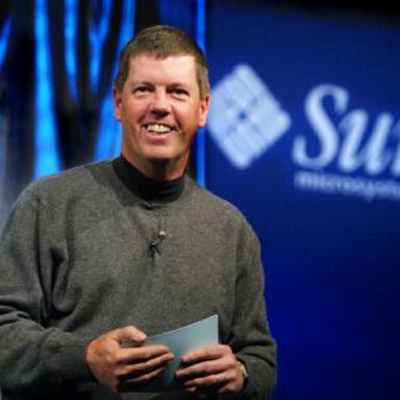
40 years ago 4 x 27 yr olds started Sun Microsystems. We were first to bundle TCP/IP on every system. Used email internally instead of paper memos. Ran production on ERP based on work editor called vi. My has the world changed. Thanks to all of the 235,000 employees + partners.
Martin Hack retweeted

Scientists are better understanding climate change thanks to machine learning. @wheresKR on.inc.com/np5kBSY
Martin Hack retweeted

Breaking: Supreme Court sides with Google in Oracle’s API copyright case theverge.com/2021/4/5/223678…