

Agent wrangler & context janitor. Raising two curious humans. Weekend warrior on the road bike.
Austria
Joined October 2007
- Tweets10K
- Following205
- Followers1.2K
- Likes1.4K
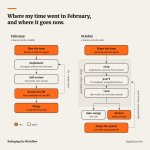




I wrote down how my work with agents changed this year. I still break down the work into vertical slices that ship on their own. I rarely read diffs now: independent reviews and a risk check catch most of it, so my time goes into shaping and guardrails.
mgratzer.com/posts/reforging…

ALT Two workflow diagrams side by side. February, a human in the middle: I plan the issue with the agent, the agent implements and self-reviews, I review the PR with line comments and the agent fixes it, then I merge. October, a human at both ends: I shape the issue with the agent. Inside guardrails from the repo and Forge, the agent ships, guards and lands the PR with a risk verdict. Low-risk PRs merge automatically, the rest come to me with a list of where to look. I shape the system, turning drift into new guardrails.
It's good to see others head in a similar direction: @thorstenball asking the agent for proof, @lethain on small changes, and @ClaudeDevs on how they review code. All worth reading. The hard part is not ending up a meat proxy.
This wasn't on my bingo card. Very interesting! Especially with their recent support for Claude subscriptions. Food for the home lab machine.


Martin Gratzer retweeted

I often get emails from junior engineers asking me what to do.
Here's what I just wrote to one of them

Martin Gratzer retweeted

recommended reading. i like the term "coherence" over "taste".
historically, simplified, a human would approach a software writing human, asking them to build a thing. that's an iterative process, until software writing human truely understands what the other human needs and wants. which is also why we moved away from waterfall. you often can't know what you want before you've build a first shitty solution you can feel out. and your wants might change.
in this scenario, the outcome is what matters, not the program structure itself, unless that makes the outcome worse/impossible (bugs, perf, ease of adding features).
the software writing human's skill is not so much programming itself, but understanding the other humans wants, pulling out domain knowledge from the other human, asking questions, and ultimately translating the other human's wants into programs, while ensuring the program structure is fit to be modified for future needs.
now, can you replace the software writing human with an agent? for simple one-off stuff, yes. if the human with a want is technically minded that extends to more complex programs.
most humans suuuuuck at this iterative colab with agents tho, as they are bad at structuring and communicating their wants.
and agents currently still suck at the software writing human skill of colaborating with another human to understand their wants and translate them to a program.
my gut tells me that this is because the training data and RL for coding agent tasks is largely composed of trajectories where a software writing human and an agent colaborate. that missed the other half of the problem: the human with a want and software writing human interaction.
and until we can encode that agents for writing programs will likely only be effective in the hands of software writing humans, or very technically minded humans.
another thing agents currently suck ar is translating software writing human shallow instructions into architecture that's not a house of cards. i think this too is a consequence of the lack of training data/RL-able trajectories that encode the process a team of software writing humans go through when building a thing. we do have digitized artifacts (design docs, commits/PRs, issue trackers) that capture some but not all of that.
i think this will improve, as we all are now doing design sessions with our agents, so labs could in theory train on that. however, even if this data were available and becomes part of training, the pretraining data still has tons of shit code from around the internet in it, ehich posttraining would have to combat.
welcome to my morning word salad.

Martin Gratzer retweeted

A new paper from Apple engineers ends with a line we couldn’t have written better ourselves:
"if idle macOS devices across organizations [...] can be securely federated, they could form a massive, shared GPU resource pool that benefits the broader ecosystem."
That’s what we’re building with Darkbloom.
The paper's Minions is a system that pool idle Apple Silicon Macs into a distributed GPU cloud for on-prem inference. Queue times went from 10+ hours to minutes. Zero new GPU purchases. Zero infrastructure cost.
It runs inside Apple, on coworkers’ Macs, using the company’s own storage and access controls. When a team needs more capacity, they Slack colleagues and ask them to turn on the executor. Even in that setting, the top adoption concern was data confidentiality. People were wary of their jobs running on a colleague’s Mac. Apple’s fix was to keep each team’s work on its own team’s machines.
Which brings it back to that one word in the conclusion: “securely.”
Inside a company, you can shrink the network until you trust everyone in it. On an open network, the machine belongs to a stranger and there’s no one to Slack. Keeping prompts private and outputs honest on hardware you don’t control is the hard problem that we solved at Darkbloom.
Apple built the on-prem version.
Darkbloom is the open one.

Martin Gratzer retweeted
There's some senior engineers on here who, in the face of AI changing the very structures this industry is built on, present themselves as Stewards of the Craft of Programming.
Bugs the hell out for me.
They keep alluding to the virtue of doing things by hand, the value of Good Code and of craftsmanship, saying that yes, AI might change some things, but hey it won't ever change the value of something done with proper care, by hand, just like in the olden days of 2024. Most everything that was Good back then is still Good now: deep knowledge of languages and systems, good code, great architecture. You know the sermon.
And, yes, some of that *is* true. At least I think so. But we don't know, because no one truly knows what will be important in the future.
We're going through times of great change and I think the best advice to give to young people and others who want to have a job and provide value is: keep your eyes open, rethink from first principles, derive from what businesses value what you can provide; the digital world is more malleable than ever, you should rethink how you can help shape it.
All this pounding on the Bible of Good Code seems to me to be doing the opposite: it lets people feel comfortable -- what I've valued all my life is still valuable, I can rest easy -- in times when one shouldn't feel comfortable. This is a bumpy, exciting, strange ride. If you lean back you might fall off the waggon.
Let's not delude ourselves and others that we can keep doing what we've been doing. Rethink it all.
And, like I said, it bugs the hell out of me seeing senior engineers (that are secure in their career) talking as if there's nothing *really* to change, because the Fundamentals will still be valued. They might!
But it's the wrong advice to not rethink everything right now.
Martin Gratzer retweeted

I’m increasingly convinced that people are spending most of their time building in agent terminals, and very little time actually using what they produce.
Lot of stuff is broken from the start, some stuff that worked before is now broken in weird ways.
Martin Gratzer retweeted
recommended reading by @mdarcemont
manuel.darcemont.fr/posts/th…


Martin Gratzer retweeted

That sounds 100% like the OC hype cycle we had 8 months ago.
Biggest limitation isn’t the tech, it’s imagination and creativity.

Martin Gratzer retweeted

TIL macOS 27 now comes with new fm cli 🤯
We can now use Apple's Foundation Models (on device) from CLI!


Martin Gratzer retweeted

new post: the senior engineer death spiral
sunilpai.dev/posts/the-senio…
a friend just started a big job and asked for some advice. so I braindumped a monologue about a super common failure mode I see with engineers and posted it here, hope it helps whoever it can.


