

Postdoctoral Fellow at @CNRS_OccitaniE . Computational Neuroscience. Oscillations. Neural networks. Diseases.
France
Joined March 2011
- Tweets8.7K
- Following710
- Followers329
- Likes9K





Pinned Tweet
"
If our ignorance is infinite, the only possible course of action is to muddle through as best we can.
3
Ana Aquiles retweeted

Rather than switching between distinct neural gears, the brain may simply speed up or slow down its oscillations, potentially reframing fast and slow thinking.
A single cortical circuit implements fast and slow visual search
doi.org/10.64898/2026.09.09.…
#neuroscience
Ana Aquiles retweeted

Human psychological functioning doesn't peak until late midlife.
The best is yet to come.

Ana Aquiles retweeted
The moment-to-moment speed of alpha and beta brain waves sculps perception via predictive coding.
Alpha and Beta Frequency Modulations in Motion Prediction Reveal Mechanisms of Predictive Coding in Perception.
doi.org/10.1162/jocn.a.2615
#neuroscience


Ana Aquiles retweeted
New results: Anesthesia may disrupt consciousness by weakening how brain regions influence one another. This is uneven, which may help explain bursts of activity under anesthesia.
Disruption of interareal control during propofol anesthesia
biorxiv.org/content/10.64898…
#neuroscience

Ana Aquiles retweeted

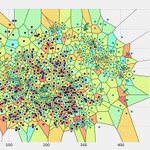
Dimensionality reduction can see structures that do not exist and miss structures that exist.
𝐓𝐡𝐞 𝐬𝐢𝐦𝐩𝐥𝐞𝐬𝐭 𝐞𝐱𝐩𝐥𝐚𝐧𝐚𝐭𝐢𝐨𝐧 𝐢𝐬𝐧’𝐭 𝐚𝐥𝐰𝐚𝐲𝐬 𝐭𝐡𝐞 𝐛𝐞𝐬𝐭 𝐨𝐧𝐞.
Sometimes, no simple way of describing the complexity of the data exists, at least not one that humans can readily interpret.
Then, faithfully representing the data is at odds with finding simple explanations.
“Everything should be made as simple as possible, but no simpler”
A basic intro video with some strategies how to avoid mistakes when using dimensionality reduction:
youtu.be/nIB-WjWzDSc?si=vfKT…

Ana Aquiles retweeted

Spontaneous and conversational laughs come from two different parts of the brain.
Learn more in Trends in Neurosciences: spkl.io/60137EUnt
Fausto Caruana & Sophie K. Scott

ALT first page of Trends in Neuroscience paper: \"\u201CThe neural basis of laughter\u201D
Ana Aquiles retweeted

Imagine being a scientist investigating vaccines in the U.S. After years of research and millions spent, your study is blocked from publication because your data doesn't support RFK's and the FDA's battle against vaccines. This is why people like me were forced to leave.

Breaking News: The FDA has blocked publication of research that found widely used Covid-19 and shingles vaccines were safe. nyti.ms/49dtF24

Ana Aquiles retweeted
The layer 6b theory of attention
cell.com/neuron/fulltext/S08…
#neuroscience

Ana Aquiles retweeted

The brain’s “default mode” and “action mode” networks are two sides of the same attractor.
Encoding a macro-scale Bayesian prior that biases processing toward internal or external drive.

Ana Aquiles retweeted
New discovery! Spoiler alert: Neural dynamics are key.
Evidence for predictive computations in a brain hierarchy during a visual search task
doi.org/10.64898/2026.04.09.…
Work led by @dimitrispp
#neuroscience
Ana Aquiles retweeted
Indeed. Timing is everything and cognition is rhythmic.

𝗖𝗼𝗴𝗻𝗶𝘁𝗶𝗼𝗻 𝗲𝗺𝗲𝗿𝗴𝗲𝘀 𝗳𝗿𝗼𝗺 𝗽𝗵𝗮𝘀𝗲 𝗱𝘆𝗻𝗮𝗺𝗶𝗰𝘀 𝗼𝗳 𝗶𝗻𝘁𝗿𝗶𝗻𝘀𝗶𝗰 𝗰𝗼𝗼𝗿𝗱𝗶𝗻𝗮𝘁𝗶𝗼𝗻
Timing is everything! The brain dynamics theme develops further...
doi.org/10.64898/2026.03.26.…

Ana Aquiles retweeted

Beautiful paper:
Thalamic activation of the visual cortex at the single-synapse level (Chen et al. 2026) science.org/doi/full/10.1126… -“Our approach enabled the identification and characterization of nearly the complete set of active dLGN synaptic inputs to a single orientation-selective L4 neuron. The spatial alignment of receptive field centers of dLGN inputs matched the preferred orientation of the corresponding neuron. Thus, our findings directly validate core predictions of the connectivity proposed by the H&W model.”


Ana Aquiles retweeted

My course on consciousness is now online: six 90´ lectures featuring both history and recent experimental results on ignition, P3b, working memory, neural manifolds… unpublished results too.
tinyurl.com/cz9yb4z3
Y no solo haciendo trampa, también perdiendo el interés en aprender.😞

Si escribir ya no exige esfuerzo mental, el aprendizaje desaparece. Hay una crisis silenciosa en las universidades: el uso masivo de IA para hacer tareas. No basta con prohibirla ni con detectores fallidos. Hay que rediseñar la evaluación. 🎓🤖
The New York Times: Cuando “incluso los alumnos buenos” usan IA para evitar el trabajo, el problema no es disciplina: es diseño institucional. La universidad debe volver a exigir demostraciones en tiempo real: ensayos en clase, exámenes orales, evaluación auténtica.
nytimes.com/es/2025/08/27/es…

1
122
Ana Aquiles retweeted

For decades, peer review has been treated as the gold standard of scientific validation.
Yet many scientists know the reality: the system is far from perfect. Peer review is broken and sometimes even corrupted.
The process can be slow, inconsistent, and vulnerable to bias. Reviewers are sometimes asked to judge work outside their true expertise. In other cases, they may be evaluating ideas that challenge the very paradigm in which they were trained. And occasionally, reviewers are simply competitors.
Ironically, the most prestigious journals can also be the most conservative. Truly new ideas are often met with skepticism, while safer work that fits the current narrative moves more easily through the system.
Increasingly, papers are judged less by the originality of the idea and more by the volume of data, the sophistication of statistics, and the beauty of the figures. Science risks becoming data-rich but idea-poor.
But there is an important reality to remember: journals do not ultimately decide the impact of scientific work. Impact is decided later, by the community. By the scientists who read it, test it, debate it, and cite it.
In the end, citations and ideas determine the legacy of a paper, not the impact factor of the journal that first published it.
Science has always advanced by questioning assumptions. Perhaps it is time we also question the system that filters scientific ideas.

Readers added context they thought people might want to know
La portada es falsa. Las fechas de la portada de la imagen corresponden a la edición doble de vacaciones.
economist.com/weeklyedition/…
Ana Aquiles retweeted

𝗪𝗵𝗮𝘁 𝗶𝘀 𝗰𝗼𝗺𝗽𝘂𝘁𝗮𝘁𝗶𝗼𝗻 𝗶𝗻 𝗱𝘆𝗻𝗮𝗺𝗶𝗰𝗮𝗹 𝘀𝘆𝘀𝘁𝗲𝗺𝘀?
Interesting paper tackling this difficult question.
Answer (in part): it's complicated!
doi.org/10.1088/2632-072X/ae…

Ana Aquiles retweeted

Molecular Psychiatry
The ventral/anterior hippocampus as a central hub for stress-related dopaminergic circuit dysfunction in psychiatric disorders
nature.com/articles/s41380-0…

Ana Aquiles retweeted
Neuroscience & Biobehavioral Reviews
The neural basis of imagination: an evolutionary perspective
sciencedirect.com/science/ar…
