

Building @funcstart • https://xitter.cf/t.co/LjbEt7TVuP • https://xitter.cf/t.co/yK9hphcLNw • https://xitter.cf/t.co/le5Ls9Nin9 . sub to my YT channel: https://xitter.cf/t.co/2x2jPWqolM
127.0.0.1
Joined June 2019
- Tweets4.4K
- Following222
- Followers669
- Likes17.4K






Albert Mends retweeted

Tomorrow, we kick off Replit UCC Builders at the University of Cape Coast. 🚀
Have an app idea but think you can't code? Come build one with us, live. No coding needed. Bring your laptop.
📅 Fri 30 Oct, 6:30 PM
📍 LT 20, UCC
@Replit #BuildInPublic


Albert Mends retweeted

Anthropic’s Economics team is sharing a new model of how AI might affect economic growth, jobs, wages, and more by 2030.
Explore the scenarios, tell us what you think will happen, and see how your answers compare to more than 10,000 Americans. anthropic.com/institute/econ…

Albert Mends retweeted

My @tedxuccgh talk some years ago. youtube.com/watch?v=AeYEedDX…
Albert Mends retweeted

We were at Claude Code Accra #2 powered by @turntablio this past Friday, at the turntabl office in Accra. Three talks, lightning demos, and a room full of people who came to build.
Andrew showed why AI agents go blind on mobile when they can't curl an endpoint or read a DOM. Mends Albert asked why we save everything but remember nothing.
@Ed_Forson said it best. There is a lot of talent in Ghana, but the sense of community is what has been missing.
This is what we shot with our lens.


Albert Mends retweeted

Accra Claude Code Meetup #2 is a wrap!
Thank you to everyone who attended: to Joseph Peter, @mendsalbert and @a11rew for the talks, and to @turntablio for hosting us at their office and keeping us fed.
Loved the energy and the engagement. There will be a #3 🇬🇭.

Albert Mends retweeted
Delighted to add @mendsalbert to the lineup for Claude Code Accra #2 tomorrow 🇬🇭.
His talk: "You Save Everything, You Remember Nothing" on why our tools for capturing information have raced ahead of our ability to actually use any of it.
Looking forward to it!
🤖 Made with AI

Albert Mends retweeted
I am an appointed Associate Editor for the newly established "AI in Global Health". It is a fully Open Access journal and official journal of the Royal Society of Tropical Medicine and Hygiene (RSTMH).
Consider submitting your articles.
rstmh.org/artificial-intelli…

Albert Mends retweeted
Meet me there...🤗

Most mathematicians choose one problem and spend a career solving it. Stephen Moore(@moorekwesi) looked at Africa's most urgent problems and decided all of them were math problems.
He was not wrong.
Born in Saltpond, Ghana. BSc Mathematics with distinction from KNUST. Then two master's degrees in Europe, one from Kaiserslautern, one from Johannes Kepler University Linz, where he stayed to complete his PhD in Computational Mathematics. He was being shaped by the finest applied mathematics institutions on the continent, and then choosing to come back.
That choice is the whole story.
Because Stephen did not return to teach and wait. He returned to build infrastructure that Ghana did not yet know it needed.
He joined @GhanaNLP and became Director of Programs. What started as a quiet research initiative became the engine behind @KhayaAI, Africa's first AI translation tool for Ghanaian languages. His team published what is now the largest Ghana language dataset ever released online: 41,513 parallel sentence pairs across Twi, Fante, Ewe, Ga, and Kusaal. Not proprietary. Public. So every researcher, every developer, every language technology builder in the world could access it freely.
He was not building a product. He was building a floor for everyone else to build on.
Then came the grants. Google Research, twice. Over USD 95,000 to advance multilingual and multimodal work for global health. The Bill and Melinda Gates Foundation, for AfriMed-QA, a pan-African medical question-answering benchmark. USD 100,000. The British Council. A collaboration with University College London worth GBP 150,000 for AI solutions to humanitarian challenges.
The world kept arriving at his door. He kept answering and routing everything back to Cape Coast.
His research now spans computational mathematics, mathematical epidemiology, machine learning, and African language AI. Forty-plus published papers. Collaborations with INRIA in France, University of L'Aquila in Italy, where he is a Visiting Professor.
The National University of Singapore invited him to a joint ASEAN-Africa workshop on computational mathematics. He was one of ten Africans in the room.
He is also the person who set up a formal exchange program so that mathematics graduate students from the University of Cape Coast can spend a semester in L'Aquila studying at the highest level. Six students have gone so far. More are going.
He teaches, supervises, publishes, builds, and then builds the pathway so others can follow.
At the 2025 Global AI Summit on Africa in Kigali, Stephen stood at Booth 18 and demonstrated Khaya AI to the world. The tool that started in a research group at a Ghanaian university was now being shown on a continental stage.
@moorekwesi is proof that the most powerful thing a mathematician can do is refuse to separate the theoretical from the practical, and refuse to separate their success from their community.
`
The equations were never just on paper. They were always about the people.

Albert Mends retweeted
Most mathematicians choose one problem and spend a career solving it. Stephen Moore(@moorekwesi) looked at Africa's most urgent problems and decided all of them were math problems.
He was not wrong.
Born in Saltpond, Ghana. BSc Mathematics with distinction from KNUST. Then two master's degrees in Europe, one from Kaiserslautern, one from Johannes Kepler University Linz, where he stayed to complete his PhD in Computational Mathematics. He was being shaped by the finest applied mathematics institutions on the continent, and then choosing to come back.
That choice is the whole story.
Because Stephen did not return to teach and wait. He returned to build infrastructure that Ghana did not yet know it needed.
He joined @GhanaNLP and became Director of Programs. What started as a quiet research initiative became the engine behind @KhayaAI, Africa's first AI translation tool for Ghanaian languages. His team published what is now the largest Ghana language dataset ever released online: 41,513 parallel sentence pairs across Twi, Fante, Ewe, Ga, and Kusaal. Not proprietary. Public. So every researcher, every developer, every language technology builder in the world could access it freely.
He was not building a product. He was building a floor for everyone else to build on.
Then came the grants. Google Research, twice. Over USD 95,000 to advance multilingual and multimodal work for global health. The Bill and Melinda Gates Foundation, for AfriMed-QA, a pan-African medical question-answering benchmark. USD 100,000. The British Council. A collaboration with University College London worth GBP 150,000 for AI solutions to humanitarian challenges.
The world kept arriving at his door. He kept answering and routing everything back to Cape Coast.
His research now spans computational mathematics, mathematical epidemiology, machine learning, and African language AI. Forty-plus published papers. Collaborations with INRIA in France, University of L'Aquila in Italy, where he is a Visiting Professor.
The National University of Singapore invited him to a joint ASEAN-Africa workshop on computational mathematics. He was one of ten Africans in the room.
He is also the person who set up a formal exchange program so that mathematics graduate students from the University of Cape Coast can spend a semester in L'Aquila studying at the highest level. Six students have gone so far. More are going.
He teaches, supervises, publishes, builds, and then builds the pathway so others can follow.
At the 2025 Global AI Summit on Africa in Kigali, Stephen stood at Booth 18 and demonstrated Khaya AI to the world. The tool that started in a research group at a Ghanaian university was now being shown on a continental stage.
@moorekwesi is proof that the most powerful thing a mathematician can do is refuse to separate the theoretical from the practical, and refuse to separate their success from their community.
`
The equations were never just on paper. They were always about the people.
Albert Mends retweeted
We benchmarked 43 Ghanaian languages across 19 existing LLMs. We can tell which LLMs are perform best in which language. In the process, we have trained over 10 volunteers on benchmarking techniques. Join to learn about LLMs. arxiv.org/abs/2605.04208 @GhanaNLP @KhayaAI @pazunre


Albert Mends retweeted

It’s official! SOLD OUT ! Big up uk 🇬🇧 you guys gassed me up… You guys did this! see yall 6th march at the @RoyalAlbertHall #RapperholicUk26

Albert Mends retweeted
Honorable ,
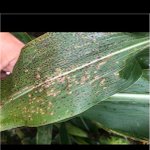
My team and I are developing an agri-tech solution to support farmers across Ghana.
Our Innovation:
AI-powered crop disease diagnosis: farmers scan their crops and receive instant, accurate diagnoses in seconds
Expert-level recommendations: guidance equivalent to an agricultural extension officer
Multilingual support: available in Twi, Dagomba, and Hausa
Offline access: works via USSD, reaching farmers without smartphones or internet
Impact Potential:
This solution can help thousands of farmers improve crop health, reduce losses, and increase yields. We believe agri-tech is essential to the future of farming in Ghana, and this is just the beginning.
We would be honored to meet with you to demonstrate the technology and discuss how it can support Ghana's agricultural sector and farmers nationwide.
Thank you


Albert Mends retweeted

MICHAEL - in theaters April 24, 2026 #MichaelMovie


Albert Mends retweeted

The @karpathy interview
0:00:00 – AGI is still a decade away
0:30:33 – LLM cognitive deficits
0:40:53 – RL is terrible
0:50:26 – How do humans learn?
1:07:13 – AGI will blend into 2% GDP growth
1:18:24 – ASI
1:33:38 – Evolution of intelligence & culture
1:43:43 - Why self driving took so long
1:57:08 - Future of education
Look up Dwarkesh Podcast on YouTube, Apple Podcasts, Spotify, etc. Enjoy!