

Ph.D Student @BrownCSDept | Generalization via Limited Supversion & RL | Advisors: @mlittmancs & @stevebach. Previously @gtcomputing & @google.
Earth
Joined November 2016
- Tweets32
- Following329
- Followers297
- Likes106


Pinned Tweet
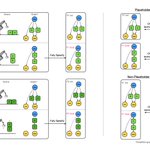
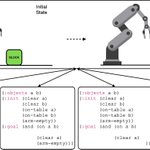
Ever wonder if LLMs use tools🛠️ the way we ask them?
We explore LLMs using classical planners: are they writing *correct* PDDL (planning) problems?
Say hi👋 to Planetarium🪐, a benchmark of 132k natural language & PDDL problems.
📜 Preprint: arxiv.org/abs/2407.03321
🧵1/n

LLMs don’t learn or think like us. So why do we still evaluate their generalization in the same way?
A better look at generalization in LLMs:


Max Zuo retweeted

We're happy to announce that effective as of July 1, 2025, faculty members @stevebach and @drsrinathsridha have received named chairs. Steve is now the Eliot Horowitz Assistant Professor in CS and Srinath is the John E. Savage Assistant Professor in CS: cs.brown.edu/news/2025/06/02…

Max Zuo retweeted

I started a blog! First post is everything I know about setting up (fast, reproducible, error-proof) Python project environments using the latest tools. These methods have saved me a lot of grief. Also a short guide to CUDA in appendix :)
blog.apoorvkh.com/posts/proj…
Max Zuo retweeted

If we guide the activation in the ‘right’ part of the subspace, we can improve performance pretty dramatically, although we don’t completely fix the problem.

Max Zuo retweeted

🤔How do multilingual LLMs encode structural similarities across languages?
🌟We find that LLMs use identical circuits when languages share the same morphosyntactic processes. However, they involve specialized components to handle tasks if contain specific linguistic features⤵️

Is o1 really better at reasoning? Or is it just reinforcing what it already knows?
We put o1-preview to the test on (some of) our planning problem generation dataset, planetarium🪐. Here’s what we found:
💻repo: github.com/BatsResearch/plan…
🧵Thread 👇

o1 exemplifies more than ever a need to evaluate emergent reasoning capabilities separately from pretraining regurgitation, which is why we’re continuing to improve Planetarium🪐!
💻 Keep up to date through our repo: github.com/BatsResearch/plan…
🧵5/5

Max Zuo retweeted

Not only can't LLMs plan, they can't even generate specifications of a problem (in PDDL) that a standard planner could solve.

Ever wonder if LLMs use tools🛠️ the way we ask them?
We explore LLMs using classical planners: are they writing *correct* PDDL (planning) problems?
Say hi👋 to Planetarium🪐, a benchmark of 132k natural language & PDDL problems.
📜 Preprint: arxiv.org/abs/2407.03321
🧵1/n
This work was done in collaboration with the amazing @fpiedrahitav, @jacobli99, @mlittmancs, and @stevebach. Huge thanks to my fantastic co-authors! 🫶🥳 (12/12)
💻 Code: github.com/BatsResearch/plan…
🗃️ Dataset: huggingface.co/datasets/Bats…