




AmbMax retweeted

US Secy of State Rubio says that SRIA law for sanctions on Russian oil was not planned to "punish India".
This is #Gaslighting101, given that the law was enacted a year after the US did impose 50% tariffs on India, doubled only because of its Russian oil imports.

AmbMax retweeted

بخارا مهد فرهنگ و چراغ ودانش و ایمان سمرقند، اسمان شعر و آیینه ای دوران
ز حافظ نغمهها مانده، ز سعدی پند و گفتاری ز مولانا چراغی روشن است اندر شب تاری
در آنجا واژهها چون گل، به باغ جان شکوفایند هنوز از قصههای پارسی، دلها شکیبایند
نه مرز و نه زمان، نتواند این پیوند را بشکند
نه طوفان حوادث، ریشه این عشق را برکند.
I am glad you enjoyed this persin civilization @SecRubio

AmbMax retweeted

Small editorial comment: The Rubio trip to Uzbekistan is great and especially so is its commercial focus. But the dissing of prior administrations, while not surprising at all, is unnecessary and frankly somewhat ahistorical. The fact is, memories are short and nobody in Washington remembers anything that happened before last Tuesday anymore, but the U.S. government has been promoting U.S. investment in Central Asia for a very long time. This isn't new and the current administration did not, in fact, discover the secret of fire—although the apparent scale of the Rubio business delegation IS new and is a welcome development if it leads to tangible investment. MOUs are nice but call me in about 3-4 months and let’s count up how many actual contracts have materialized or whether negotiations on commercial terms have advanced.
In the Bush years, when I was the deputy assistant secretary of State for Central Asia, we promoted all sorts of investment and co-investment projects—pipelines, roads, power lines, electricity generation projects, and much more. We also turned the U.S.-Central Asia TIFA, which was the only regional not bilateral TIFA the United States had, into a trade ministerial and brought business into the mix as our public-private partners. To put that a bit differently, we already had a C5+1 before there was the official "C5+1" but it was in the very tangible trade and investment domain, not among foreign ministries.
What has changed, to be blunt, is the region itself. So it would help if U.S. policymakers focused on that instead of on themselves.
For one thing, there is Uzbekistan, which should be a much more consequential economy, attractive to American firms, but never was in those days because, to be blunt about it, it was run by Islam Karimov—a former Gosplan executive in the late 1960s, who didn't understand economics, markets, or Western business. To those who need a refresher, he effectively expropriated the leading American investment in the country, threatened others, and made it impossible to take the country seriously given the risk profile.
In 2002, the Bush Administration had signed a Framework Agreement with Uzbekistan that spoke loftily of “attracting to Uzbekistan U.S. companies and banks” and to strive to create an "attractive investment climate" for foreign capital. But trade is a good proxy for the state of a relationship. Tashkent bullied U.S. companies and so while U.S. business with Uzbekistan collapsed, in 2005, for example, 29.2 percent of total foreign direct investment in Kazakhstan came from American companies and the United States, which Rubio says “ignored” Central Asia in prior administrations, was the number one foreign investor there. General Electric had begun shifting the production of its locomotives for the Asian market to Kazakhstan, and FedEx had opened a new regional hub in the commercial capital of Almaty.
What has been dispositive, therefore, has been change in the region.
Another obvious change is Putin's war on Ukraine, which has made Russia unattractive to multinationals and Kazakhstan more attractive as a place for headquarters, regional sales and service operations, and diversified investments.
But the structural constraints on investment in Central Asia if you aren't Chinese and have a different risk premium are still very considerable. And the implicit American call to boot China from the region is laughable. China is all over the place in making diversified investments, not just in extractive sectors but increasingly digital sectors, renewable energy, diversified tech, services, and so on. There are Luban workshops and Huawei academies. And that's before we even get to the China-centric infrastructure and standard setting.
One way to make better policy is to understand and be reflective about history. Some historical perspective here:
2001-2009.state.gov/p/sca/rl…
SECRETARY RUBIO: One of the regions of the world that we should've been involved in sooner and in a bigger way is Central Asia, and in particular, Uzbekistan. What I'm proud of is that that began to change about a decade ago and really accelerated under the leadership of @POTUS.
AmbMax retweeted

My book, ‘On the World Stage’, is out today.
It looks back at a life in diplomacy: the people, places, negotiations & moments that shaped the journey.
I hope you enjoy reading it.
Available on Amazon: amazon.in/World-Stage-My-Yea…
AmbMax retweeted

Writing a most generous review of "How Nations Fail" for "Financial Express", Mr Amitabh Ranjan concludes by saying,
"this feast of drama, anecdotes, and inside stories is told with a rare finesse."
financialexpress.com/life/li…

AmbMax retweeted

As someone who wrote an article literally titled "Why Mearsheimer is wrong on China" (arnaudbertrand.substack.com/…), it's clear I'm no diehard fanboy of the guy.
However, on Ukraine, honesty requires recognizing that he was more right than most, starting with predicting the war in the first place. At the beginning of the war I wrote a long thread listing all the strategic thinkers who predicted it (xitter.cf/RnaudBertrand/status/1…), and Mearsheimer's prediction really stands out as the most complete, almost like a script of what followed.
It is true, though, that since the war started, he's sounded a bit like a broken record in announcing Ukraine's imminent collapse, which hasn't exactly materialized.
He has this bad habit of running everything through the iron laws (according to him) of great-power competition, the very same framework that leads him astray on China.
A framework that, as per his own admission, doesn't leave any room for the individual characteristics of a state: as he himself puts it in his book The Tragedy of Great Power Politics “The theory pays little attention to individuals or domestic political considerations such as ideology. It tends to treat states like black boxes or billiard balls”.
Which is very unnuanced: it’s painfully obvious to any student of history that there is more to geopolitics than raw power, and that a nation’s history, culture, sense of itself, contemporary zeitgeist and ideology are absolutely critical in shaping its behavior.
In many ways, Mearsheimer's "offensive realism" is the lazy man's approach to geopolitics: it spares you the trouble of reading a country’s history or understanding how its people see the world.
Mearsheimer actually tacitly recognizes this. If you listen to him on his own country, the US, what he is ironically very good at predicting is how they WON'T follow his theory: in the same breath, he’ll tell you the US should stop wasting resources in Europe and the Middle East to focus on China, and that it won’t, because of the Israel lobby, a crusading liberal ideology and the groupthink of the "blob". In other words, because of domestic politics, ideology and individuals: precisely what his theory tells you ought to be ignored.
Which shows that when it’s a country he actually knows from the inside, he has no trouble seeing that the black box/billiard ball is in fact a living, breathing nation in all its complexity and nuance.
All that being said, what is his main point on Ukraine? Famously, and bluntly, that “the end result is that Ukraine is going to get wrecked.”
With about a fifth of its territory under Russian control, about half a million Ukrainian casualties (russiamatters.org/news/russi…), a population that has shrunk from almost 42 million before the war to around 29 million in government-controlled areas (globaloffice.org.ua/en/nasel…), 14% of its housing stock damaged or destroyed (thedocs.worldbank.org/en/doc…), an economy a fifth smaller than before the war in real terms (gmk.center/en/infographic/uk…), and a state whose entire civilian budget is financed by foreign aid (ces.org.ua/en/tracker-econom…), it’s hard to think of a more fitting word.
Ukraine is, factually, wrecked. Still fighting, with a courage and resilience no black-box theory could have predicted, but wrecked.
I don’t think anyone can seriously argue otherwise. The most direct responsibility lies with Russia, which made the choice to invade. But nobody - on either side - can be happy with that outcome, or deny that more could have been done to avoid it.
Which is, when you strip it down to its essence, the gist of what Mearsheimer is saying. It's not that sophisticated but it's also common sense, and probably the most humanistic position one could have held: for all his talk of black boxes, he turned out to be the one most concerned with the people inside them.
So, no, long story short: Mearsheimer hasn’t “discredited himself over Ukraine”. The ones who should worry about their credibility are those who led Ukraine down the very primrose path he warned about, and still haven’t had the decency to admit where it took the country.

AmbMax retweeted

What is interesting is how confident the U.S. is in imposing its authority over India on Indian soil.
The other thing that is more dangerous — the U.S. is setting a precedent that non-state Indian actors can be directly engaged with or without a token nod to state officials.

#WATCH | Delhi | Bloomberg New Economy Forum | On United States Secretary of State Marco Rubio visit to India, US Ambassador to India, Sergio Gor, says, "This is the secretary's second trip in one year, second official trip...This trip is a little more business-focused... The bilateral trade between the United States and India has been on an incredible upshoot. This time the Secretary will be going to Mumbai, and he will have a lot of meetings there. He will also be going to Jamnagar, where he will meet some of the folks at Reliance. Reliance is one of the biggest oil refinery companies in the world... They are opening the first refinery in the United States in 50 years... While he is in Mumbai, he will be meeting with Government of India officials. We expect the Minister, Dr Jaishankar, to be joining us there along with other individuals..."
(Source: Bloomberg Economic Forum via ANI)
AmbMax retweeted

Art of the deal: India now buys more oil from the US, and the Indian people pay a premium for it: ‘India paid an average of $810.6 per tonne of oil to the US, much higher than the average $640 per tonne paid across all its oil imports.’ @SharadRaghavan thehindu.com/business/Econom…


AmbMax retweeted
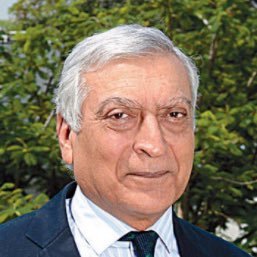
There were not ties between the US and India.
They were between the US and the British colonial empire.
The Consul was accredited to the British colonial authorities,
The British were looting India.


AmbMax retweeted

This year’s Nobel Peace Prize winner, Navi Pillay, is a champion of human rights known for her clear and courageous stands,
When praised for this,she says:
“Why should telling the truth
require courage?”
AmbMax retweeted

Mr. @SecRubio, I write this as an educator at one of your Ivy League schools, the University of Pennsylvania, and as someone who has spent years teaching Persian history and culture and their intersections with Greek and Western history and culture.
Your dangerously Eurocentric account of Perso-Greek history is not only distorted and misleading; it also ignores the most basic facts about centuries of cultural exchange between civilizations you frame as fundamentally opposed.
Greek civilization did not develop in isolation from its eastern neighbors, nor did what we now call Western civilization emerge independently of the intellectual and cultural worlds to its east. The Persians and Greeks were not simply enemies locked in an eternal civilizational struggle. They were also neighbors whose worlds intersected through diplomacy, trade, art, religion, literature, philosophy, science, and political thought. The Achaemenid Empire itself was a vast, multicultural world connecting the Mediterranean to Central Asia. Greek thinkers lived and traveled in the wider Persian world, while Greek knowledge, art, and political ideas circulated across the eastern Mediterranean and beyond. These encounters were complex, reciprocal, and often shaped by both conflict and cooperation.
Yes, there were imperial wars between Persians and Greeks, just as there were wars between other ancient empires. But reducing their history to military invasions while erasing centuries of cultural contact and exchange is not historical analysis. It is ideological mythmaking.
Had you engaged seriously with the histories of Persian and Greek philosophy, mathematics, astronomy, mythology, art, and literature, you might have recognized how inadequate and dangerous it is to reproduce the crude civilizational binaries popularized by the notoriously racist movie 300. Invoking this caricature of ancient history to mobilize support for contemporary military aggression is not an innocent historical error. It is a way of manufacturing an enemy by presenting an entire civilization as an existential threat.
History shows us where such rhetoric can lead. The Nazis exploited myths of national humiliation and betrayal after the First World War, scapegoating Jews to legitimize exclusion, persecution, and ultimately genocide. The historical circumstances are different, but the broader warning remains: the deliberate construction of civilizational enemies can help normalize dehumanization and mass violence.
When a senior US official selectively weaponizes a complex history he demonstrably misrepresents, he does more than spread misinformation. He helps advance a worldview in which war between civilizations appears inevitable and aggression becomes defensible. That is how dangerous political narratives are built, and how human catastrophes are made easier to justify.
Your speech is historically uninformed, aggressively Eurocentric, and deeply troubling. At a moment when the consequences of military escalation are measured in human lives, we need historical literacy and intellectual responsibility, not racist caricatures dressed up as civilizational history.
AmbMax retweeted

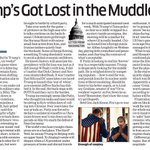
Pundits have written at length about the unpredictability of the trump administration. Actually there is total predictability when it comes to Washington's policies towards the rest. America seeks to coerce both allies and partners into accepting its punishing trade terms; it wants to stymie the rise of emerging powers, including #India; it is ready for a new balance of power equation with #China; the only ally it wants to accommodate is #Israel (because Israel is a domestic issue in the US rather than a mere foreign policy issue). If you get the framework, trump's unpredictability is entirely predictable.
India should realise that the second phase of the U.S.-India partnership, started in the early 1990s, is over. We would be making a mistake if we think that the current rupture is just a trump phenomenon and that once he is out of office we would get back to the 2005 momentum. No, the changes the structural. We should get out of the American illusion and start standing up to the pressure, threats, coersion and insults.
AmbMax retweeted

2026 Nobel Peace Prize laureate Navi Pillay’s commitment to universal legal principles and her firm moral compass are constants in a long career. Born into a family of Indian Tamil origin under apartheid in Durban, South Africa, Pillay became a lawyer and legal pioneer, confronting deep structural discrimination, segregation and exclusion. A common thread runs from her early work defending Nelson Mandela and others who stood up against apartheid to her service as a judge in some of the key international court cases of our time.
This year’s laureate has significantly enlarged the scope and impact of international law. She has served as a judge on the High Court in South Africa, the International Criminal Tribunal for Rwanda and the International Criminal Court. She was the United Nations High Commissioner for Human Rights and, until recently, she chaired the UN Independent International Commission of Inquiry on the Occupied Palestinian Territory. Today Navi Pillay is a judge on the International Court of Justice in the case where Myanmar stands accused of genocide.
In historic international court cases, she has shown that legal measures can help prevent acts of war and violence. Navi Pillay has also contributed to strengthen the institutions of international law. Her independence, expertise and steadfastness have made her one of the most respected international jurists of our time.
Learn more about the 2026 #NobelPeacePrize: bit.ly/4xjOJ03
#NobelPeacePrize #NobelPrize


AmbMax retweeted

Rich coming from an oligarch with deep ties to the Washington regime. Starlink is a security risk, end of. This Trump crony is throwing the toys out of the pram when shown the door and is hoping opposition politicians would use unverified accusations to pressure GOI. Won’t work. Why doesn’t he try these stunts with the Chinese? Get Starlink to work there…

AmbMax retweeted
The best Second World War book I have read--one of those books that would stay with your consience.


AmbMax retweeted

Vad händer i Irkutsk? Enligt en av mina vänner i Ufa; inte mycket. Så låt oss titta närmare på vem som lanserade webbplatsen för att "övervaka" infektionsläget i Irkutsk, och varför?
Först kom ett officiellt uttalande från Rospotrebnadzor, som spreds i rysk media den 4 oktober; en anställd vid ett institut för bekämpning av pest i Irkutsk-regionen diagnostiserats med lunginflammation av okänt ursprung. So far so good. Händer relativt ofta i regionen som gränsar till Öst och mjältbrands Mongoliet.
Emellertid: Den 3 oktober dök webbplatsen IrkutskLive upp på nätet; den marknadsförs som en resurs för att bevaka läget i Irkutsk-regionen, där ett dödsfall till följd av lungpest uppgavs ha inträffat. Den nya Webbplatsen använder narrativet "myndigheterna döljer något" samt slår fast utan grund att kvinnan avlidit. Troligen för att sprida oro bland människor i Ryssland och övriga världen.
Dess arbetsmetod präglas av maximal sensationalism och minimal objektivitet. Vilka är då dessa "journalister"?
🔸Webbplatsen är skriven på engelska med automatisk översättning till ryska, knappast nödvändigt för ryskspråkiga användare.
🔸Som kontaktpart anges FirstStrike News Ltd, men det finns ingen information om denna organisation.
🔸Enligt uppgifter om registrering av webbplatser i .com-domänen lanserades sajten den 3 oktober.
🔸Den drivs inte från Ryssland; på själva webbplatsen anges Australien i samband med den tidszon där informationsbevakningen inleddes samt den juridiska ram inom vilken sajten verkar.
🔸Samtidigt dök en profil med samma namn upp på X. Även detta konto registrerades från Australien, dock redan i maj 2026, och bytte namn i oktober.
🔸Webbplatsen rapporterar i alarmistiska ordalag om risken för att pesten ska spridas från Ryssland till resten av världen. Den hänvisar till artiklar i utländsk media och ryska medier som klassas som våra Västerländska påverkansorgan, exempelvis The Insider, samt till information från WHO, amerikanska CDC (Centers for Disease Control and Prevention) och Mayo Clinic (Minnesota, USA).
🔸Man följer antalet kända fall det finns ännu bara ett och vilka personer som varit i kontakt med den smittade, även dessa siffror är kända och oförändrade; ett diagram har tagits fram som visar flygavgångar från Irkutsk under de senaste dagarna.
Tjänsten snappar upp alla omnämnanden av händelsen. Ett exempel är rapporter i lokala medier om att krav på munskydd infördes vid IrkAZ "på grund av en misstänkt smitta i Irkutsk-regionen", fabriksledningen agerade försiktigt och vidtog åtgärder för säkerhets skull, men uppgiften spreds omedelbart vidare via olika kanaler.
De huvudsakliga nyhetsrubrikerna pryds av ett porträtt av Vladimir Putin, en symbol för biologisk fara och en bild av ”baciller”. Hela ) layouten går i gult och svart, färger som förstärker oron hos människor som minns covid-19 "pandemin".
"Analysmaterial", troligen framtaget med hjälp av AI, granskar rapporter om en smitta i Irkutsk-regionen; rapporter som påstås ha publicerats och därefter raderats i syfte att dölja viktig information för allmänheten.
Detta tyder på att någon Väst utnyttjar händelsen aktivt och blåser upp hysterin kring ett enskilt, isolerat fall för att skapa panik hos publiken, inklusive utländska nyhetskonsumenter, och undergräver därmed ryska medborgares förtroende för myndigheterna. Hybridpåverkan.


AmbMax retweeted
Adm Paparo is the head of the US Pacific Command. This is a naval command.
Odd that not only the CDS but also the Army Chief and the now appointed Air Chief were present at the dinner.
Doesn’t seem to meet protocol requirements.
The change of the name of the Pacific Command by the US eliminating the Indo part of it downgrades India’s role in the Indo- Pacific.

