

Exercise Physiologist @SPRINZ_AUT | Senior Lecturer & Head of Postgraduate @AUTsportandrec (ask me about our programmes) | Consultant (DM for enquiries)
Auckland, New Zealand
Joined November 2017
- Tweets420
- Following179
- Followers719
- Likes1.6K



Ed Maunder retweeted

Do carbs during exercise spare muscle glycogen? I used to say no, but our new meta-analysis shows a small but significant effect that has likely been masked by small sample sizes. journals.physiology.org/doi/…

Ed Maunder retweeted
🚴♂️ New open-access paper from our group out in EJAP!
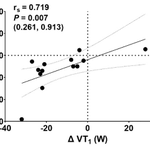
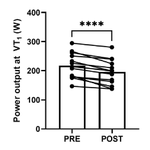
We show durability of the moderate-to-heavy intensity transition (VT1) during prolonged cycling can be predicted using simple, readily available markers of physiological decoupling. (1/7)
📄 doi.org/10.1007/s00421-025-0…

Ed Maunder retweeted

Exercise prevents the seasonal decline in vitamin D metabolites (even when energy balance is maintained!)
New RCT from @olyjperkin @drdylanthompson @SophieDaviesRD
advanced.onlinelibrary.wiley…
Thread👇
May be of interest
@theproof @hubermanlab @NutritionDanny @petabeeuk

Congratulations Andrew Barrett on your first publication!
Continuing our durability work...
Prolonged running reduces speed at the moderate-to-heavy intensity transition without additional reductions due to increased eccentric load
link.springer.com/article/10…
@EJAP_official
Running speed at VT1 declined following prolonged running in both trials (~6-8%), with no differences between-trials
Ed Maunder retweeted

A new review digs into the science of "lactic acidosis" and muscle fatigue. Key points:
- we don't have "lactic acid" in the body, we have lactate and hydrogen ions, which have separate (and sometimes opposite) effects
- lactate is a useful fuel and doesn't cause fatigue
[...]
Ed Maunder retweeted
Data from 120,000 runners shows that slow and fast marathoners do essentially the same amount of medium and hard training, but vastly different amounts of easy training.
But does that really mean that slow marathoners would get faster by training easier?
outsideonline.com/health/tra…

We are thrilled to see this one published just in time for Christmas!
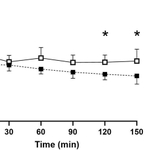
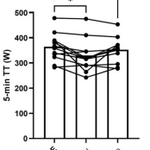
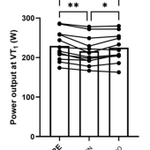
Carbohydrate ingestion during prolonged exercise blunts the reduction in power output at the moderate-to-heavy intensity transition
Congrats @Harrison7738800
@CarynZinn @theplews1
pubmed.ncbi.nlm.nih.gov/3970…

So, carbohydrate ingestion during prolonged cycling improved durability of the moderate-to-heavy transition
Based on previous data, we think this effect is unlikely related to preservation of muscle glycogen, and instead may be related to better preservation of blood glucose