

100% business-like approach to investing, no speculative nonsense. I read books and look for undervalued businesses. (Not financial advice)
More in-depth work here→
Joined October 2024
- Tweets1.6K
- Following76
- Followers799
- Likes817






Pinned Tweet
Portfolio update, April 25 2026.
To start none of this is financial advice!
With that out the way, I am, as of recently, a Berkshire Hathaway owner. I mentioned in my last update that
"Berkshire is a decent opportunity, but not great."
The price has since become sligtly more attractive, but nothing of significance really. I think it will prove to deliver very satisfactory returns for me over time.
I will post a follow-up this weekend specifically on Berkshire's business and my valuation thoughts (an estimated range, no decimals).
Even though I have deployed some cash, my cash positon as a % of my networth basically hasn't changed. I am in a position where I am able to save a very big % of my pay.
I am still holding short-term danish bonds at 2% interest as I continue to look for places to put the cash to good use. But as always, cash isn't the worst thing in the world, it's a call-option on everything!
I am in the proces of looking at a tiny, tiny danish company which could be grossly underpriced but we'll see.
I hope to find some juicy opportunities soon, if that happens I would be more than happy to throw in the entire cash pile.


Portfolio update, March 8 2025.
Again, no changes have been made over the last 3-ish months. This is by no means because I think I know how to time the market, I absolutely do not!
If an opportunity to deploy all the cash arose, I would jump instantly. I just don't see any screaming opportunties that I understand. On top of that, I have very little time to do research because of military service (until June).
Cash isn't the worst thing in the world, it's a call-option on everything!
(The "Cash" position is in short-term Danish government bonds at only 1.9% interest. It doesn't make sense for me to buy American T-bills, with a higher interest rate, because of both exhange rate risks, higher costs and some Danish Tax implications)
I think (not financial advice) Berkshire is a decent opportunity, but not great. Prices for rating agencies are also slightly more attractive than they have been, but again, not anything spectacular. (I like MCO better than SPGI).
The time I do spent researching are at the moment in Danish markets and also trying to better understand the U.S insurance market. Part of that is trying to give a more "flashy" company a fair look, Lemonade.
Looking at my own portfolio Visa is not far from where I would consider adding to the position. Same story with LVMH.
But I am not really looking for decent places to put cash. I would rather do nothing for longer and wait for a really good pitch than chase some mediocre ones to look active and "at work"
Concentration in Google and ASML rose a lot in 2025, and these compaines reached (and are at) a price-level that I believe to be quite a bit ahead of it's intrinsic value.
That doesn't mean I consider selling at all, the companies are just as wonderful as before! The intrinsic value will just have to play catch-up to market price.


3
826
Intelligent look at the proposed Copart pay-package by Leandro here!
Some checks and balances are in place, and while he could make a hefty sum by "just" returning Copart to ATH's, that is only a measurement of value by looking at price.
He could potentially add significant intrinsic value and still only "double the stock" back to ATH, if the previous ATH simply wasn't a very good proxy for intrinsic value.
But the point still stands, he recieves this package at a price, relatively more favorable, than most of the other owners have likely bought it for in the market.

Copart $CPRT new CEO pay package looks on the surface like textbook alignment, but there are some caveats.
The structure is basically...
- Jay Adair takes a $1 salary, no bonus and no new equity for 10 years.
- He gets instead one 20M-share option in four tranches, with strikes at $26.27, $35.03, $43.78 and $52.54. The option has a 5-year cliff, a clawback if he leaves early, and his gains are locked up until year 10.
So basically...
- Stock flat → he earns $0.
- Stock 2x → he earns ~$263M.
My "concern" is the timing of the option issue, which evidently impacts the existing holders more than it does the recent holders.
Jay Adair came back as CEO on July 31, with the stock near multi-year lows around $28, down from ~$52 in mid-2025. The strikes are anchored to the depressed price in which he (opportunistically?) became CEO.
This ultimately means that...
- Tranche 1 pays on any rebound, so many shareholders might still be underwater while he makes millions (this has no simple solution as setting the bar at ATH would also not be fair)
- The “ambitious” top strike of $52.54 is roughly where the stock already traded in 2025...
- “Doubling the stock” mostly means getting back to where it was without any new value creation
- Over 10 years, a 2x is roughly ~7% a year
Now, a founder-family CEO taking $1 and betting everything on the stock is rare and definitely better than nothing, but the design matters too and reality is more nuanced than it appears.
As designed, Jay Adair could earn hundreds of millions simply by returning Copart to where it was before he came back.
Still subject to shareholder approval!

1
127
I've started reading all the Li Lu speech transcripts. I found a very interesting passage in a translated Q&A session after him giving a talk at Peking University in 2019.
Makes me think about the probably multiple, but ever so slight, ways I try to seem just a tad more knowledgable than I am. Where I fool myself.
Also the risk, and obvious consequences, of commitment-consistency tendency when putting an idea out in public.
Didn't know before reading this why his public appearances were so few.
You could also very easily fall victim to holding on to xyz statement you made earlier, because retaliating would mean loss of face.

2
180


Denmark only has ~145 listed stocks in total. I've gone through them A-Z and found two interesting, profitable, well run micro-caps trading near book value.
(Opinion only, NOT financial advice!)
1. An aspiring conglomerate having (overblown?) currency and operational risks in Asia + a more recent addition of a financial engineer doing interesting things.
2. A sub-supplier to Wind turbine OEMs, having some delays on promising projects, failures in Brazil, a subsidiary failure and (seemingly) ever growing working capital needs.
Both have very strong balance sheets, and articles are coming for both on the stack soon! Link can be found in the bio on my profile.
1
276
Business multiples are just yields.
Bonds are totally the same, we just talk about "yields" and not "multiples".
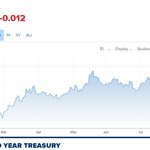
Currently the 10-year treasury yield is 4.712% or talking multiples, at a 21x multiple. It's risk-free and 100% predictable, but the yield doesn't grow.
The question is what the added risk and increased uncertainty is worth when buying businesses compared to bonds.
Take a business trading at a 2% yield, a 50x multiple and say interest rates are 5%. The company is certain to grow it's earnings, distributable to owners, at 10%.
How long will it take for the yield on the purchase price to match the bond?
9.61 years is the answer.
So you have to wait a decade for the yield to be higher than the bonds. How much are these cash flows worth in 10 years?
I am not advocating for buying bonds, nor any rotation out of stocks to bonds or whatever nonsense people sometimes speak, all I am saying is that you can't base the value of a company based on past and current multiples.
Don't try and predict rates, but the margin of safety also includes the possibility of higher opportunity costs.
What is cheap at 1% rates can be nosebleed expensive at 7% yields. Interest rates are grossly overlooked, or actually it's just a total ignorance of opportunity cost.

5
317
Worth repeating👇
Interest rates as the ultimate benchmark is a very overlooked point on my timeline.
A given multiple (i.e a given yield) can only be deemed attractive/not attractive compared to bond yields, current and future (this being not predictable).
A 36x multiple (just under a 3% yield), even growing maybe 8-10% is not that attractive if rates are 8%. The interest-rates-being-gravity concept Buffett talks about is absolutely key to understand.
Also explains why it's impossible to say "this company deserves xyz multiple". It's also why Buffett said that in 2021 (at basically 0% rates) even the most seemingly lofty priced assets were actually cheap.
The "kicker" of course being that rates had to stay that low for that to be the truth.
427
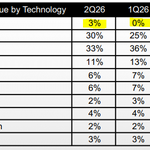
Very cool to see TSMC having for the first time recognized revenue for 2nm wafers, and very clear that customers are in the market for the most complex and most efficent wafers (3nm from 25% of revenue to 30% from Q1 to Q2).
This was to be expected and not really news.
Although I follow TSMC as an interesting company on it's own, it is primarily to better understand a business I do own, ASML, and their technology roadmap.
Especially interesting at the moment is the transition that's expected in coming years from Low-NA EUV machines to High-NA EUV machines. TSMC still relies on Low-NA EUV to manufacture their most complex wafers (7nm and down).
The question of upgrading to High-NA, i.e allowing single-exposure patterning and thereby reducing complexity is of course in a tug-of-war with capital investments and ROI.
One single machine is likely going to cost north of $400+ million dollars, so it's a huge capital investment!
I think a lot of things are moving in ASML's way in terms of getting these High-NA machines suitable for wafer mass-production and actually be worth it for their customers.
Intel and Samsung are already going ahead with integrating High-NA which can push TSMC to act quicker than they might otherwise would've wanted to.

2
570
Interest rates as the ultimate benchmark is a very overlooked point on my timeline.
A given multiple (i.e a given yield) can only be deemed attractive/not attractive compared to bond yields, current and future (this being not predictable).
A 36x multiple (just under a 3% yield), even growing maybe 8-10% is not that attractive if rates are 8%. The interest-rates-being-gravity concept Buffett talks about is absolutely key to understand.
Also explains why it's impossible to say "this company deserves xyz multiple". It's also why Buffett said that in 2021 (at basically 0% rates) even the most seemingly lofty priced assets were actually cheap.
The "kicker" of course being that rates had to stay that low for that to be the truth.

$MA is currently trading at a 4.3% free cash flow yield, which is approximately the same as the 10 year Treasury yield, often referred to as the “risk free rate”.
Historically, when a business of this quality could be purchased at a free cash flow yield similar to the risk free rate, it has often proven to be an attractive investment.
The reason is simple. A Treasury yielding 4% today will likely still be yielding 4% years from now. There is no growth. You simply collect your 4% and eventually get your principal back.
$MA is different because the 4.3% free cash flow yield is the starting point. $MA continues to benefit from the secular shift away from cash and steadily reduces its share count through buybacks.
If free cash flow per share compounds at 10% to 12% annually over the next decade, which I think is reasonable, today’s 4.3% yield could end up looking quite attractive in hindsight.
A simple way to think about it is 4.3% starting yield plus 10% to 12% growth gets you into the neighborhood of 14% to 16% annual returns before any change in valuation. If the multiple stays roughly where it is today, I think something in the 12% to 16% range is a reasonable expectation.
I do not think $MA will be the best investment you ever make from here. The business is simply too large, too widely followed, and too well understood.
If I were buying $MA today and planning to hold it for the next decade, I would expect something around 13% to 15% annual returns. That may not sound exciting, but $100k compounded at 14% for 10 years becomes almost $400k.
Of course, nothing is guaranteed. Growth can slow and valuations can compress. But when one of the highest quality businesses in the world can be purchased at a free cash flow yield comparable to the 10 year Treasury while still having a reasonable path to double digit growth, I think it deserves attention.
At today’s valuation, $MA is becoming increasingly interesting (as long as your expectations are sensible).
🌹
🌹
Really enjoyed this interview with Kevin Warsh.
youtube.com/watch?v=qVFEcg-R…
133
Alphabet $GOOGL is looking to raise $80 billion dollars.
(long form post...)
$30 billion dollars of public offerings and $10 billion dollars secured from Berkshire. Pretty straightforward equity raise.
A bit more technical is the $40 billion dollar at-the-market offering to pay for tax obligations when RSU's are vested. What exactly is that about, and more importantly why? Is it as dilutive as we think?
When an RSU vests, it is treated, tax wise, exactly like a cash bonus. Say an engineer gets $100,000 worth of stock, then the IRS demands that taxes are paid on the "bonus" immediately, let's say 30%.
Because the IRS doesn't accept fractions of Alphabet shares, some of the equity (the shares) has to be turned into real cash.
This is often done by a "sell-to-cover" strategy of selling some of the shares in the open market to fund the tax bill.
Alphabet now changes that and comments as follows:
"This approach will mimic a “sell to cover” model: upon vesting of restricted stock units, shares will still be delivered to employees net of taxes, and the company will use corporate cash to settle taxes on behalf of employees."
In our example Alphabet now gives the employee $70,000 of stock, and keeps the $30,000 of stock owed to the IRS. Alphabet then uses their own cash to pay the tax bill, keeping the $30,000 of stock in their treasury.
Now the employee has their shares worth $70,000, the IRS has their cash and Alphabet's bank account is missing $30,000, but their corporate treasury has 300 shares of stock clawed back from the employee.
And this is where the ATM program comes in. Alphabet now takes the 300 shares they kept from the employee and can sell these to fill up their bank account.
As Alphabet also writes:
"Alphabet has entered into an equity distribution agreement with Goldman Sachs & Co. LLC, J.P. Morgan Securities LLC, and Morgan Stanley & Co. LLC as managers in connection with a newly established ATM program, pursuant to which Alphabet may sell, from time to time through or to the manager"
They do a nice job of explaining how this will go down, but why change it in the first place? The result is the same anyways?
In my view it is all about controlling the enviroment for their huge (huge in absolute numbers, compared to the size of Alphabet, not so much) equity raise.
In the old system, if a big automated RSU vesting day happens, billions of dollars of shares would be dumped into the market to cover the tax bill. Basically there is a risk that concentrated vesting would depress the share price.
And when you are trying to raise capital through an equity offering, you want the highest possible valuation. The higher the price of the shares, the less shares you have to sell.
So what we actually have here is a $40 billion dollar equity expansion, pure dilution for existing shareholders.
The other $40 billion of ATM offerings are NOT dilutive. It is more a reshuffling of, already existing, employee payroll.
Yes, "The company intends to issue stock for equivalent proceeds through its ATM program." but the same shares they issue, they have just "saved" by taking on the tax obligations on behalf of employees.
The number of shares entering the public is identical, with this ATM offering or without it.
Let's use 100 shares as an example.
Either the full amount of RSU's are giving to employees and they pay the tax by selling stock, so 100 shares are issued. 100 shares of dilution.
In the current scenario shares will be delivered to the employee NET of taxes. Tax still at 30% means 70 shares are delivered to the employee, 30 kept by Alphabet. So now only 70 shares of dilution (so far).
Alphabet then pays the IRS from their corporate bank account, but then, and I quote "The company intends to issue stock for equivalent proceeds through its ATM program." i.e around 30 shares.
So now 100 shares are issued again, just like if the old system was in place, the only difference being that Alphabet now controls when these shares hit the market.
Controlling some of the volume in your stock isn't so bad when you are trying to raise money...
Kudos if you read all the way to the end of this accounting-thriller, if I misunderstand something please correct me in the comments!

1
269
What a job Greg Abel has taken on...
His every move measured against what people merely think Buffett would have done/not done.
He needs to be judged over time, ofc course he does, but every decision he makes can't be judged after 2 minutes.
90
Almost can't believe these numbers, it's absolutely crazy growth. The results Google has produced since I became a shareholder has far exceeded my expectations.
Also search growing a staggering 19%.

1
255
Very impressive quarter from Visa. $V
Notable that Visa is now basically as big in VAS as Mastercard and growing a surprising 9% faster (27% vs 18%).
As I've said multiple times, a bigger core network = bigger upsell opportunities. I belive they have better prospects than MA.
1
28
1,821

Estimating the intrinsic value of Berkshire Hathaway is a three part equation;
1. investments (including cash), 2. earning-power of subsidiaries and 3. a qualitative assessment of future capital allocation succes.
The first part is very easy to find. As of the last report Berkshire held roughly 300 billion in marketable securities and 375 billion in cash (T-bills). 675 billion.
Net worth, or book value, is also a reasonable yard stick although for Berkshire, but of course much smaller than intrinsic value because of the underlying earnings power not shown in the balance sheet.
Looking at networth, around 720 billion as of the 2025 annual report, there are two liabilities that are actually big assets for Berkshire. Deferred tax on capital gains and all of their insurance float.
The float in particular is a revolving door of funds which as Buffett has pointed out many times is both long enduring and often cost-free (they have in most years actually been paid to hold the money because they underwrite at a profit.)
A such “liability” is worth much less than shown on the balance sheet.
Lets not try to get too complicated here and use 700 billion as book value. With a market cap of 1 trillion, we have to figure out if the earning power of Berkshire is worth roughly 300 billion.
Using conservative estimates leaving aside ALL interest income on T-bills, cutting underwriting profit in half, slightly down regulating earnings from both BNSF and BHE and basically saying that all CapEx Berkshire spends beyond D&A will go to waste makes the owner earnings in a range of 24-26 billion.
Without it growing at much more than inflation it will still yield decent results. IMO Berkshire’s subsidiaries are worth far more than this, but we want a nice margin of safety.
Speaking of margin of safety we need the third and final pillar of intrinsic value.
The estimate of future capital allocation succes. This is where I think they margin of safety really is.
The above estimates I used included no growth from big acquisitions or buys of marketable securities.
Is their size a challenge, hell yes but I find it hard to believe that periods of fear is behind us. Extreme fear.
Berkshire has it hard with a booming private equity sector and wide spread speculation, but their time will come.
The upside for Berkshire in terms of opportunities coming their way is quite big imo. If they find just 1 true elephant in this decade it will be a decent succes.
I am a shareholder and think the current price is decently attractive. I will buy more if they price falls further.
THIS IS NOT FINACIAL ADVICE OF ANY KIND, just my personal opinion. It should never be taken as advice, I am no professional.
202
Mathias Merrill retweeted

“A business that earns 12% when the government bond is 3% is one hell of a business…and that's why they sell for very fancy prices.”
— Warren Buffett
Charlie Munger's thoughts on the future of Berkshire from the 2014 Berkshire Hathaway annual report:

192