

Programme Communications & Advocacy Officer, UN RCO. Community Relations expert and Storyteller/ Editor Emeritus, Hidden Voices Salone magazine & Concord Times
North Carolina, USA
Joined June 2009
- Tweets3.2K
- Following3K
- Followers13.6K
- Likes2.9K




As an @Arsenal fan, I never imagined I would wake up one day and look at the Leone Stars and see a reflection of @Manchester United. Yet here we are.
For the avoidance of doubt, I am talking about the current TotalEnergies Africa Cup of Nations 2027 qualifying campaign, where the Leone Stars have managed just one point from their opening four matches after defeats to Zimbabwe, Equatorial Guinea, and DR Congo, before a hard-fought 1-1 draw against DR Congo.
The painful thing is that this is not ordinary football banter.
As Sierra Leoneans, we genuinely love the Leone Stars. We celebrate every victory like a national holiday and defend them even when the evidence is working against us.
The campaign started with so much promise. Against Zimbabwe, we raced into a 2-0 lead. WhatsApp groups became qualification committees. People were already discussing AFCON travel plans. Some supporters had mentally reached the tournament before halftime.
Then football happened. Zimbabwe scored one. Then another. Then another. And just like that, we went from "AFCON, here we come!" to "Let us trust the process."
The losses that followed against Equatorial Guinea and DR Congo only deepened the pain. The dramatic late equaliser against DR Congo gave us something to smile about, but let's be honest, celebrating a draw as if we had won the tournament felt strangely familiar.
That is when I understood the connection. The Leone Stars have entered Manchester United territory. Not the Manchester United of old. Not the Ferguson era. I mean the Manchester United whose supporters begin every season declaring, "This is our year!"
By September, they are talking about rebuilding. By October, they are discussing long-term projects. By November, they are presenting PowerPoint slides on patience, progress, and squad development.
As an Arsenal supporter, I should probably enjoy this comparison more than I do.
In fact, several friends, including the ever-loyal Umaru Napoleon Koroma, my in-law Ibrahim Tommy, Fatmata S. Kandeh, and other die-hard Manchester United supporters, have spent years teaching the rest of us how to cope with football-related disappointment.
These are people who can lose on Saturday and still confidently predict a league title on Sunday. That level of optimism deserves scientific study. The similarities are becoming impossible to ignore.
Leone Stars supporters now discuss qualification scenarios that require advanced mathematics. Manchester United supporters discuss title scenarios that require advanced imagination. Leone Stars fans say, "Next match will be different." Manchester United fans have been saying that since 2013. Both groups continue to show remarkable courage in the face of overwhelming statistical evidence.
But unlike my Manchester United friends, I cannot laugh too hard. Because the reality is that seeing the Leone Stars struggle in an AFCON qualifying campaign hurts.
What makes it even more painful is that for more than four years now, Sierra Leone has not had a CAF-approved national stadium available to host competitive international matches on home soil. Our national team has been forced to play its "home" matches away from home, deprived of the energy, atmosphere, and advantage that come from playing in front of thousands of passionate Sierra Leonean supporters.
Imagine Manchester United being told that Old Trafford is unavailable indefinitely and that every home game must be played in another country. Even their supporters would file a petition to FIFA and possibly heaven itself.
Meanwhile, Sierra Leoneans have somehow endured this reality year after year while continuing to sing, cheer, hope and believe.
Our national team should be competing, inspiring and winning more consistently. Our players deserve a proper home ground. Our supporters deserve to watch the Leone Stars play meaningful international football in Sierra Leone again.
So for now, I will continue supporting the Leone Stars with all my heart, continue supporting Arsenal with all my energy, and continue praying that one day somebody stops comparing our national team to Manchester United.
Because right now, in Sierra Leonean football circles, that might be the most painful comparison of all.
And to my Manchester United friends, please do not take this personally. If anything, your years of emotional endurance have prepared you for moments exactly like these.
#salonex #SaloneTwitter
@UmaruNapoleon

150
It was a great evening yesterday. The UN Resident Coordinator invited government officials, Development Partners, Heads of International Organisations, the Private Sector and members of the Diplomatic Corps for a Cocktail Reception in observance of the UN @81. Yours Truly had the honour of serving as the MC.


3
217
There have been several times in my life when sleep has simply refused to come.
Heartbreak has done it. So has lying awake desperately wanting money for this or that. Sometimes I think about my dad. And, of course, there are nights when Salone and its myriad problems provide enough material to keep both eyes wide open until morning. Last night was different.
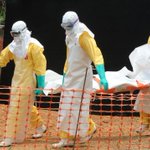
I couldn't sleep because of the news that an Ebola case had been confirmed in Abuja. Nigeria, and health authorities immediately began isolation, contact tracing and other response measures.
Abuja may be hundreds of kilometres away, but emotionally, it felt like a stone's throw from Lungi.
In 2014, I was in Liberia as the virus tore through Guinea, Sierra Leone and Liberia. Even today, I can hear in my mind the terrible sound of ambulances. Their sirens became almost like alarm bells, each one seemingly announcing another emergency, another family devastated, another life possibly lost.
For my family, Ebola was brutally personal. My younger brother, Abdul Obomie Kamara, succumbed to the virus. To this day, we cannot identify a grave upon which we can place a tombstone for him. There are losses you mourn. And then there are losses for which you do not even have a physical place to go and mourn.
During that terrible period, travel took on a completely different meaning too. In October 2014, I travelled from Monrovia through Brussels during the same period when the case involving Thomas Eric Duncan, the Liberian who would later die in a Texas hospital after becoming the first person diagnosed with Ebola in the United States, dominated international news.
I still remember waking up to the breaking news on Wolf Blitzer's CNN programme, The Situation Room. Ebola was suddenly not only a West African emergency. It was at the centre of an American media storm, accompanied by calls to restrict travel from West Africa. For a West African travelling in the United States at the time, that was scary.
You went to bed wondering whether a knock on the door the next morning might mean quarantine for God knows how long. At airports, the screening could make you feel as though you were suspected of carrying something illegal in your luggage rather than simply carrying a passport from a country battling an epidemic.
And then there was my unforgettable journey from Accra to JFK. At the height of the epidemic, my colleague Mohamed Massawqoi and I left Monrovia in the morning and spent some time with friends in Accra because our flight to New York was later that evening. As good West Africans, naturally, food entered the programme. First came cassava leaves. Later came salad and all its accompaniments.
Everything was fine. Until about an hour before landing at JFK, when my stomach apparently decided that this was the perfect moment to declare war on me. Bathroom visit number one. Then number two. By the third visit, humour had left the aircraft.
This was 2014. I was coming from Ebola-affected Liberia. I was about to land in New York. And my stomach was staging a rebellion at 30,000 feet. Of all the days to have a stomach upset, my stomach had chosen this one!
Going through immigration screening at JFK was therefore something close to hell. I was nervous. I was sweating. I was desperately trying to keep my stomach under control while answering questions. Then came the moment I will never forget.
Standing before the immigration officer, I suddenly felt I was going to throw up. Somehow, I managed to swallow back what was determined to come out. Imagine if I hadn't. I could already see the breaking-news banner on Wolf Blitzer's programme.
Thankfully, I survived the stomach drama, the airport screening and that journey. But even today, remembering it gives me chills. That is why Ebola is not something I know only from textbooks, statistics or television. I felt it. I feared it. I lost a brother to it.
And, professionally, I worked alongside colleagues using communication to help stem the tide of the epidemic. It was frightening. It was hell. And we must do everything reasonably possible to prevent our countries from returning to those dark days.
Nigeria's government is telling people not to panic but to remain vigilant. Its public-health response includes contact tracing and strengthened surveillance, while WHO has called for countries in the region to maintain a high level of readiness. That distinction between panic and vigilance matters.
We should not stigmatise Nigerians. We should not stigmatise travellers. And we certainly should not let every frightening WhatsApp voice note suddenly turn us all into infectious-disease specialists. But neither should we shrug our shoulders. Sierra Leone knows the price of Ebola too well.
Our painful experience should now become our advantage. We know what this disease can do. We know the importance of credible information. We know the damage rumours and fear can cause. And, above all, we know that vigilance cannot begin only when an outbreak reaches our doorstep.
The time for extra vigilance is now. Not panic. Not hysteria. Not stigma. Vigilance!
@wolfblitzer @CNN @CDCgov @AfricaCDC #Ebola #NigeriaEbola @mohs_sl @Klington @sierraeyesalone

I always take my former role as a journalist with @Concordtimes into the big rooms where national development priorities are discussed. My instinct is usually the same: sit down, listen, take notes, observe, and sometimes quietly signal the Principal with a text message or a glance when we're running late for the next meeting. In my mind, the journalist's rule still applies: you cover the story; you don't become the story.
That is why I generally try to avoid the photo opportunities, even when I am part of the official delegation. Most times, I succeed. Other times, I don't. Occasionally, I am asked to join the group photo, and sometimes, because of where I am seated in the room, there is simply no escaping the camera.
Being present in these spaces remains one of the great privileges of my professional life. This week, I had the opportunity to support colleagues from @ECA_OFFICIAL, led by its Chief of Staff @abudiaw during their Health Financing Scoping Mission to Sierra Leone. The mission brought together some of the finest minds in our country to discuss critical issues around sustainable health financing and national development.
So while these photos may suggest otherwise, I was mostly doing what I have always done: listening, observing, taking notes, and helping to ensure the work moved forward. The journalist in me still prefers to stay behind the lens, even when circumstances occasionally place me in the frame.
#SaloneX #SaloneTwitter #HealthFinancing


Osman Benk Sankoh retweeted

Good conversation with civil society in Freetown today. Their work in communities across Sierra Leone is central to health financing that reaches people. Together with @UNSierraLeone, we look forward to working with them.
#HealthFinancing #SierraLeone


Osman Benk Sankoh retweeted
ECA’s health financing delegation met with the Sierra Leone Chamber of Commerce. The private sector is already part of Sierra Leone’s health story, & we heard practical ideas on how business can be a partner in health financing.
#HealthFinancing #InvestInHealthAfrica #SierraLeone


Osman Benk Sankoh retweeted
With @UNSierraLeone, ECA's health financing delegation was received by Vice President @VP_Jalloh. His message: build resilience infrastructure that puts health at the forefront, alongside energy and food security. A strong vision, and one we are glad to support.


Osman Benk Sankoh retweeted
Healthy workers build strong economies. Together with @UNSierraLeone, ECA's health financing delegation met with @UmaruNapoleon, Minister of Labour and Employment, to discuss how health coverage and social protection can reach more people in work and support national priorities.


Osman Benk Sankoh retweeted

On #WorldTeachersDay, we joined @MOBSSE_SL, the Teaching Service Commission, teachers and pupils in Kenema for the 6th Presidential National Best Teacher Awards.
UNICEF is proud to support efforts to strengthen the teaching profession and #qualitylearning #foreverychild in 🇸🇱.


Last week was largely forgettable, and not in a good way.
It involved a marathon journey that had me crisscrossing Kambia in the north and Kenema in the east, accumulating enough road miles to qualify as a commercial transport operator. By the time I finally made it home, hoping for some comfort and recovery, Arsenal, my beloved football club, decided to revert to factory settings after going what felt like an eternity without tasting defeat.
To make matters worse, my regular Sunday pilgrimage to Peacock Farm had to be cancelled. Between the long trip and Arsenal's generosity in sharing three points, I simply needed time to recharge my batteries, restore my faith in football, and remind myself that life still had meaning. With very little to do, I turned to TikTok. Why TikTok?
Well, beyond the fact that communications practitioners are expected to keep an eye on emerging platforms, I had a point to prove to my dear niece, Danica Mellissa Johnny. She had recently launched a sustained campaign against her father and me, declaring us hopelessly old, hopelessly out of touch, and completely disconnected from Gen-Z culture.
Naturally, I objected. I reminded her that we rely on Artificial Intelligence just as much as they do. We can dance to the same beats, sing the same songs, and, if necessary, attend the same parties. She was unimpressed.
In fact, she countered by claiming that her father had made it a personal mission to attend events where nobody had actually invited members of his generation. According to her, his presence at such gatherings was becoming a public concern.
For the record, I no longer attend such parties. God is my witness. Nevertheless, Mellissa's accusations lingered in my mind.
So, as I scrolled through TikTok, prepared to defend the honour of my generation, I stumbled upon a surprising sight: Nigeria's former President, General Olusegun Obasanjo. Not on BBC. Not on CNN. Not on Channels TV. But on TikTok!
The elder statesman had appeared on the wildly popular podcast Curiosity Made Me Ask, hosted by 30-year-old YouTuber and comedian Adebayo Ridwan Abidemi, better known as Isbae U or Bae U Barbie. The clips were everywhere, attracting views at a rate that could only be compared to August rain falling on a zinc roof.
The programme is essentially a mixture of interviews, comedy and public roasting. And Baba willingly walked into it.
Imagine a young host opening an interview with a former president by claiming that Obasanjo was once his employee and that he personally paid his salary, fed him, and covered his rent at Aso Rock. Most people would have demanded the cameras be switched off immediately. Not Baba.
Then came questions about Don Jazzy, Poco Lee and Carter Efe. And when Obasanjo reached for a glass of water, Isbae U jokingly accused him of doing so without asking permission.
At this point, most retired generals would have ordered a military takeover of the podcast studio. Not Baba.
Instead, Obasanjo fired back with equal humour. He reminded the young man that while he might know celebrities and influencers, he had personally met Queen Elizabeth II and King Charles III. In other words: young man, your contact list is impressive, but mine contains actual royalty.
What followed was perhaps the most interesting part. Here was a former President and military leader, a man old enough to be the host's grandfather, willingly participating in a space dominated by young people. He laughed at the jokes, sang songs from his military days, instructed the host to salute properly and even got him to perform a dramatic "dorballe." It was humanising. It was refreshing. And it was a reminder that age does not have to be a barrier to relevance.
The episode showed that staying connected isn't about pretending to be young. It is about being confident enough to engage new generations on their own platforms without losing yourself in the process. Which brings me back to Mellissa. Perhaps she is right that Gen-Z has its own culture and language.
But after watching Baba effortlessly survive a TikTok roasting session and come out looking cooler than half the people on the app, I would argue that the generation gap may not be as wide as she thinks.
So, could something similar happen here at home? Could one of our respected elders willingly sit in front of a young content creator, endure a few jokes, share a few laughs and connect with a younger audience? Maybe.
After all, Baba has shown that no matter our age, there is always room to tap into the Gen-Z craze, have fun, and still make a point. Well done, Baba.
@isbae_u @DONJAZZY #CuriosityMadeMeAsk #SaloneX #SaloneTwitter #Obasanjo

1
3
585
In a previous chapter of my life, I had the privilege of supervising what was arguably the first musical band ever established within a United Nations Peacekeeping Mission. This was Liberia in the immediate aftermath of a brutal civil war, and the band was made up of some of the country's finest musical talents. They were exceptional. Evidence? Chris Wolo, Joseph Roberts-Mensah, Kingsley Lington, Christoper Hayes-Onanuga.
One unforgettable moment remains etched in my memory. When 2Face Idibia, one of Africa's most celebrated and influential musicians, was at the very peak of his career, he visited Liberia for an event where he was not even scheduled to perform. But music has a way of taking over the soul. Once he stepped onto the stage, the atmosphere changed. The music grabbed him, and before long he was singing. What happened next was pure magic. The band instantly responded with a medley of songs, matching him note for note and rhythm for rhythm, as though they had spent months rehearsing together. They had not. It was simply the mark of extraordinary musicianship.
My journey in music has not stopped there. I have planned and organised a national singing competition that helped discover and nurture some of Liberia's finest talents. The late Moses Swaray, Nicholas, Margaret Cephas, Victoria Tiah, and several others emerged from that platform to become stars in their own right. Many went on to represent Liberia at the West Africa Project Fame competition, making their country proud and demonstrating the depth of Liberian talent.
Now, let me be clear: I may not be able to sing to save my life. But I know a thing or two about music, and especially about what separates a good band from a truly great one.
That is why, when I watched the Borderline Musical Band from Kambia perform this week at the official handover ceremony of a skills training centre, performing songs like Kabor, originally done by Sylvester Williams, Heal the World, done by King of Pop Michael Jackson, and Lady on the Road by the late Amara Kabba, I immediately recognised what I was seeing. This was no ordinary performance. The musicianship, coordination, stage presence, and confidence were undeniable.
Freetown is blessed with many outstanding bands, and competition at the top is fierce. But if you ask me, the Borderline Musical Band of Kambia has earned its place in that conversation. They are not merely a provincial band seeking recognition; they are a serious musical force with the talent, discipline, and versatility to stand shoulder to shoulder with the capital's best bands.
Kambia should be proud. Very proud. Because, from what I witnessed, Borderline isn't just crossing borders; they are breaking them. And maybe Kandeh Yumkella, who hails from that area, should invite them to a side event for his West Investment Summit in November at Lungi.
5
308
Journalism gave me the rare privilege of sitting at many tables. I shared spaces with the high and mighty, the famous and the forgotten, the good, the bad, and sometimes even the ugly. My passport into those worlds was simple: a pen, a notebook, a recorder, and a retentive memory.
Over the years, I rubbed shoulders with politicians, civil society activists, musicians, and actors. At a time when Nollywood had firmly colonised our television screens, and Sierra Leone's fledgling movie industry was striving to find its footing, one towering figure stood above the rest: Olu Jacobs. He was everyone's uncle, a household name whose presence commanded admiration and respect.
In February 2004, while I was a reporter at Concord Times, fate presented me with an unforgettable opportunity. The late Rtd. Major Abu Noah, proprietor of Mount Everest Security Company, was working on a film project titled Bai Bureh Goes to War. Through that initiative, I had the privilege of meeting the legendary Olu Jacobs.
Together with Ephraim Akhere, I sat down with him for an exclusive interview. What struck me instantly was his warmth. He was open, honest, gracious, and refreshingly candid. There was no trace of celebrity arrogance, only wisdom, humility, and an infectious passion for his craft. That encounter deepened my admiration for the man and his work, and I became an even greater fan of his movies.
Today, I learned of his passing, and with that news came a flood of memories. The world has lost not just a gifted actor, but an icon whose legacy transcended screens and borders. Generations were entertained, inspired, and touched by his remarkable talent.
He will be deeply missed, but his legacy will endure in the countless stories he helped bring to life and in the hearts of those who had the privilege of knowing him, whether personally or through his art.
Rest well, Uncle Olu Jacobs. Thank you for the memories.
#Nollywood #SaloneX #SaloneTwitter


Osman Benk Sankoh retweeted
Every child deserves more than a seat in a classroom. Every child deserves the opportunity to learn.
Read Mariko Kagoshima's latest Op-Ed on why strengthening learning outcomes must be at the heart of Sierra Leone's education journey.
🔗 unicef.org/sierraleone/stori…
#ForEveryChild


A Tribute to Sheku: The Tailor Who Stitched Elegance into Many Lives
There is a saying in this part of the world that craftsmen are often economical with the truth. Ask a tailor whether your outfit will be ready before Ramadan, Christmas, a wedding, or a major event, and more often than not, the answer is an immediate and confident "yes." It matters little whether they are overwhelmed with orders or struggling to meet existing deadlines. Their optimism can sometimes leave clients disappointed at the very moment they need their garments the most. That was, in many ways, my relationship with Sheku.
Sheku was an exceptionally gifted tailor, but punctuality was not always one of his virtues. Many times, it took repeated reminders, follow-ups, and second chances before an outfit emerged exactly as envisioned. Yet, somehow, one kept returning to him. Why? Because beneath the delays and occasional frustrations was a craftsman of rare talent, a man who paid extraordinary attention to detail and possessed an eye for elegance that could transform ordinary fabric into something remarkable.
Long before I pitched my tent with Izelia and Fashion One for my kaftans and agbadas, Sheku was my tailor of choice. At a critical period, he elevated the profile of my wardrobe, producing countless outfits that accompanied me onto stages as a Master of Ceremonies at official functions and to prestigious social gatherings where appearance mattered almost as much as presence.
Over the years, our conversations extended beyond measurements, fabrics, and fittings. I often encouraged him to think bigger. I urged him to invest in branding, to elevate the presentation of his creations, and to package his remarkable talent in a manner befitting its quality. I encouraged him to relocate from Bo to Freetown, where many of his most prominent clients resided, sparing himself the exhausting weekly commute to deliver finished garments. I saw in him not merely a skilled tailor, but an entrepreneur waiting to happen.
For me, Sheku’s work touched my family as well. He tailored outfits for my son, OBS Jr., and for my nephew, IK Jr. He even turned Ambassador IK into one of his loyal clients. At one point, I entrusted him with the ambitious task of producing more than twenty outfits for my Saudi Arabia-based brother, though that, perhaps, is a story for another day.
Last week, I received a text message from Mordu Bangura, the colleague who first introduced me to Sheku. The message carried news I was unprepared to receive. Sheku had passed away, and his remains had already been taken to Bo for burial.
I was unable to attend the funeral. I had no direct contact with his family. Yet today, I feel compelled to pause and honour a man whose hands fashioned more than clothes. He fashioned confidence. He fashioned presence. He fashioned memories.
In remembering him, I choose to remember not the delayed deliveries or missed timelines, but the artistry, the dedication, and the countless stitches through which he quietly built a reputation that earned him admiration far beyond his hometown.
Rest in peace, Sheku. And if Heaven needs a tailor, take comfort in knowing you arrive with the highest recommendation.
#tailor #SaloneX #SaloneTwitter
Happy Birthday Bosslady

Happy Birthday to our UN Res. Coord , @swakana99 🎉
Thank you for your dedicated leadership and steadfast commitment to sustainable development, peace, and progress across Sierra Leone. Wishing you a wonderful day and an impactful year ahead! 🇸🇱🇺🇳
#UNSierraLeone #Leadership


1
381
Osman Benk Sankoh retweeted

@UNSierraLeone is driving impact across the country: From launching youth employment & peacebuilding initiatives, strengthening maternal & child health, expanding education & nutrition services, boosting local food systems through school feeding, to advancing clean energy access

IYD 2026 at Lungi: Zero Chill, Maximum Vibes! 📷📷
Let's be honest: there is no such thing as a youth event without singing, dancing, and a little bit of controlled chaos. And at the freshly minted and newly baptised Julius Maada Bio Conference Centre in Lungi, the celebration of International Youth Day 2026 delivered exactly that. The vibes were so intense that some young people appeared to unlock dance moves that have probably never been approved by science. Others looked like they had been recruited straight from Michael Jackson's Thriller video. If MJ had made a surprise appearance, nobody would have questioned it.
But while the King of Pop was nowhere in sight, Rap G, Alieu Melody, and LXG more than held their own. The trio had the crowd in a chokehold from start to finish, including the ever-youthful Hon. Ibrahim Sannoh, who took to the stage so many times that people began wondering whether he had secretly missed his calling as a dancer or rapper.
Enter Rap G. From backstage alone, he had already sent the crowd into a frenzy. The moment he dropped Bakethon ("it is enough"), the audience responded as if their data bundles had just been renewed for free. Then came the famous line: "Ar de feel am na mi..." And suddenly everybody was feeling it.
As if that wasn't enough, he reminded everyone that "this is your boy Rap G" with Indo, which the crowd sang word for word, line for line, as though they were preparing for a final-year exam. He even took everybody to church with Pastor Pray Me, proving that groove and good vibes can comfortably share the same stage.
Then Alieu Melody stepped up. His opening line: "Da woman way de keep e compin man, dem don sack am" sent shockwaves through the crowd. Some audience members were singing enthusiastically. Others were singing suspiciously. And a few seemed to be using the song as a public service announcement directed at unnamed rivals sitting somewhere in the venue.
Then came: "You jog me man, ar jog you man too..."
At that point, the crowd needed no encouragement. The chorus practically sang itself.
Just when people thought they had recovered, LXG arrived. The soundtrack Na We Get Di Pawa blasted through the speakers, and everybody instantly remembered they indeed had the power... to lose all composure.
Then came: "Pack, comot ya! Pack, comot ya!" And the entire hall became one giant sing-along. When Bye Bye to My Ex dropped, things escalated quickly. There was synchronised shaking to the left, shaking to the right, dramatic finger-pointing, and enough emotional damage directed at former partners to keep relationship counsellors busy for months. Most of the exes were not even in the building, but that did not stop anybody from delivering their performance.
One thing is clear: Sierra Leonean artists know how to command a stage. The talent, the energy, and the ability to get people out of their seats and onto the dance floor are something special. Yes, there was plenty of dancing, plenty of laughter, and enough vibes to power Lungi for a week.
But beyond the music and entertainment, there was also inspiration. The day offered young people opportunities, ideas, and motivation from speakers who reminded them that their future is not just something to wait for, but something to actively shape.
In summary: the speakers inspired them, the artists entertained them, and the dance floor survived... somehow. 📷📷📷 #IYD2026
@felipepaullier @UNYouthAffairs #SaloneX


They say when it rains, it pours, and the last few days have certainly felt that way. What began as a simple slip on a rug at home turned into an unexpected expense, costing me nearly Le 4,000 to repair my phone screen. Before I could recover from that setback, my vehicle developed a fault. The plugs and coils had to be replaced because it could no longer climb the hill to my home, adding yet another unplanned financial burden.
As if those challenges were not enough, the heavy rains descended on Goderich, where I live, causing two sections of my fence to collapse. When the repair estimate arrived, the bill was close to Le 30,000. Then came another blow: my daughter Amie's room was completely drenched after rainwater found its way into the house, damaging her living space and creating yet another problem to address.
The financial implications of these setbacks have been significant, with one unexpected expense following another in rapid succession. Yet, despite the strain, we remain grateful. While these challenges have tested our patience, resources, and resolve, we are still here, alive, healthy, and able to confront them.
Life has a way of reminding us that difficulties often arrive together, but it also reminds us of our capacity to endure. In the midst of repairs, bills, and unforeseen setbacks, we choose gratitude over despair, knowing that every challenge we face is one we still have the strength to overcome.

2
19
572
Osman Benk Sankoh retweeted

On the 29th July 2026, @UNSierraLeone UN Resident Coordinator’s Office (RCO) Sierra Leone and the United Nations Association of Sierra Leone (#UNASIL) and the United Nations Youth Association of Sierra Leone (#UNYASIL) held a strategic meeting and discussion of the United Nations Sustainable Development Cooperation Framework (#UNSDCF) 2025–2030. Asil Yasil presented their proposals and detailed recommendations, leading up to its adoption in Geneva, Switzerland during the @WFUNA World Federation of United Nations Associations 44th Plenary Assembly.
We were warmly welcomed by Madam @Silvia_Vides Silvia Eunice Vides Canas, Partnerships and Development Financing Officer, United Nations Resident Coordinator’s Office Sierra Leone, Mr Osman Benk Sankoh @masiemra and and Mdm Kadiatu Mansaray. The meeting was convened in a warm and constructive atmosphere at the UNRCO Conference hall to explore avenues for structured engagement between UNASIL/UNYASIL and the (UNCT) in Sierra Leone. Discussions centred on the (UNSDCF) 2025–2030, the primary instrument guiding UN support to Sierra Leone’s national development priorities.
The Framework, launched in July 2024, is fully aligned with the Government’s Medium-Term National Development Plan (MTNDP) 2024–2030 and the 2030 Agenda for Sustainable Development. It prioritises three strategic outcome areas:
• Food systems, natural resource management, and climate change
• Human capital, essential services, and employment
• Governance and economic transformation
These priorities also support the UN Secretary-General’s six transitions (food systems; energy access and affordability; digital connectivity; education; jobs and social protection; and climate change, biodiversity loss, and pollution).
2. Key Discussion Points
Participants conducted a thorough review of the UNSDCF’s design process, which was highly inclusive and participatory. It involved national and regional consultations with local authorities, civil society organisations, organisations of persons with disabilities, the private sector, women, and youth groups. Stakeholder inputs informed prioritisation across economic, social, environmental, and governance dimensions.
UNASIL and UNYASIL representatives highlighted their complementary roles as civil society partners in:
• Raising public awareness of the UN Charter, the SDGs, and the Cooperation Framework
• Mobilising youth and community participation in Agenda 2030 implementation
• Supporting localisation of the Framework through education, advocacy, skills development, and grassroots initiatives
The RCO side, led by the Partnerships and Development Financing Officer, outlined opportunities for collaboration with the broader UNCT. Emphasis was placed on strengthening multi-stakeholder partnerships to accelerate delivery of the Framework’s outcomes, particularly in areas of youth engagement, inclusive development, climate action, and leaving no one behind.
3. Areas of Convergence and Proposed Engagement
Both parties affirmed a shared commitment to making Agenda 2030 a lived reality for all Sierra Leoneans. Discussions identified potential areas for joint work
4. Outcomes and Next Steps
• Mutual appreciation for the open and constructive dialogue.
• Agreement to pursue further engagement to define concrete collaboration modalities in support of the UNSDCF 2025–2030.
• Commitment to continue dialogue toward partnership arrangements that leverage UNASIL/UNYASIL’s national reach and youth networks alongside UN system comparative advantages.
Representatives of the (UNASIL), included the Board of Trustee Chairperson Mr. Momoh Gbeteh Sallu Kallon, Director General @junisak Junisa Precious Gbeteh Sallu Kallon, Vice Chairperson of the Executive Organizing Committee Mr. Peter Alie Conteh, Under Director General and Special Appointee Mr Kassim Father Kamara, Head of Media and Public Relations Mr. Ibrahim Sorie Samura, Executive Organizing Committee Mdm Esther Conteh
1/2


