

Mirfield , West Yorkshire Former Town Mayor of Mirfield , Mayor of Kirklees 2013 Occasionally rides bike!
Mirfield, Yorkshire
Joined October 2009
- Tweets64.9K
- Following2.5K
- Followers2K
- Likes38K





Martyn Bolt retweeted

En julio de 1938, Benito Mussolini tenía preparado un desfile propagandístico para coronar a Gino Bartali como el estandarte atlético del fascismo italiano tras conquistar el Tour de Francia.
El dictador exigía que el campeón dedicara el maillot amarillo a la gloria del régimen; Bartali, católico inquebrantable apodado "Gino el Piadoso", se negó en público a hacer el saludo fascista y llevó el ramo de flores directamente al altar de la Virgen en la catedral de Notre-Dame de París.
Desde aquel desplante, la policía secreta lo catalogó como una figura incómoda, pero su estatus de ídolo popular obligó al poder a tolerar su presencia.
Cinco años después, en septiembre de 1943, la Alemania nazi ocupó el norte de Italia e inició la cacería y deportación sistemática de la población judía. Fue entonces cuando el cardenal de Florencia, Elia Dalla Costa, lo convocó a una reunión a puerta cerrada.
La Iglesia y la red clandestina DELASEM ocultaban una imprenta secreta en el convento de San Quirico en Asís, donde falsificaban identidades para cientos de familias en peligro. Solo faltaba un eslabón: alguien con la capacidad pulmonar de devorar montañas en solitario.
Bartali solicitó un salvoconducto oficial alegando que debía pedalear cientos de kilómetros para no perder el fondo físico de cara a la posguerra. En jornadas infernales de hasta 380 kilómetros de ida y vuelta sobre carreteras bombardeadas, cruzaba los Apeninos entre Florencia, Asís y Roma.
Dentro del tubo del sillín, la tija y el manillar hueco de su bicicleta Legnano de carreras, viajaban enrolladas las fotografías de los refugiados y los pasaportes falsificados que les abrirían la frontera hacia la libertad.
Salía a la carretera con su maillot de competición con su apellido bordado en el pecho para que los centinelas lo reconocieran a la distancia. Cuando las patrullas de las SS y las Camisas Negras le ordenaban detenerse en los retenes, Gino se bajaba con frialdad de hielo, les firmaba autógrafos a los soldados y les soltaba una advertencia técnica demoledora: "Por favor, tengan mucho cuidado y no toquen la bicicleta; está calibrada al milímetro para mis carreras. Si mueven las piezas, arruinarán meses de entrenamiento".
Intimidados ante la leyenda nacional y temerosos de desajustar una máquina de élite, los guardias se limitaban a registrarle los bolsillos y lo dejaban continuar con decenas de vidas ocultas en el metal.
Su compromiso no se detuvo en el asfalto. En Florencia escondió a la familia judía Goldenberg en un sótano de su propiedad en Via del Bandino, alimentándolos en secreto durante los meses más crudos de la guerra.
En julio de 1944 fue arrestado por la sanguinaria Banda Carità y conducido a Villa Triste, un cuartel de torturas donde fue interrogado durante tres días bajo amenaza de muerte. No delató a nadie ni dio un solo nombre; las gestiones del cardenal y el pánico de las autoridades a una insurrección popular forzaron su liberación.
Gracias a sus viajes, más de 800 personas escaparon de los campos de exterminio. En 1948, con treinta y cuatro años, volvió a ganar el Tour de Francia, pero jamás escribió un libro sobre su pasado bélico ni utilizó su heroísmo para cobrar favores políticos.
Cuando su hijo Andrea descubrió su secreto décadas después, Gino le exigió guardar silencio absoluto con una frase lapidaria: "El bien se hace, pero no se dice. Y ciertas medallas se cuelgan en el alma, no en la chaqueta".
Murió en el año 2000; trece años después, el memorial de Yad Vashem lo declaró Justo entre las Naciones, confirmando que las piernas que ganaron el Tour pedalearon, sobre todo, para derrotar al horror.
#shoa

Martyn Bolt retweeted

Utterly appalling, as is the cheering as the tower fell. France’s reputation as a civilised country to visit is also going up in smoke. A tragedy on many levels. 👇


Martyn Bolt retweeted

Those fighting for our country need protection from lawfare. Our investigation reveals the legal torment suffered by the SAS. No one should be above the law but these brave soldiers have been badly mistreated:
thetimes.com/comment/the-tim…

Martyn Bolt retweeted

Had the worst day ever. I paid a joiner to build me a double bed, but he’s done a bunk. It’s just one thing on top of another.
Martyn Bolt retweeted

October 14, 1066. Hastings lasted around nine hours, which for a medieval battle is almost unheard of, and the reason it went that long is the reason it was so appalling.
Most battles of that era are decided in under an hour. One side's line breaks and the killing happens in the pursuit. Hastings did not break. Two armies stood a few yards apart and worked on each other from mid morning until dusk.
Start with what the English were standing in.
Harold's men formed a shield wall on the ridge, packed so tightly that contemporary accounts describe the dead being held upright because there was no room to fall. They stood in that press for hours in October, in mail, taking arrows and then spears and then the weight of mounted men coming uphill into them.
The sources describe the sound more than the sight. Chroniclers reach for the same comparison repeatedly, which is that it could be heard a long way off and did not stop.
The weapon that did most of the work on the English side was the Danish axe. A long handled axe swung two handed, which means no shield, which means the man beside you covers you while you swing. The Bayeux Tapestry shows what it did. Horses cut down through the neck and chest in a single stroke. Men split through helmet and skull. One blow from it took a horse's head off, and the accounts of Norman knights being killed along with their mounts are not exaggeration, they are a description of the physics.
And because the shield wall held, the Normans had to keep going back into it. Charge uphill, fail, pull back, reform, charge again. Hour after hour. William reportedly had three horses killed under him and at one point had to pull his helmet off and ride along his own line bare headed to prove he was not dead, because the rumour that he had been killed was collapsing his army.
What finally broke it was the feigned retreat. Norman troops pulled back, English infantry came off the ridge after them, and were cut to pieces in the open where the cavalry could work. That may have started as a genuine rout by the Breton contingent that William turned into a tactic. Either way it was repeated, and each time the shield wall got thinner.
By late afternoon it was no longer a battle line. It was a shrinking knot of men around the king's standard, which is the worst place to be, because that is where everyone aims.
Harold was killed there, and his brothers Gyrth and Leofwine were already dead.
Then there is the question of the body, and this is where the brutality stops being about combat.
The accounts disagree, but the recurring theme in several of them is that Harold was so mutilated he could not be recognised by his face. One version has his remains identified only by marks on his body, and the person brought to do it was Edith Swanneck, who had been his partner for twenty years. Another version has William refusing Harold's mother's offer of gold for the body and ordering it buried on the shore under a cairn, with the remark that he should guard the coast he had been so keen to defend.
There is no grave. The last English king before the conquest has no confirmed resting place.
The field afterward was left for days. William stayed at Hastings for two weeks and the English dead were not systematically buried. The site got a name in the sources, Senlac, and a long tradition that the local ground turned red after rain, which is almost certainly iron oxide in the soil and is also exactly the kind of story a landscape generates when something like that happens on it.
And the terror did not end on the 14th.
William's method after Hastings was deliberate devastation. He burned his way through Kent and Sussex and later up through the Midlands, and in 1069 and 1070 he did the Harrying of the North, which was not a battle at all. Villages burned, livestock killed, seed grain destroyed, in winter, across Yorkshire and beyond. Contemporary estimates of the dead run to a hundred thousand, which is probably too high, and the Domesday survey seventeen years later still records huge stretches of Yorkshire as waste.
Orderic Vitalis, who was half Norman and generally sympathetic to William, wrote about the Harrying that he could not praise it, that it was a brutal slaughter of the innocent, and that William would answer for it.
That is a Norman monk, writing about the man his own people revered, saying he thought it was a crime.
Hastings is remembered as a single decisive day, which it was. It was also nine hours of men standing in a crush too tight to fall down in, being killed with axes and arrows at arm's length, and the fourteen years of burning that followed it.

Martyn Bolt retweeted

A University of Huddersfield graduate with more than 30 years’ experience in insurance has launched a new brokerage in the town.
huddersfieldhub.co.uk/univer…

Martyn Bolt retweeted

In the Calvary garden @CR_Mirfield where I used to sit and ponder 🤔 🙏 a lot as a seminarian at @CoRMirfield

Martyn Bolt retweeted

This is absolutely horrendous.

Man tried to rape woman who was dying or already dead in Bradford city centre ift.tt/xJXrTP3 ift.tt/V3I8tqg

Martyn Bolt retweeted

Only 6 years after Baby Star Hobson was murdered in Keighley, Frankie Smith has been released early from prison.
I am furious at this Labour government.
Martyn Bolt retweeted
A town centre café that provides a vital service for veterans has been forced to relocate after a flood - and they need our support at the new venue.
huddersfieldhub.co.uk/tommys…

Martyn Bolt retweeted
We were discussing baby names and my girlfriend said, "I want something original."
I said, "What about Werthers?"


Martyn Bolt retweeted

If you didn’t have a tear of proudness in your eye seeing this, you are lying. 🥲 Arise Sir Kevin.

Arise Sir Kev.
Sir Kevin Sinfield has officially received his knighthood from Prince William in a ceremony at Windsor Castle.
He was recognised for his career in rugby league and raising more than £13m for charities tackling motor neurone disease
bbc.co.uk/news/videos/ckg4xn…
Martyn Bolt retweeted

A city full of pride ❤️🤍💙
Recorded at yesterday’s #Evensong, @toby_howarth, Bishop-elect of Leeds, & our Dean, @pphobday, share their congratulations with @WTrinityRL following their historic victory.
“A huge congratulations -not just for the team, but for the whole city.” 🏆
Martyn Bolt retweeted

I have made it onto the “Birmingham Tapestry” at the Conservative Party Conference! 💪👍😂

Martyn Bolt retweeted
A huge thank you to Adrian and our brilliant bellringers for ringing the Cathedral bells as the @WTrinityRL champions came past! 🔔🏆
And there’s more to celebrate - join us at 3.30pm, as we officially welcome our brilliant Associate Priest, Revd Sam Crook.
Do come along! ❤️

Martyn Bolt retweeted
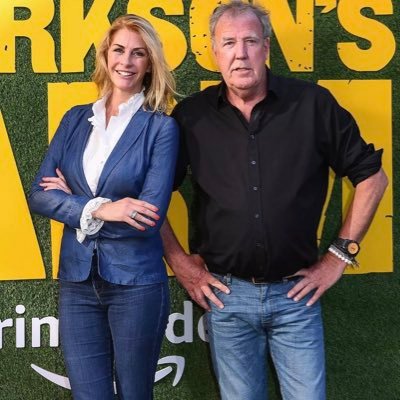
Free blood test Prostate cancer checks for farmers (and others) available at Bakewell and Shrewsbury markets November 23rd and 24th!
Please share!🤝
Martyn Bolt retweeted
🏆 @WTrinityRL - SUPER LEAGUE CHAMPIONS! ❤️🤍💙
What a night for our city. We couldn’t be prouder of everyone at the club.
Tonight we’re also remembering our much-loved Churchwarden & former Trinity player, Gerry Mann, who we lost earlier this year.
This one’s for you, Gerry.


