

Trading Coach & Speaker · Founder of Growth Hub Helping traders turn complexity into clarity. Free 2-min process audit + Inner Circle ↓
Palm Springs, CA
Joined February 2021
- Tweets4.8K
- Following406
- Followers5.7K
- Likes7.8K




I think a lot of traders are trying to solve a discipline problem when what they really have is a lack of clarity around their system.
This came up a few times during our group coaching call with the @growthhubcrew this week. When you haven't clearly defined what you're looking for, almost everything in the market has the potential to look like an opportunity. You see price moving away from a level you marked, start thinking about how much you could have made, and suddenly you're negotiating with yourself about whether or not to take a trade.
The more time you spend defining your entry models, the easier it becomes to sit out of trades. You can watch a stock make a huge move without feeling like you've missed anything because the criteria you needed to see were never there.
There's also something to be said about how much easier it becomes to evaluate your own performance when your rules are clear. If your strategy leaves a lot of room for interpretation, it's very easy to convince yourself at the end of the day that you followed your plan.
Before spending more time trying to improve your discipline, I'd encourage you to spend some time looking at your system. How much of it is actually defined on paper, and how much of it still lives in your head?
You might find that the clarity you've been missing is a big part of the discipline you've been struggling with.
If you're not quite sure where to focus your efforts, I've put together a free, two-minute Process Audit to help you take a closer look at your trading process and identify where you have the biggest opportunity for growth.
Take the audit here: meganmarlow.com/audit
Megan Marlow retweeted

Stopping volume gets you interested.
It doesn't get you in.
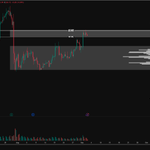
Big volume at a level can stop a move, but the tide hasn't turned until the volume starts to flip.
Location. Stopping volume. Then wait for the flip.
Weeks like this are a good reminder of just how important the process behind your trading really is. When the market gets volatile, it's easy to get caught up in the speed of everything. We start feeling like we need to make decisions faster, take advantage of every move, or make back what we lost earlier in the week. And sometimes, without even realizing it, we start making exceptions to the very rules we've worked so hard to build.
Maybe you widened a stop because the ranges were bigger than usual, increased your size to recover a loss, or took a trade away from your planned location because you didn't want to miss the move. These are all things worth paying attention to, because they often have very little to do with the strategy itself and much more to do with how we're executing it.
Something I noticed this week was that the traders who managed the volatility well weren't necessarily the ones who predicted the selloff. They were the ones who continued to respect their locations, adjusted their risk to account for the larger ranges, and were comfortable sitting out when they didn't have a clear setup or enough information to make a good decision.
I think there's a tendency to believe that faster markets require us to do more, when often the opposite is true. We need to be even more selective about where we're participating and what we're willing to risk.
So if this week was a difficult one for you, I'd encourage you to spend some time reviewing more than just your P&L. Look at the decisions you made along the way. Where did you follow your process well? Where did you start making exceptions? And what could you do differently the next time we experience a week like this?
Those are the conversations and observations that can really help us grow as traders. Not every difficult week means something in your strategy needs to change. Sometimes it's an opportunity to get a little better at following the one you already have.
And if you're not quite sure where your biggest opportunities for improvement are, I've created a free, two-minute Process Audit to help you take a closer look at how you're preparing, executing, reviewing, and holding yourself accountable.
Sometimes knowing where to focus your attention is the best place to start.
meganmarlow.com/audit
Megan Marlow retweeted
This week, one of our members volunteered his trade for the hot seat.
His pattern was valid. But as we broke it down, we found his entry was extended from the ideal zone, which made his stop much bigger, and price was running straight into a key level overhead.
What he did next is what made it a great session. He took two clear notes for his trade plan:
1. Pick one timeframe for the setup, and stick to it
2. Notice when trading too early in the session adds stress
That's how you improve: one honest review at a time.
youtu.be/fT7GSyRXRKM
Not sure what to work on next in your trading? Take the free Process Audit 👇 growthhub.academy/process-au…
Megan Marlow retweeted
There's a lot that goes into becoming a better trader that has nothing to do with finding another strategy or setup.
Sometimes it's a conversation with another trader that helps you see something differently. Someone asking a question you hadn't thought to ask yourself, sharing an experience you can learn from, or helping you work through something you've been struggling to figure out on your own.
One of our members recently completed his first 100 live trades and shared a little about his experience in Growth Hub. What we loved most about his message was that, even after reaching this milestone, he's already thinking about what he can continue working on and how to make better use of what he's learned.
And that's really what we're trying to encourage here. Not just learning how to trade, but developing the curiosity, self-awareness, and willingness to keep improving, while having a group of people around you who genuinely want to see you succeed.
A big congratulations to this member on their first 100 live trades, and thank you for letting us be part of your journey!
If you're interested in joining a supportive community for your trading and growth, we'd love to have you @ growthhub.academy!

Have you ever tried to explain your trading strategy out loud and realized just how much information you've got floating around in your head?
You know what you're looking for on a chart, you recognize certain patterns, and you might even have some really good trades to show for it. But when it comes to defining exactly what needs to happen before you take a trade, things can get a little messy.
Here's a glimpse into what coaching with me looks like inside Growth Hub.
A lot of the traders I work with already have some really good components to their strategies. They don't necessarily need another setup or more information. They need help organizing what they already know and turning it into a clearly defined system they can consistently execute.
That's why you'll hear me asking so many questions during coaching sessions. I'm not there to tell someone how I would trade their strategy. I'm there to help them better understand their own thinking, challenge assumptions, and figure out what's essential versus what's optional.
Think of it as taking the novel running through your head and breaking it down into CliffsNotes. Something that's easier to understand, follow, and evaluate.
Here's a 10-minute look inside one of our coaching sessions. 👇
youtube.com/watch?v=OnonJKyP…

How many times have you changed your trading strategy when the strategy wasn't actually the problem?
I see traders spend so much time trying to find better setups or add another indicator to their charts - and while there's certainly value in refining a strategy, I think we often overlook something equally (if not more) important: the process supporting it.
You can have a perfectly good trading strategy and still struggle to find consistency if you're showing up unprepared, taking trades outside of your plan, failing to review your decisions, or repeating the same mistakes without recognizing them.
When I first started trading, some of the biggest improvements I made didn't come from learning another setup or finding a better entry. They came from spending time reviewing my trades, talking through my decisions out loud, and having conversations with other traders about what I was seeing and why I was making certain decisions. Those habits helped me immensely because they forced me to slow down, think critically about what I was doing, and recognize patterns in my own behavior that I might not have noticed otherwise.
Strategy is important, but all the bits and pieces of your process (how you prepare, how you execute, how you review, and where you find accountability) are what truly matter.
Before you decide that your strategy needs fixing, I would encourage you to look at how consistently you're doing the things that allow that strategy to work in the first place. Because sometimes the next step in your development as a trader isn't learning something new, but rather getting better at doing what you already know you should be doing.
I put together a free, two-minute Process Audit to help you take a closer look at those four areas of your trading: preparation, execution, review, and accountability. It might help you identify something you've been overlooking. 🫶
Take the Process Audit👇growthhub.academy/process-au…

One of the things I really want traders to get better at is reading the story behind each candle, rather than just reacting to whether it's green or red. Where is the volume coming in? Are buyers actually taking control, or are they just absorbing selling pressure? Are sellers still defending the same area?
In this coaching session, we walked through a member's trade bar by bar, looking at the subtle shifts in price and volume that can help us understand who's actually in control. Sometimes the most valuable information isn't in the big moves, but in the smaller details leading up to them.

Getting stopped out doesn't always mean you were wrong.
Sometimes the stop was just too tight.
If your thesis is still intact, a stop-out isn't the end of the trade. It can be a second chance at a better entry.
Full video [youtu.be/gFOWUvcuqGU]
2
393
Megan Marlow retweeted
One of our Growth Hub members shared his day, and it shows what a repeatable process looks like on the good trades and the bad ones.
On $OKLO, every step had a reason:
→ Setup: a 3-bar pivot on the 5m
→ Entry: a 2m ABCD over the premarket high, the level he was watching
→ First partial: under 25, near T1 and a psychological level
→ Second partial: near T2, just under large orders on level 2
→ Runner: trailed on value and structure
On $GOOGL, he got impatient. The market was ripping, so he let “close enough” replace his level and didn’t wait for 296. Small loss, lesson learned.
That honesty is the point. When the market is moving fast, it’s easy to bend your rules. Reviewing the trade where you broke them is how you stop doing it next time.
Great work from the crew! 👏

One thing I always encourage traders to work on is developing a thesis without becoming attached to it.
You can have a strong directional bias based on what you're seeing on the higher timeframes, but that doesn't mean price has to cooperate. Pay attention to who's actually in control, how they're behaving at important levels, and whether the market is confirming or challenging your original idea.
The goal isn't to be right about your bias. It's to make good decisions with the information in front of you.
Have a bias. Just don't marry it.
Lean into your thesis, but leave room for price to tell you otherwise.
If the level isn't holding, the flexible trader adjusts. The stubborn one hopes.
Full video [youtu.be/zhqL_b1WmpQ]
1
2
334
Megan Marlow retweeted
A Growth Hub member didn’t trade the opening flush on $AMD yesterday because there was no setup for him. Instead of chasing, he waited patiently. He sat through the noise for hours until the market finally offered a pullback on the 1H, much later in the session. Then he got in with a clear target of 413 at intraday value.
This is what a defined system and plan give you. When the market turns irrational, you don’t have to react to every move. You already know what your setup looks like, so you can wait for it to come to you. Patience gets easy when you know exactly what you’re waiting for.
Great work from the crew! 👏

In this clip from one of our @growthhubcrew coaching sessions, Coach Bhushan and I walk through an example on $MU where we could see a subtle shift in control before market structure had even changed.
I always encourage traders to spend time studying the relationship between price action and volume to better understand the behavior of buyers and sellers at important locations. Learning to recognize these shifts, even when they're subtle, can help you make more informed trading decisions.
A little glimpse into the kind of chart work and conversations we have inside Growth Hub. 👇
You don't need a reversal pattern to see a shift in control.
At a key level, watch the volume: one side's volume starts to dry up, the other side's starts to pick up.
Sometimes it's subtle, and it takes time. But it often shows up before price does.
4
481
The decisions we make early in a trade can directly influence how we manage it later.
In this clip from one of our Growth Hub coaching sessions, a member walks us through his $CRWV trade, explaining his entry thesis, what he was seeing in the price action, where he took profits, and how he planned to manage the position.
It also highlights a common challenge: chasing an entry or trading outside of our plan can create a snowball effect. Once we break one rule, it becomes easier to justify taking profits too early, moving our stop, or exiting simply because we’re uncomfortable. Improving trade management often starts with examining how we entered the trade to begin with.
I’ve always believed there’s tremendous value in being able to articulate WHY you’re making a decision. Sometimes it’s not until you explain your reasoning out loud that you recognize the gaps in your own process.
That’s something I really love about this clip and the environment we’ve built amongst the members of @growthhubcrew. The traders in the community aren’t just names behind keyboards. They’re actively sharing their screens, talking through their thought process, asking questions, and learning from one another.
Incredibly proud of this crew. 🫶
A bad entry rarely stays a bad entry.
Once you chase, you're already off the plan. Then the partials get early, the stops get loose, and the whole trade starts to snowball.
Get the entry right, and the rest of the trade gets easier to manage.
Full video [youtu.be/NNM2aR3oubA]
2
406
Megan Marlow retweeted
A good trade starts with a thesis, but it also needs a plan for execution, targets, and invalidation.
One of our Growth Hub members shared his $TSLA trade today, and it's a great example of putting those pieces together.
What we love about this example is that every part of the trade had a reason behind it. He knew why he wanted to enter a continuation, what he was looking for, where he expected price to go, and what would tell him it was time to get out.
What we're working toward as traders is not just finding setups, but building a repeatable decision-making process that guides us from entry to exit.
Great work from the crew! 👏

A red candle doesn't automatically mean sellers are taking control. Sometimes it's telling you the exact opposite.
This is something I spend a lot of time working on with traders inside @growthhubcrew: learning to read what's actually happening on a chart rather than simply recognizing patterns or relying on indicators. When we start pairing price action with volume, we get a much better understanding of who's participating, who's in control, and whether buyers or sellers are actually making progress.
This becomes especially important when you're managing a trade because not every red candle is a reason to exit, just like not every green candle is a reason to enter a long position. We need to understand what's happening within the context of the overall move and whether the behavior we're seeing actually supports a change in direction.
The goal is to learn to understand the behavior behind the candles so you can make better decisions based on what the market is showing you, rather than reacting to every move.
A little glimpse into how we work through chart reading and price action together inside Growth Hub. 👇
youtube.com/watch?v=2XNldwJb…

An indecision candle is a battle.
You don't need to guess the winner. You just wait to see who breaks it.
We read META bar by bar ahead of earnings 👇
Full video [youtu.be/2XNldwJbAPQ]
5
663
Megan Marlow retweeted
Sometimes the best trade is the one you don't take.
During a recent chart review, one of our members, walked through a setup on SPY. The signal was there. He knew exactly where his stop would go and what was defending it.
But when he looked at his target, the trade didn't give him enough room for his risk criteria. So his answer was simple: no trade.
It's easy to see a setup and feel like you have to act on it. But a valid signal isn't the same as a valid trade. The setup has to fit your plan, not just the chart.
If you're struggling with consistency, try adding one question before every entry: "Does this meet my criteria?" If the answer is no, sitting on your hands is a decision too.
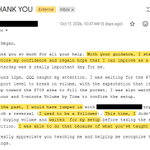
I received this email from a trader I've been coaching through 1:1 sessions and within the @growthhubcrew, and it reminded me why I love what I do.
My goal as a coach has never been to hand you a trading system and tell you to follow it. It's always been to help you develop your own, learn to read what's happening in front of you, and build the confidence to make decisions without needing someone else to validate them.
Ultimately, I don't want you to need me forever (as I've said before, it's a terrible FURU business model, I know 😂). I want to see you recognize your old habits, stop following the crowd, and start trusting the work you've put into your own process.
Incredibly proud of the work this trader has put in to get to a place where they're trusting their own analysis and realizing they don't need someone else to tell them what to do!

10
616